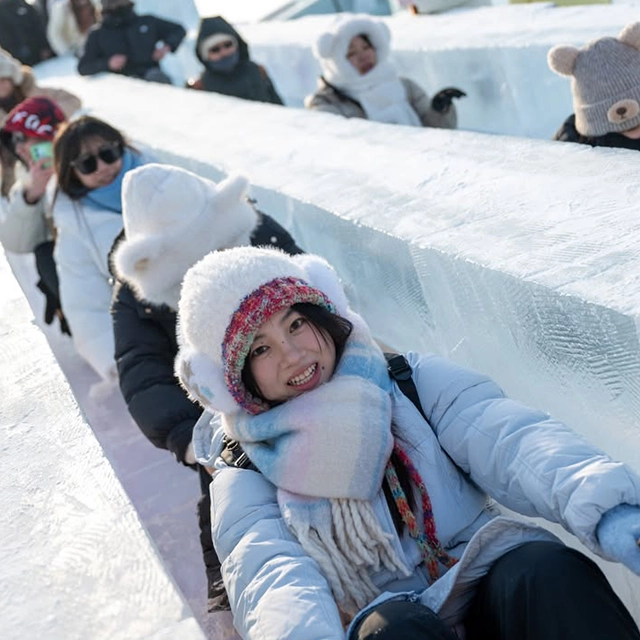
It is cold in Harbin, a city located in China’s northeastern reaches. It is the capital of Heilongjiang Province, on the banks of the Songhua River. Winters here are long and severe. Nearly three quarters of its territory borders the far—and frozen—Russian Far East.
One of the qualities I most admire in the Chinese people is their practical intelligence. They perform small miracles with whatever lies at hand...
My interest in Asia does not arise from fascination, but from the recognition of a cultural sediment that resists superficial readings. China and Japan have been fundamental references in this process, both in the realm of visual arts and in that of symbolic management. Their literature and philosophy have not lost their capacity to converse with contemporaneity—not as untouchable corpora, but as tools for living thought, applicable to politics, ethics, cultural architecture, and aesthetics.
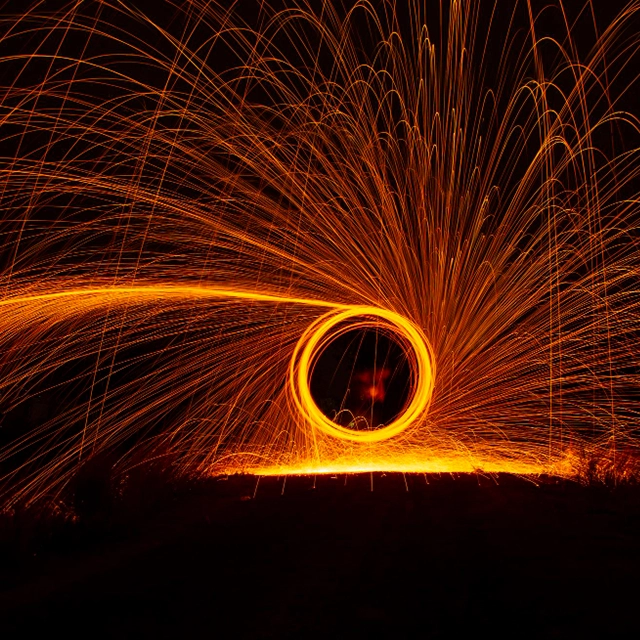
Why share an image that, from an aesthetic standpoint, I find unpleasant? Of all possible complementary color pairings, this is probably the only one I would never use in a design or in a work of artistic intent. Together—yellow-gold and cold violet—they vibrate in an unbearable way, imposing a visual rhetoric saturated with meaning. Perhaps because, over centuries, they have been associated with institutions now perceived as decadent, with a solemnity that fails to justify itself.
It is not the same to watch a cyclone from the window of your house as from an orbital station. They are two entirely different spectacles. When I was a child, it filled me with tremendous excitement. I had eyes only for its ravaging gusts. I did not notice my father sweating as he nailed boards over the windows. That is the distortion produced by perspective. From the distance established by innocence, catastrophe becomes nothing more than a majestic spectacle.


