I have sometimes thought about what, for once, I might call “the oneiric substance,” if only to steer the question into less sinister territory: do dreams arise from experiences not fully processed, or are they autonomous energetic structures, detached from various material or temporal sources, that pass through the mind in search of the lost warmth of emotions? The question has its beauty.




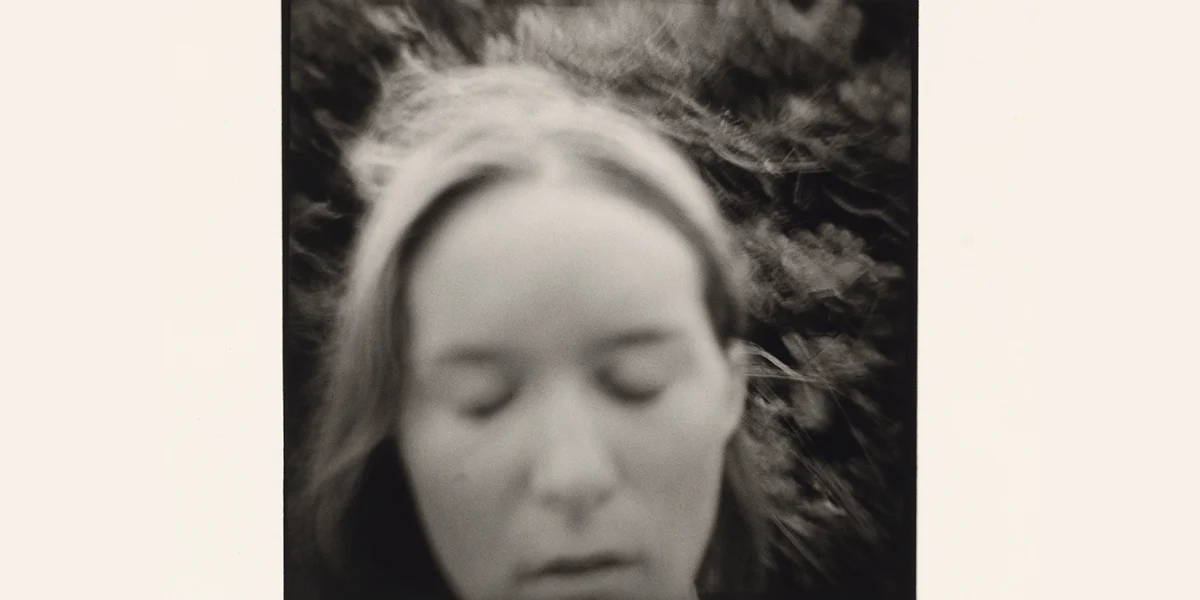
CAM presents more than 150 photographs and archival materials in the first career retrospective devoted to Nancy Rexroth.

Noel Maghathe brings woven photographs and family archives to the Art Academy of Cincinnati for FotoFocus 2026.

Edie McKee Harper’s photographs, paintings, weavings, and prints go on view October 17 at the Taft Museum.

Artist Marzena Abrahamik discusses her photo exhibition Girl Play at a free October 30 talk in Cincinnati.

Bring one or two personal photos and share their stories at a free CAC program for adults on October 30.

Artist Rhys Watkins leads free multisensory exhibition tours and audience discussions at Here and Now in Newport.

Featured artists discuss their work and the theme of unity at a free GALLERY jENSEITS panel in Mt. Adams.

Cincinnati artist Terence Hammonds pairs new printed ceramics, wallpaper and textiles with museum objects about Black history.

In encounters with certain works of contemporary visual art, perception activates modes of association that situate aesthetic experience in territories where matter, gesture, and time intertwine. Elizabet Cerviño’s (Manzanillo, Cuba, 1986) exhibition The Rhythm of Resilience, recently presented at Gallery 114 in Ybor City, Florida, unfolds within this horizon.

Whenever I take part—as a curator or a viewer—in an exhibition bringing together several artists, seven women in this case, any number of men or any combination of the two sexes, I try to imagine the reasons, the implicit mystique that such a combination requires.




The Baker Hunt Art & Cultural Center invites visitors to meet the artists and teachers behind its annual adult student show and sale on Sunday, June 1, from 2:00 to 4:00 pm, with a chance to enjoy the gardens in Covington, Kentucky.

The official fundraiser that kicks off summer, A Taste of Duveneck, returns to the Cincinnati Art Museum on Thursday, June 5th, from 6pm-9pm. Last year, the event brought in more than 700 guests.

CINCINNATI, OH (5/22/14) – This month, join us as we celebrate the past and present with Art After Dark: Cincinnati Pride Night! After After Dark, the Cincinnati Art Museum’s Final Friday Happy Hour is proud to be involved with the Cincinnati Pride celebration this year as the 1st official stop on the Skyy Vodka Pub Crawl. Kick off Pride Weekend and enjoy after-hours access to our galleries.

On Saturday, September 12th, The Annex Gallery brought together some forty people for an evening of celebration and fundraising dedicated to advancing the education of children living in some of the world's poorest communities. Jens G. Rosenkrantz and Kay Hurley, mother of Katie Hurley Wales, opened the gallery to host a benefit for Brighter Children, the organization led by Katie, under the banner Gather with Purpose.
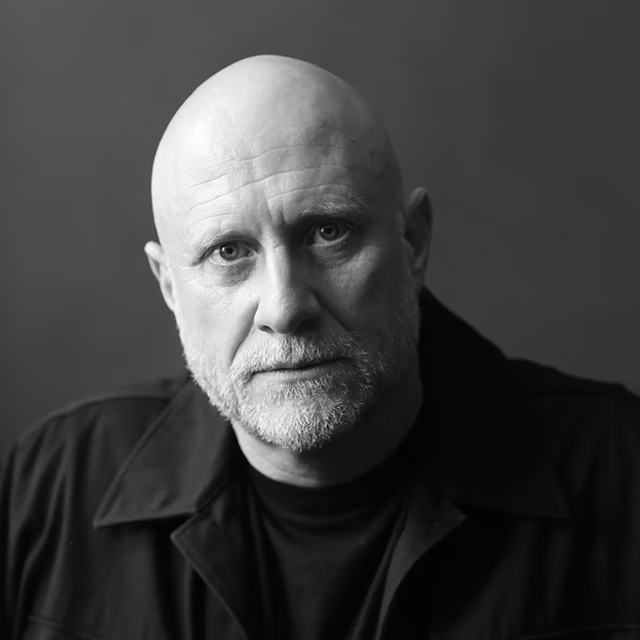
Beyond I.T.I.N.E.R.A.T.I.O.N.S., at The Annex Gallery, The Most Merciful Thing in the World, by renowned American artist Trevor Paglen, was the first exhibition I visited in the current FotoFocus Biennial at its main venue. Open since October 1, it held its official reception only yesterday, on the 3rd, following a performance-lecture by Paglen. This carefully conceived exhibition has been curated by Kevin Moore, Ph.D., Artistic Director and Curator of FotoFocus.
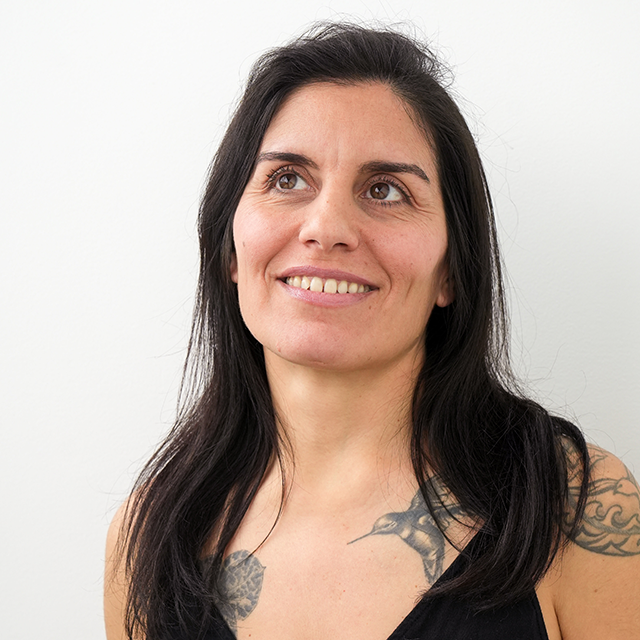
In the Middle of the Endless Water, a solo exhibition by Julia Orquera Bianco curated by Carolina Cuervo at the Philip M. Meyers Jr. Memorial Gallery at the University of Cincinnati, brings together more than a decade of work by an artist whose practice has gradually moved from the personal experience of migration toward an inquiry into territory, memory, ecology, and alternative forms of knowledge.
Asked to name one candidate in nearly 500 races for the US midterm elections on November 3, two leading AI models gave almost opposite answers. Grok 4.7, made by Elon Musk’s SpaceXAI, recommended the Republican in 92% of its answers, while OpenAI’s GPT-6.1 Sol picked the Democrat in 97%. The two agreed in fewer than one race in ten. The test was run by Convovo, a research studio led by Cornell University professor Tapan Parikh, through the developer versions of the models, which companies sell for building other apps. The prompt told each model to choose one name and not hedge. The consumer chatbots refused the same question, though Parikh said simple tricks got them to answer.
The picks barely changed with the local electorate. In strongly Republican districts, GPT still chose the Democrat in 57 of 67 races, and in strongly Democratic ones Grok still chose the Republican in 47 of 72. The models also read different things. Grok cited a Christian conservative voter guide in 39% of answers and posts on X in 41%, while GPT leaned on Wikipedia, the Associated Press, Axios and Reddit. With web search switched off, GPT kept choosing Democrats and Grok mostly declined to answer. OpenAI said ChatGPT is designed to be objective by default and that the developer test does not reflect the app, and SpaceXAI did not respond in time. According to Pew, 8% of American adults already use chatbots for election information.

A former kindergarten teacher in Concord, Massachusetts, is asking a state court to cancel the arbitration ruling that upheld her firing, because the arbitrator used AI chatbots to settle a question about AI and told neither side. Christine Apollos taught at Thoreau Elementary School for more than 20 years and was dismissed in 2025. She claims her principal, Justin Sparks, used AI to write the evaluation that recommended her dismissal, and says it cites sections of the teacher rating guide that do not exist. The district and Sparks say only an AI grammar checker was used and that the firing followed a series of weak reviews. During arbitration, Apollos ran the reports through GPTZero, a program that estimates whether a text was machine-written, and it rated several of them as likely written by AI.
In his August 27 decision, the arbitrator upheld the firing, found no age discrimination and gave “no weight” to the AI claim, though he called the errors in the evaluations “troubling.” To judge GPTZero, he asked two chatbots, OpenAI’s GPT-5.4 and Anthropic’s Claude Opus 5, to describe it, and their answers said it is not always accurate. Neither side was told about this research, so Apollos could not challenge it. Her lawsuit, filed September 28 in Suffolk County Superior Court, calls this misconduct and asks for a new hearing before a different arbitrator. The district has until January 26 to answer.
Microsoft researchers reported in the journal Science on October 22 that their diagnostic system solved 83.2% of 304 difficult medical cases, while general physicians working alone solved 36.1% with textbooks and online references and 22.3% without them. The cases came from teaching case reports in The New England Journal of Medicine. The system, called MAI-DxO, coordinates several AI programs that play different roles, like a panel of doctors. It never sees the whole file at once. It asks questions, orders tests and gets each answer from a separate program that releases information only when asked. On 325 emergency room cases taken from hospital records, it reached about 80% accuracy, against 47% for the physicians.
The authors list the limits of the comparison themselves. The doctors were generalists working alone, without specialists or hospital teams, and every case was a written file with no scans or tissue slides and no patient in the room. Most of the gain came from the underlying model, since OpenAI’s GPT-5 alone scored about 79%. Using standard U.S. prices, its most accurate setting spent $5,431 per case, above the $4,725 spent by physicians, while a cheaper setting reached 80.9% for $2,241. All the authors work for Microsoft. The next step is a study at Beth Israel Deaconess Medical Center in Boston, where patients who agree will use the system during normal care and its conclusions will be compared with their doctors’.