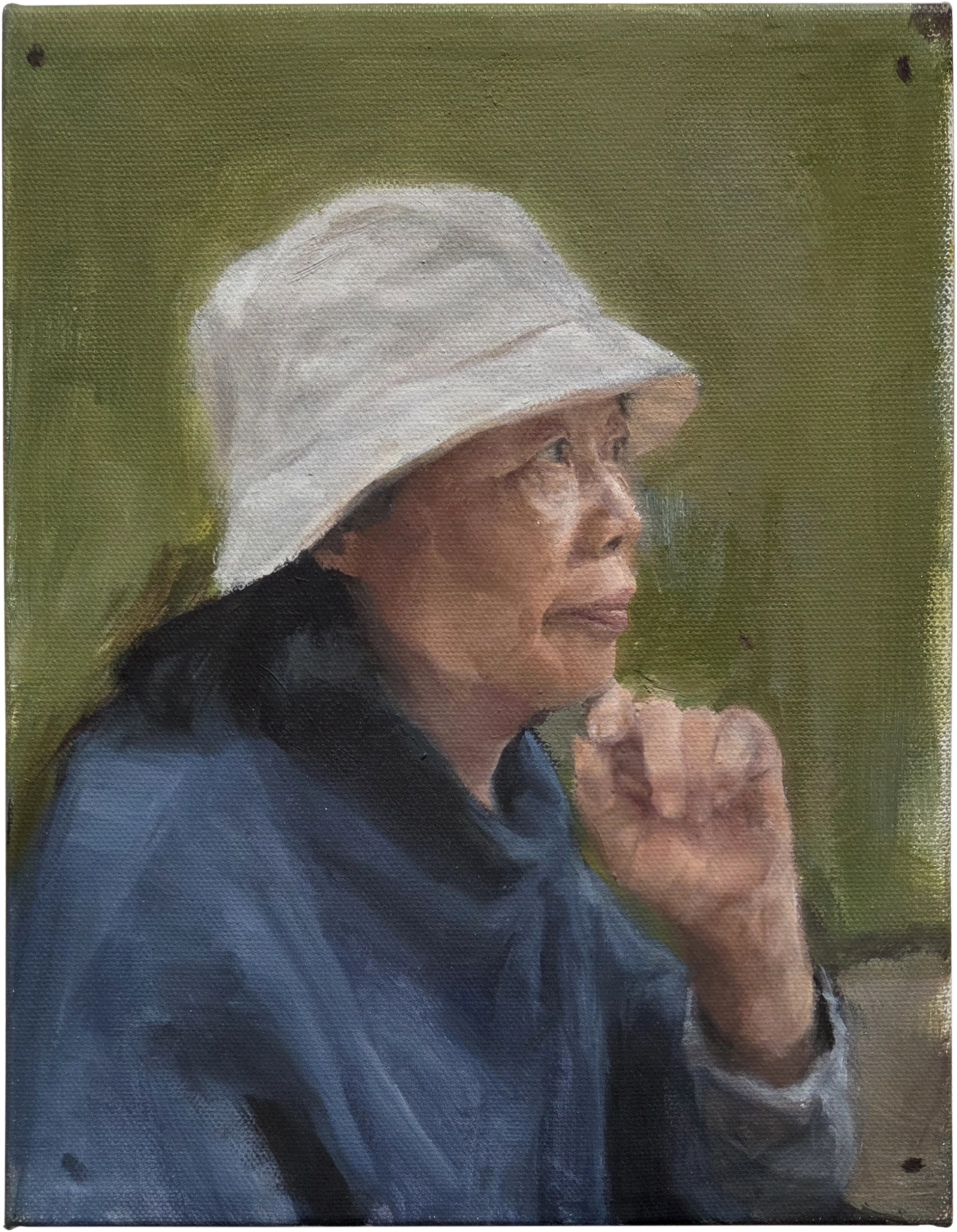
Grandma by Olivia Zhao. Painting. Grade 9, Cincinnati, OH (Gold)
Last Friday, February 6, I attended the opening of the Scholastic Art and Writing Awards 2026 at the Art Academy of Cincinnati. Given the temperature outside, one would have expected a thin crowd, a hush, the kind of dispersal that comes with an icy wind. The opposite happened. It was a celebration. All six floors of the institution were packed with children, teenagers, and adults—an enthusiasm the visual arts rarely manage to elicit. Everyone celebrating emerging talent.
The event was organized by levels, each floor devoted to a category of student production. Nothing about that arrangement is accidental. It disciplines the walk-through and compels you to read the whole rather than isolated rooms. It also sets a tempo. Moving up and down the building makes the range of work visible—from individual pieces to more extended bodies of work.
The sixth floor, for instance, was reserved for Independent Submissions, works presented outside the framework of a particular school. The fifth gathered three-dimensional and design disciplines, especially fashion and work in the round. The fourth concentrated visual arts from different educational centers. The third was dedicated to writing categories and literary portfolios. The second functioned as a reception space during the opening, with open readings and encounters among participants. On the first level and in the common areas were the points of welcome, orientation, and social exchange.
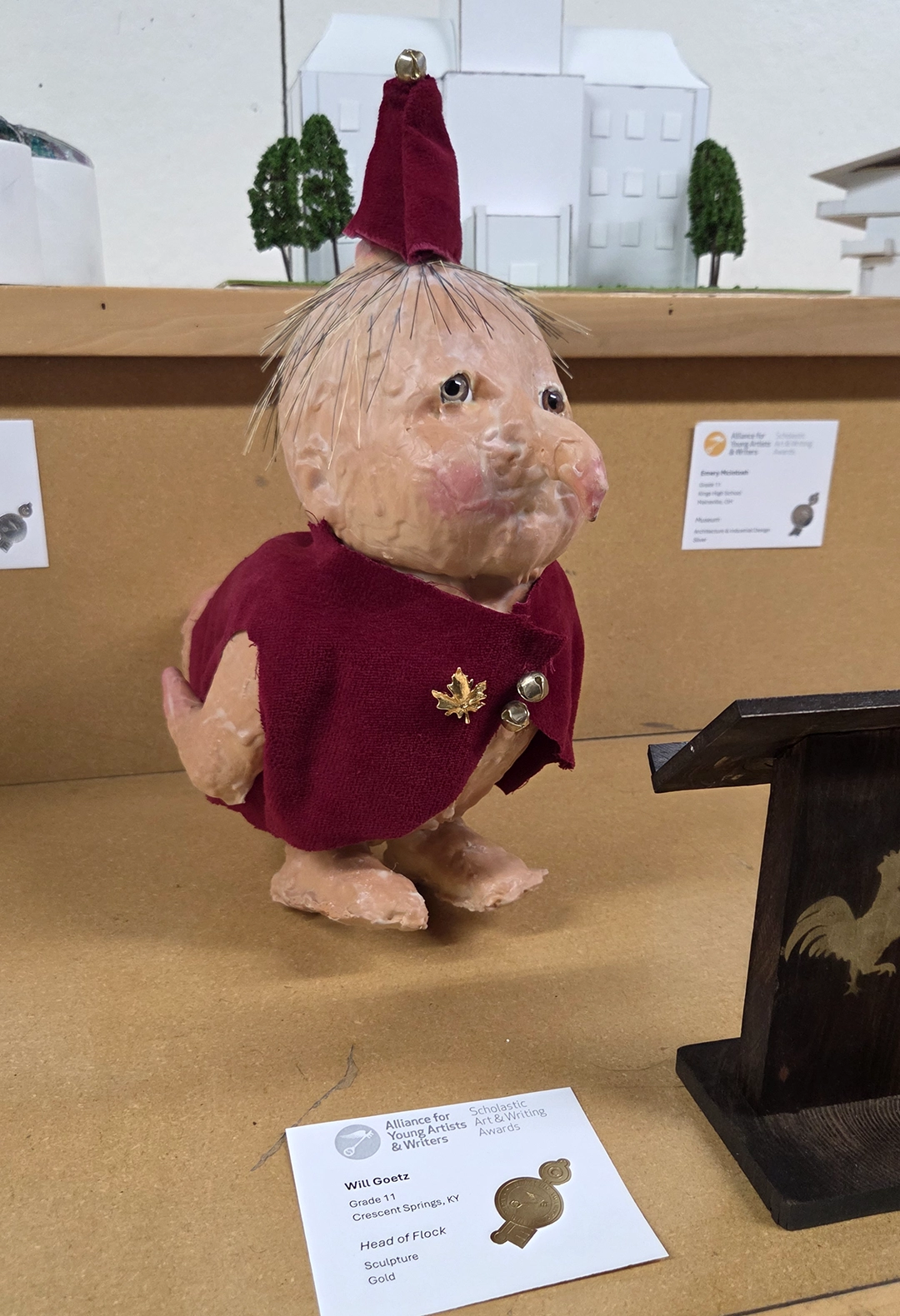
Head of Flock by Will Goetz. Sculpture Grade 11. Crescent Springs, KY.
Finally, the level below housed the complete portfolios. There, too, a selection of work by teachers was shown—artists with craft, and with real weight within the city’s cultural ecosystem. Taken together, the route sorts disciplines and makes visible different degrees of training, autonomy, and artistic consolidation.
What you find there is best understood as a departure into public space. Most of the works are born from learning processes, and their natural habitat is the classroom. Here they leave that frame and face an open gaze, with a recognition that does not arrive automatically. For anyone unfamiliar with the process, the whole offers a legible passage: from years of formation toward the gallery, the institution, or any professional arena.
Since its founding, this program has operated as a discreet infrastructure within the American art system, identifying and projecting those who have not yet entered the professional circuit, even when their work already hints at an emerging authorial consciousness. Isolated technical prowess matters less than the appearance of a creative will. In that sense, the building’s architecture works in the event’s favor. The ascent by floors—distinct practices on each level—reinforces the idea of process, of advance.
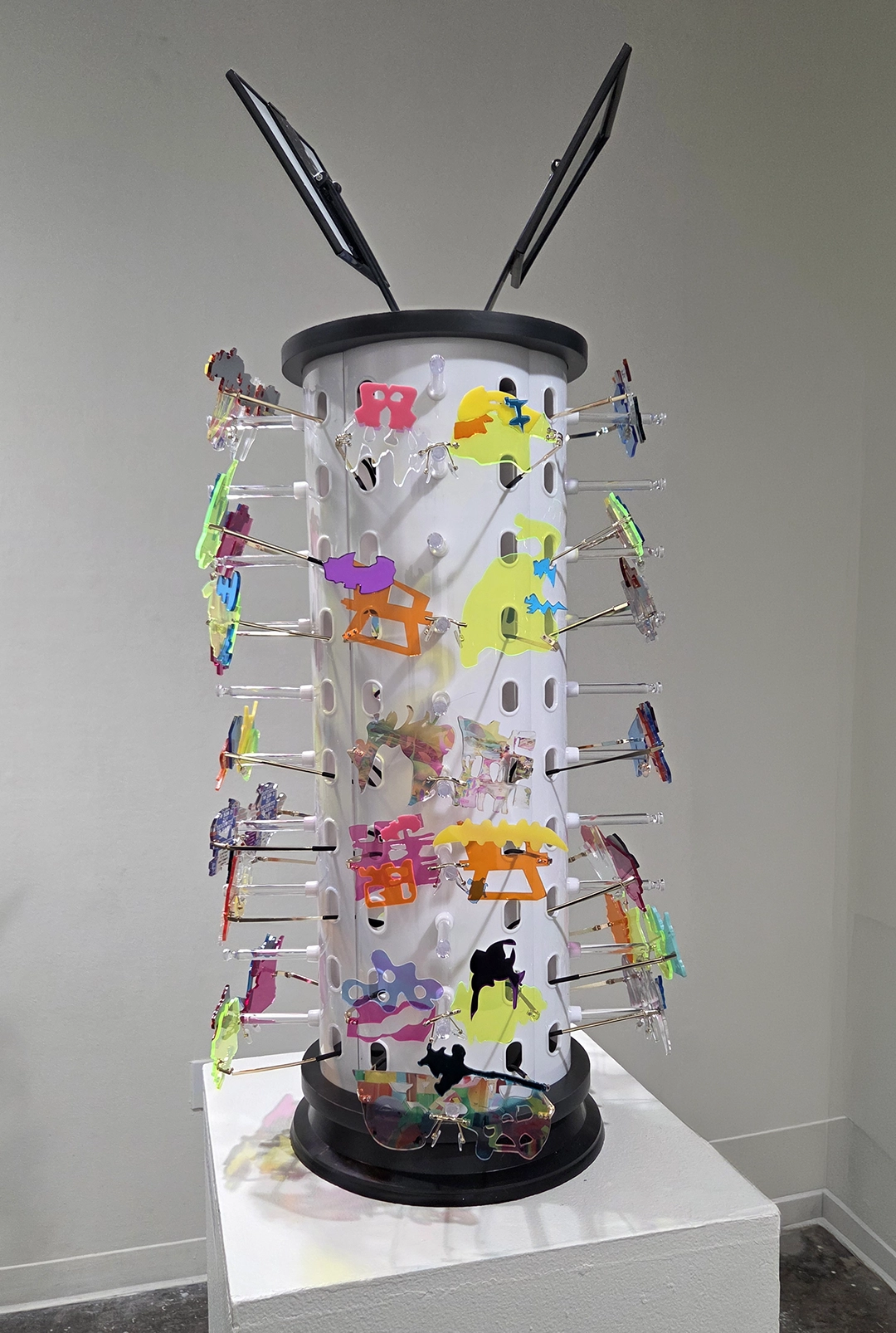
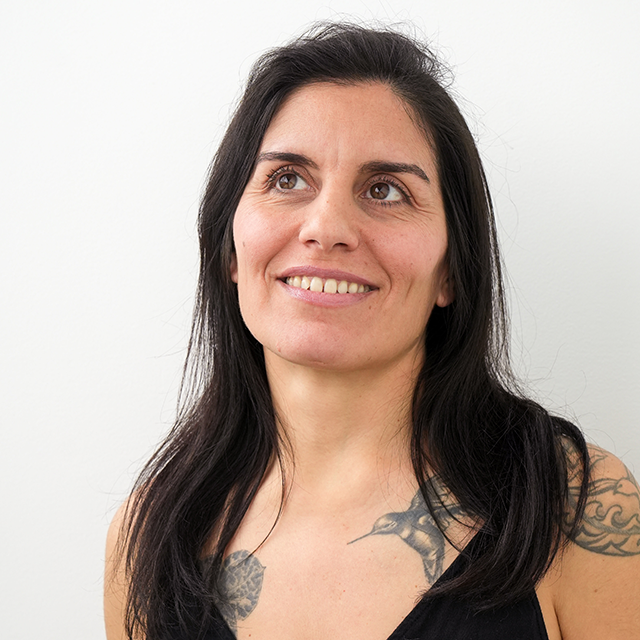
Lindsey Whittle aka Sparklezilla
Glasses Maypole Version #1, 2026
Glasses stand, glasses parts, laser cut acrylic featuring the shape languages of Clint Basinger, Jake Vogds, Molly Donnerymeyer, Jada Kirk, Steve Kemple, Future Lindsey, Sky Cubabcub, Terry Palmer, Jamie Shiverdecker, Brittany Gottschall, My Family, Roger Basinger, Vesper james, and Grace Duval *Shape languages are collaborative visual and conceptual systems that serve as the foundation from which Whittle makes artistic decisions
The works speak from intuition, but you can already sense direction. A nascent awareness of gesture appears; of image; of form as a vehicle of assertion. Beyond careful imitation, there is the attempt—still fragile, but unmistakable—to build a voice. Personally, I saw splendid work on every level. The adjective may sound excessive, but I use it with the context in mind. More than once, pieces by middle-school students carried greater force than those by older students.
It is often said that events like this receive less attention than they deserve, because they take place before the art system confirms and consecrates. And yet trajectories begin to take shape here—trajectories we will encounter years later in galleries, museums, and collections. The artists we will admire tomorrow, and from whom we may even buy a work, are here. Our task is to look closely, to risk a reading, to try to see where each gaze is heading. Somewhere in the building, that voice is already forming. That is why I understand the Scholastic Art and Writing Awards as paying less attention to immediate success and more to possibility.
I want to return—to see the pieces calmly, without having to compete with anyone for space. Because I saw a great deal, but through noise and traffic. I want, quietly, to place my bets. To find out whether I have any future as a clairvoyant.
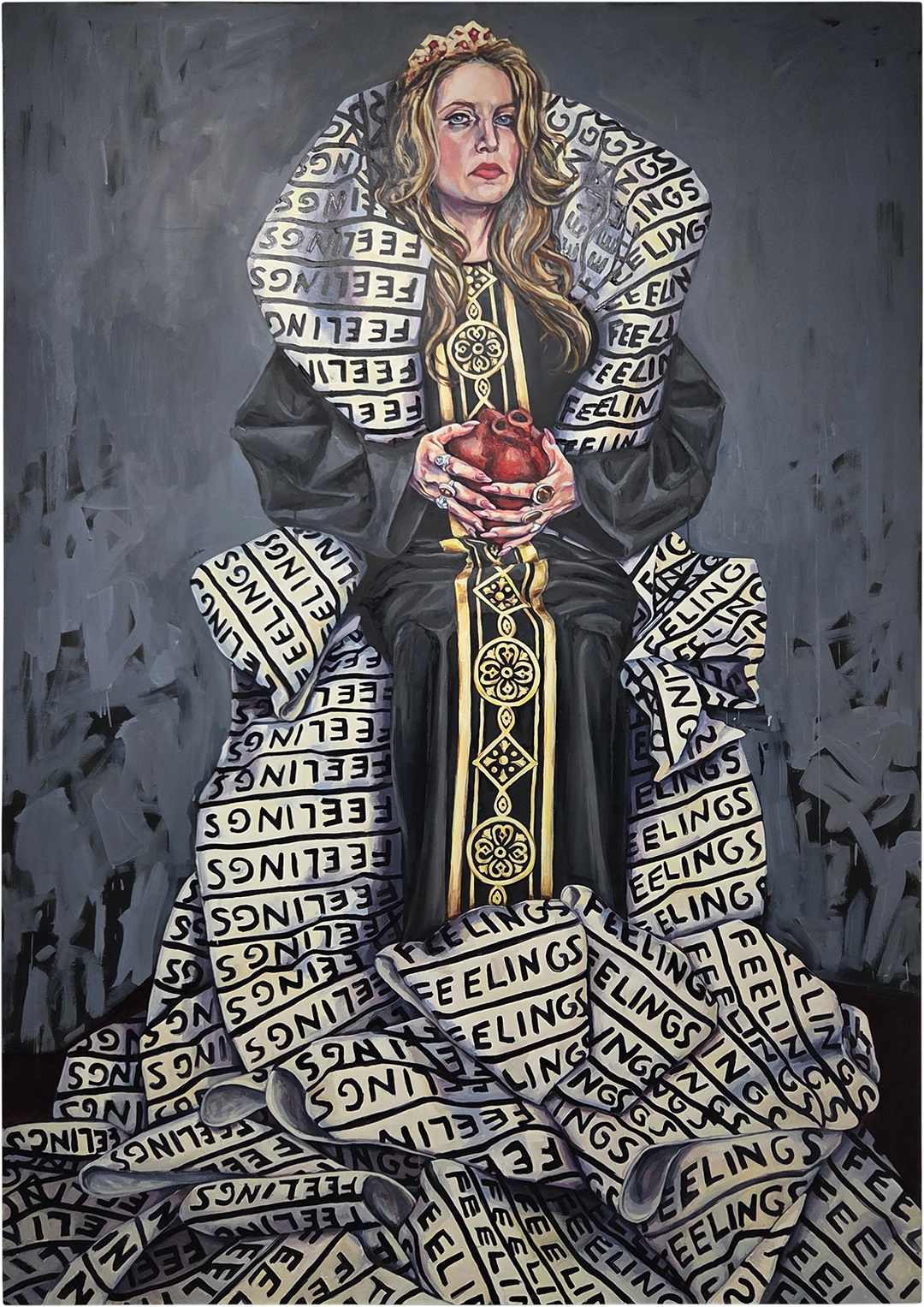
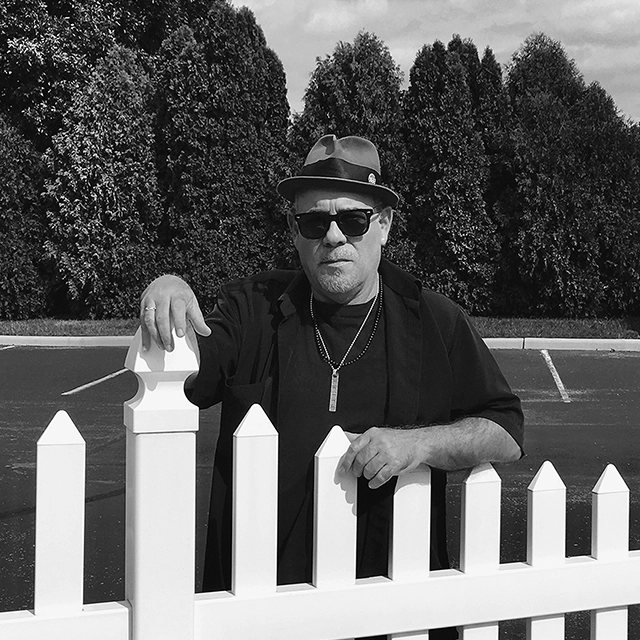
Sarah Stolar
Balitronica, The Queen of Feelings, 2024
Oil on canvas








Comments powered by Talkyard.