
Netflix aired the final episode of Stranger Things on December 31, 2025. It coincided with the closing of an unusual and demoralizing year. A masterstroke. We will remember forever the day the Upside Down arc was sealed, Vecna definitively defeated, and Eleven’s story brought to a close—at every level: her power, and her life in the physical realm. The group of friends disperses as an active unit. Each takes a different path. And, above all, one of the warmest windows onto the extraordinary 1980s was shut.
Those years began with Reagan’s rise to power. His inauguration took place on January 20, 1981. In the offices of Granma, the Cuban state newspaper, the relentless clatter of typewriter keys never ceased: imperialism, Cold War, “hands off Central America,” “soil soaked in blood”… a rhetoric that, even today, remains intact.
In the United States, on August 1, Mark Goodman introduces MTV. With its first video, Video Killed the Radio Star by The Buggles, the industry begins to spin until it is completely overturned. Sound is no longer enough. A new layer must be added—vibrant, incandescent: the image. The record ceases to be merely musical and becomes an object that articulates multiple layers of meaning. Visual. Performative. An entire architecture of identity. In fact, vinyl reaches at this very moment its peak of aesthetic and iconographic sophistication. Without wishing to spoil the celebration, barely a year later, in 1982, Sony and Philips will bring the Compact Disc into circulation.
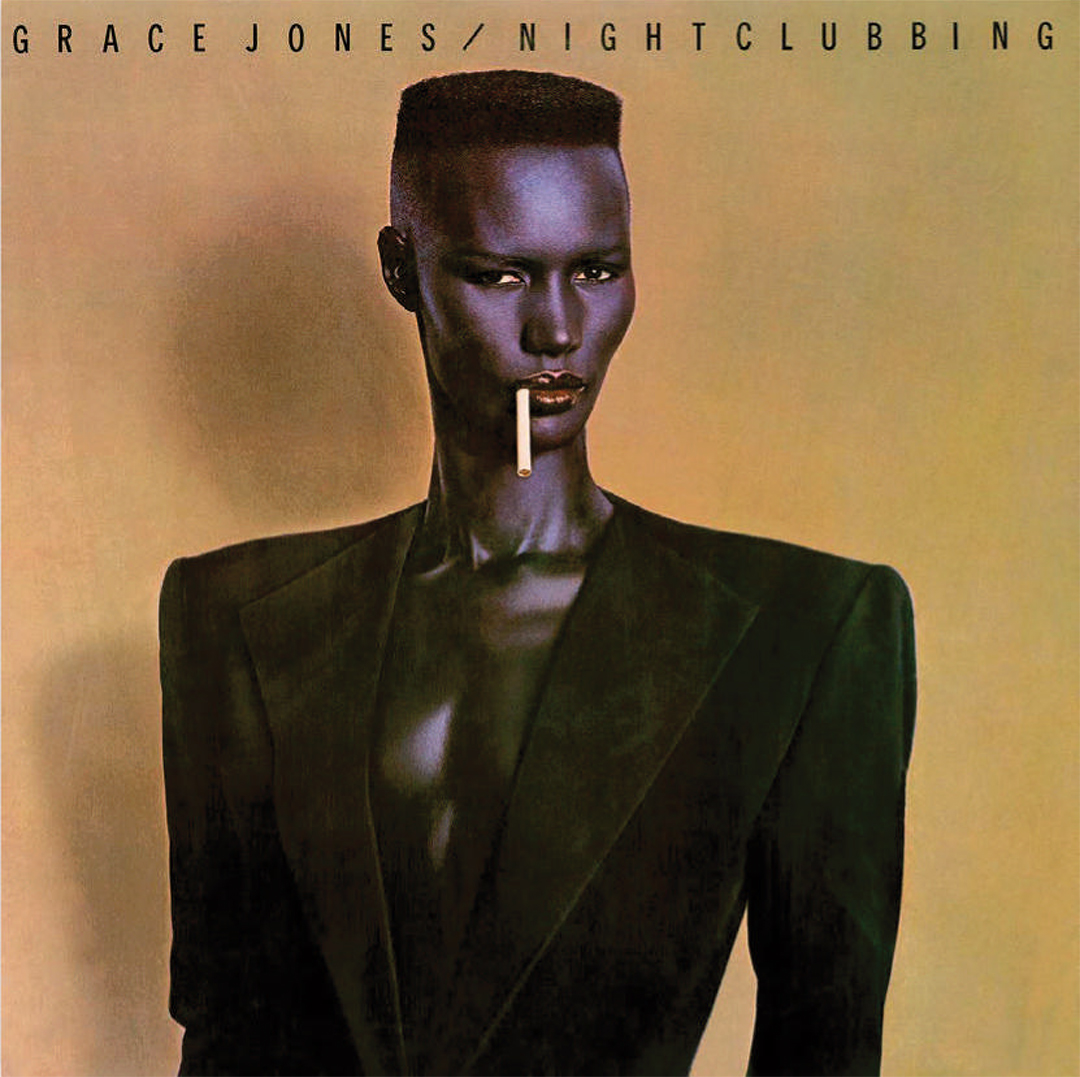
We are still in 1981. A 32-year-old Grace Jones releases her fifth studio album on May 11, Nightclubbing, under the Island Records label. It appears precisely at the threshold between the album as object and the artist as absolute visual icon. Much of this rests on the cover. Chris Blackwell, founder of the label and co-producer of the album, commissioned it directly from Jean-Paul Goude, who at that moment—at forty-one—was living his creative prime.
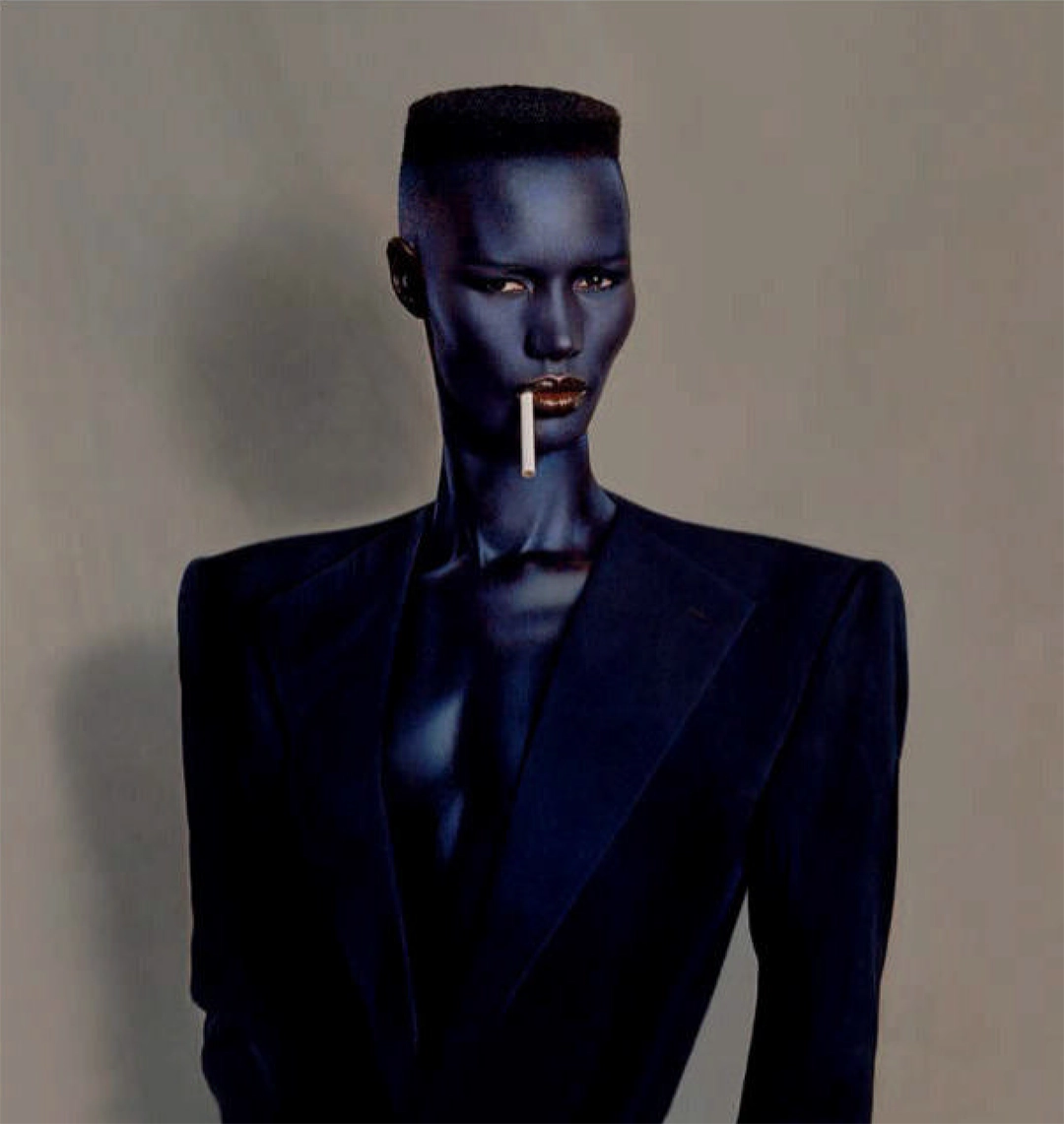
It was Blackwell who decided to take an existing photograph by Goude and turn it into the album’s official cover, crediting the work as “Cover painting by Jean Paul Goude.” The decision meant betting on a radical image that broke with the dominant disco iconography, despite internal resistance from the label’s A&R (Artists and Repertoire) department.
The cover of Nightclubbing went on to establish itself as one of the most influential images of late twentieth-century visual culture—not only because of its immediate impact, but because it redefined the relationship between music, identity, and iconographic construction.
The image ceases to illustrate sound. The “acoustic” image—if the term makes any sense—is displaced by plastic form as the central instrument of meaning. In a single gesture it condenses aesthetics, attitude, and cultural position. Grace Jones’s figure sustains a field of signification deliberately constructed to operate within ambiguity, generating—through tension and a defiant, sovereign pose—a transcendent presence.












Comments powered by Talkyard.