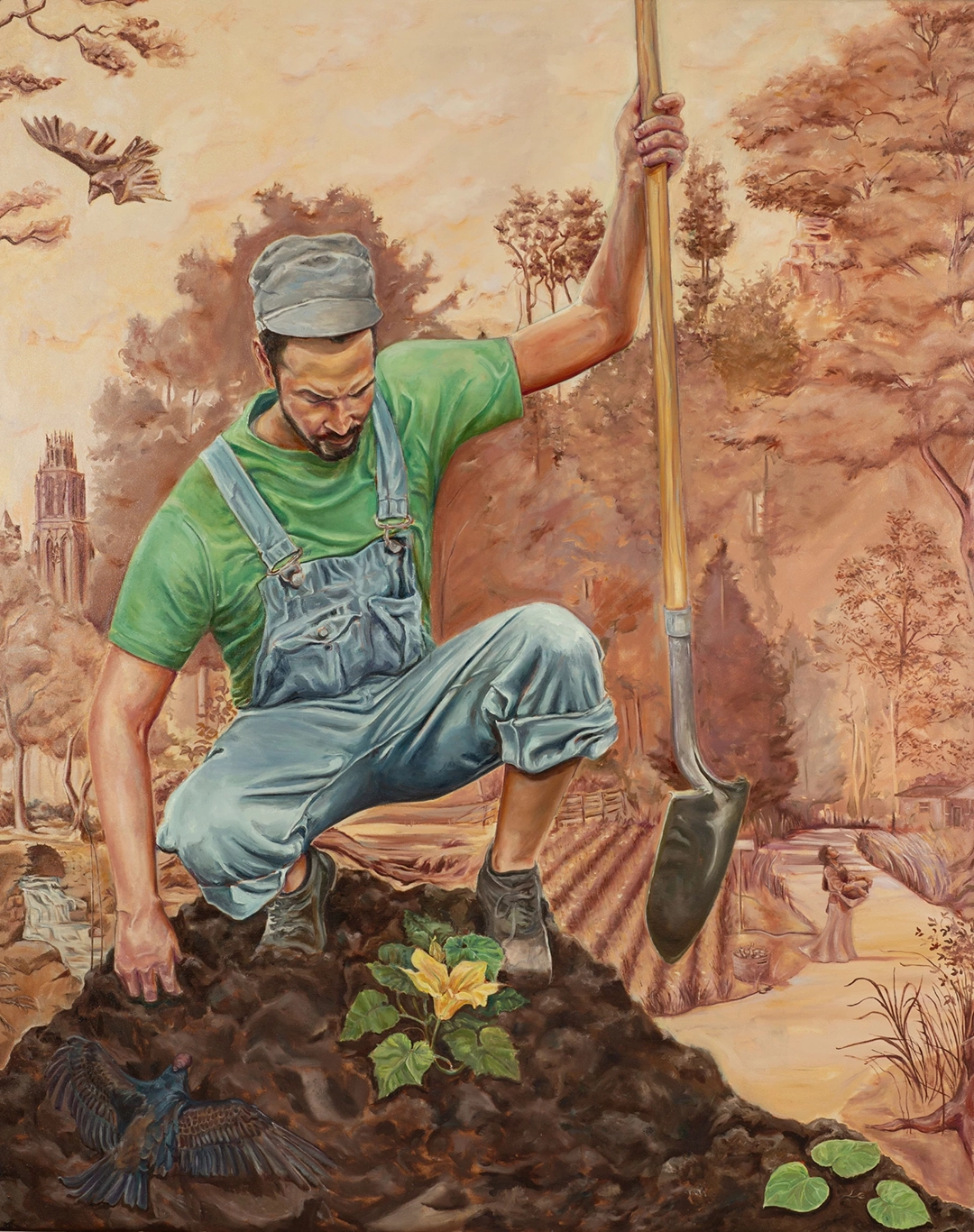
Oil painting by Ayana Ross (American, b. 1977).
Seed for the Sower, 2024
Oil on canvas | 60 × 48 in. Photo: Deborah Whitlaw Llewellyn
Art historiography in the American Midwest often relies on preservation institutions that consolidate particular versions of the past. This year, the Taft Museum of Art subjects its founding narrative to review through the integration of “domestic” aesthetics into the historical texture that defines it.
Its Federal architecture imposes a spatial grammar that conditions the interpretation of the works on view. The intersection between nineteenth-century mural painting and contemporary figuration requires a logic of mutual validation. The museum’s strategy appears to draw on its residential atmosphere to temper the transition between the aristocratic legacy of its past and the representational demands of the present.
In 2026, the institution marks four decades of its Duncanson Artist-in-Residence program. Established in 1986, the initiative set out to convene contemporary Black artists in dialogue with the legacy of the nineteenth-century painter. The commemoration of this closed anniversary demanded a figure capable of bearing the weight of the milestone and the challenge of integrating her visual syntax into the murals of the entrance hall.
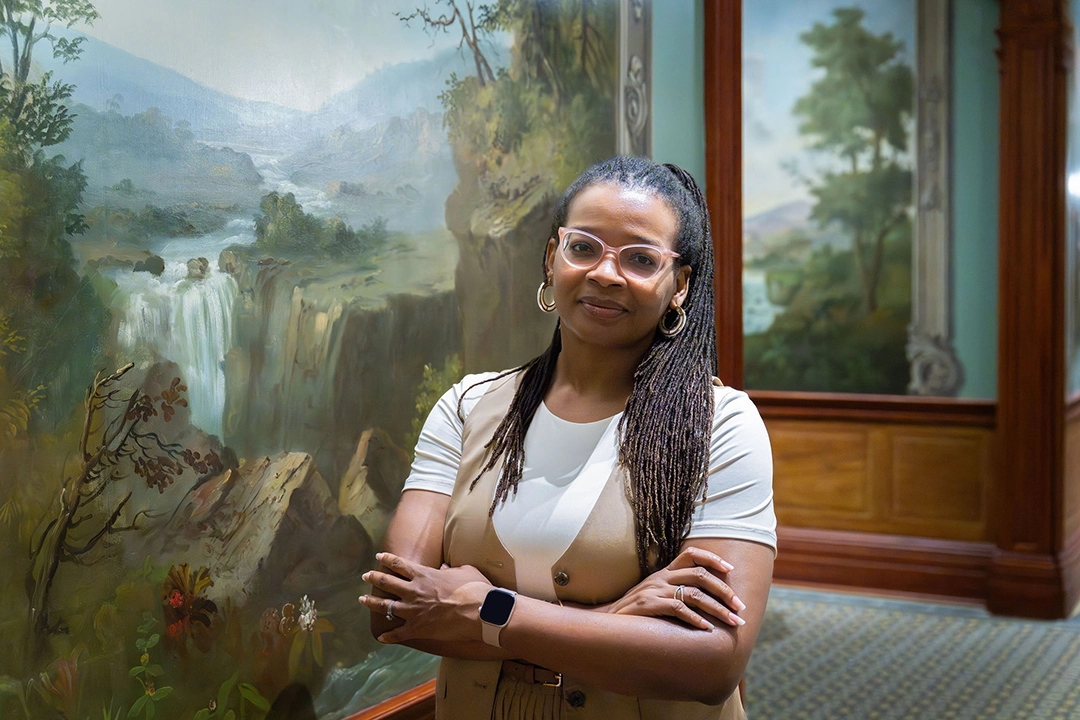
Ayana Ross.
The Duncanson Artist-in-Residence program was established in 1986 to recognize artists of color connected to the region; poet Nikki Giovanni was its first recipient. Ayana Ross, the 2026 Duncanson Artist-in-Residence, combines traditional oil painting with figurative realism, elevating her subjects while evoking a sense of nostalgia through the patterned and decorative elements present in her work.
Image courtesy of the Instagram account of the Taft Museum of Art
The selection made by curator Angela Fuller and program director Kareem A. Simpson fell on Ayana Ross. Born in 1977, Ross carries the distinction of the Bennett Prize awarded in 2021, along with a Mellon Foundation fellowship at Yale University in 2024. Her painting is grounded in traditional oil and figurative realism. Her canvases capture the density of Black everyday life through the integration of decorative patterns that appeal to intergenerational memory.
Her insertion into the space designed by Robert S. Duncanson allows the museum—through the neutrality of the landscape—to update its social message while maintaining its traditional aesthetic intact. It confirms how this genre retains its relevance and continues to function as a site of political and social negotiation.
Ross’s visual grammar, once embedded in the walls of the Baum-Longworth-Taft House, turns the landscape into a structure capable of supporting narratives of belonging. The institution projects an image of cultural continuity in which innovation extends tradition.
The institutional directive behind the exhibition reveals a precise exercise in communicational engineering. It draws on Duncanson’s historical prestige to validate the discourses of racial equity introduced by Ross. By framing the work through conciliatory concepts such as “memory,” “quiet strength,” and “continuity,” it diffuses the political frictions often associated with contemporary figuration. Nineteenth-century landscape painting operates here as a visual anesthetic for conservative audiences and established elites.
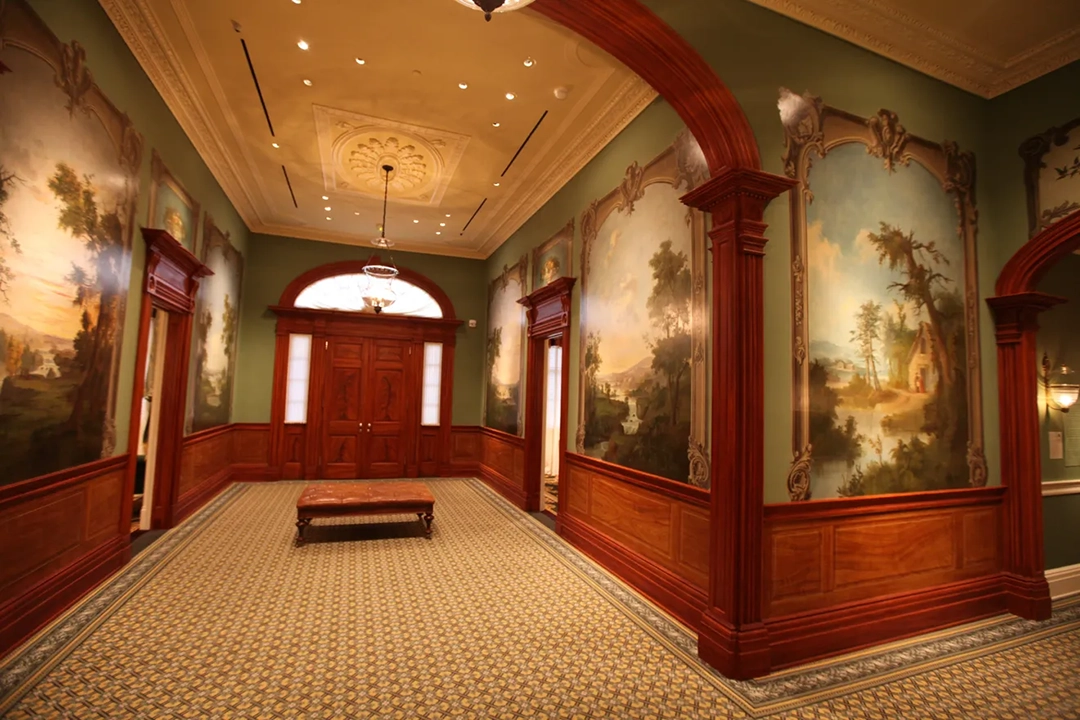
Murals by Robert S. Duncanson.
Image courtesy of the Cincinnati History Instagram account (@thisdayincincinnati).
The Taft Museum of Art in Cincinnati houses one of the most significant collections of domestic art—objects conceived for the space of the home—from the period preceding the American Civil War. It is located in the historic Baum-Longworth-Taft House, a Federal-style mansion built around 1820 for Martin Baum. The patron Nicholas Longworth acquired it in 1829 and transformed it into his residence under the name Belmont. In 1850, he commissioned Robert S. Duncanson to create eight landscape murals for the main hall. With this work, Duncanson established himself as the first African American artist to achieve international recognition. The works commissioned for the walls of this property now constitute the museum’s core identity and operate as an anchoring point for its programming.
The exhibition Beyond the Picturesque. The American Landscape as a Site of Memory, Identity, and Continuity presents seven works by Ayana Ross and will remain on view through July 26, 2026. Ross appropriates the classical American landscape and deploys it as an ornamental motif within her compositions. Against this backdrop, she inscribes contemporary narratives of survival and belonging before the viewer’s gaze.
The residency program imposes a strict schedule of community engagement across schools and youth centers in the city. The administrative apparatus translates Ross’s pedagogical labor into measurable indicators of social impact. Through this mechanism, the institution renews its cultural relevance and secures philanthropic funding by incorporating historically excluded subjects into a classical aesthetic that preserves intact the foundational values of the United States.
Beyond the Picturesque may stand as the most recent case study in the symbiosis between institution and artist. Its success rests on both the technical rigor of Ross’s oils and the museum’s capacity to absorb the artist’s identity into its own narrative. In bringing these elements into alignment, the Taft Museum expands its visual repertoire and secures the continuity of its role as an arbiter of regional culture, mediating between the weight of the past and the reverberations of the present.
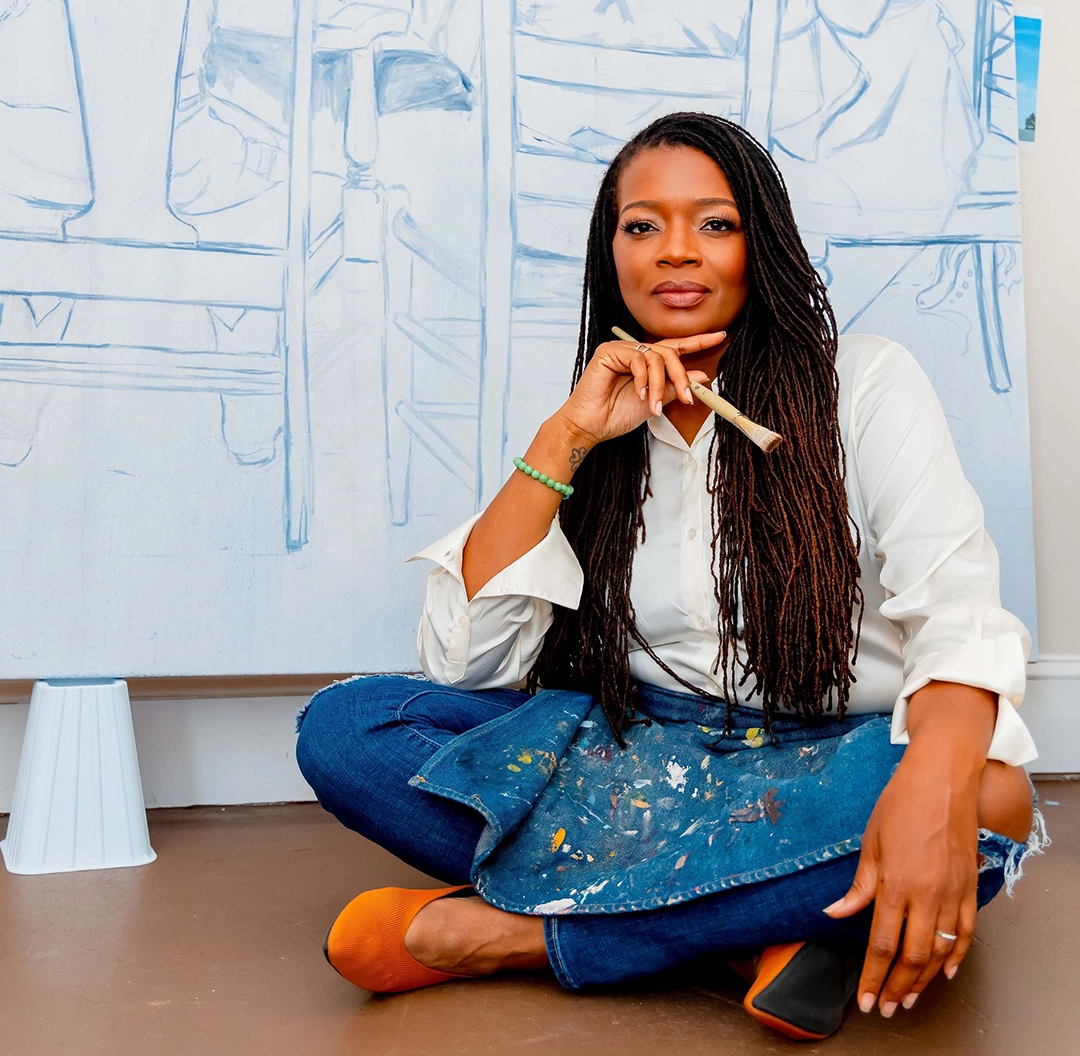
Ayana Ross. Photo: Carol Rose, Colurwrk Photography
Beyond the Picturesque: The American Landscape as a Site of Memory, Identity, and Continuity presents seven figurative paintings by Ayana Ross as the 40th Duncanson Artist-in-Residence. The exhibition opened on April 11 and will remain on view through July 26, 2026, from Tuesday to Sunday, 10:00 a.m. to 5:00 p.m., with free admission available on Mondays. This edition marks four decades of the country’s longest-running residency program dedicated to Black artists, set within a National Historic Landmark. Details on programming and registration for opening events are available at
Beyond the Picturesque
The American Landscape as a Site of Memory, Identity, and Continuity
April 11–July 26, 2026 | Sinton Gallery and Duncanson Foyer
More info at
Taft Museum of Art Celebrates Artist Ayana Ross in Milestone Year











Comments powered by Talkyard.