 Go to English Version
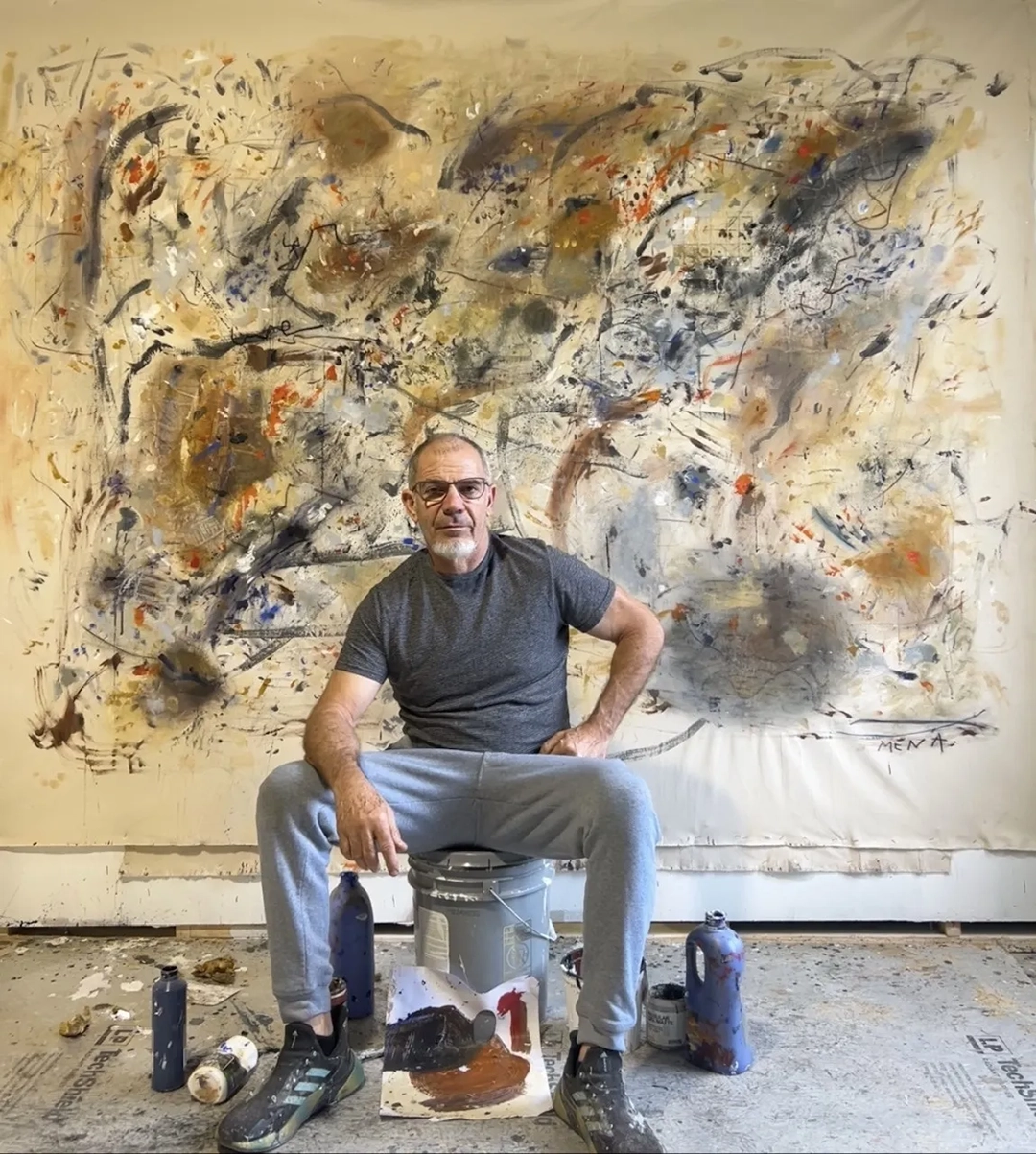
Rigoberto Mena is an artist with a solid career spanning more than three decades. I consider him the most important Cuban abstract artist working today, and I am not willing, in the presence of such a figure, to write a definitive text without having this exhibition before me. Above all because this is not just another show. Here, as in a previous one held in North Carolina, something has shifted in ways that matter.
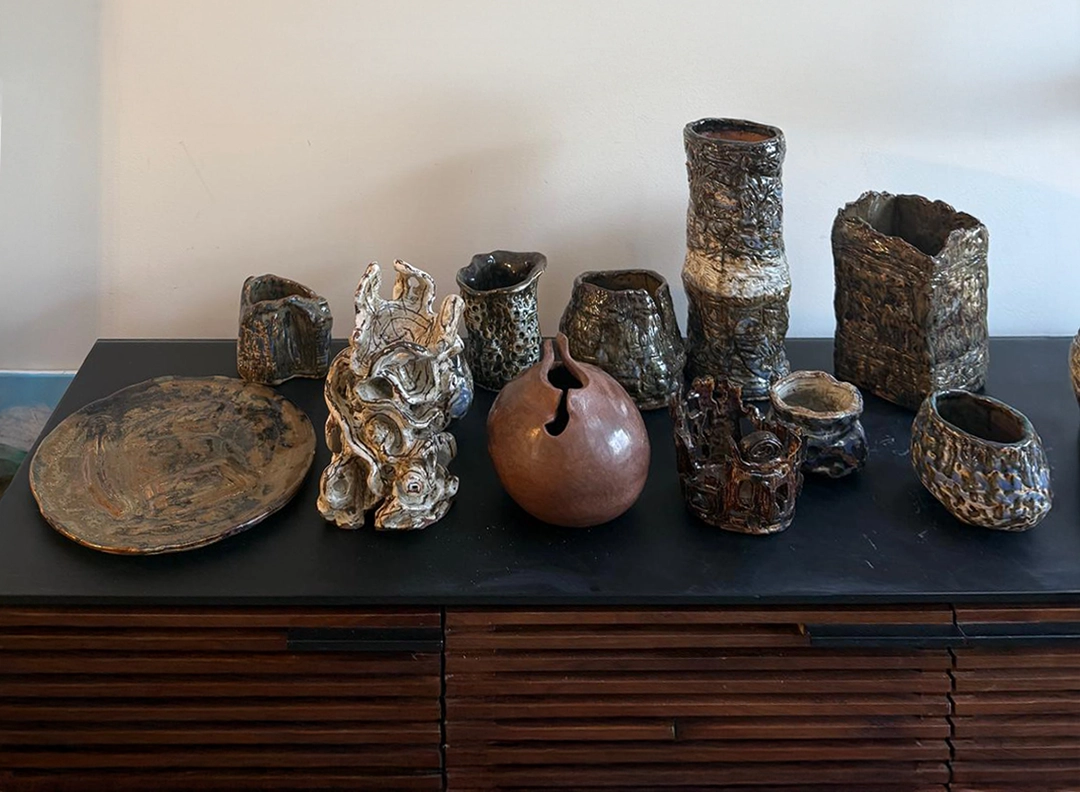
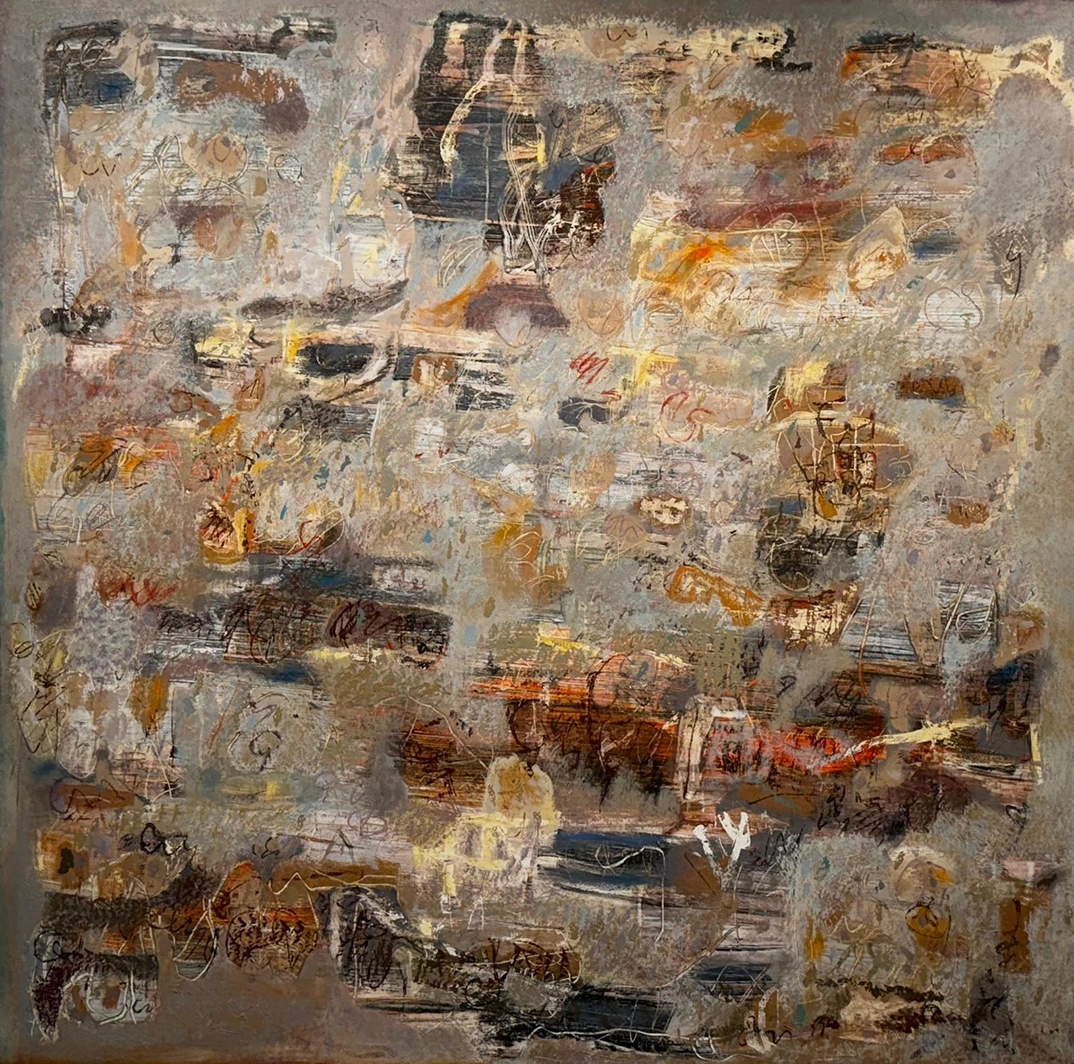
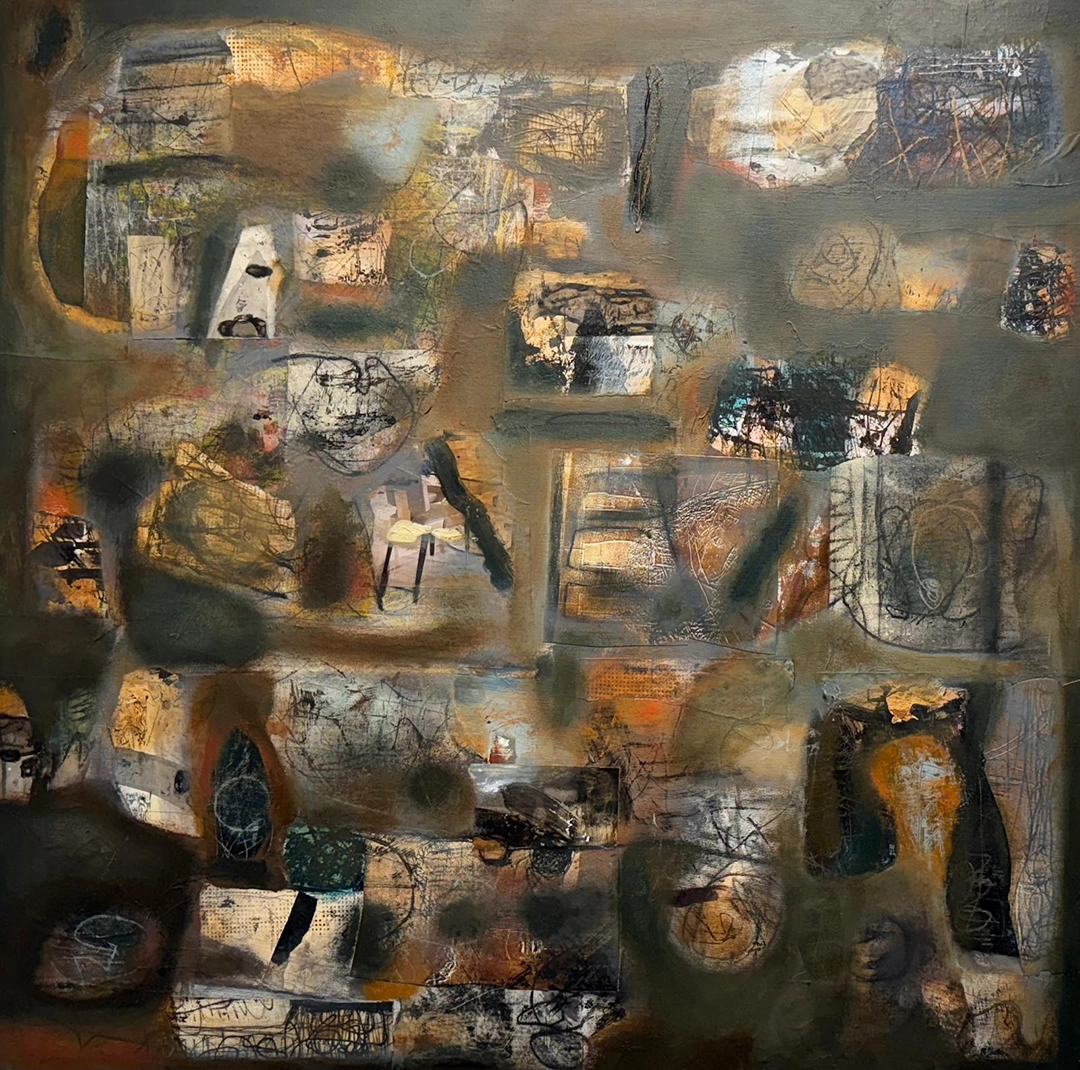
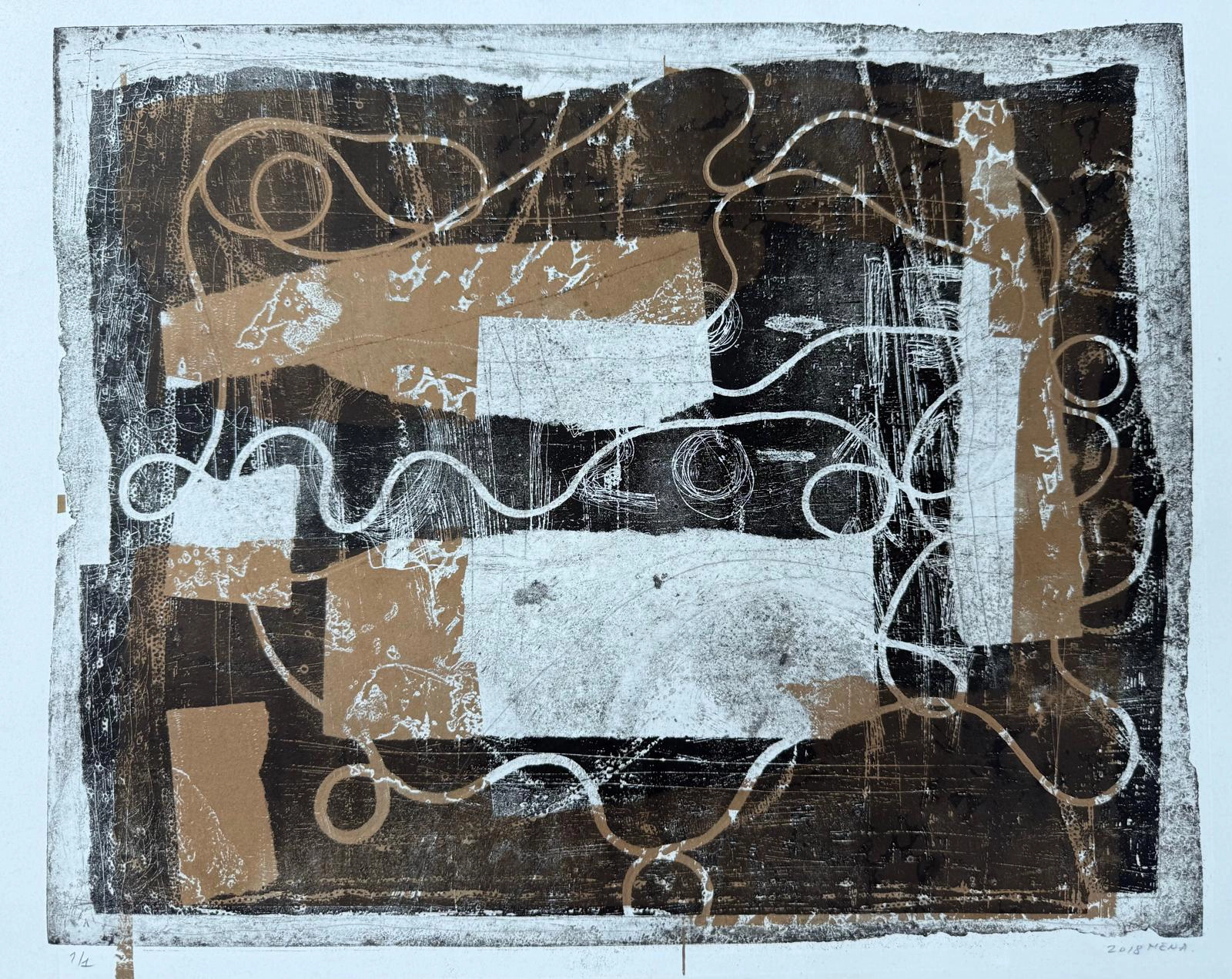
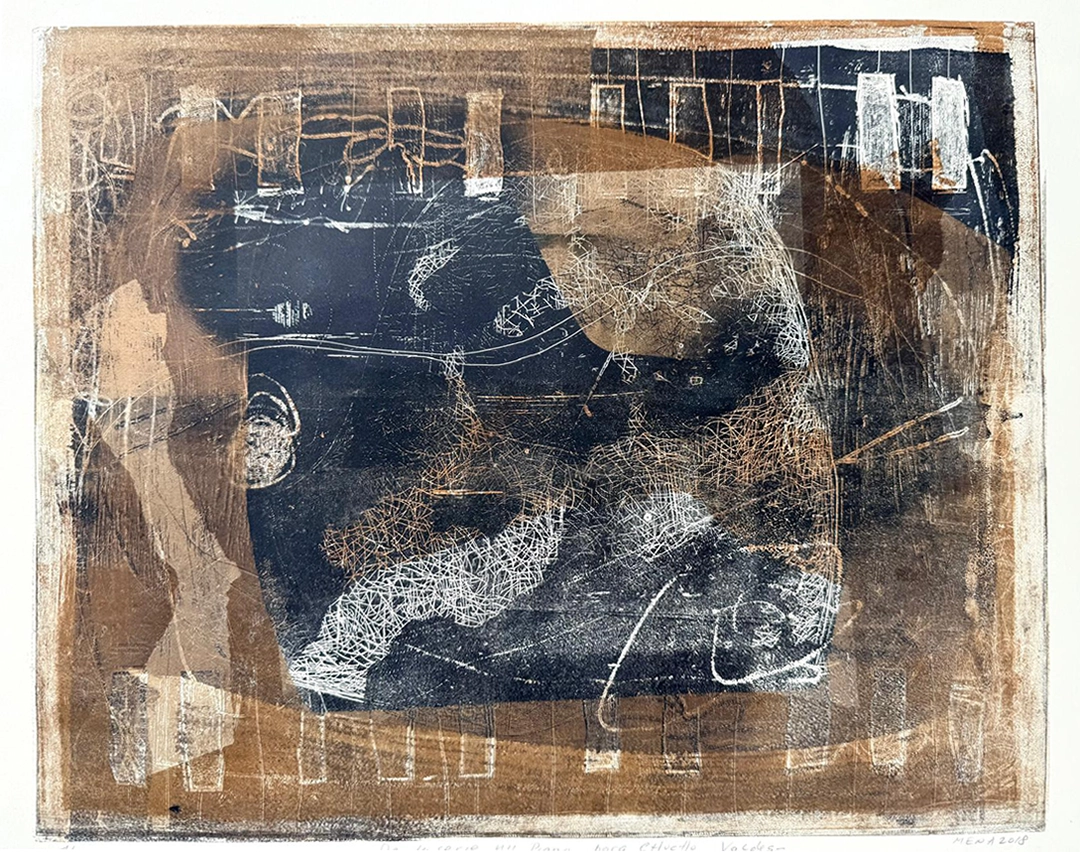
There are artists who do not fit within a single medium. They spill over into others, carrying with them a forceful style, a voice that remains unmistakably their own. In Fire and Gesture, Rigoberto Mena brings together painting, printmaking, and ceramics — including original intervened plates — without establishing hierarchies among them. A tension runs through the entire exhibition, one that holds together speed and delay, impulse and restraint. His gesture is also a form of thought. A vital statement, in the fullest sense.
In painting, Mena works from immediacy. Acrylic dries fast, and this allows him to “stain several canvases at once,” multiplying decisions, chaining impulses. Surfaces accumulate layers, rhythms, insistences. It is expanded control. He repeats and covers again, erases; above all, he insists, returning to the canvas as if he only had a few hours to bring it to completion.
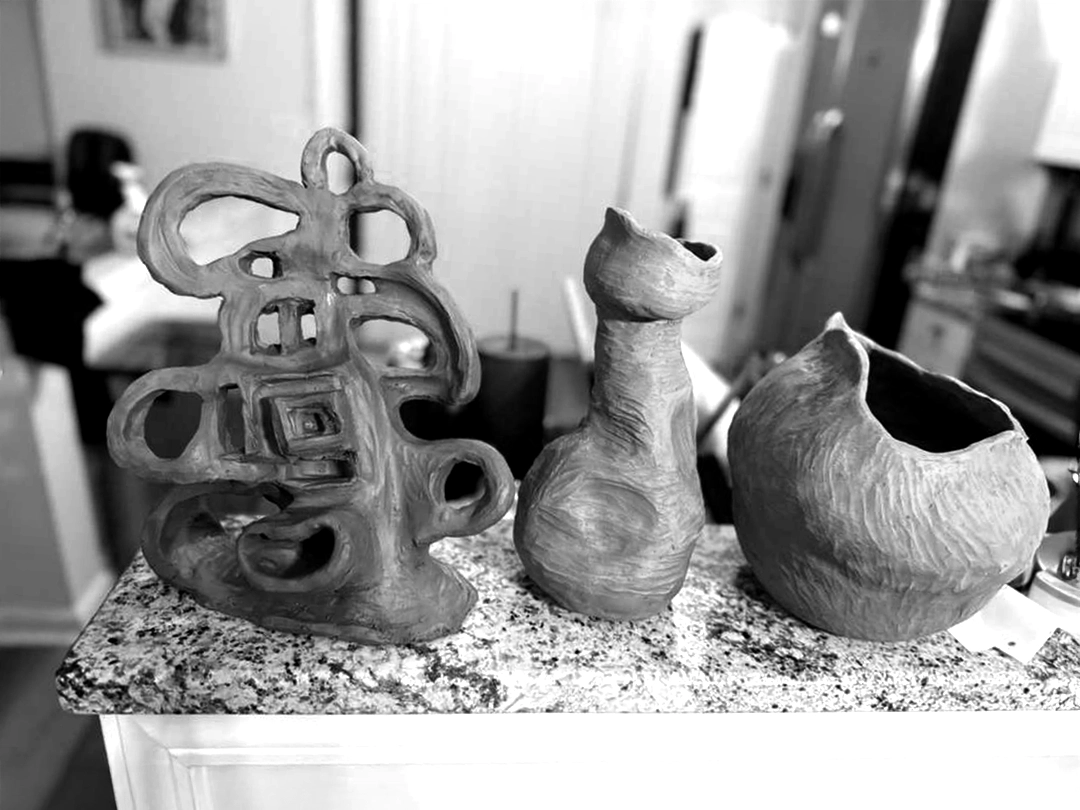
Ceramics — and this is where something genuinely new emerges — demands something else from him. “Every interval matters,” he says, “the time of rest, when doing nothing takes on weight.” Clay follows its own temporality, and working it requires an almost monastic concentration. Learning the technique is, in part, learning how to wait. One learns from clay what one learns from the passage of years: to tolerate uncertainty, to let go of the illusion that the outcome depends entirely on attention and effort. Mena understands that life unfolds according to dynamics that remain ultimately unknowable.
For me, these explorations form one of the most fertile cores of the exhibition: the negotiation with the material. “There are limits,” Mena admits. “Then, with color, oxides, mixtures, the fire — things will happen.” When he speaks of the “magical,” he does not mean the inexplicable, but rather what slips beyond his control. Clay carries a peculiar kind of memory; it resists, it warps, it forces redesign in the very act of making. The artist decides up to a point. Beyond that, another logic takes over — one he only partially commands.
This openness to accident deepens in the Oxidation series, where color is not applied so much as it is produced: chemical reactions that verge on the jubilant, processes activated by fire, unfolding according to their own internal logic. Fire transforms. And within that transformation, several of the essential conditions of the process are inscribed.
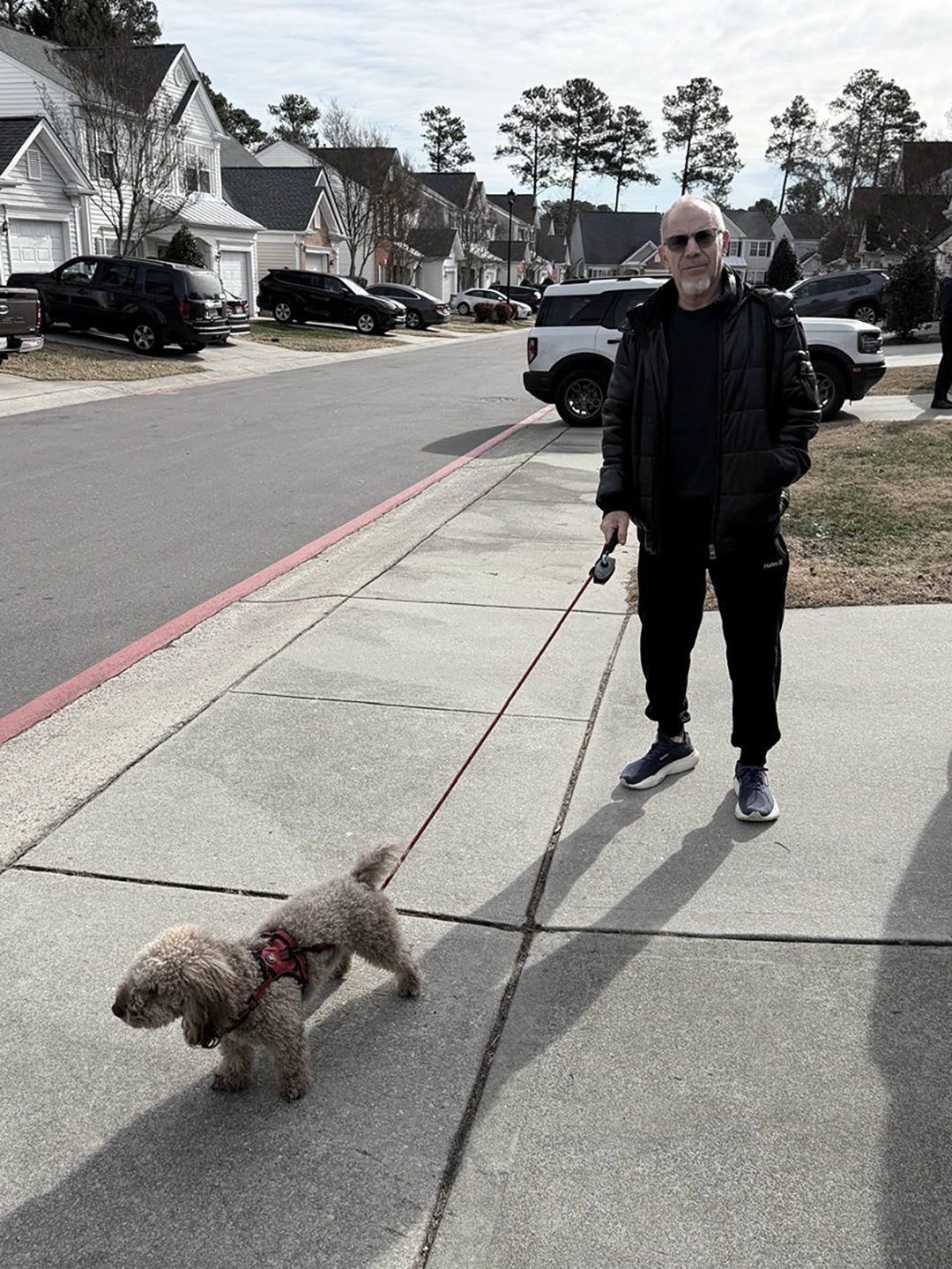
Geographic displacement runs through the work without ever becoming its subject. This must be said because abstraction speaks in a very low voice. Now based in North Carolina, in what is known as the Research Triangle, Mena moves within an environment of calm — expanses of green, sharply marked seasons. The muted greens and cold air grant him more time to think. Distance neither erases nor heals, nor does it grant oblivion. He stands 1,454 kilometers from Havana, and still sees its walls licked by sadness. Migration leaves layers, not clean breaks. The work flows, but it carries with it a residue of uncertain atmospheres.
There, ceramics takes on a particular weight. North Carolina holds one of the most solid ceramic traditions in the United States — with centers such as Seagrove — where it coexists naturally alongside painting and sculpture. Mena arrives from a prior experience in Miami, where he had already intervened plates, yet he decides to go further. He begins to model, to build volume, to inhabit form. A brief course was enough to lead him to place his hands in clay and activate, through tactile experience, a process that has not stopped since.
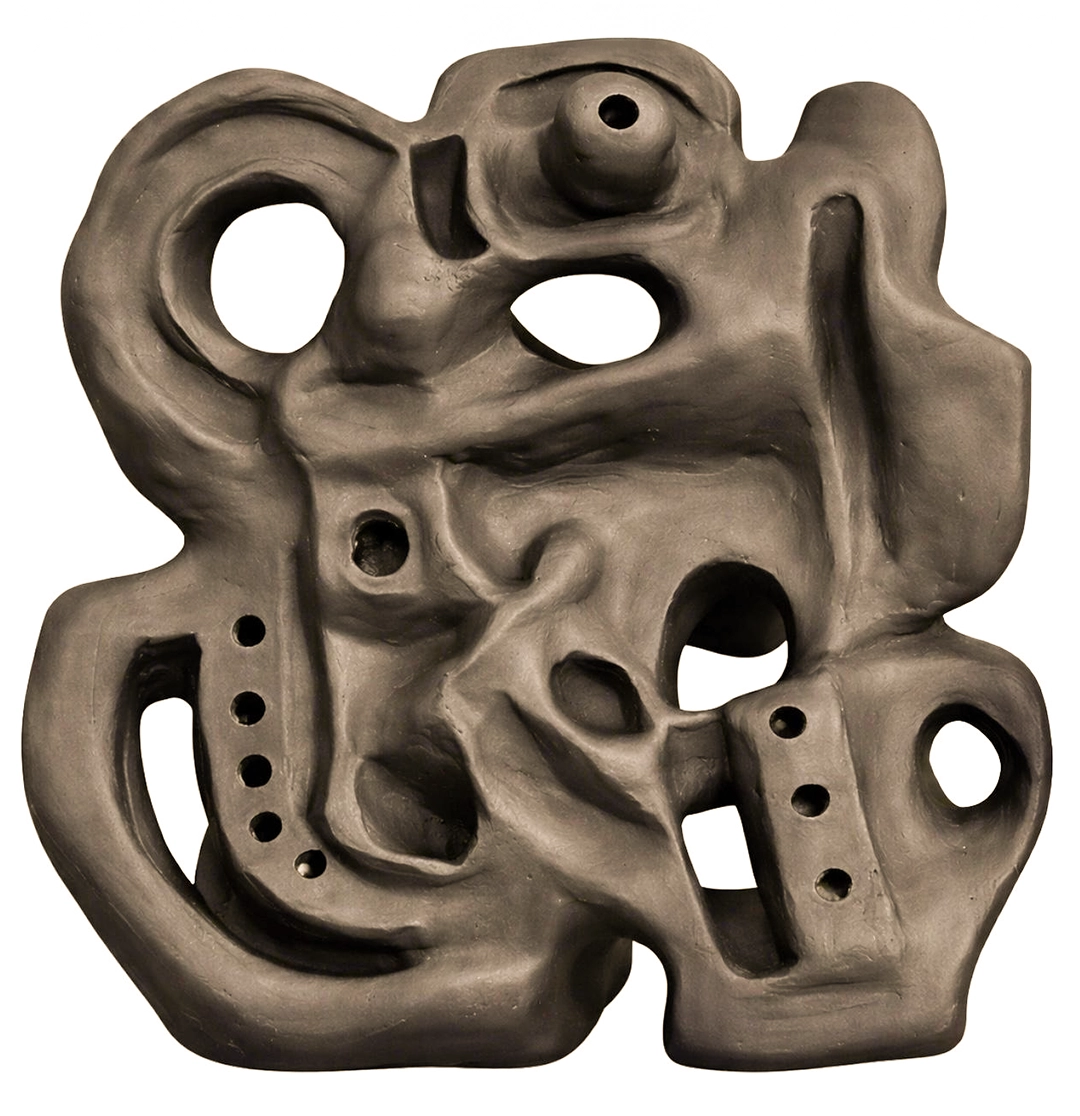
There is in his words an almost bodily dimension of thought: “I like to touch the earth, to feel that ancestral connection… I feel like a child playing with Play-Doh.” And I take pleasure in that pleasure. From this return to the elemental — kneading, pressing, turning — a form of knowledge emerges that circulates through the body before it reaches language. He uses clay as a “lightning rod”: it absorbs the discharges of the anima, regulates them, concentrates them, gives them form. At moments, this practice approaches meditation.
Fire and Gesture proposes a coexistence grounded in respect. Painting and ceramics do not explain one another; they seem to glance sideways, to endure each other. One accelerates what the other slows. One multiplies decisions; the other demands renunciation. Between them, creation becomes a field of forces: time, matter, memory, fire.
Every form is the result of a negotiation between what the artist seeks to do and what the material allows, between impulse and waiting, between the place one inhabits and the one one carries within.
Short bio (courtesy of Ella West Gallery)
Mena utilizes color and gesture to give immense feeling in more abstract pieces calling to human emotion. The interactions of people that create unexplainable feelings, in turn, create abstract works that can be fully understood. That is what his titles comment on. "The public often asks about the title of my work or what the work means and I always say that it's not descriptive, that I work with emotions. You may start with an idea, but it is impossible to express abstract things that people can fully understand. I'm talking about the realm of inner emotions rather than the field of rationality." He goes on to say abstraction has its own language.
In 2011 Mena was selected to be part of the collection of the Museo Nacional de Bellas Artes de Cuba, after the inauguration of his exhibition "Hablando en Lenguas". His artwork is also shown in the collection of the Museum of Latin American Art, Los Angeles (MOLAA), USA, Consejo Nacional de las Artes Plásticas, La Habana, Cuba, and Centro de Arte Contemporáneo Wifredo Lam, La Habana, Cuba.
Rigoberto Mena (Artemisa, Cuba, 1961) was born in Artemisa, Cuba in 1961. Through the eyes of an abstract expressionist, he draws inspiration from his home's urban landscapes and the spirit of the people and the city.







Comments powered by Talkyard.