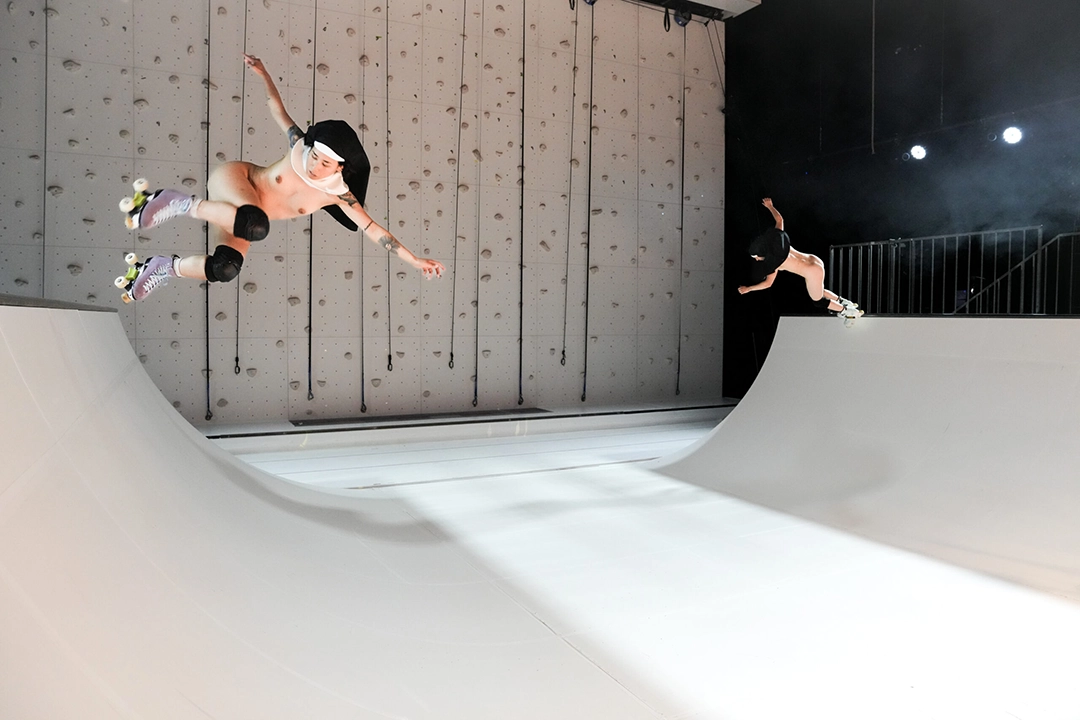
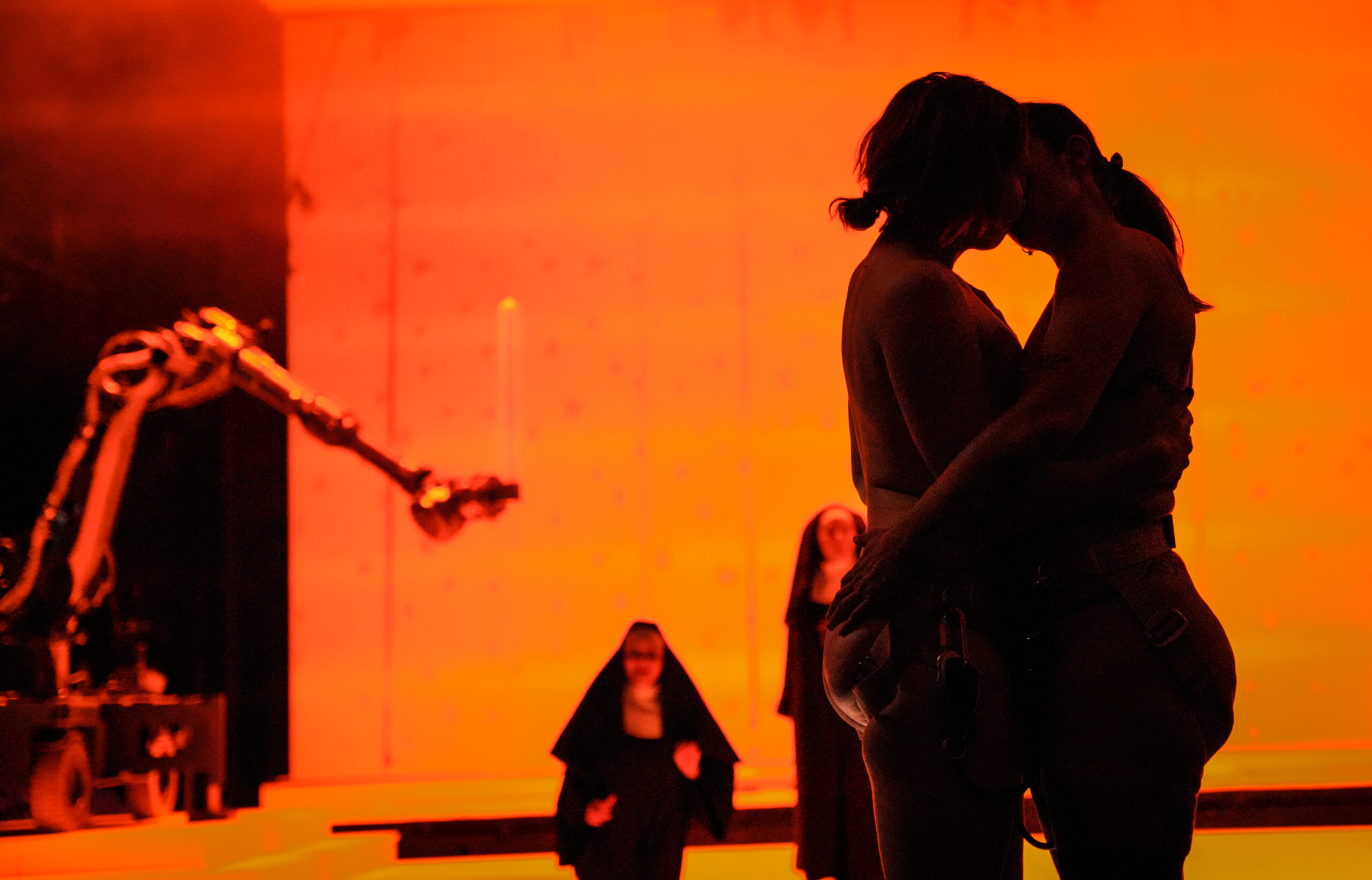
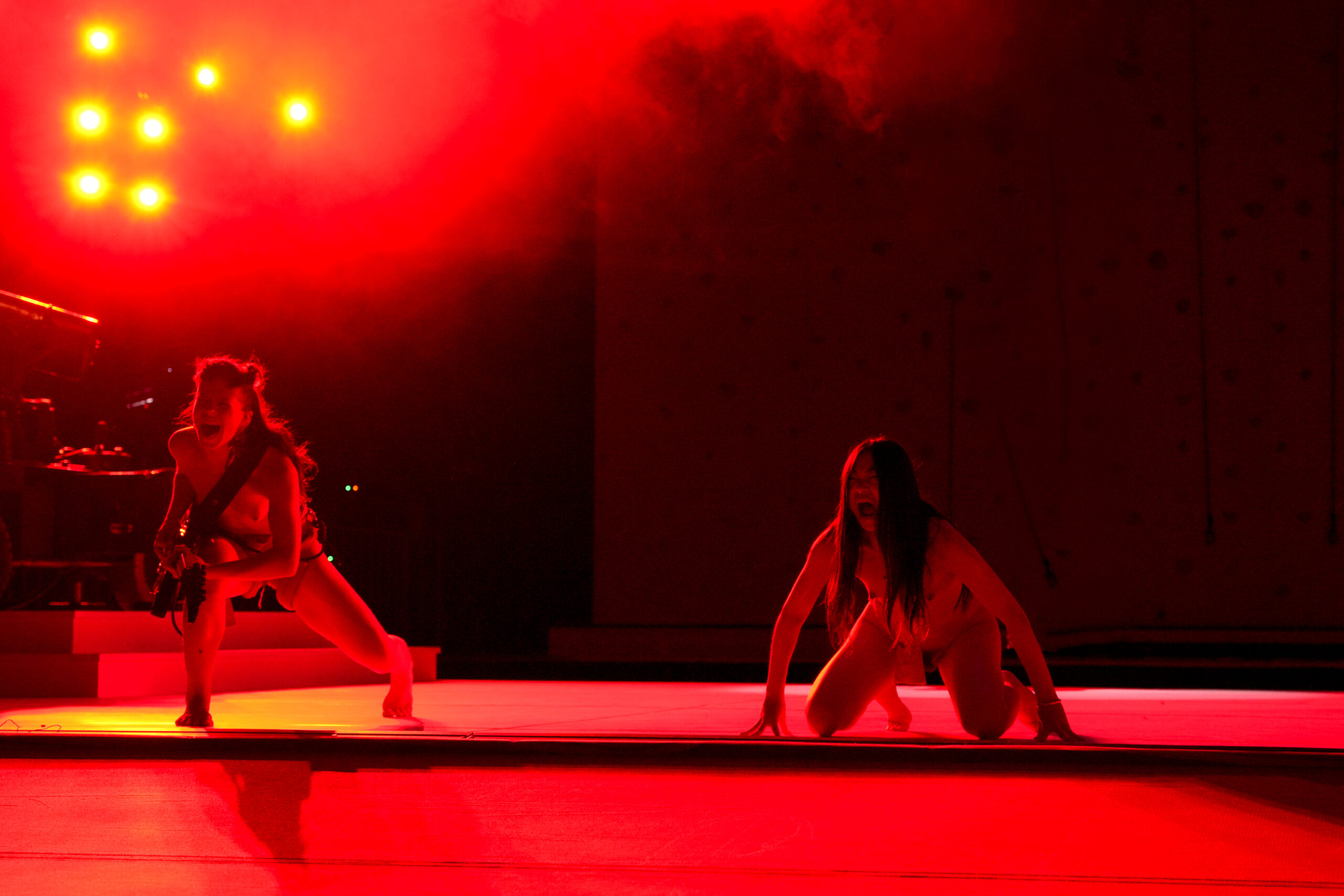
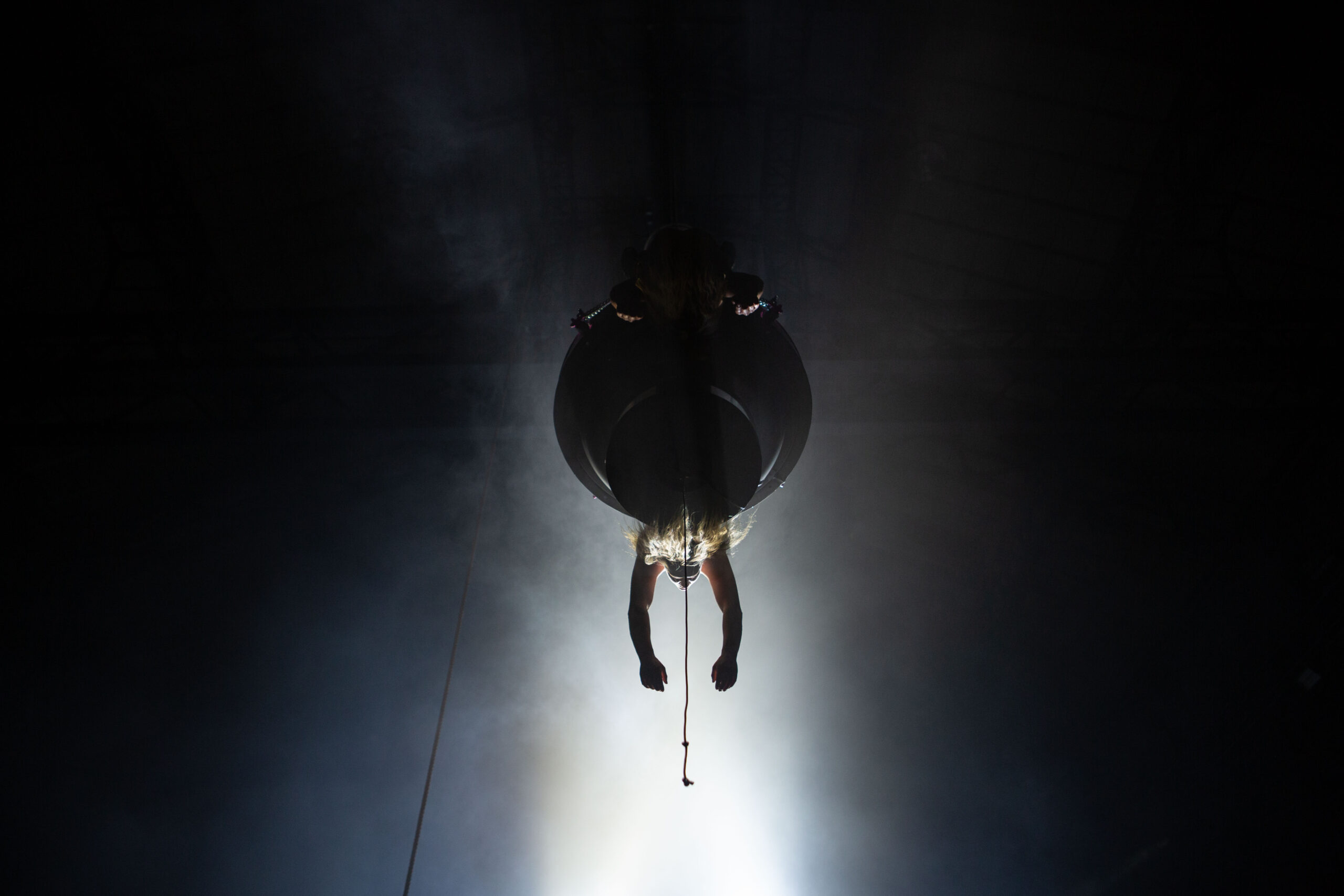
SANCTA by Florentina Holzinger. 'This is about the female libido breaking out'. In the photo Sara Lancerio and Netti Nueganen. Photograph: Nicole Marianna Wytyczak
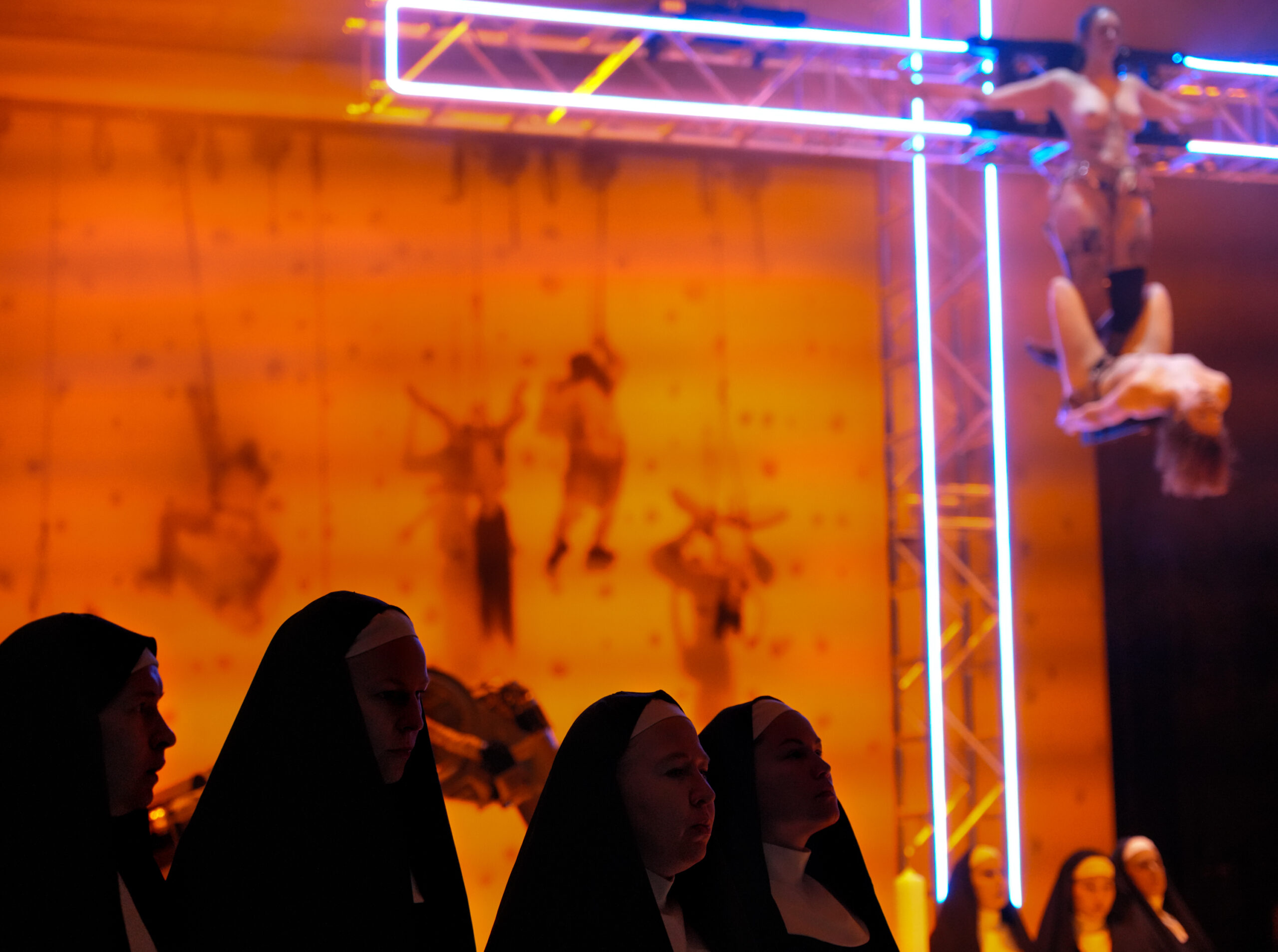
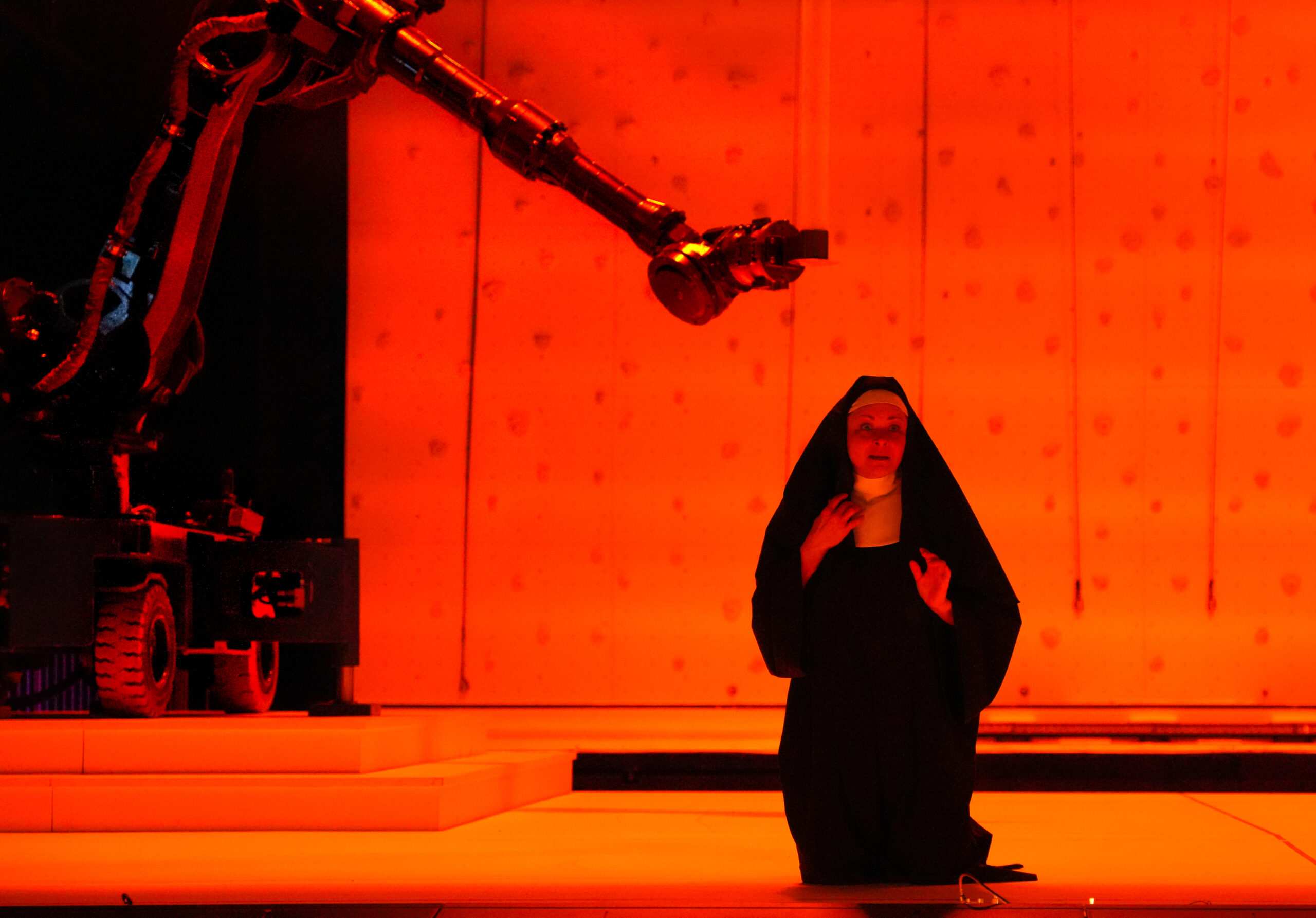
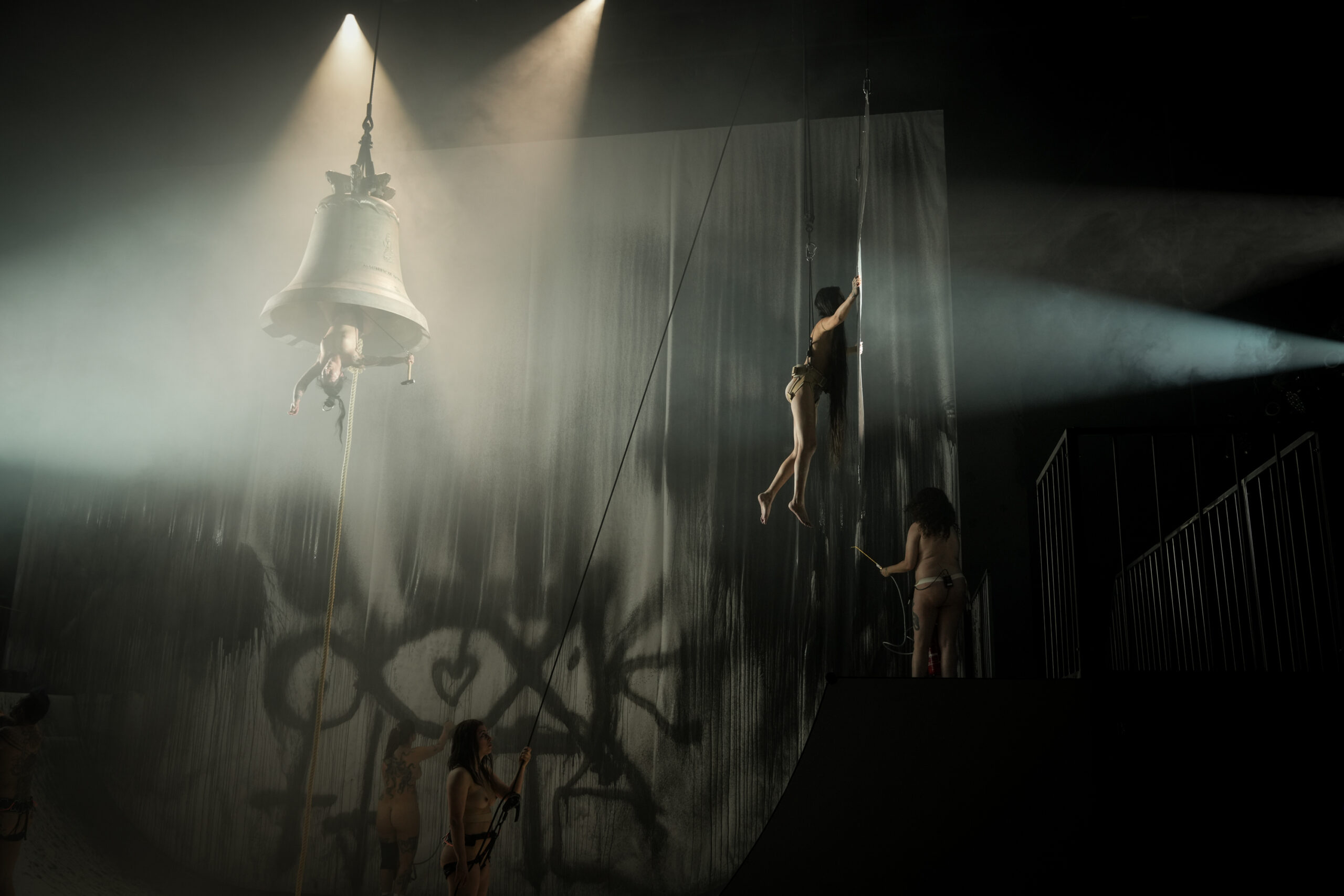
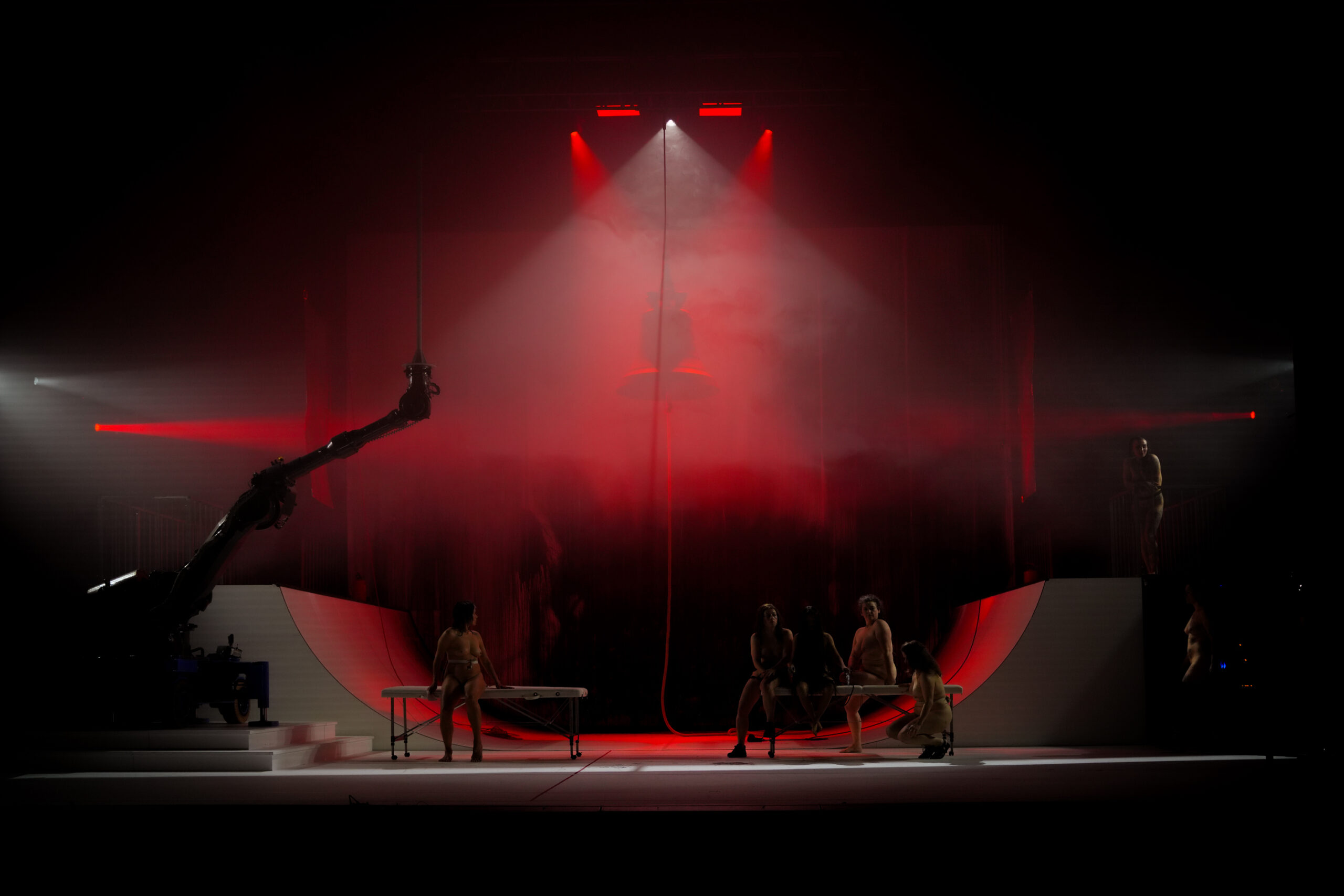
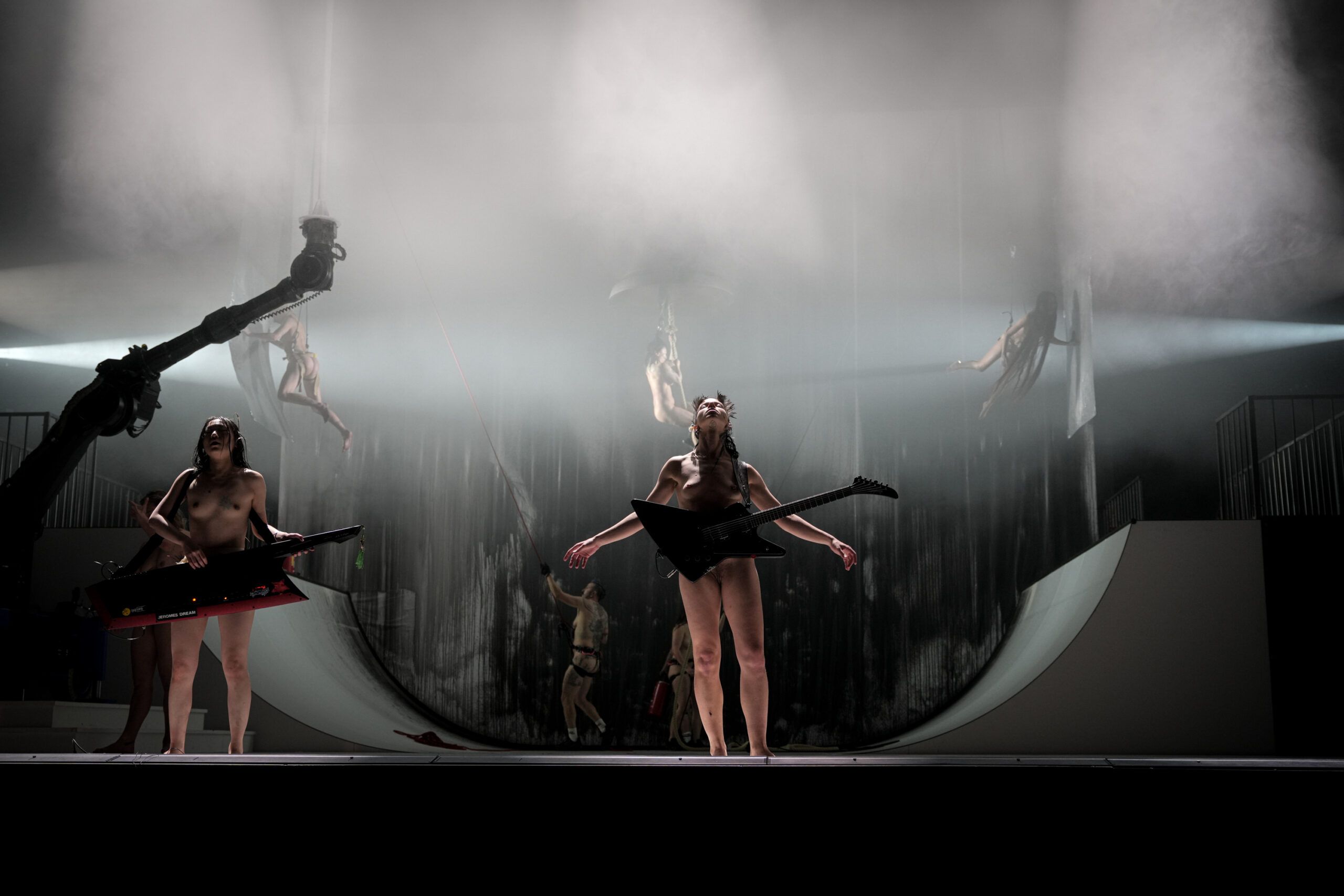
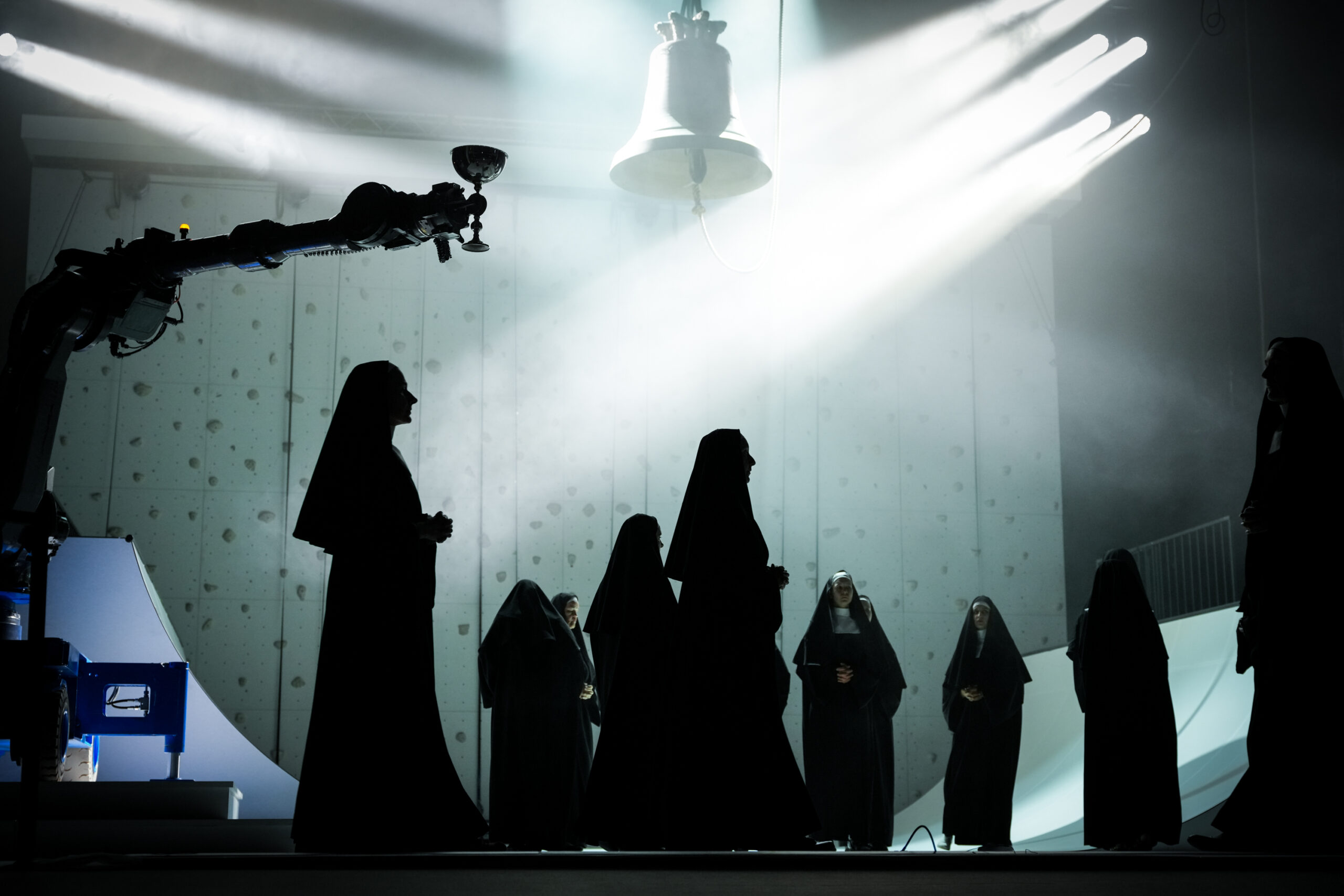
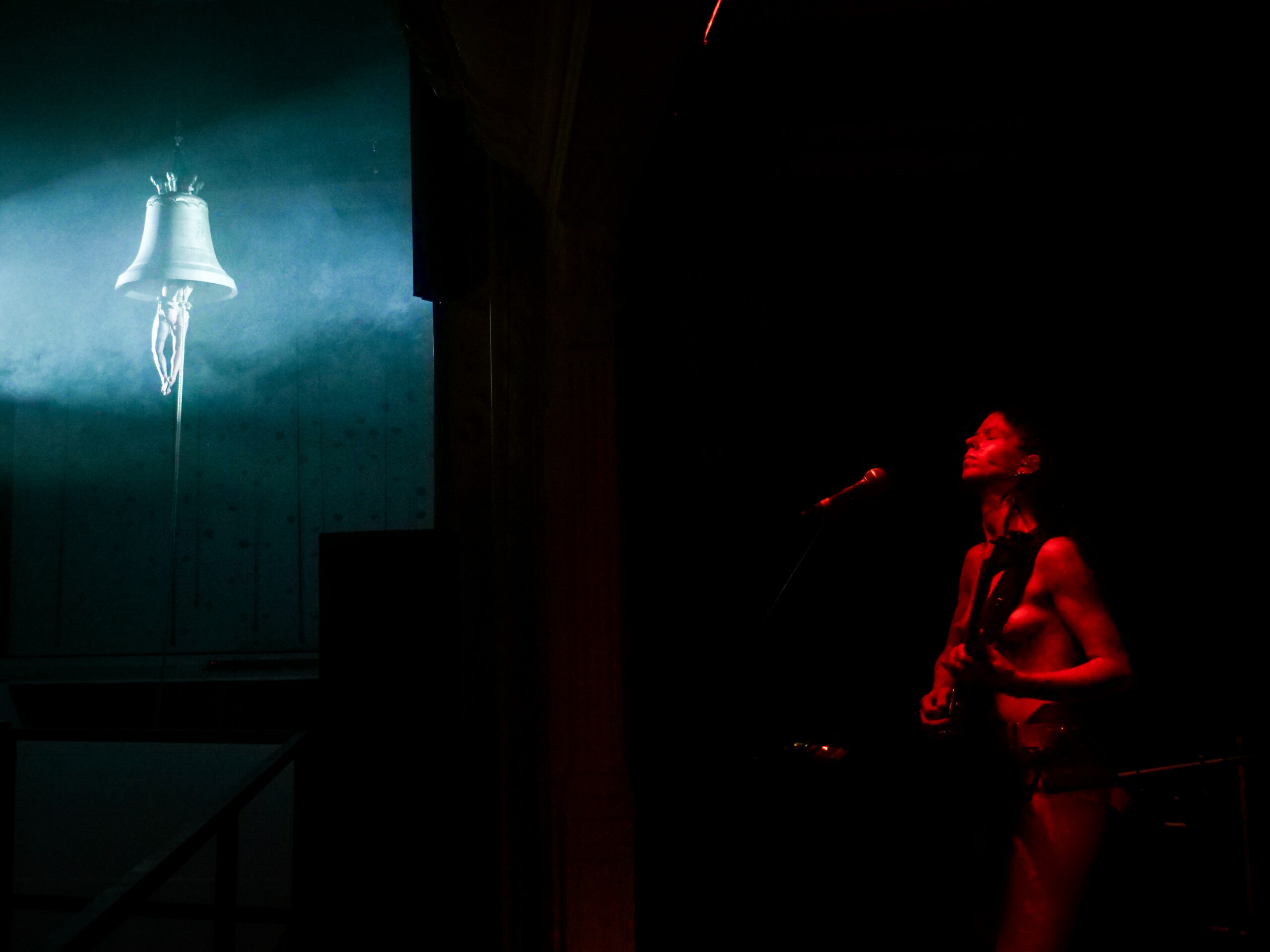
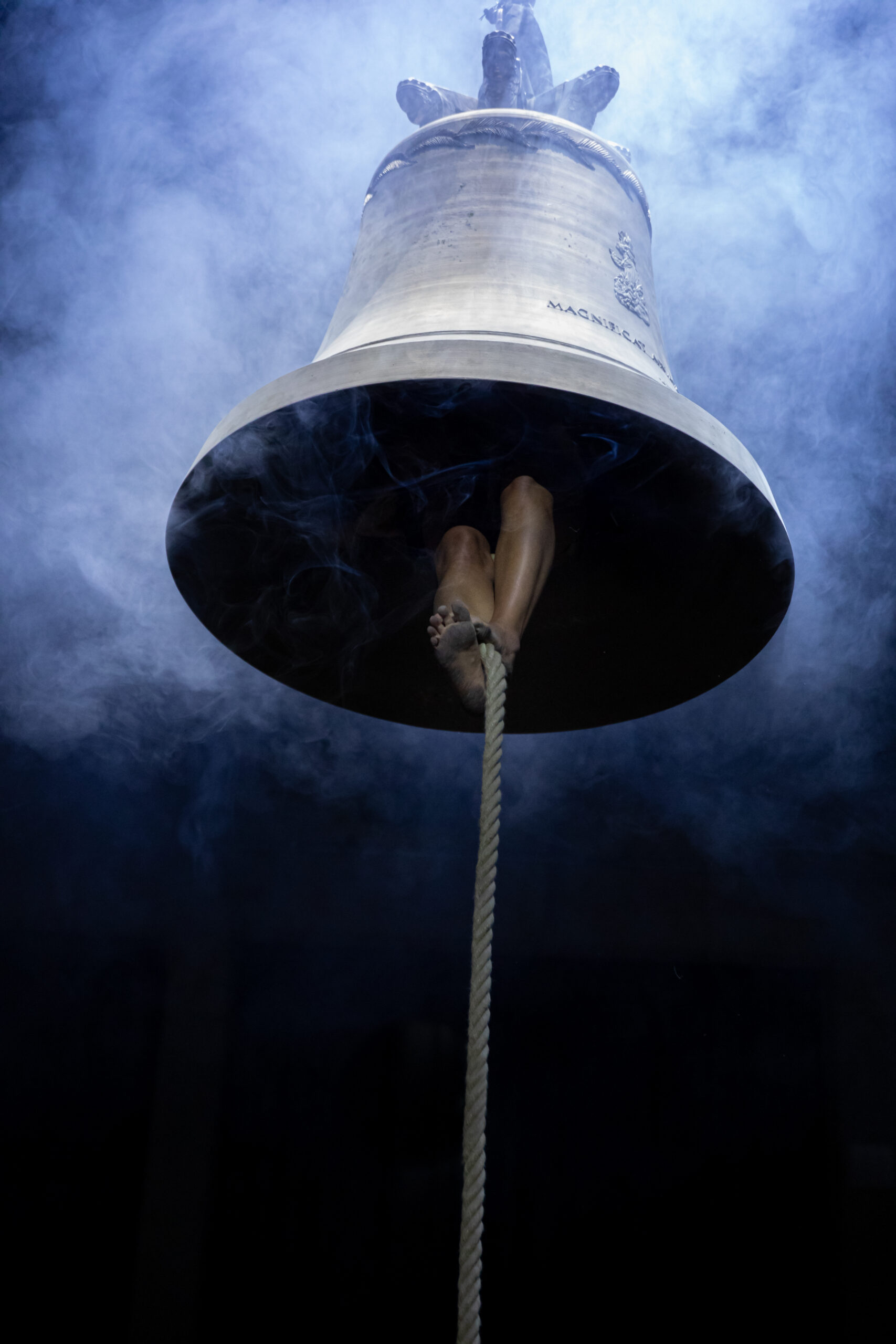
I had the opportunity to read, in the latest issue of The Critic, an article on Sancta, the most recent work by Austrian choreographer and director Florentina Holzinger, one of the most radical figures in the contemporary European scene. It takes as its point of departure Sancta Susanna (1921–22) by Paul Hindemith—already scandalous in its time—and expands it into a hybrid scene somewhere between opera, performance, concert, and a ritual of quasi-satanic affiliation.
It becomes clear, from the photographs alone—since I have neither seen it nor intend to—that this is a belated provocation directed at the Church as a structure of control over the body and its desire. It seems so to me because this critique not only dates back centuries, but has never ceased to operate.
Holzinger pushes the stage into a territory where the body abandons its representational function and enters into violent exposure. She redefines liturgy and manipulates the symbol so that everything that has always been repressed—the brutality of desire, the violence of famished pleasure—erupts without qualification in a performance executed with such literalness that it cancels any margin for interpretation. The aim, we are told, is to expose the extent to which certain structures persist precisely because they are not directly confronted.
It is undeniable that Western culture finds nuns fascinating. Something in their appearance compels us to avert our gaze prematurely. We sense that the habit does not cool the body. It turns it, rather, into an insoluble question. A sealed tin of sardines without a key.
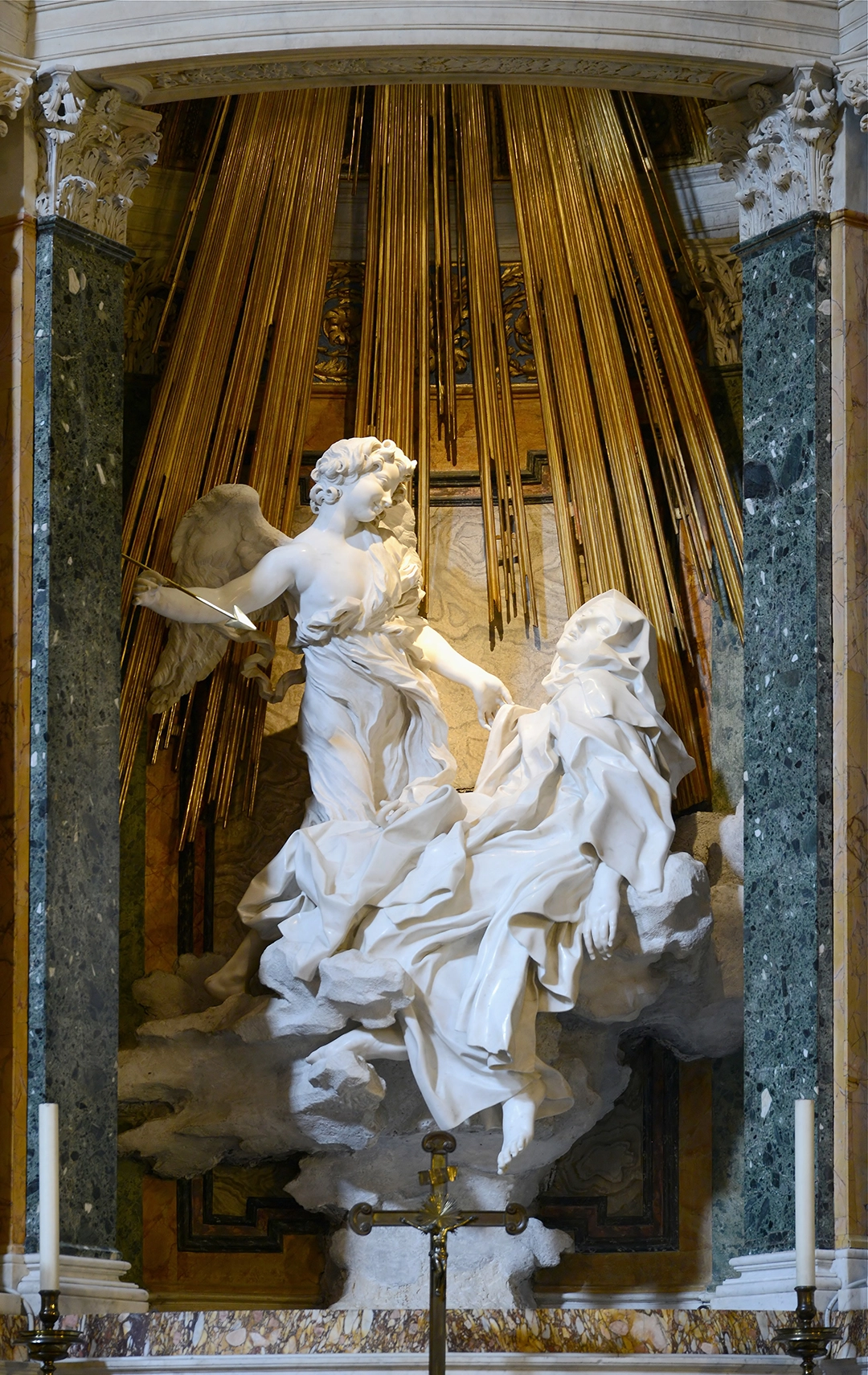
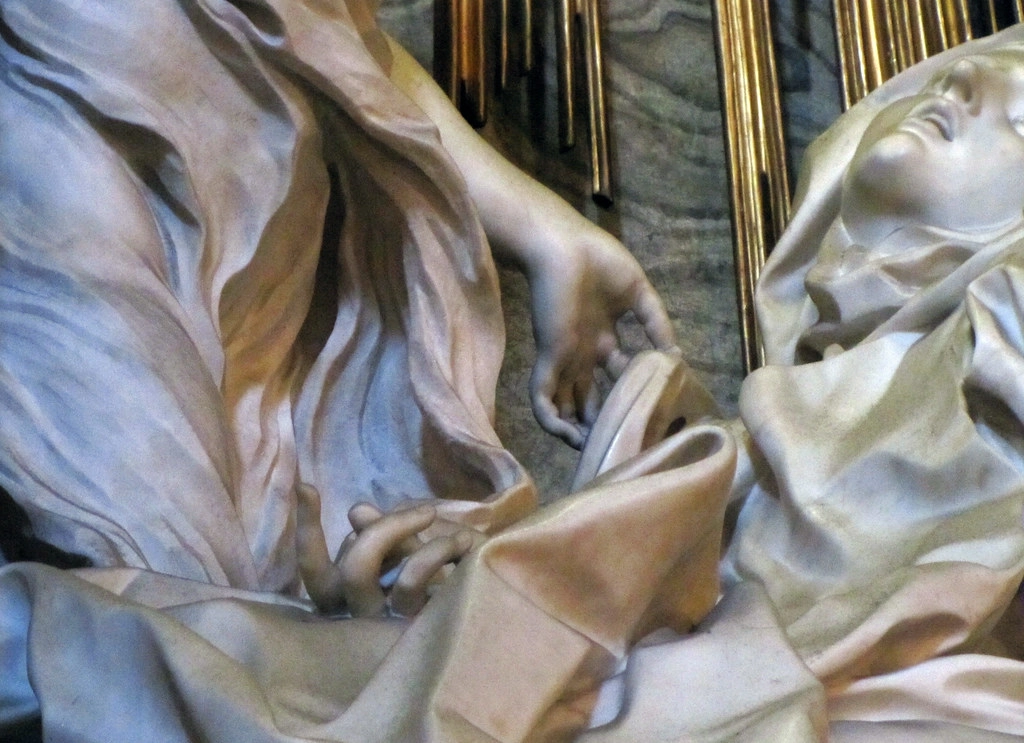
The Ecstasy of Saint Teresa, also known as The Transverberation of Saint Teresa (Italian: L’Estasi di Santa Teresa, Santa Teresa in estasi, or Transverberazione di Santa Teresa), is a marble sculptural group by the Baroque sculptor and painter Gian Lorenzo Bernini. Executed between 1647 and 1652 at the behest of Cardinal Cornaro, it was conceived for the site of his funerary monument in the Santa Maria della Vittoria, Rome, where it remains today, within the so-called Cornaro Chapel.
Santa Maria della Vittoria, a seventeenth-century basilica erected to commemorate Emperor Ferdinand II’s victory at the Battle of White Mountain, houses what is widely regarded as one of the supreme masterpieces of the Roman High Baroque. Wiki
Bernini understood this perfectly. In The Ecstasy of Saint Teresa, the body seems to boil and perspire beneath a heavy mantle. One intuits a body vandalized by successive waves of erotic energy. The saint yields, abandons herself. Pain has often been read into her gesture. I am incapable of perceiving it, for Teresa appears to inhabit another register entirely. Her mouth slightly parted, her head thrown back—if this is religious ecstasy, it is astonishing that the world is not overrun with nuns.
The Church, however, counterattacks. It insists on reading the scene as a triumph of the spiritual. Yet this insistence reveals more anxiety than conviction. The Baroque was not naïve, and Bernini least of all. He knew exactly where to place intensity so that the viewer would experience something irreducible to the purely spiritual.
This is the most well-trodden path in the history of art. Literature, opera, cinema—all repeat the same operation with varying degrees of modesty. Matthew Lewis had already understood that confining a woman under a vow was enough for desire to find its most insistent forms of emergence. Giovanni Boccaccio and Geoffrey Chaucer required no theoretical apparatus; it sufficed to narrate it.
Opera, however, amplifies the mechanism because it requires conflict. In Robert le diable—a French opera from 1831 composed by Giacomo Meyerbeer—nuns rise from their graves in a choreography no one would dare call devout. In Thaïs, another French opera, a courtesan becomes a saint while the morally upright monk who guides her finds himself ensnared in the very desire he seeks to correct. Habit and body share the stage with no intention of reconciliation.
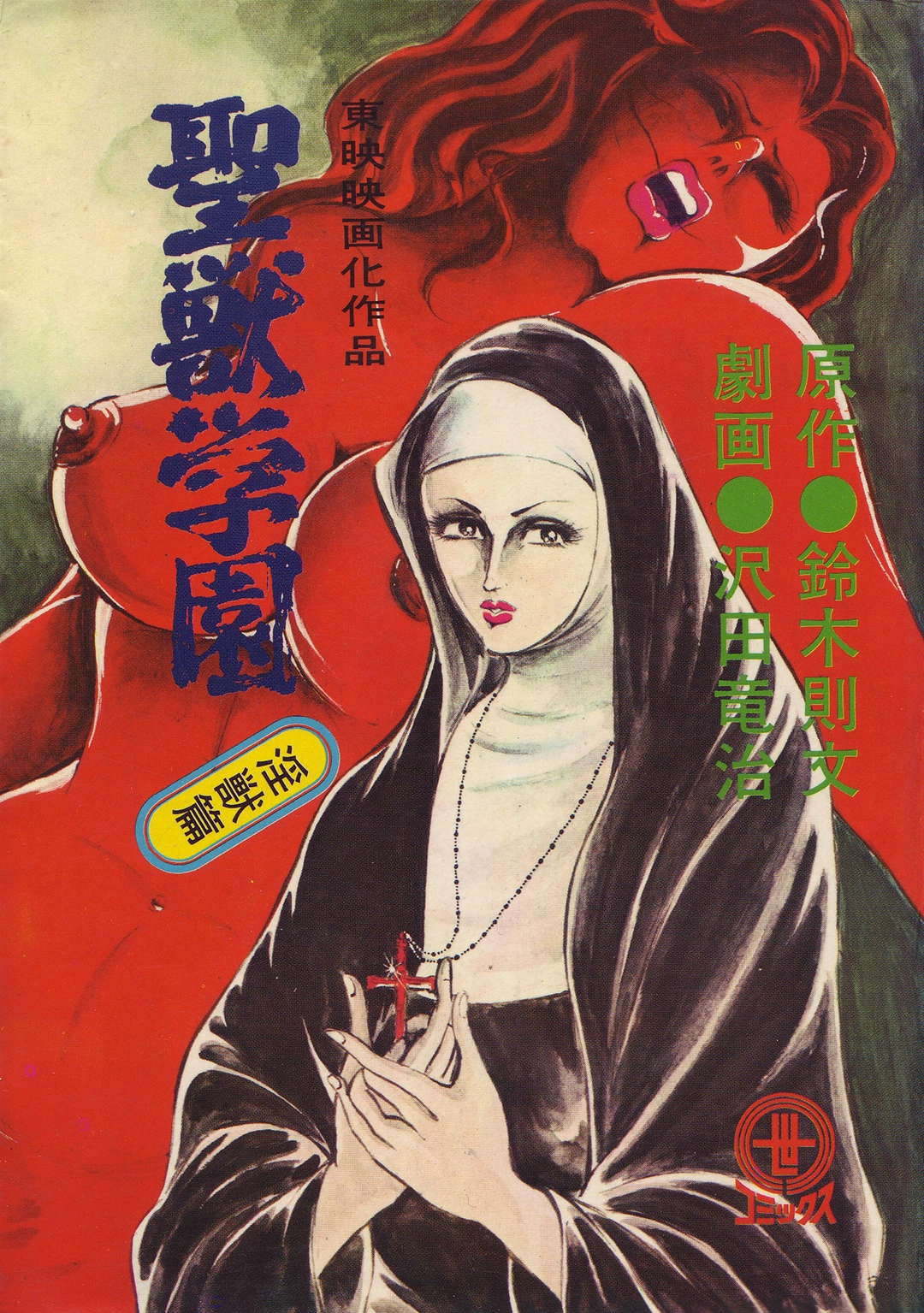
Not many people seem to know that School of the Holy Beast was a multi-media project, with the film being preceded by a manga version. Norifumi Suzuki (鈴木則文) is credited with the text and Ryuuji Sawada (沢田竜治) took care of the artwork. Not easy to track down these days.
The twentieth century eliminates any residual elegance. In films such as The Devils (Ken Russell, United Kingdom, 1971) and School of the Holy Beast (Norifumi Suzuki, Japan, 1974), insinuation is abandoned in order to render explicit the conflicts between power and sexuality, and between repression and excess. Everything is made explicit, almost didactic. The convent functions as a stage upon which repression produces exactly what it seeks to contain.
In both cases, the same pattern is articulated: what varies is not the logic of representation, but the degree of explicitness through which it manifests.
The nun does not disappear as an erotic figure because culture does not know what to do with a body that does not circulate, that does not advance on green, that refuses to step onto the escalator. It irritates, interrupts, generates an expectation that nothing can resolve. Desire requires objects that are, to some extent, available. The habit conceals them, and that withdrawal is the most provocative gesture we can conceive.
At this point, the nun no longer represents purity. She embodies an unresolved tension, one that the entertainment industry recycles with Spartan discipline. She persists as image, as habit, and as cliché. Into the conventual well fall a substantial portion of the darker ruminations of societies where religion retains a quotidian presence. Each era adds its own aesthetic layer; none makes the slightest effort to deactivate her.
In any case, even without seeing them, it is clear that between Sancta and The Ecstasy of Saint Teresa there lies an abyss of noise, entropy, and excess.












Comments powered by Talkyard.