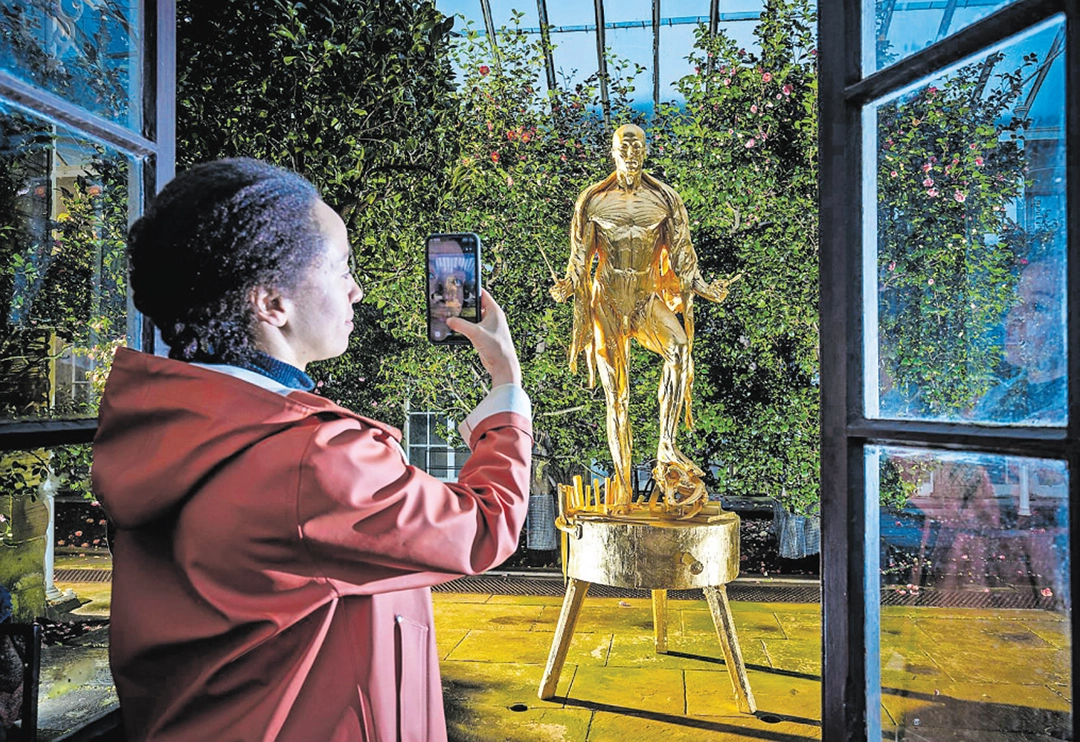
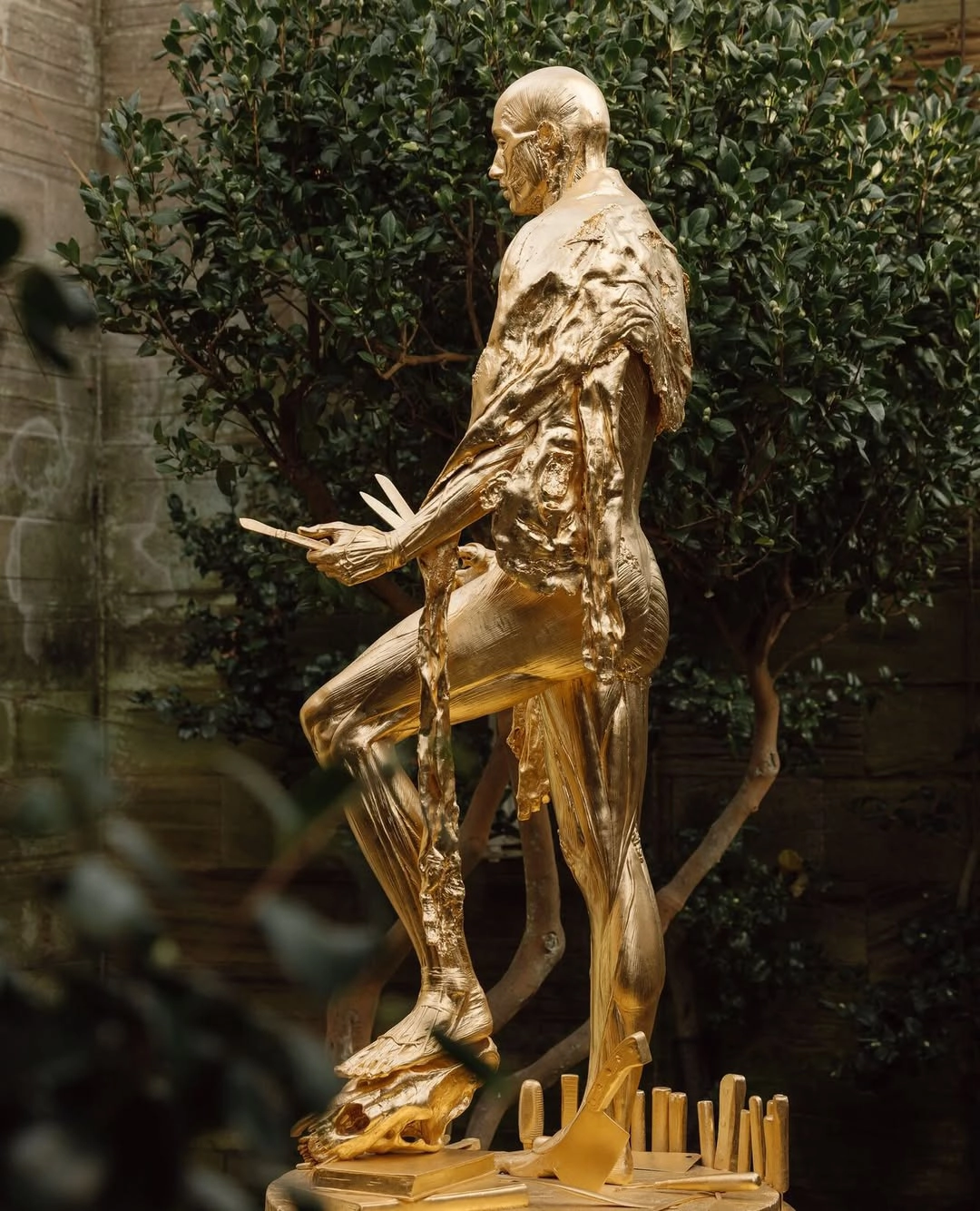
Damien Hirst’s The Martyr – St Bartholomew is one of three new additions to Yorkshire Sculpture Park this year. The apostle was flayed alive. Original caption: The Times. Photograph by James Glossop.
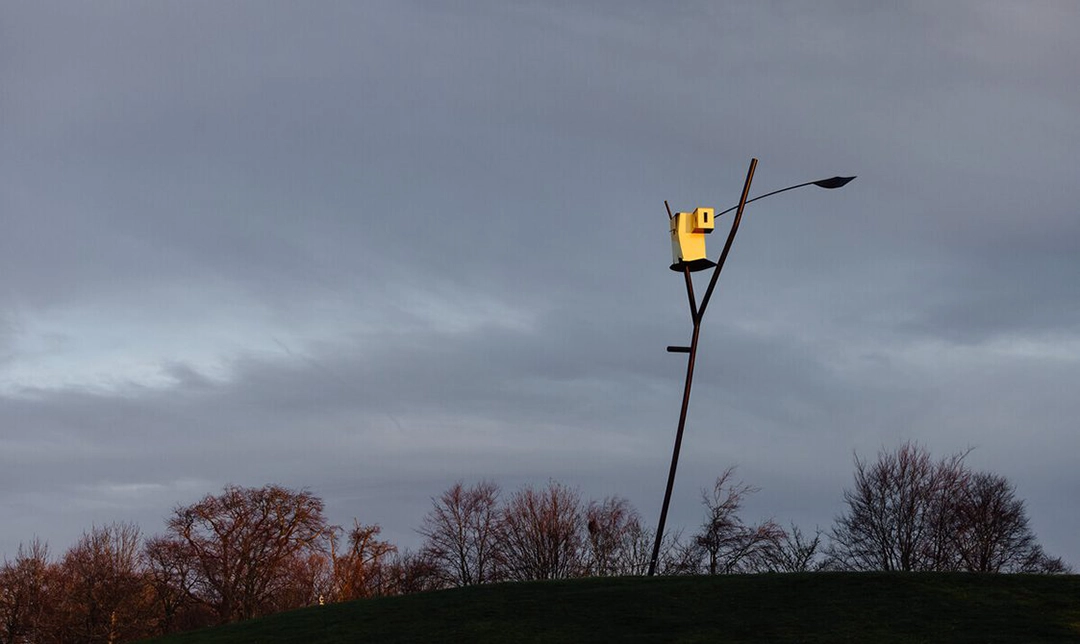
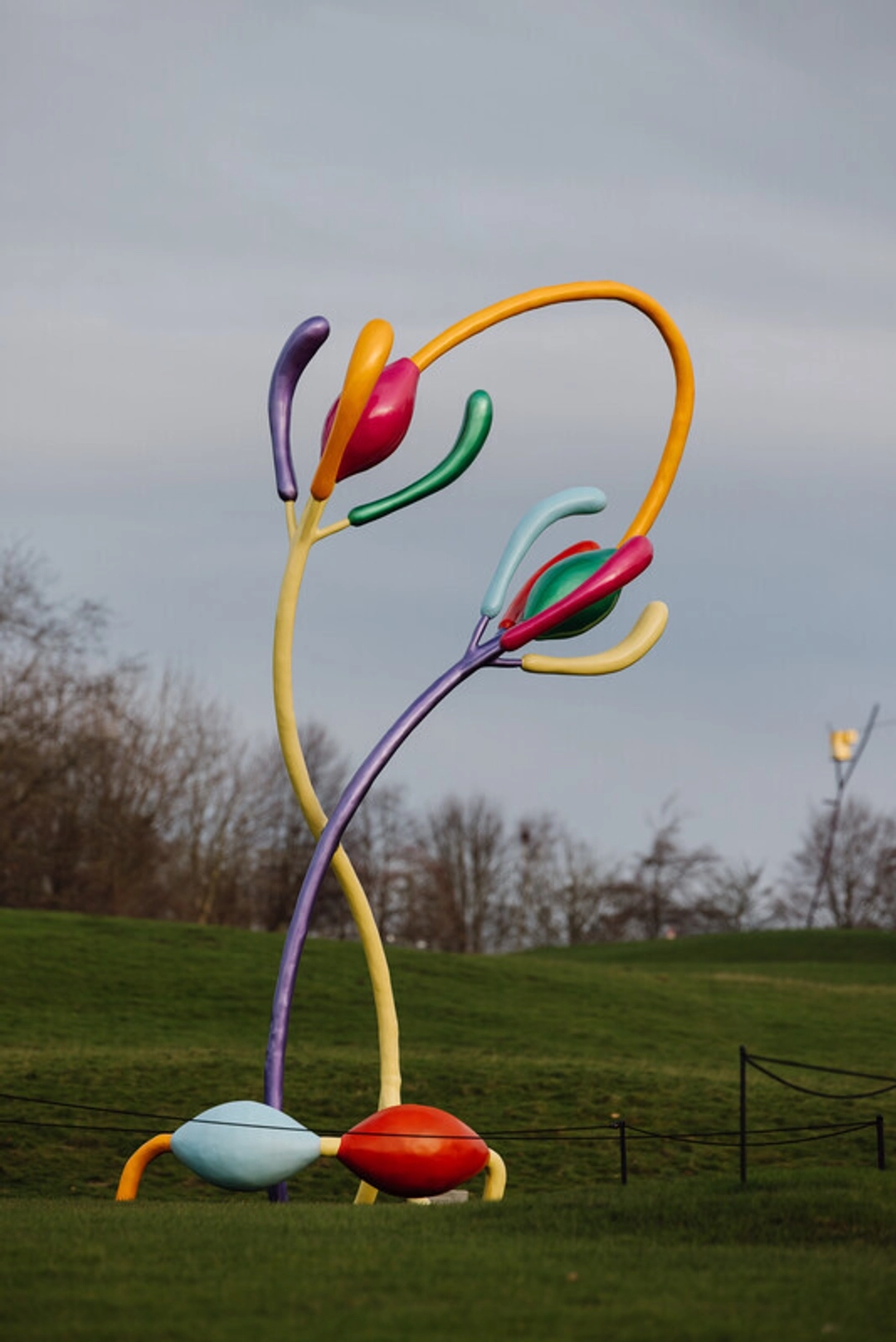
I have not the faintest idea why The Times, in its February 16 edition, informs us—by a delay so un-British—that Damien Hirst’s Saint Bartholomew, Exquisite Pain has been installed in the Camellia House at the Yorkshire Sculpture Park. Not only that work: The Watchtower, by Auke de Vries, and Muamba Posy, by Vanessa da Silva, both outdoors in the Country Park.
The park’s official press release—which was consulted for the writing of this text—states that the ceremony took place on January 14, a little over a month ago. The park’s official account had already announced the installation on December 17, while Yorkshire Times published it on January 12.
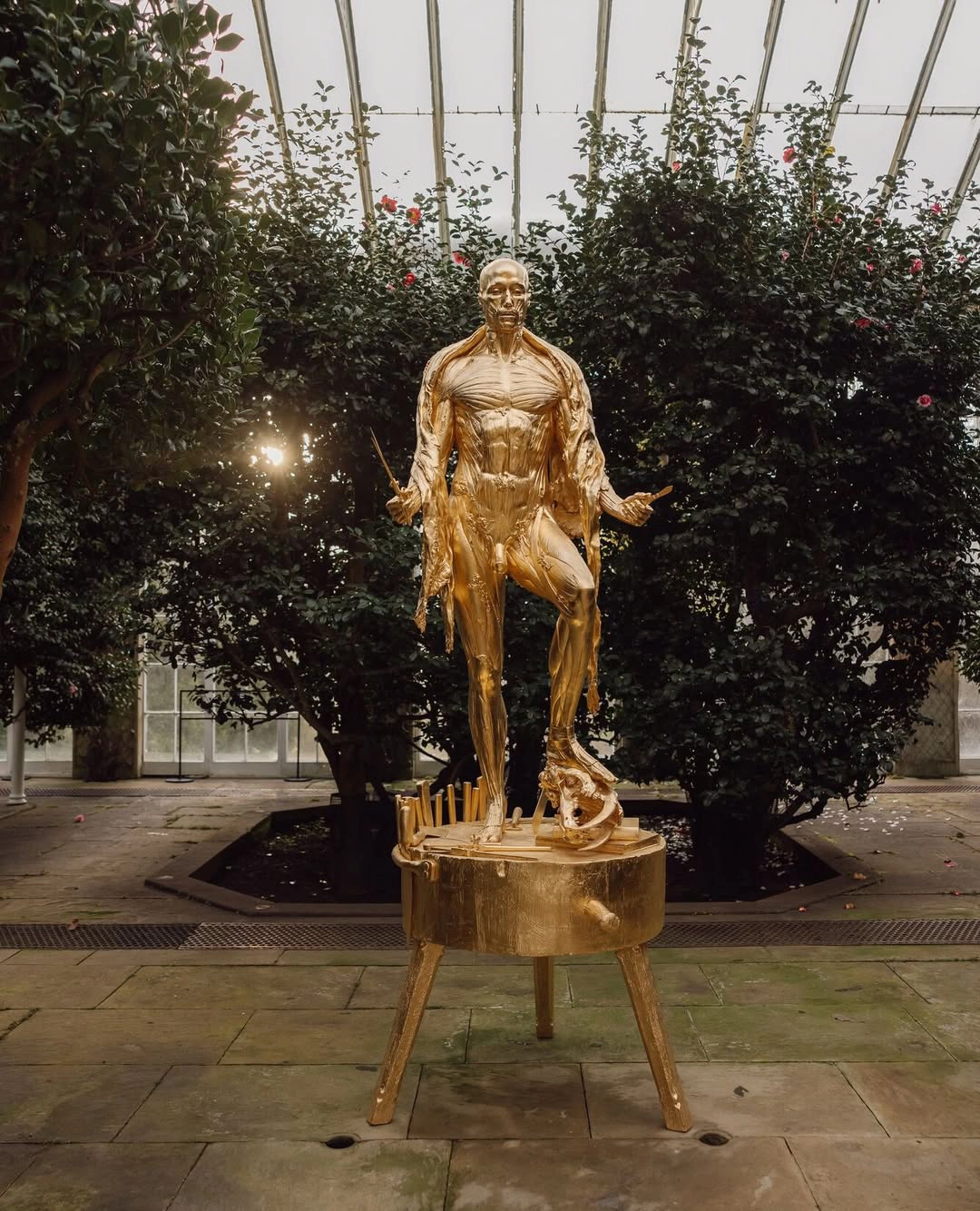
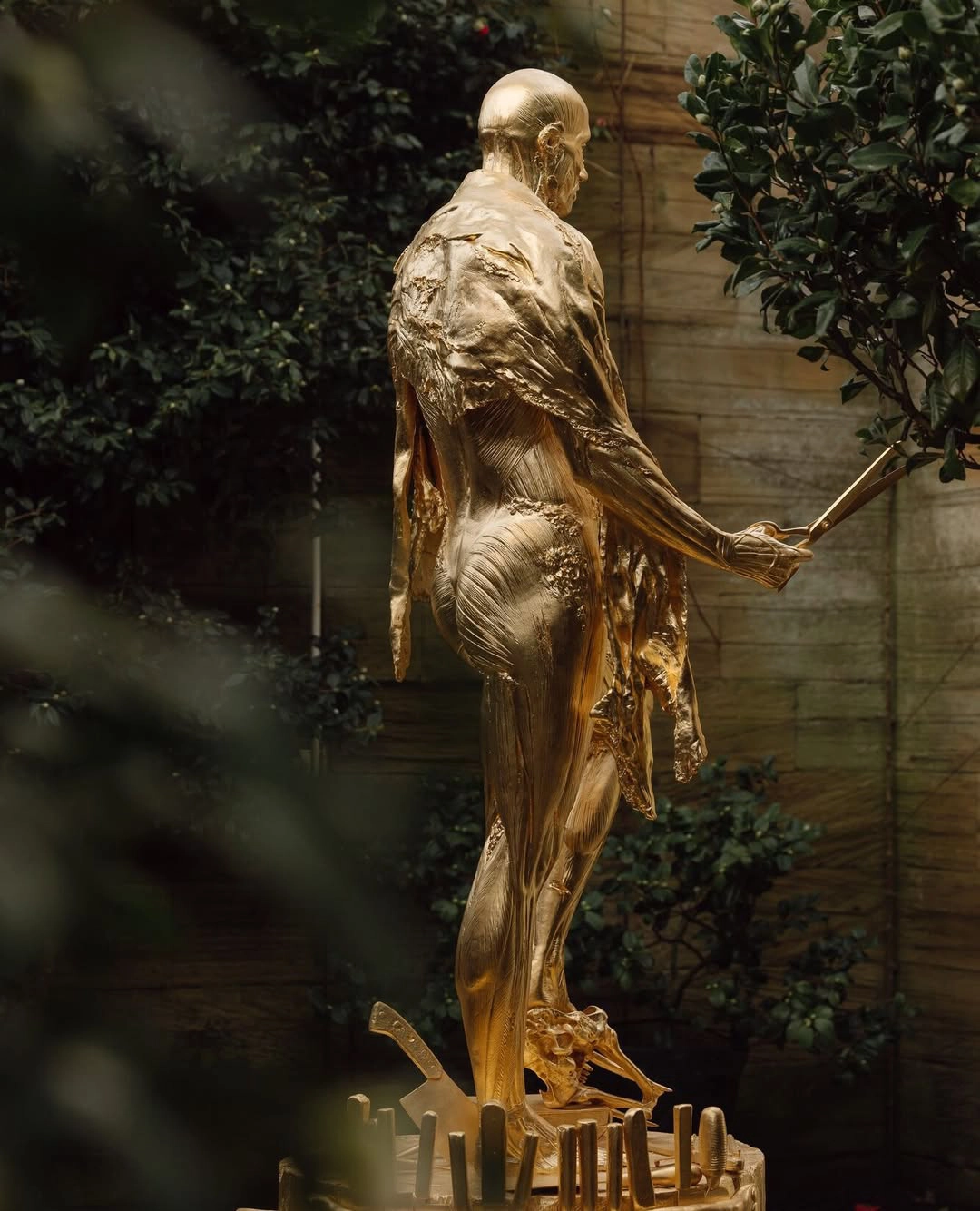
Hirst made the sculpture in 2006, in painted bronze. It stands about three metres high and belongs to a group of works in which he used full anatomical models to represent the interior of the human body. The piece draws on contemporary medical references rather than on traditional religious sculpture, and it was conceived as an autonomous object, not as a liturgical monument.
Saint Bartholomew, Exquisite Pain was presented to the public that same year as part of Damien Hirst: In the Darkest Hour There May Be Light at the Serpentine Gallery in London. The exhibition brought together several anatomical sculptures not previously shown. The group marked a transition toward a systematic use of bronze. Up to that point, Hirst had worked mainly with industrial materials, vitrines, and real specimens. The series consolidated his interest in the physical permanence of traditional sculpture, to the relief of his usual collectors.
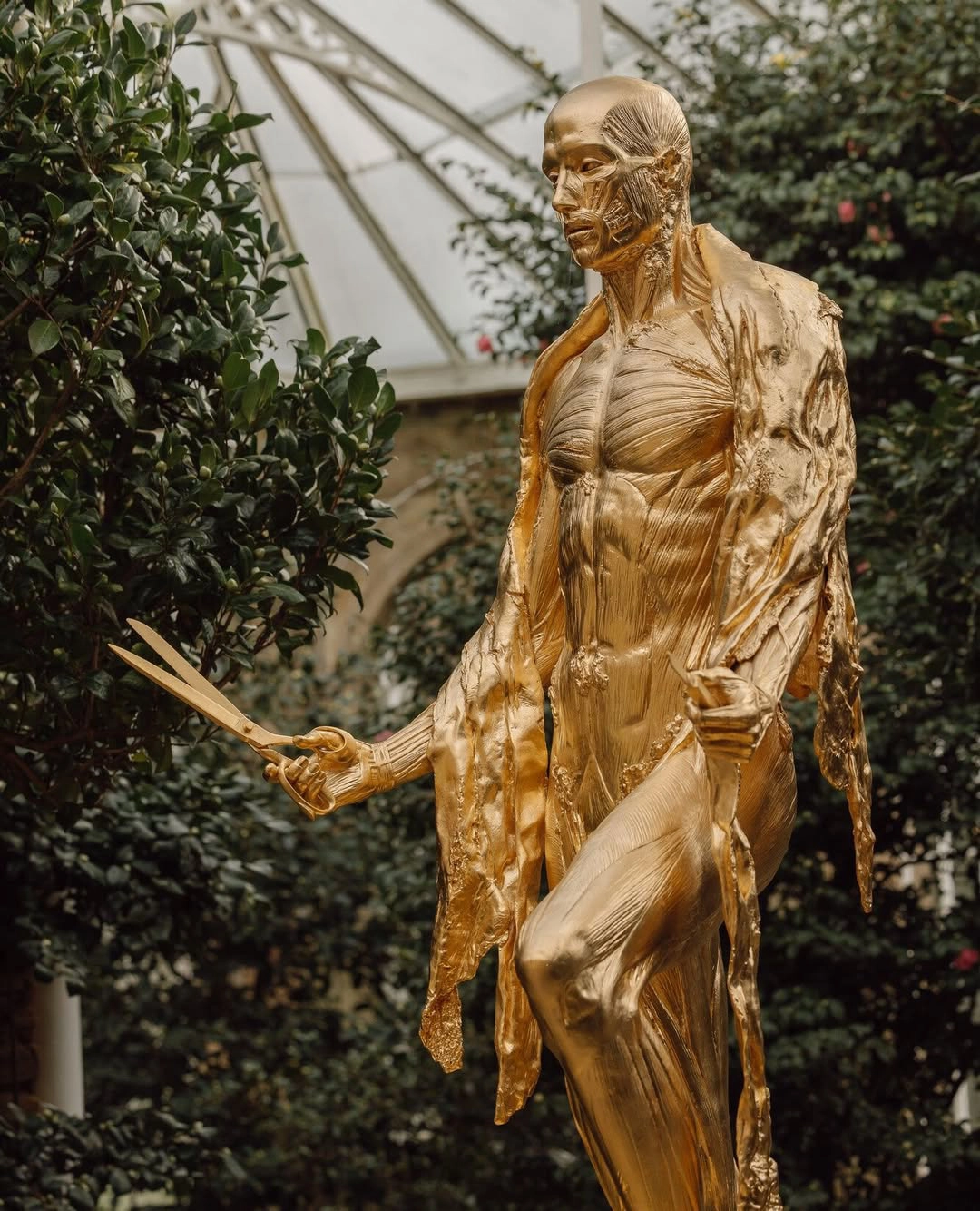
This particular sculpture depicts the apostle holding his own skin after having been flayed alive. The work follows the traditional Christian iconography in which Bartholomew appears as a martyr. Hirst rejects its idealisation. The body is obscenely anatomical—opened, exposed. The skin hangs like an independent object. There is nothing heroic in the gesture. Barely a result.
Across the series to which this work belongs, Hirst examines the human body as material. It is well known that for decades he has worked with cadavers, anatomical replicas in wax, silicone, and so on, as well as dissections. No one expects his interest to be religious. He is interested in the body as structure, as physical construction. He treats it almost as evidence. He reproduces its anatomy without aesthetic correction: organised matter, nothing more. He flees the ideal as one flees a demon. And although these pieces relate, in some way, to the Western tradition of anatomical representation, they are not—despite appearances—conceived for any educational purpose.
The suffering martyr arrived at the Yorkshire Sculpture Park as part of its acquisitions and loans programme. They placed it indoors, in the Camellia House, without the grace of a decent pedestal. The curatorial model favours integrating contemporary sculpture into natural surroundings. In the same building—described as historic by various outlets—other related works by Hirst are on view. All of them in the same vein: opened bodies, dissected bodies.
There is no public evidence that Saint Bartholomew, Exquisite Pain has been acquired by the park as a permanent holding. Nor is it a one-off original; it is not unique. There are several limited editions in private collections or in the artist’s studios. Nor is there any news of an intention to acquire this particular example.
Aware that these texts may be presumed to be consumed by serious readers, I insist on verifying every fact. I do not slide down the chute of saying the first thing that crosses my mind—the first thing I read—the first datum with the scent of reality. What still torments me, a little, is not knowing—after consulting so many sources—the day on which the sculpture was actually installed in the place it occupies today. One can ask, with reason: “And who cares about that?” It is enough for me to know that there are still people—discreet, even camouflaged—who continue to defend historical rigor and verifiable truth.
Brief biographical note
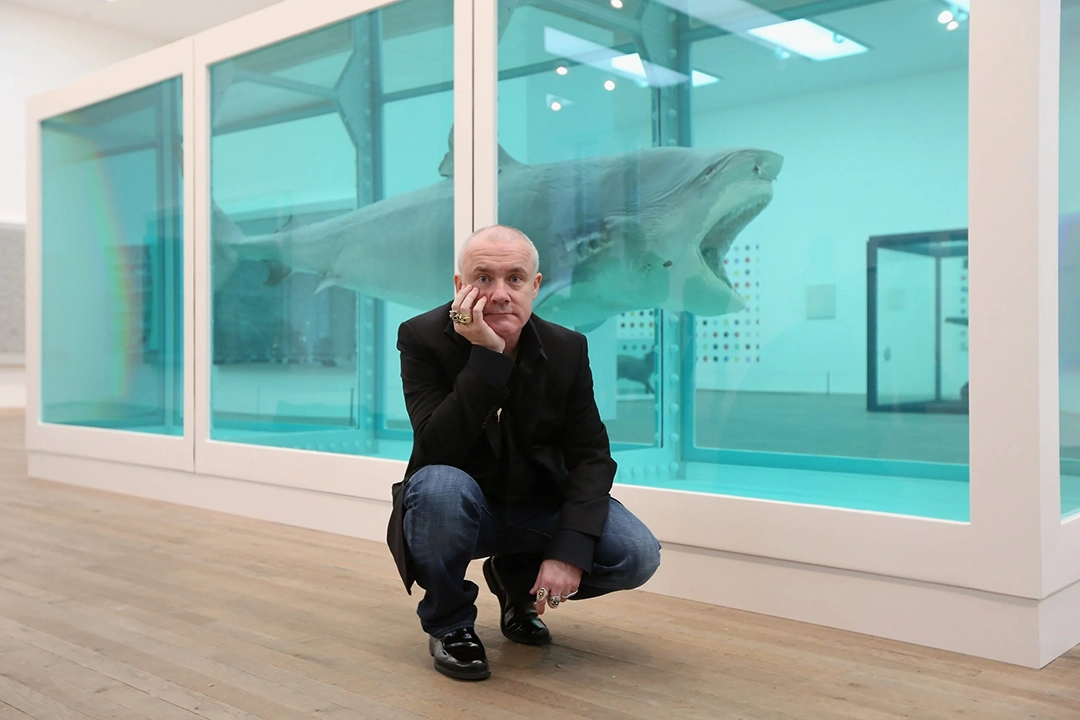
Damien Hirst (b.1965) grew up in Leeds and studied at Leeds College of Art and Goldsmiths University, London. Recognised as a leading artist of his generation, he works across installation, sculpture, painting, and drawing. He has exhibited internationally and his work is held in many public collections, including the British Museum, Tate and the Museum of Modern Art, New York. He was awarded the Turner Prize in 1995. Three large bronze works by Hirst - The Virgin Mother, Charity and The Hat Makes The Man are currently on display in YSP’s Country Park, near The Weston.









Comments powered by Talkyard.