
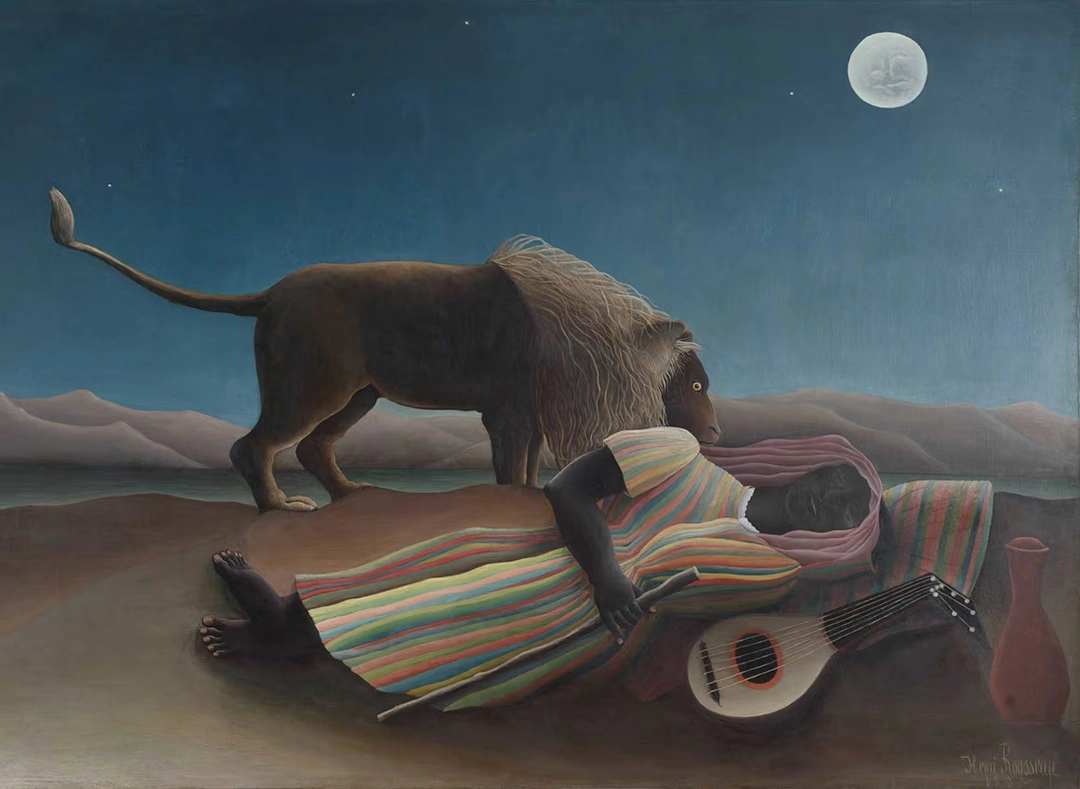
Philately was one of the small devotions of my childhood. I inherited hundreds of stamps from my father. I could never say whether he collected them himself or simply bought them for my brother and me. Among all of them, one in particular held my gaze with disproportionate insistence: a reproduction of The Sleeping Gypsy, the 1897 painting by Henri Rousseau that I finally saw years later at the MoMA.
Scrutinizing that tiny image was one of the most intense and enduring visual experiences of my early life—perhaps the first that awakened my desire to interpret what I saw. A woman asleep in the desert, her mandolin and water jar beside her, while a lion approaches, almost timidly, to breathe her in under a swollen moon. An icon of dream imagery in art, and one of Rousseau’s most celebrated works.
Rousseau replaces the narrative logic of the scene with a dialogue between symbolic elements of a shared, almost primordial nature. The woman’s deep sleep, which would normally suggest absolute vulnerability, does not, in this case, consign her to helplessness. Perhaps what truly sleeps is her habitual vigilance—her native state of alertness. In the background, the unconscious—those internal traumas not yet shelved in the archives of forgetting—takes the form of a lion, watching from the periphery, acutely alert. Although traditionally a symbol of power and threat, here it appears arrested in a gesture stripped of violence, reinforcing the sense that it may be the woman’s psychic shadow observing the momentary softening of her own identity.
This occurs in the desert—an a-historical space with no cultural coordinates. An archetypal plane in which signs operate in their purest state. The moon asserts its own agency as witness, orchestrator of this subversion of conduct, presiding over the improbable coexistence of danger and calm, animality and humanity, sleep and vigilance.
I doubt Rousseau sought anything more than to show—without attempting to resolve it—the coexistence of contradictory forces within a singular soul, or to meditate on the dark territory where the deformed flowers of the interior life take root. That realm where rationality abdicates, and from which an ancient, ambiguous, revelatory consciousness rises.
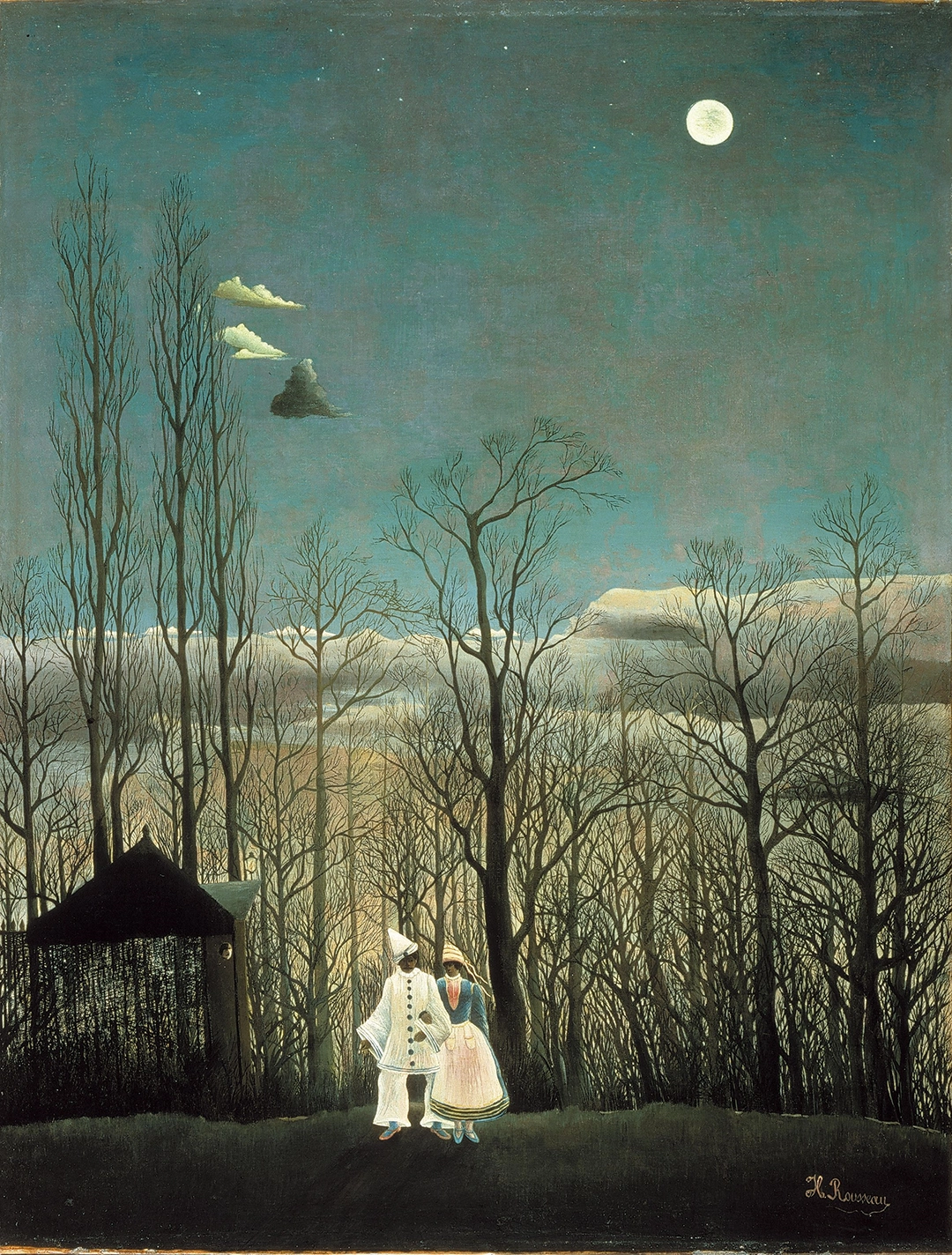
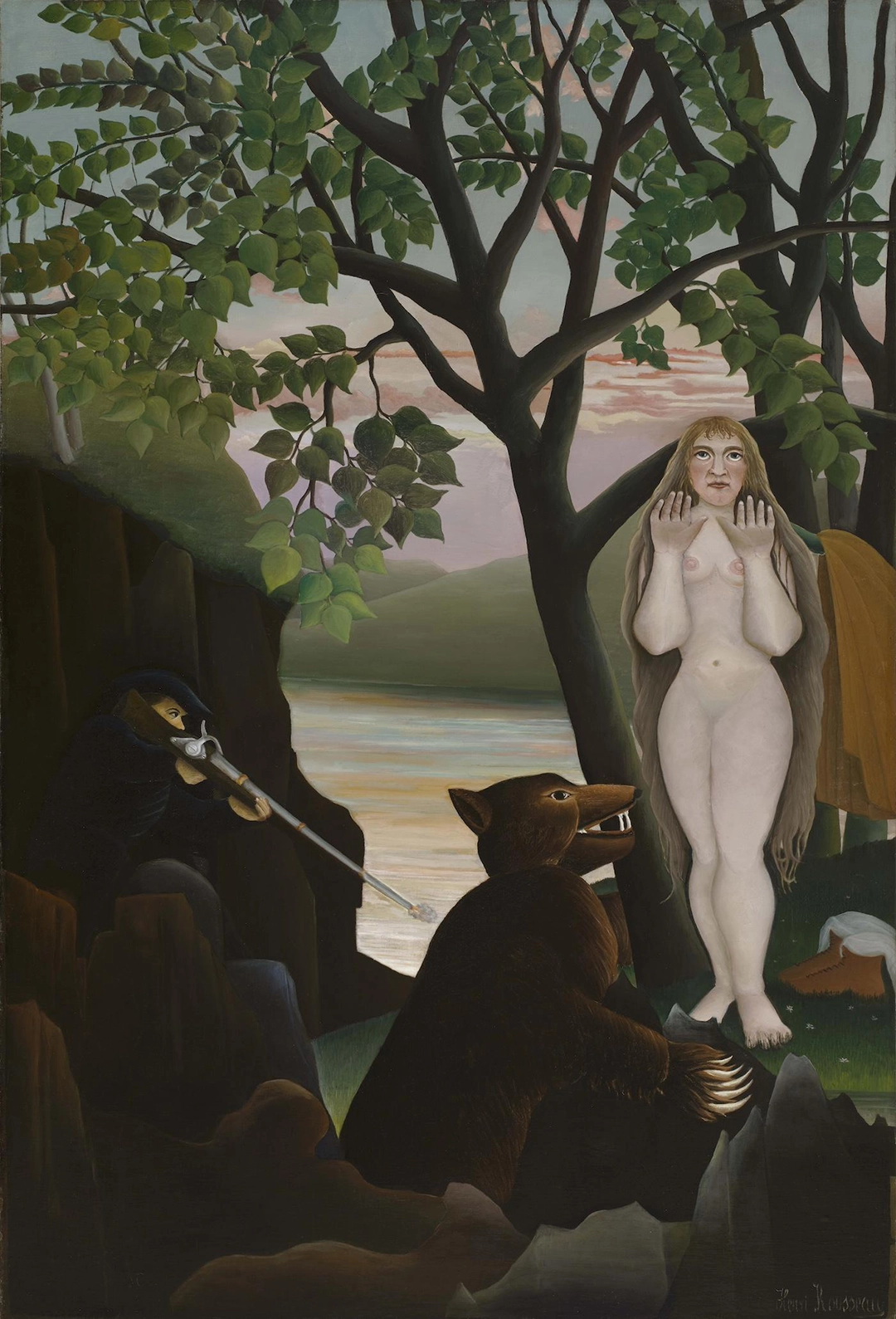
He is, without question, one of the artists who shaped my vocation for the visual. Fifty-five of his paintings are currently on view at the Barnes Foundation in Philadelphia. The exhibition is titled A Painter’s Secret, and—as with any exhibition of his—it is rare, magical, and filled with drifting enchantments.
The curators say they sought to dispel the myth of Rousseau as an ingenuous painter. They see him instead as a kind of visionary who understood the seductive power of calculated awkwardness, of pictorial candor as a strategy. His almost childlike frontal compositions and rigid figures operate as masks—concealing a far deeper understanding of the human psyche while presenting only a primitive, seemingly innocent figuration. From that supposed naïveté he forged an imaginary world with virtually no limits. In his paintings, echoes of folk art and pre-Renaissance Christian iconography mingle with what critics have called the “magic and frank spontaneity of children’s art.”










Comments powered by Talkyard.