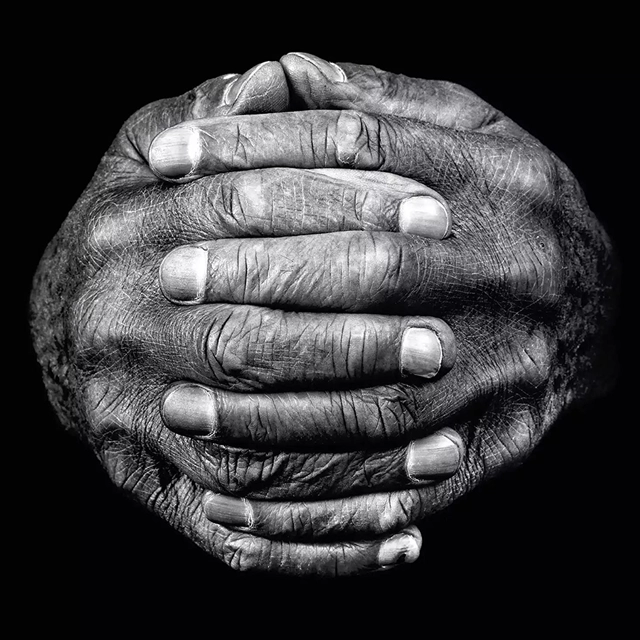
Human genius can be observed in many of its works. Nowhere is it more detectable than in the arts: music, literature, and the visual arts. As a species, seen from above, we are all fairly clever. But some are—or were—truly exceptional. What did they require to rise above the rest? What made them singular, beyond the reasoning most of us share?
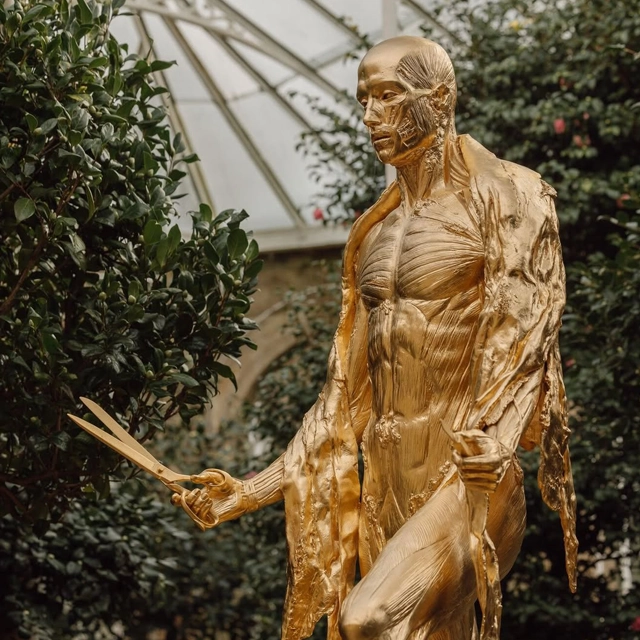
I have not the faintest idea why The Times, in its February 16 edition, informs us—by a delay so un-British—that Damien Hirst’s Saint Bartholomew, Exquisite Pain has been installed in the Camellia House at the Yorkshire Sculpture Park. Not only that work: The Watchtower, by Auke de Vries, and Muamba Posy, by Vanessa da Silva, both outdoors in the Country Park.

The Petrie Museum of Egyptian and Sudanese Archaeology, part of University College London (UCL), houses one of the most important collections of Egyptian artefacts in the world. It preserves more than 80,000 objects recovered from excavations conducted between the late nineteenth and early twentieth centuries. Among them are hundreds of shabti, small funerary figures that formed part of the ritual equipment of tombs in ancient Egypt...
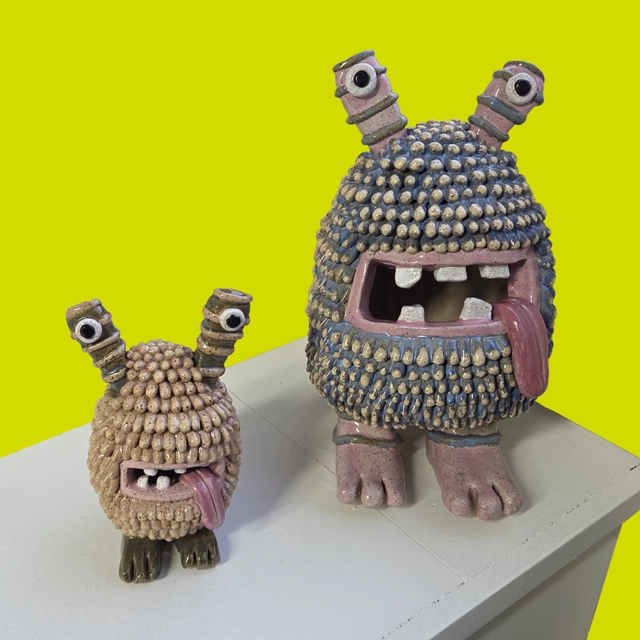
Last Friday, February 6, I attended the opening of the Scholastic Art and Writing Awards 2026 at the Art Academy of Cincinnati. Given the temperature outside, one would have expected a thin crowd, a hush, the kind of dispersal that comes with an icy wind. The opposite happened. It was a celebration. All six floors of the institution were packed with children, teenagers, and adults—an enthusiasm the visual arts rarely manage to elicit. Everyone celebrating emerging talent.
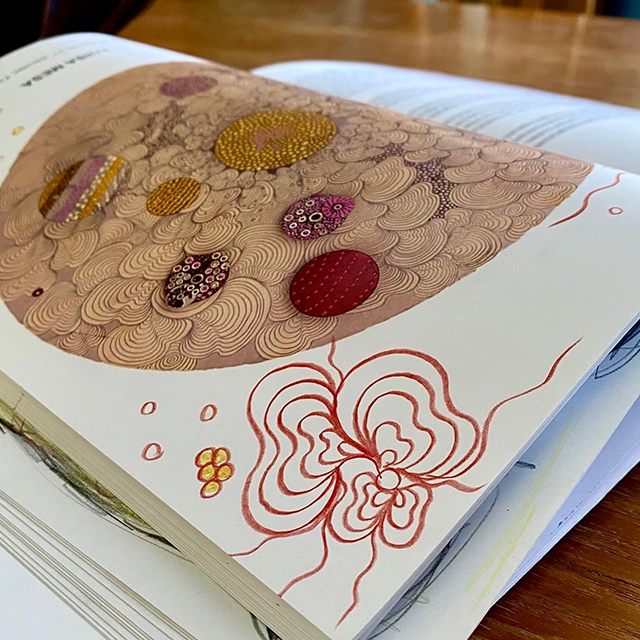
The Pattern & Decoration (P&D) movement, once dismissed for its embrace of "decorative" arts, is now celebrated for challenging traditional art hierarchies. Explore its legacy and modern-day echoes in Cincinnati, where creative hubs like the Freeport Row Art Alley are contributing to a thriving art scene, with a mural by Esteban Leyva at Liberty and Elm streets.

We have previously discussed how a photograph — or an image — can rearticulate the public perception of reality. How it can encapsulate experience, much like a verb does, rendering it transferable, exposable, and legible in a specific way.
Any story is a continuum, difficult to apprehend in its full extension and multidimensionality. In order to be understood and fixed as experience — and as argument — it must be reformulated through its most expressive qualities...


