Persistently, and since the most remote antiquity, the moon has acted as a trigger for the human imagination. It has agitated artists and writers, the deranged of every kind, poets, philosophers, spiritual beings, night wanderers—but above all, lovers. Perhaps because it casts that faint light which outlines the features of the desired body: the point of light, the delicate glimmer that ignites along the maiden’s lower lip. Beyond that, it has been linked to instability, even to loss—and, since humanity came into possession of abstract and metaphorical thought, it has functioned as a field of cultural meaning that activates states of introspection and dislocation. That is to say: an optimal ground for emotional projection.
Any work of art grounded in the heavy presence of that silver sphere suspended above our condition provokes in me an immediate reaction of distrust. It may pass quickly; it may also linger, delaying sleep beyond what would be reasonable.
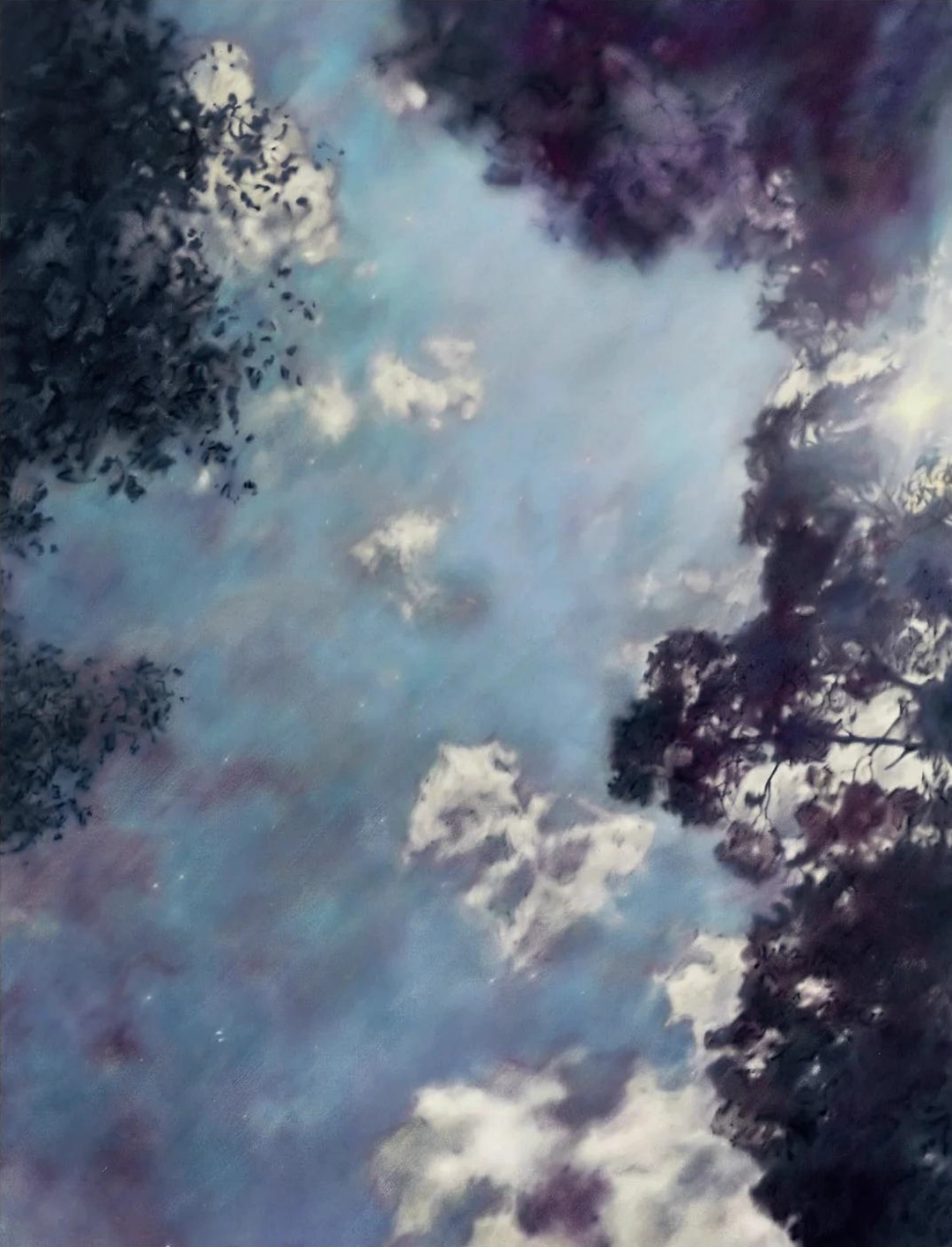
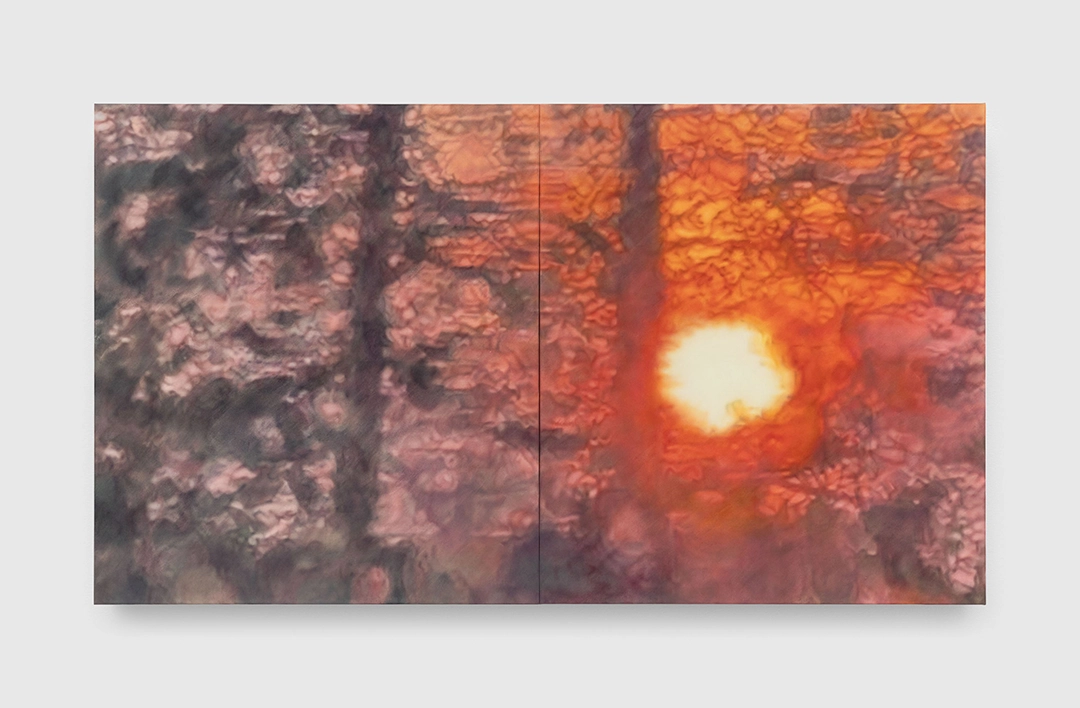
Always With Me, 2025, by James Prapaithong
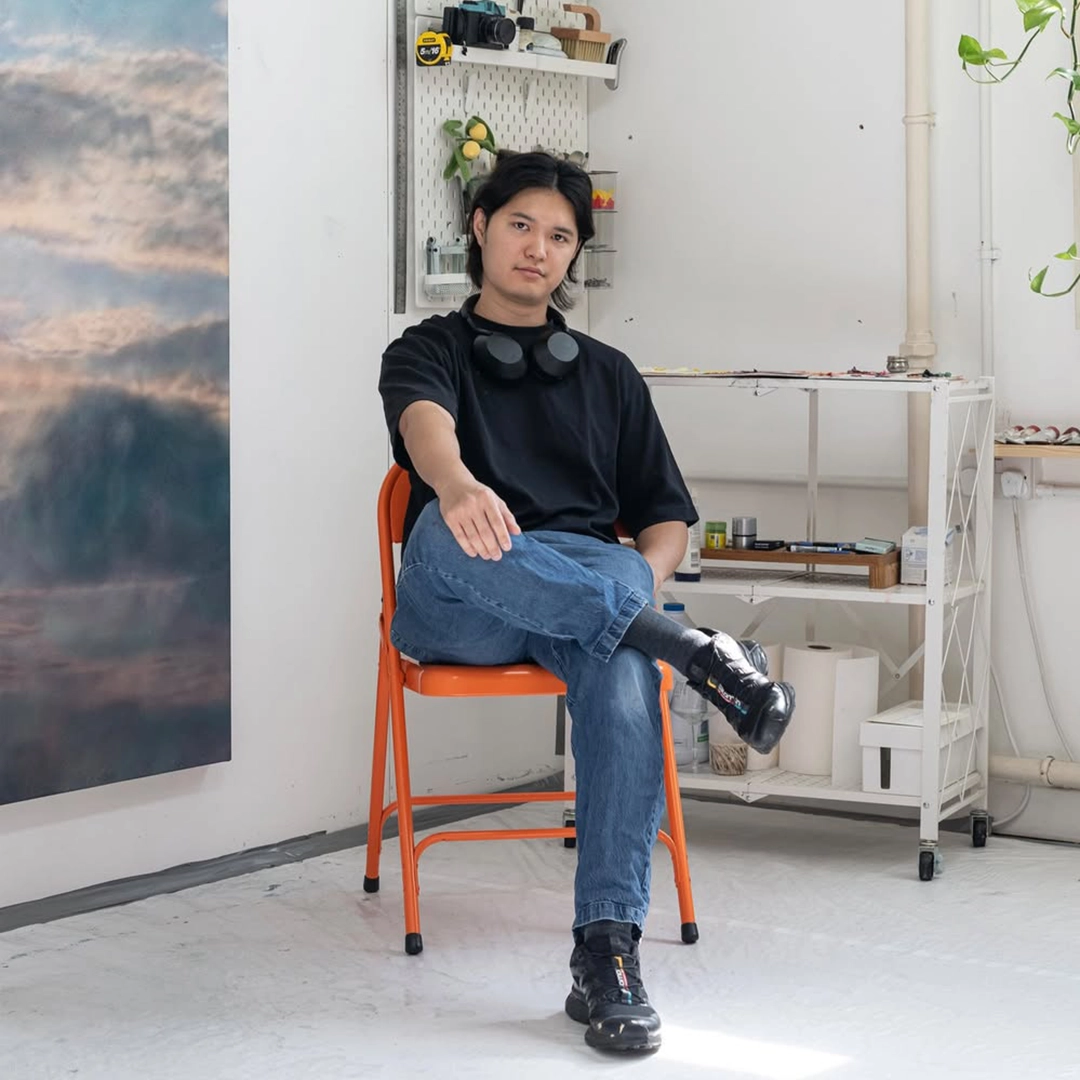
James Prapaithong is a Thai painter who lives and works in London. He has recounted in the press that one day he came across an Instagram post—uploaded by a friend—in which the unsettling glow of the moon pierced through the foliage of a tree. He experienced the same sensation that, with varying degrees of intensity, we have all felt. The slightly bland aftertaste of the experience lies in the certainty that it is not especially difficult to find inspiration under a real moon, visible anywhere the sky is clear. If one is moved by an Instagram image, that is not entirely objectionable. Far worse is the one who is moved by nothing at all.
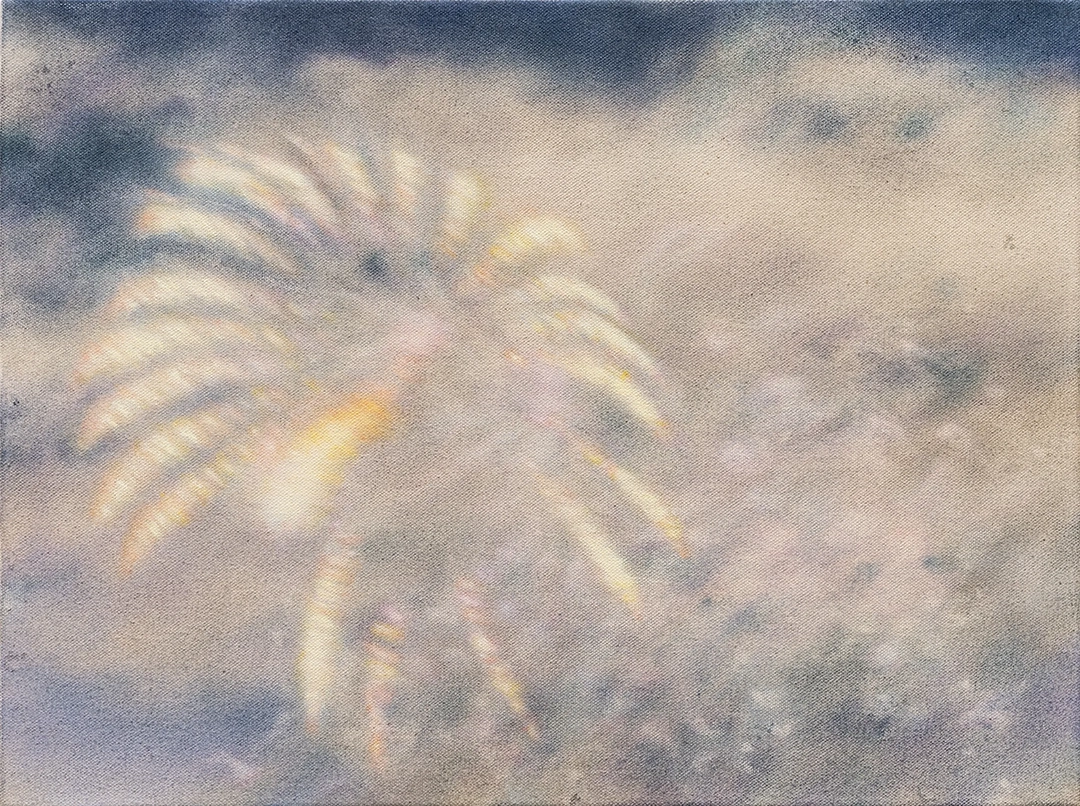
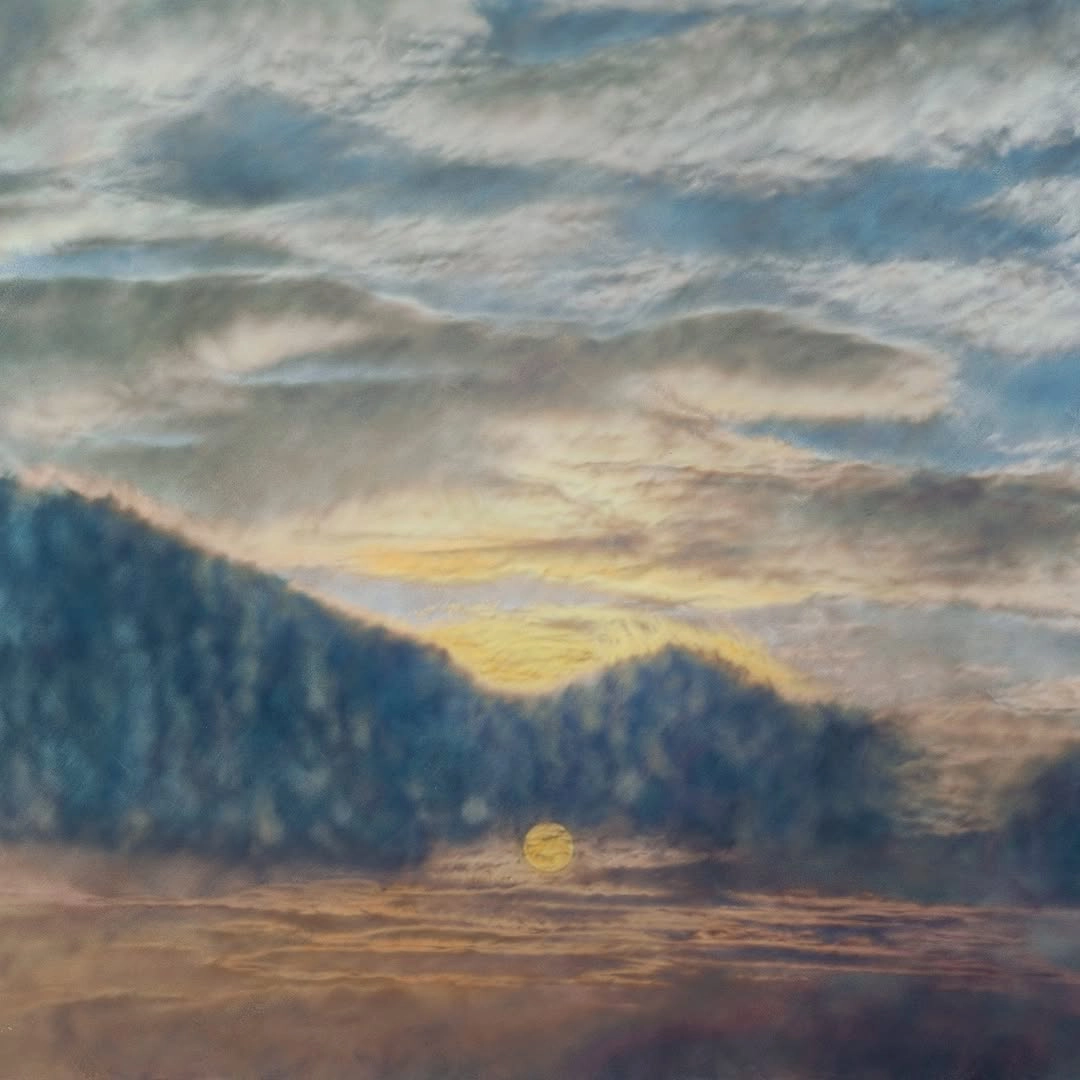
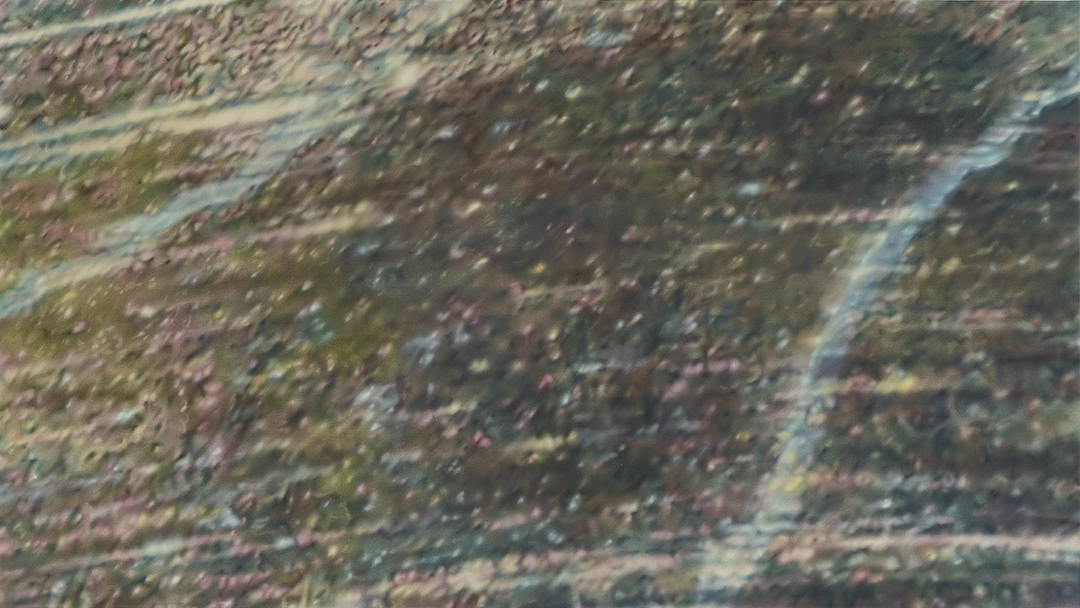
He felt, then, an immediate connection with the rest of the planet’s spellbound: “we are all under that light.” And, setting to work, he produced a series of oil paintings—muted, cautious—so as not to stray too far from the purely contemplative instant. In one canvas, night rain falls out of focus across a car windshield; in another, the setting sun yields the stage to a moon reflected on the trembling surface of an inscrutable body of water.
Prapaithong sought to explore the idea that “one of the dimmest objects in the solar system can shine so brightly by reflecting the light of the sun.”
There is a great deal of self-reflection in this series. Perhaps because the artist is approaching thirty—the first round number that unsettles us. Or perhaps because he, or a friend, or most people are as dim as the moon itself, and only manage to shine under the glow of mobile phone screens.
The moon is something that finds its way onto the canvas—at least for quite some time now—when a portion of the surface is left without direction. This is what I tend to believe, without having spent twenty years studying its presence in figurative art. The moon is beautiful, yes—of course.
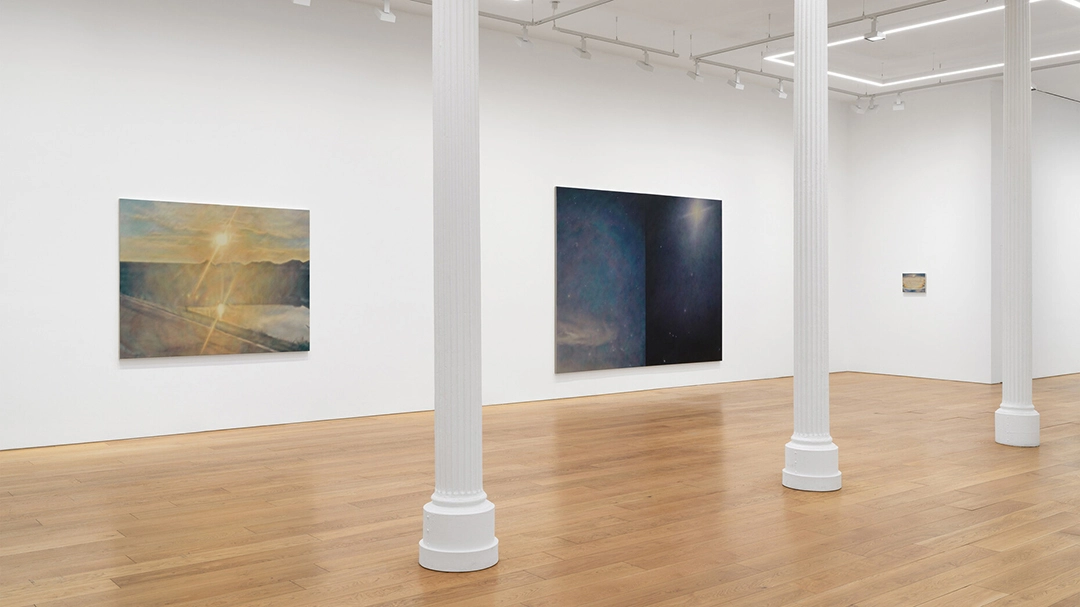
So We Won’t Forget, an exhibition by James Prapaithong, is on view at Timothy Taylor, New York, through April 18.
James Prapaithong, So we won’t forget, exhibition view. Courtesy of Timothy Taylor Gallery













Comments powered by Talkyard.