I suppose that waking up to find the night has birthed a new Banksy is, by now, almost routine. This time, however, something is different. He has literally moved up a step. He has planted a life-size sculpture in one of the most heavily guarded spaces in London. No witnesses.
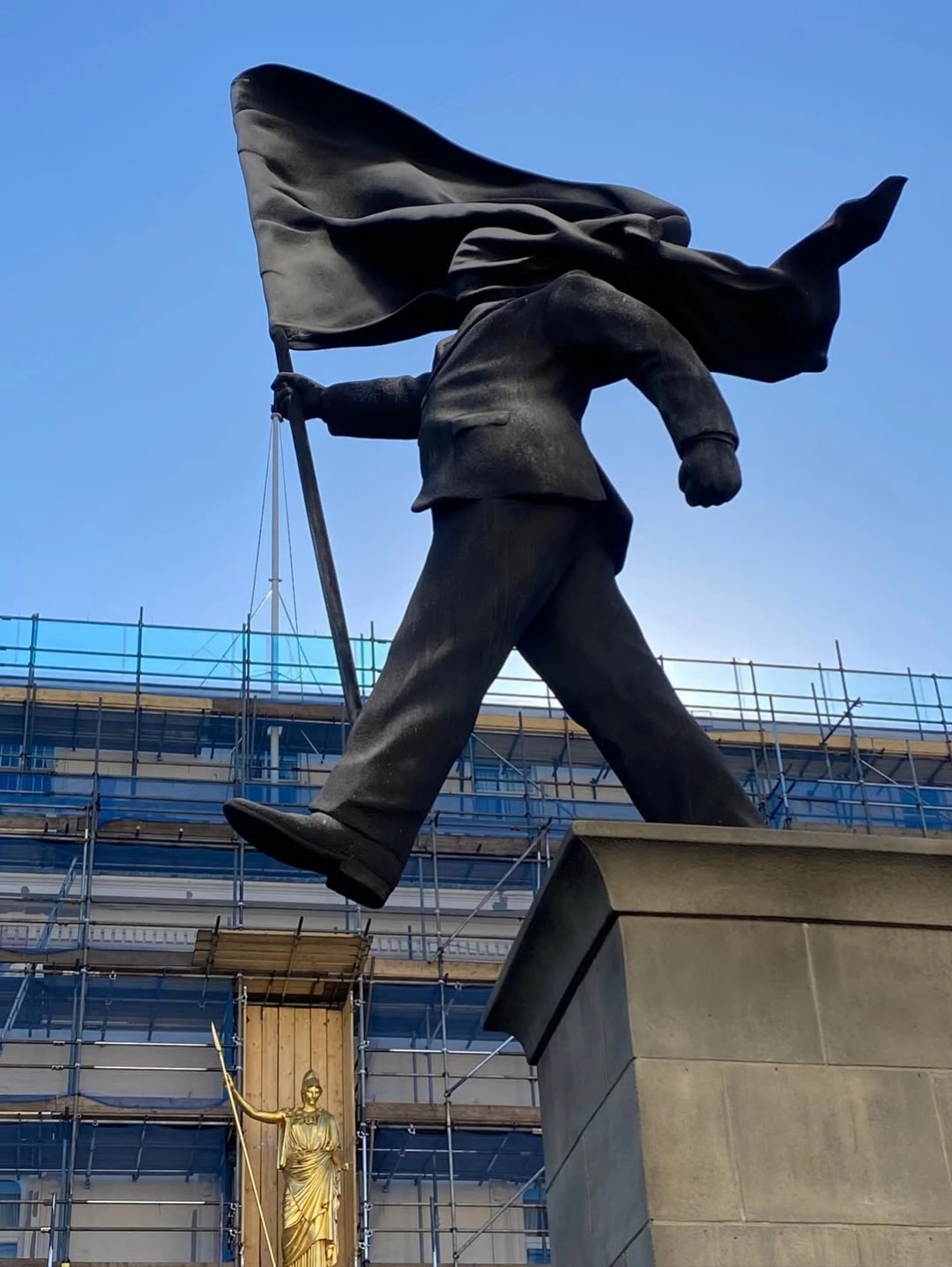
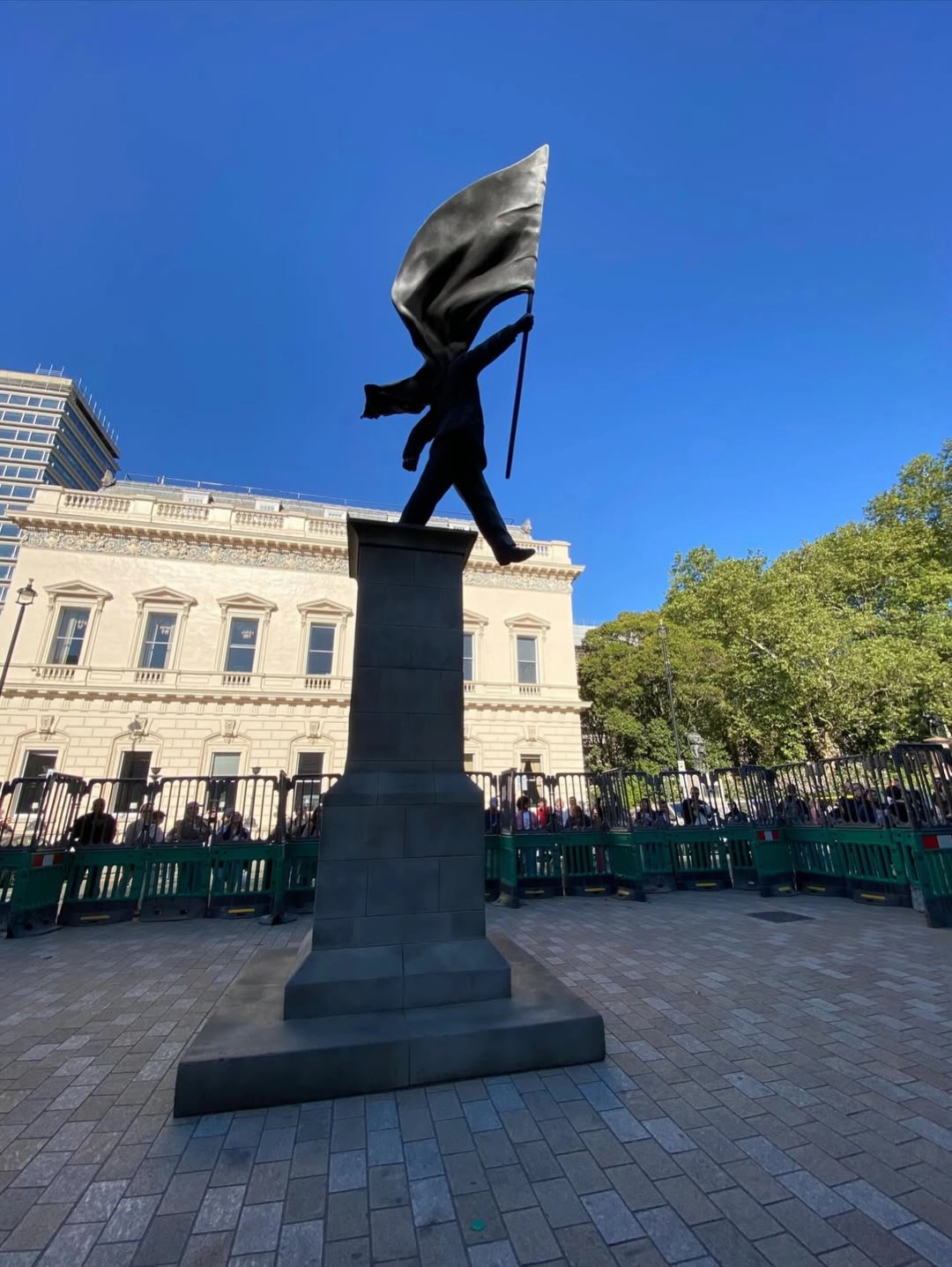
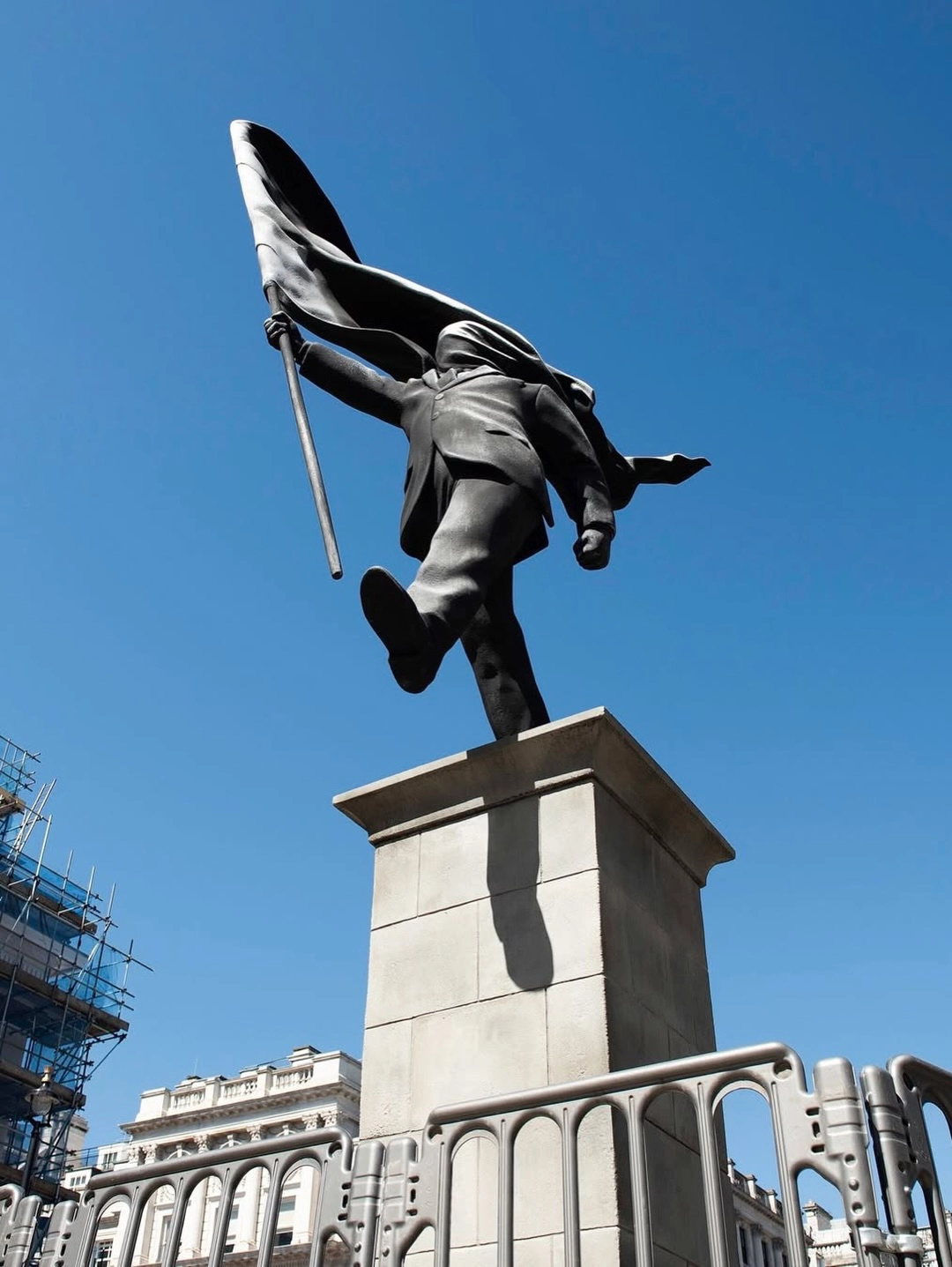
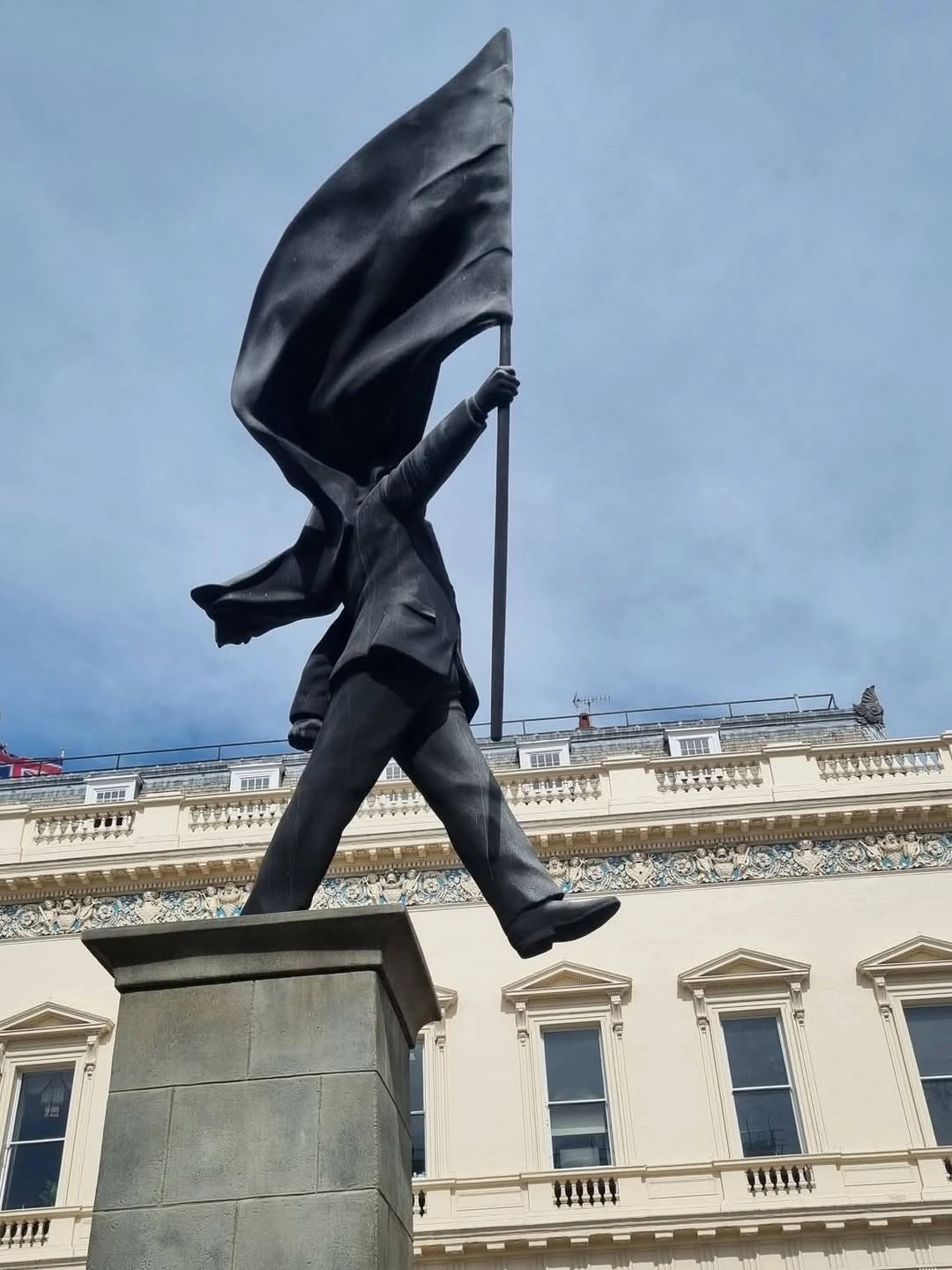
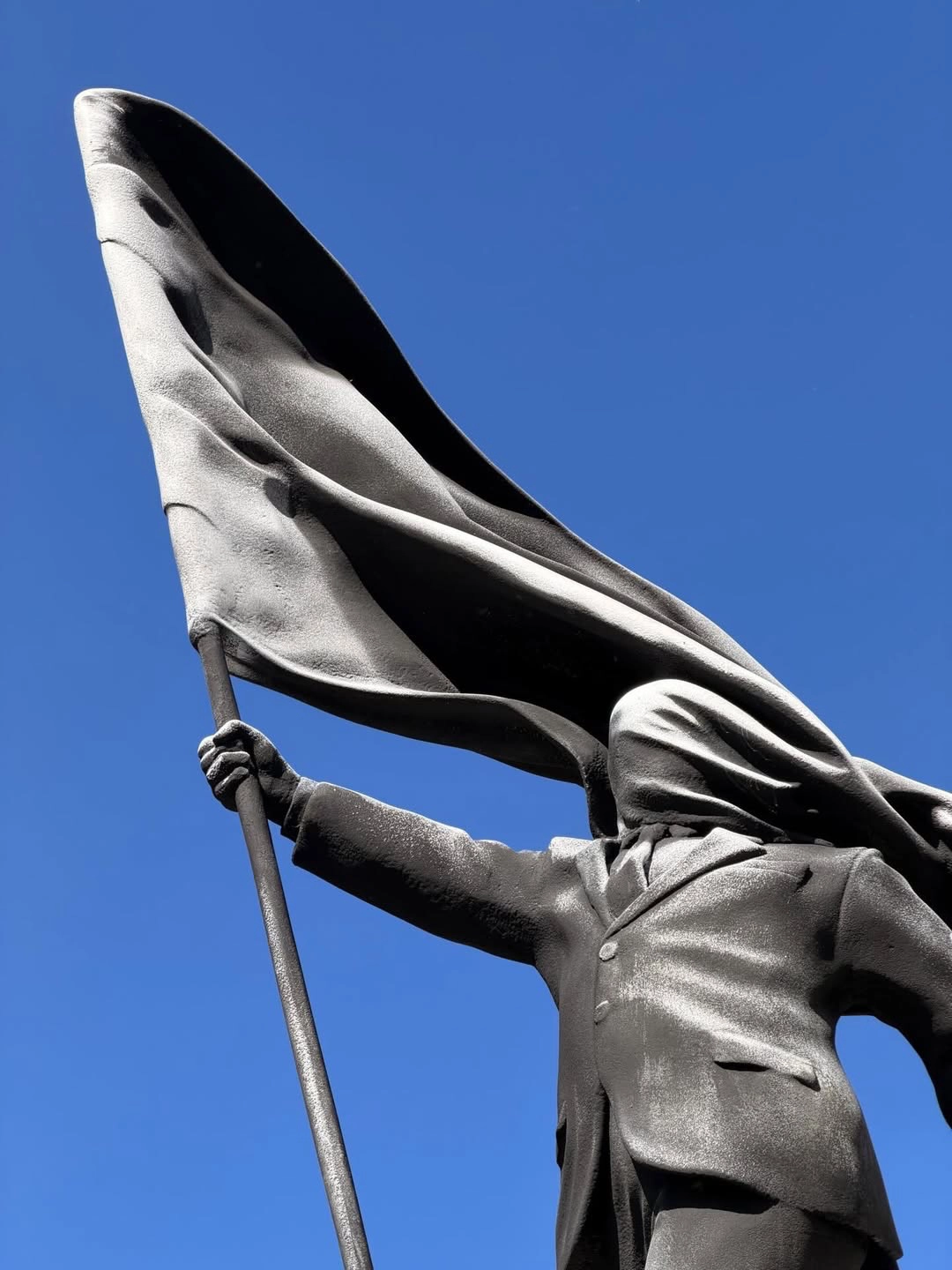
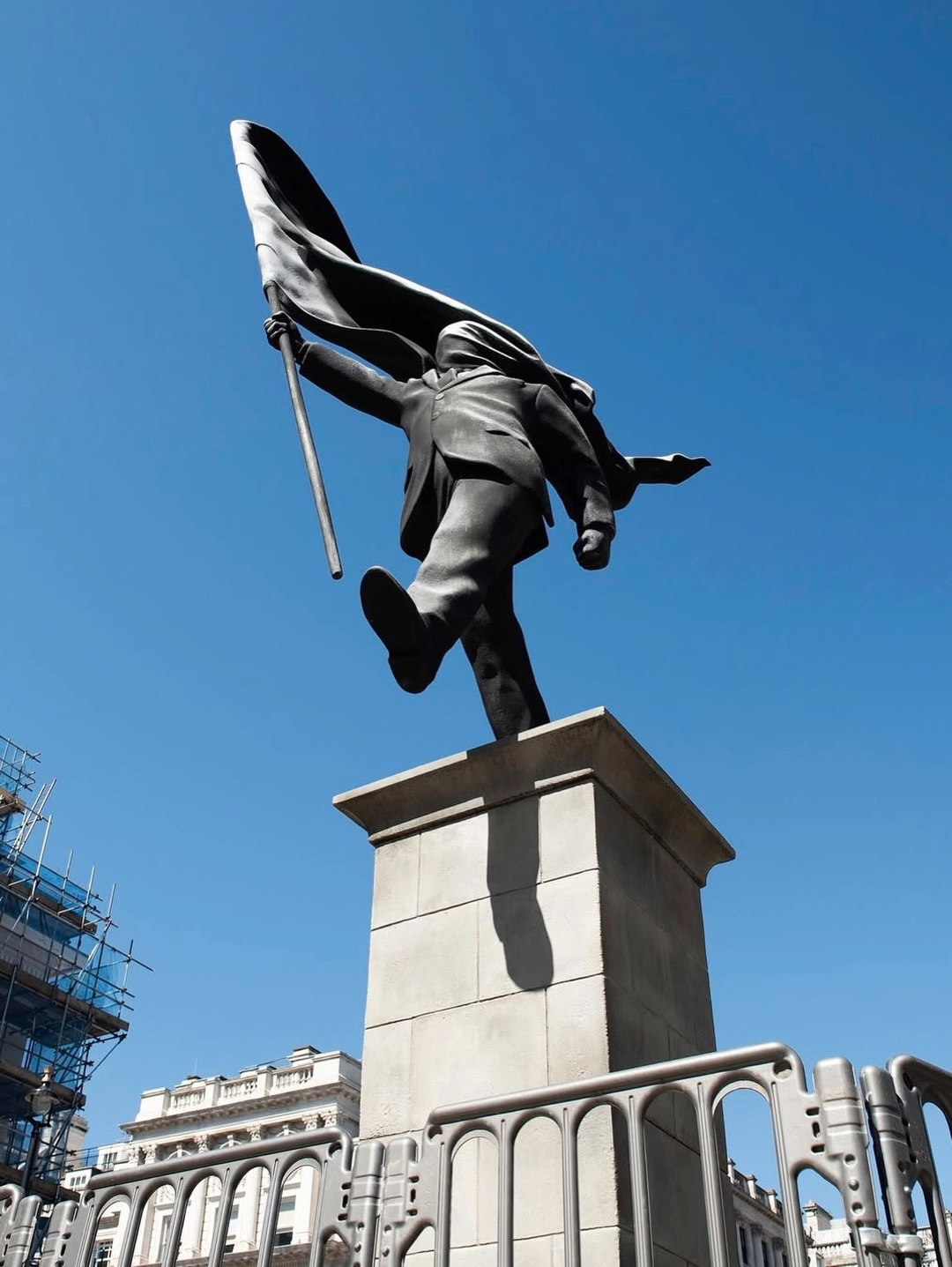
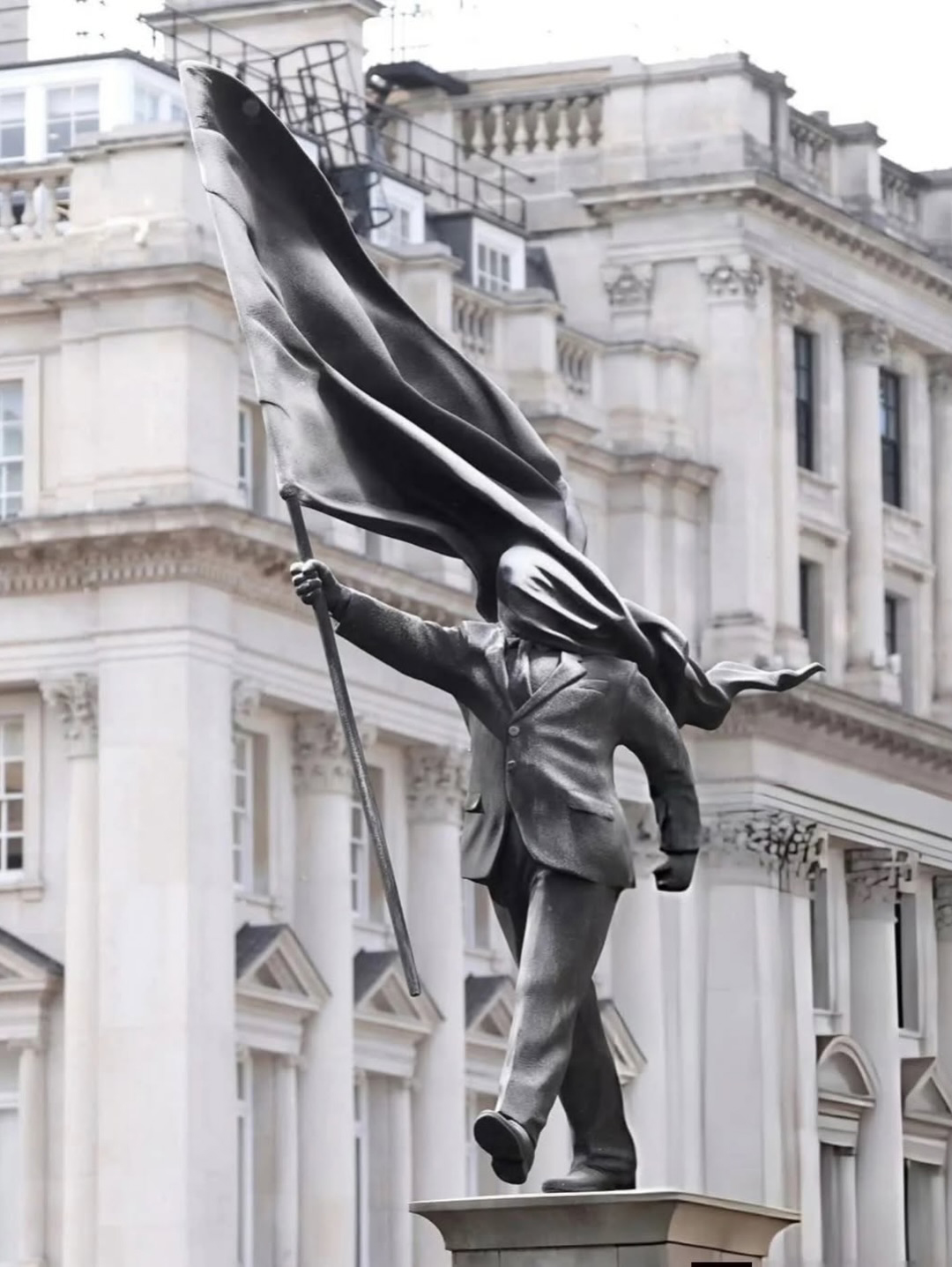
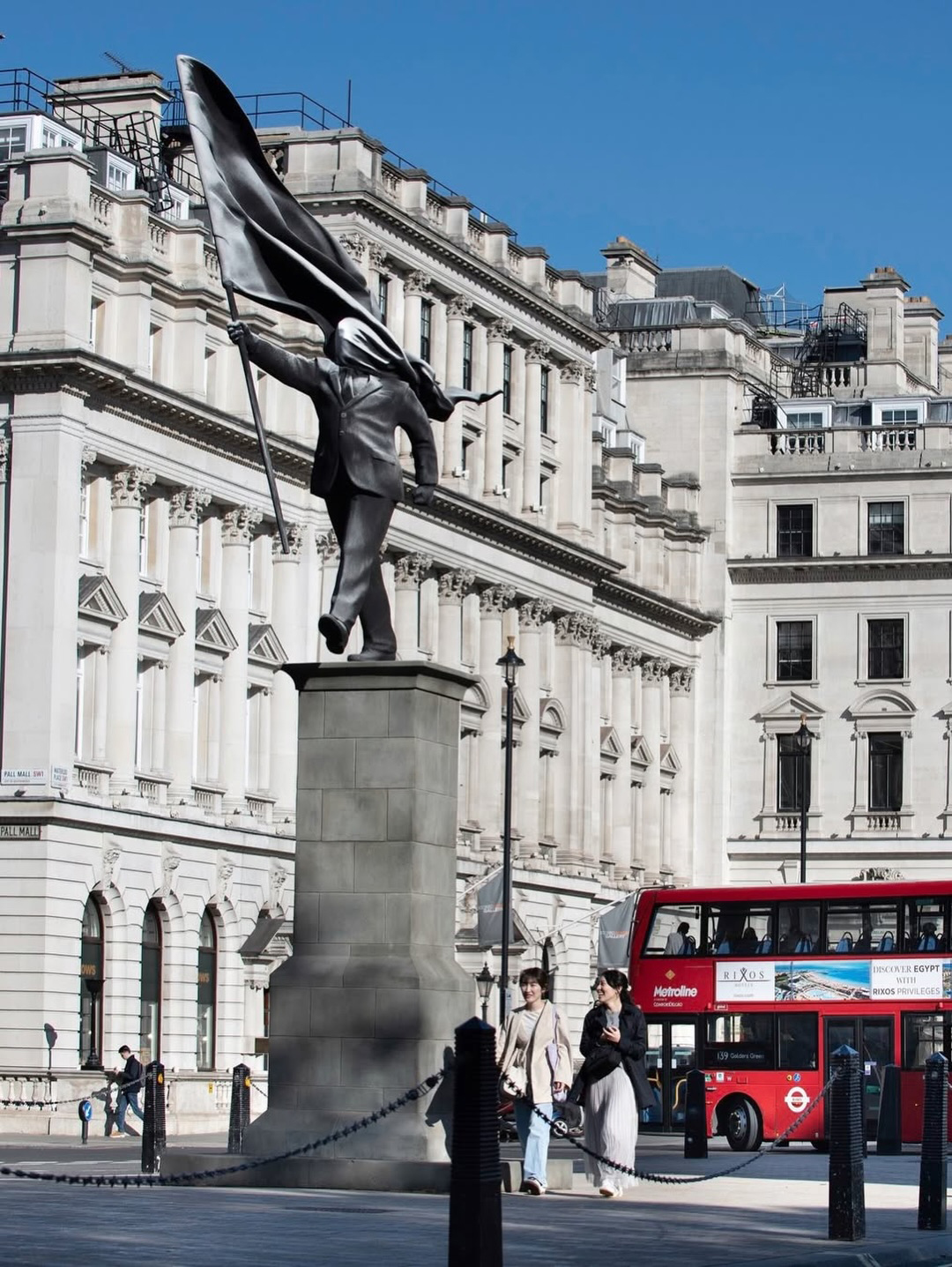
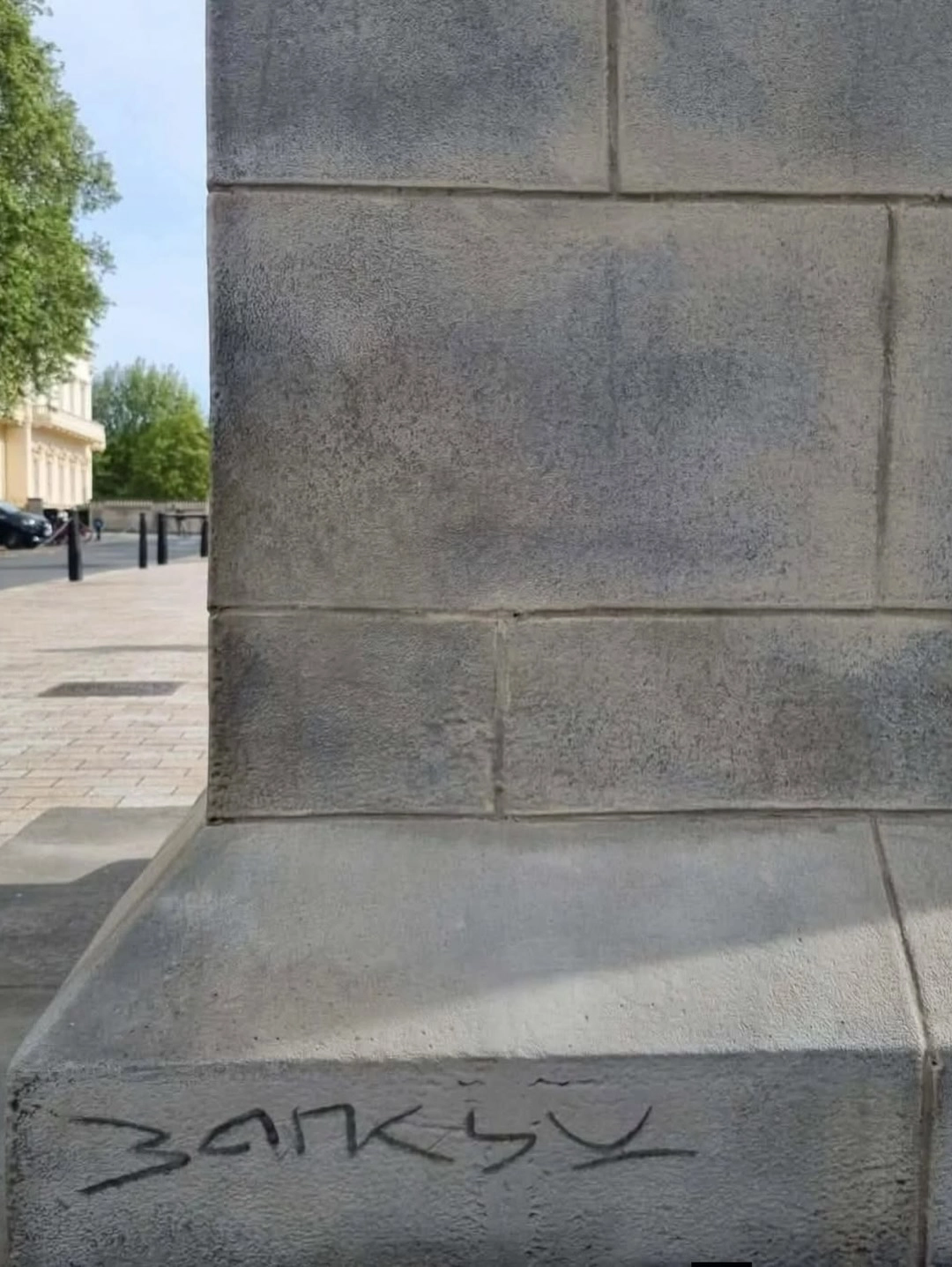
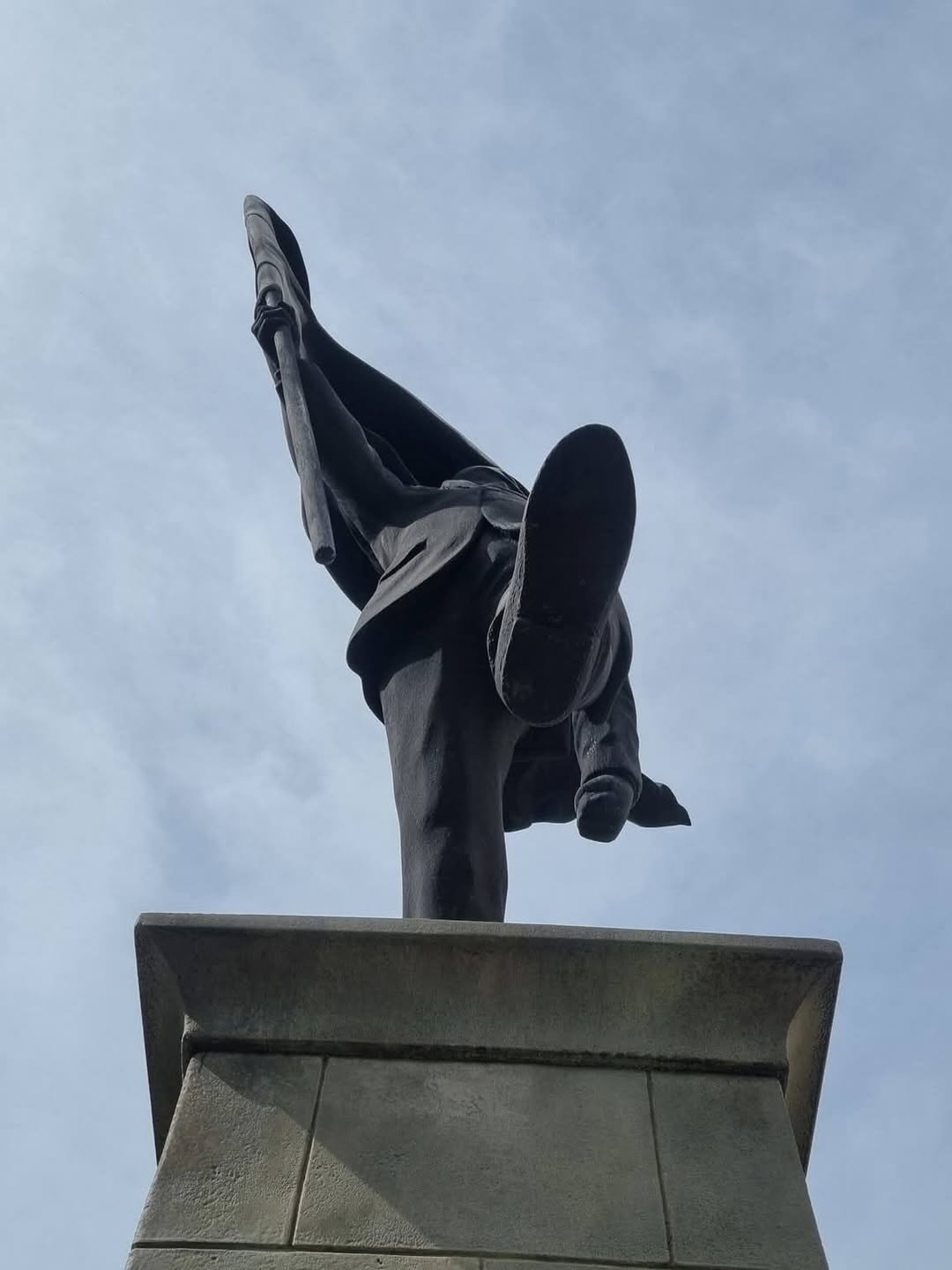
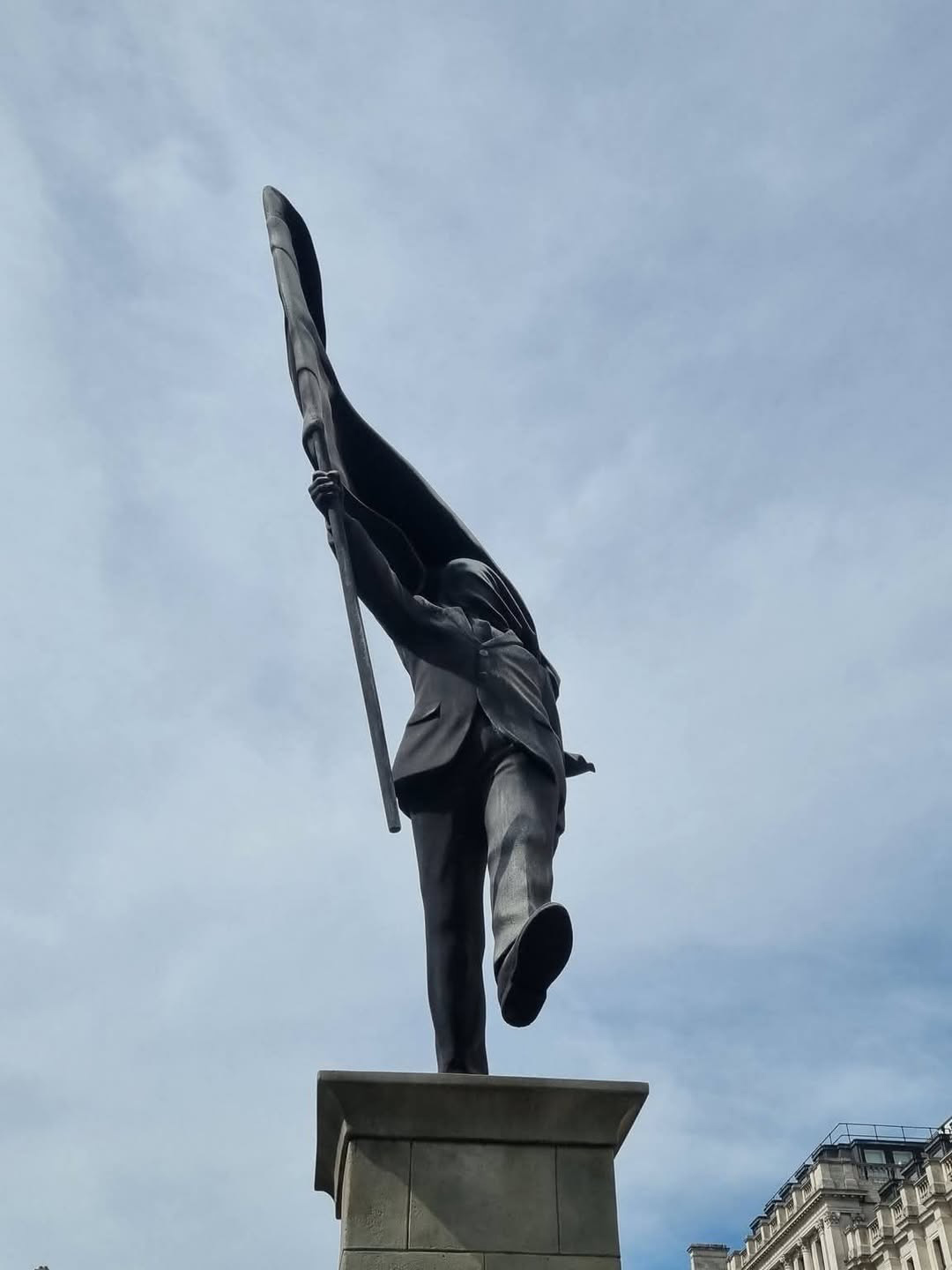
The piece appeared in the early hours of Wednesday at Waterloo Place, an avenue in central London halfway between Trafalgar Square and Buckingham Palace. A male figure, dressed in suit and tie, entirely dark, his face covered by a flag. One of his feet hangs beyond the edge of the pedestal, in the instant before a likely fall. Banksy confirmed authorship on Thursday through a video on his Instagram account. Backed by a portentous score, he runs through the city's great monuments —Big Ben, the equestrian statues, the one of Winston Churchill— before unveiling his own.
The obvious reading is the hardest to dodge. A politician —presumably, going by the suit, the solemn march, the pedestal— blinded by his own flag, will fall into the void. Blind, jingoistic nationalism, no shading.
The flag carries no colour, no identifiable symbols. It seems aimed not at any single country but at attitudes proliferating across all five continents. Advancing without looking, without judgment or scrutiny, brandishing standards that prevent any objective reading of the surrounding whole, reducing it to a pen of a few square metres. A collective blindness.
The location, naturally, amplifies the message. The statue speaks with its neighbours —King Edward VII, the nurse Florence Nightingale, the fallen of the Crimean War, Captain Scott— and confronts them, displaces them, redraws them and strips their figures of every shred of solemnity they had until that moment held.
All of them stand for the virtues of office —courage, sacrifice, duty— and Banksy's character drapes over himself and over all of them a veil that blinds them and, at once, strips their triumphal airs of any authority.
Banksy's sculptures can be counted on the fingers of one hand. The unavoidable reference is The Drinker, installed in 2004 on Shaftesbury Avenue. A brazen parody of Rodin's Thinker, with a traffic cone for a hat. A joke.
This one belongs to another register. There is no obvious humour, no knowing wink. It is a sinister figure, equal in stature to our ominous global hour. A body advancing blind, a foot that will rest on nothing. The parody has turned far darker.
Now, how does one install a sculpture of those dimensions, in solid stone, at the ceremonial heart of London, with no one taking notice? The area is saturated with security cameras owing to its proximity to the royal palaces and to the British gentlemen's clubs.
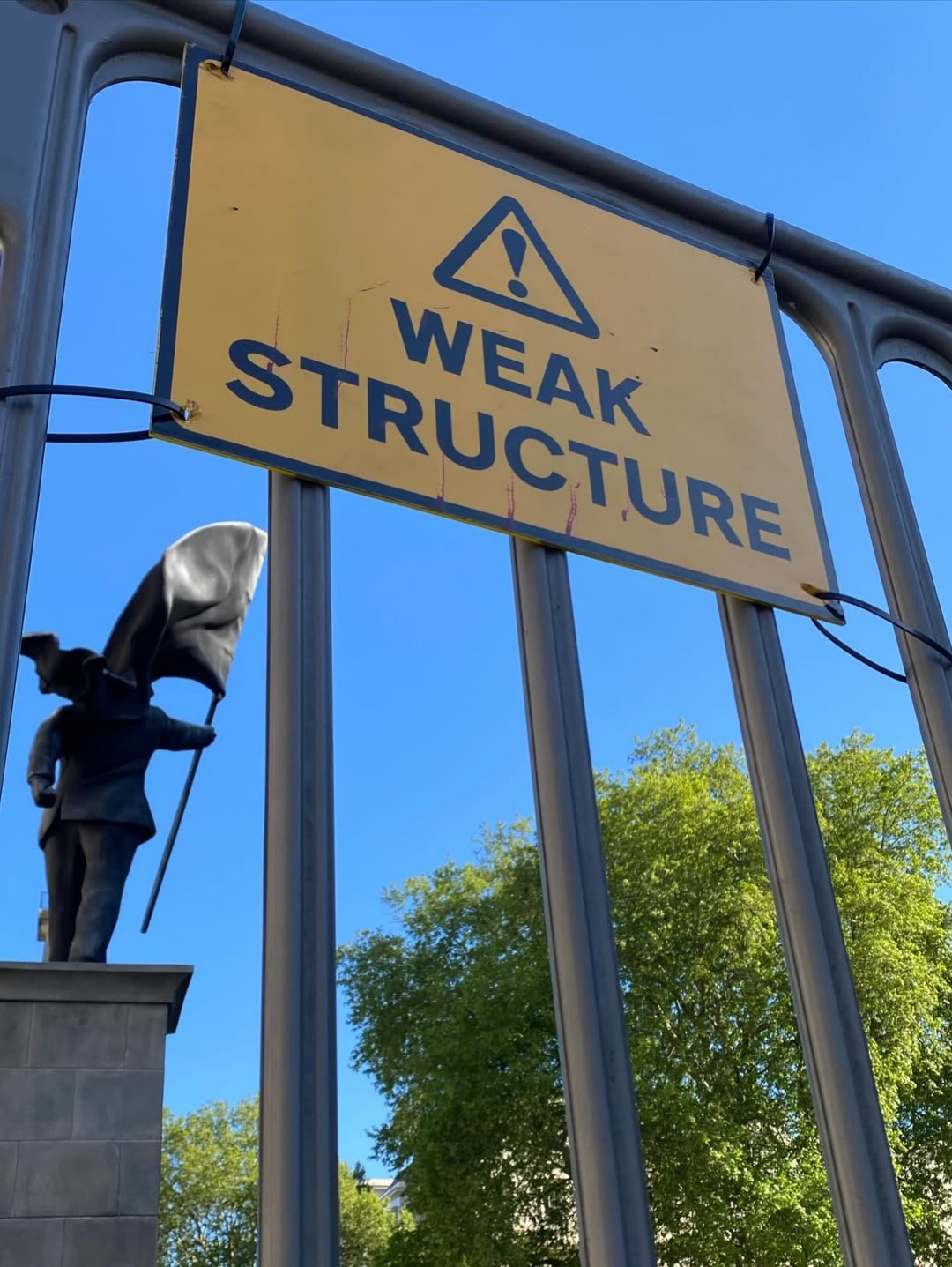
Banksy's own footage shows a truck and workers operating in the night. How did he do it? Who is sustaining that operation at the highest level? Knights Templar, Illuminati, MI5? Westminster Council greeted the work's appearance with delight and described it as a 'notable addition' to the city's artistic landscape. Well, no wonder… given what it will mean for tourism. They even erected protective barriers around it, mindful of its 'cultural' value and anticipating the mass pilgrimage of the curious that it has already set off.
The sculpture arrives barely a month after the Reuters investigation that confirmed the artist's true identity, backing the version the Mail on Sunday had been holding for almost two decades. And precisely now appears a work about identity, hidden behind a flag. A pantomime perfectly premeditated.
That his real identity has been unveiled —assuming they are not mistaken— I found disappointing. The same thing happened to me with Ratoncito Pérez, Santa Claus, the bogeyman, the intrinsic goodness of the sapiens, the eternity of friendship, the roots of true love. Every Banksy piece always provokes the same thought in me… that one I could have done myself… it isn't that hard. But things like that never occur to me. To him, they do. And so it should be. All the glory to him.









Comments powered by Talkyard.