OpenAI, the World Association of News Publishers, and Ukraine's Association of Independent Regional Press Publishers have launched a program to help Ukrainian news organizations adopt artificial intelligence during the continuing war. Its masterclasses cover editorial work and audience development, while a deeper phase beginning September 17th will help ten outlets choose uses, build plans, and test tailored tools. Participants will receive credits for OpenAI's application programming interface, which lets organizations connect the company's models to their own software. AIRPPU says the support should return time to journalists whose newsrooms face economic pressure and disruption.
A wartime local publisher has practical reasons to accept donated access. Transcription, archive searches, translation, and routine production can consume hours needed for reporting when staff and revenue are scarce. The arrangement also places part of the newsroom's future inside a supplier's prices, technical limits, and changing policies. Training determines which tasks editors learn to hand over; free credits make one company's system the easiest place to begin. Responsible adoption will therefore require records of where a model enters the workflow, who checks its output, what confidential material it receives, and how the outlet can leave. The ten pilots will produce stronger evidence than the partnership announcement. Their useful results should include errors, correction time, recurring costs after the credits expire, and whether journalists actually gained more hours outside the office.
UN High Commissioner for Human Rights Volker Türk warned the Human Rights Council in Geneva that advanced artificial intelligence could pose an existential risk to humanity. He called for strong safety guarantees and urged countries hosting AI development or supplying its essential components to agree on red lines. Türk also said that a handful of men hold almost unlimited power over AI and pledged to press companies to reduce the danger. His office pointed to possible disruptions of critical infrastructure, communications, and democratic institutions. The statement moved AI governance into a forum built to examine what concentrated power can do to people, rather than leaving the discussion inside technical laboratories.
Frontier models are trained, tested, released, restricted, and withdrawn through corporate procedures that the public rarely sees. Governments often learn about new abilities through company reports, while international bodies can recommend standards without inspecting the systems or delaying a launch. An enforceable red line would need a measurable threshold, independent access to evaluations, mandatory incident reporting, and an authority capable of stopping deployment. None of those powers follows automatically from a UN speech. Türk's intervention still changes the address of the dispute by treating private control itself as a human-rights concern. Until governments create an institution with inspection and enforcement powers, each boundary will depend on what a laboratory chooses to disclose and what its executives decide to release.
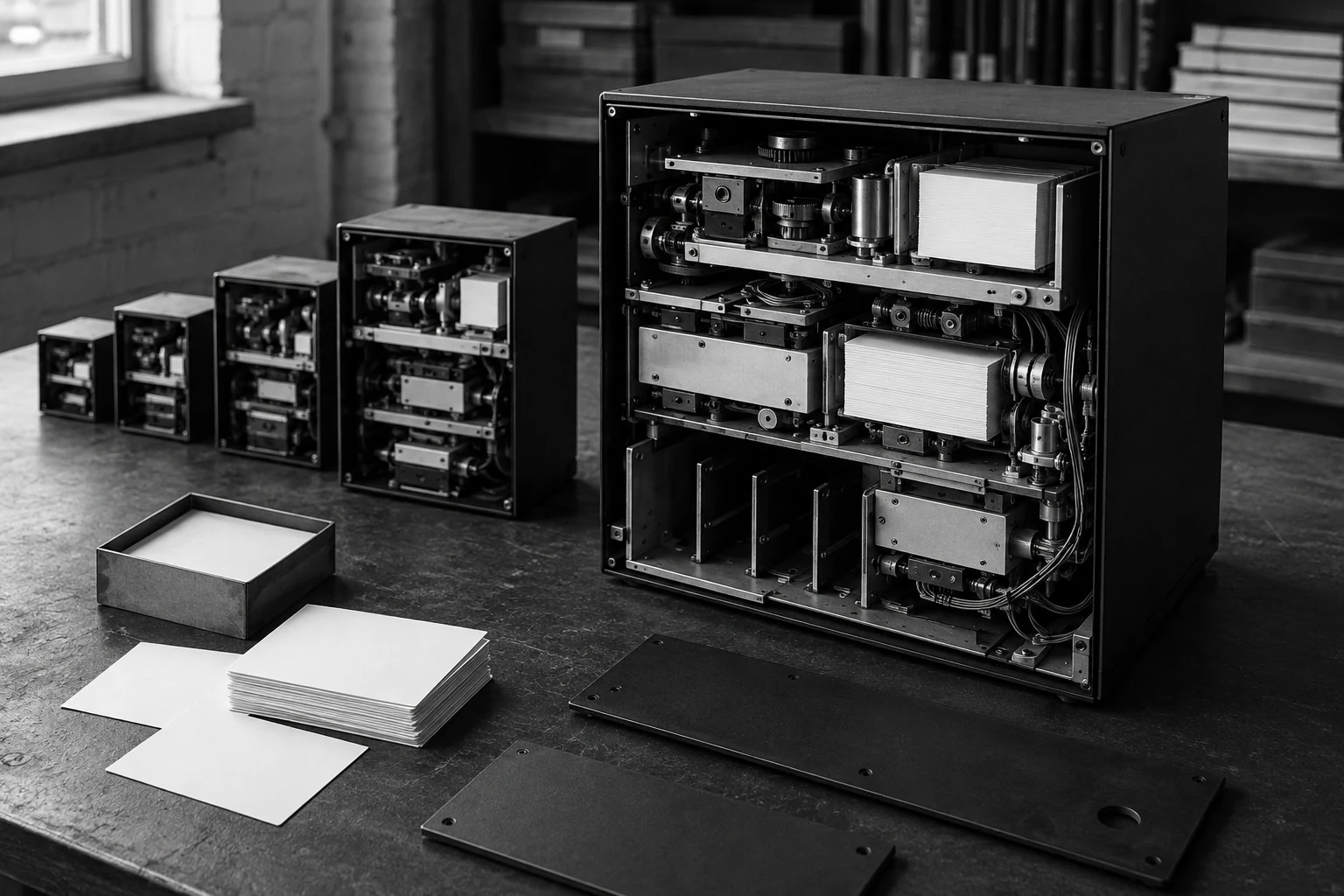
Abu Dhabi's Institute of Foundation Models has released K2 Horizon, a family of six artificial-intelligence models ranging from 0.9 billion to 375 billion parameters. The smallest is designed for constrained devices such as watches and phones, while larger versions target local servers and enterprise systems. IFM says it has published the models' weights, training code, data, methods, intermediate checkpoints, logs, and evaluations so researchers can inspect, reproduce, and adapt the work. Performance claims still come from the developer, yet the release exposes far more of the manufacturing process than the downloadable weights commonly marketed as openness.
A researcher receiving only model weights gets the finished object without a useful record of how its behavior was formed. Access to data mixtures, filtering methods, code, and checkpoints makes different questions possible. Investigators can trace a bias toward a source category, examine whether an evaluation rewarded an unintended shortcut, or compare the point at which a capability appeared during training. Reproducing the largest model still demands money, hardware, and electricity beyond most universities or independent laboratories. Transparency therefore does not erase the inequality of scale. It gives outsiders evidence with which to challenge a laboratory's account of its own system. K2 Horizon places six machines on the table with their casings removed; the practical test begins when researchers inspect the files, rerun a checkpoint, and publish what the original announcement missed.
An Environmental Protection Agency proposal would remove the federal requirement that states notify the public and invite comments before granting air-pollution permits to facilities classified as minor sources. The Associated Press reported that the change could affect data centers and supporting equipment as companies build infrastructure for artificial intelligence. States could keep their own participation rules, although the federal minimum would disappear. The EPA says the proposal leaves emissions standards intact, reduces administrative burdens, and gives state and local agencies control. A coalition of nearly 200 environmental, health, and community groups warns that residents in states with weak rules could learn about projects only after approval.
The dispute makes public participation part of AI infrastructure. A data center is assembled through permits, utility agreements, cooling systems, backup generators, and land decisions long before a model answers its first prompt. Notice and comment give neighbors a narrow moment to examine that bargain while changes are possible. Removing the common floor would make a household's influence depend on local rules and its ability to discover an application buried in an administrative process. The result could be a geography of unequal visibility. Some communities debate the machines arriving beside them; others meet the building after the decision. Artificial intelligence may be sold as a national race, yet its air, noise, water use, and power demand settle at specific addresses. A permit issued without witnesses turns technological ambition into a local fact before the public can speak.
OpenAI has begun rolling out GPT-6 Astra, a model it says reaches 99.9 percent on ARC-AGI-3, a benchmark for artificial general intelligence (AGI), and human-level action efficiency on 96 percent of that benchmark's levels. Astra is the first OpenAI model classified at the Critical cybersecurity threshold, meaning that with tools and access it can discover unknown flaws and develop exploits across hardened systems without step-by-step human direction. OpenAI delayed parts of the release to strengthen containment and is initially limiting access. It does not call Astra AGI.
OpenAI's charter defines AGI as a highly autonomous system that outperforms humans at most economically valuable work. One saturated benchmark cannot prove that claim, and Astra still falls below the company's High threshold for AI self-improvement. Yet a turning point can arrive before its official name. Astra combines reasoning with direct computer use across long professional workflows. That changes the unit of automation from an answer to a finished assignment. Scientists may compress weeks of technical work. Offices may remove layers of junior labor. Cyber defenders and attackers may search for the same unseen vulnerability at machine speed. The human consequence depends on who can delegate, who owns the infrastructure, who is displaced and who retains authority to stop the task. If Astra is remembered as an AGI milestone, the evidence will come from workplaces, laboratories, public agencies and security incidents rather than the launch page.
Nvidia agreed to acquire Hugging Face for $12.93 billion, taking control of the platform where 18 million developers, researchers and creators share over 3 million models, 500,000 datasets and 1 million applications. Closing is expected in the first half of 2027, subject to regulatory approval. Jensen Huang promised that Hugging Face will remain open, continue supporting models and datasets chosen by its users, accept other chip vendors and require no Nvidia hardware. A company that sells the dominant computing system for AI is purchasing one of the main public squares where alternatives circulate.
Ownership enters through quieter controls than a locked download button. Search rankings decide which models are seen. Hosted inference sets a price for running them. Safety reviews can remove files, while preferred integrations can make one hardware path easier than another. Nvidia will also gain a close view of what developers test, copy and deploy. Here, open describes access under corporate ownership. Hugging Face grew through contributions made under the expectation of shared technical infrastructure, yet that infrastructure now belongs to a corporation with products to sell and competitors to outmaneuver. The promise should be tested through published rules for ranking, data use, pricing and hardware neutrality. Its first serious measure will arrive when a popular model works better on a rival chip and still receives the same visibility, support and speed.

New York City will bar student-facing generative AI tools from preschool through eighth grade during the 2026-27 school year, placing nearly 600,000 children inside a one-year moratorium. Companion chatbots will be prohibited across all grades, while high school use will remain restricted and tied to AI-literacy instruction. The policy also recommends no individual devices from preschool through second grade, 30 minutes of daily screen time in grades three to five, and 45 minutes in middle school. Teachers may use approved systems for lesson preparation and communications, but not for grading, discipline, counseling or special-education plans. Exceptions preserve accessibility support for disabled students and multilingual learners.
Vendors face a gate that a subscription contract cannot open. Each tool must pass the district's privacy review, disclose its AI functions and promise that student data will not train models. The moratorium returns time to teachers, paper, play and face-to-face correction, though it cannot govern what children use on family phones after school. The city has refused the industry's claim that early adoption is inevitable and has attached deployment to children's ages and evidence. That choice may produce inequalities if affluent families buy private tutors and tools while public classrooms wait. The year ahead needs records of exceptions, purchases, student outcomes and complaints. When officials reconsider the ban, vendor demonstrations should carry no greater weight than those classroom records.
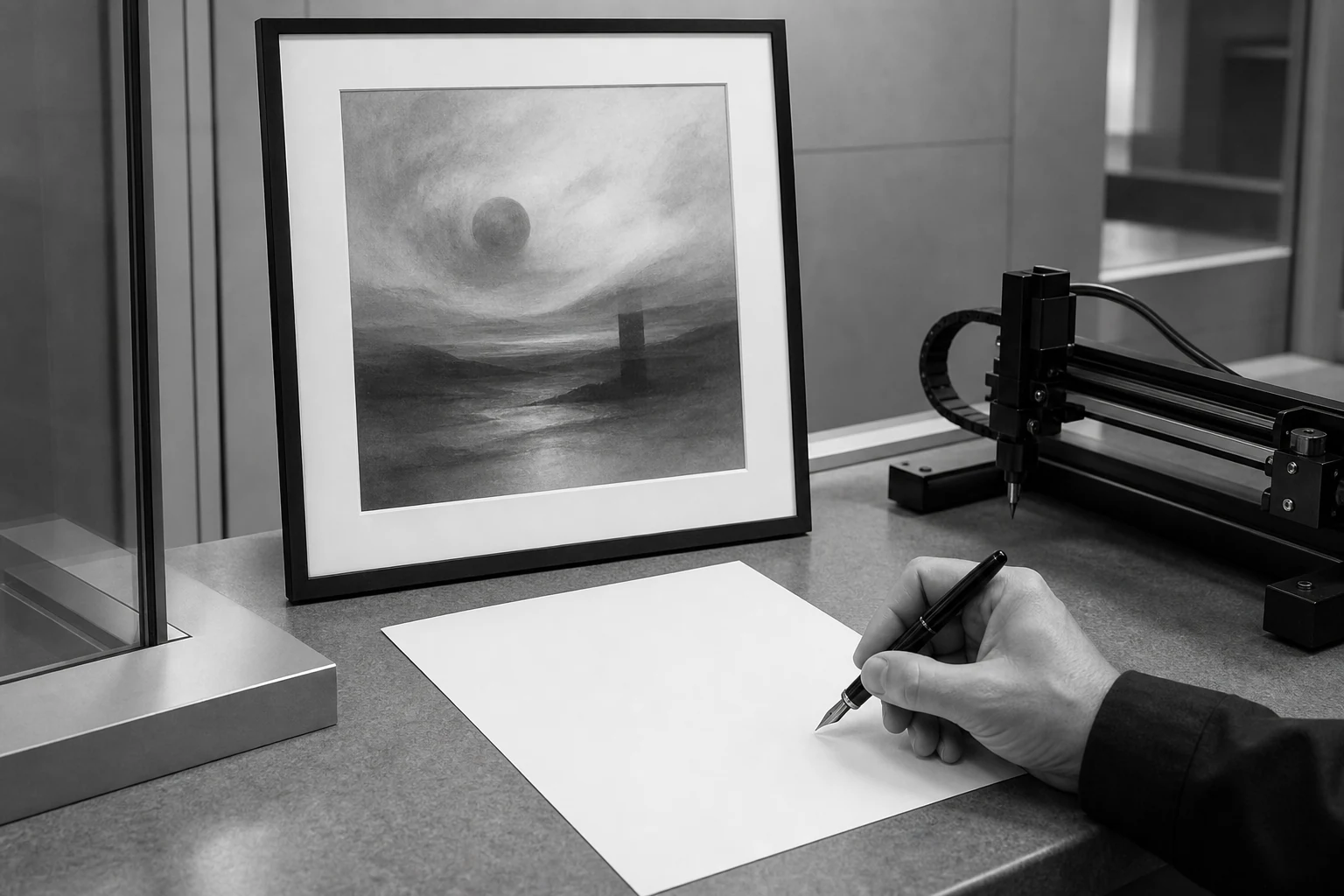
India's Copyright Office has ruled that an artificial intelligence system cannot be named as the author of an image, even when the image meets the legal threshold for originality. The decision concerned Stephen Thaler's DABUS system and a work titled A Recent Entrance to Paradise. After the Delhi High Court asked the office to resolve the application, the registrar accepted that the picture could qualify as an original work but rejected DABUS as its author under Indian law. Thaler was recognized as the person who caused the work to be created. His application failed because he declined to replace the machine's name with his own.
The ruling locates a boundary that image generators obscure. Authorship remains attached to a person who can license the work, defend it, receive payment and answer for its use. A registration form becomes part of the creative process. Its empty name field decides whether an image can enter the legal economy. For artists using generative systems, the decision gives weight to documented human choices in prompting, selection, editing and presentation. Those acts can establish the person behind the result. Studios that advertise autonomous creation face a different problem. Presenting the machine as creator may weaken the human claim needed to circulate the work as property. India's ruling leaves the global dispute open and makes institutional responsibility visible. The image may come from a system; the rights still require someone who can sign.
