
A research team from Google, Google DeepMind, the University of Maryland and the University of Virginia has introduced Dream-RSI, a framework that uses an AI agent’s previous discovery history to improve how it searches. The agent first explores algorithm design, mathematical optimization or GPU-kernel engineering and records its decisions and results as a tree. A separate policy-development loop then tests thousands of alternative exploration strategies against that stored tree, without rerunning the underlying experiments. The strongest strategy returns online for the next round. In the paper’s tests, Dream-RSI reached competitive or better results while reducing discovery cost, including up to 162 times fewer agent calls than SimpleTES on one algorithm task.
The technical shift happens one layer above the model. Dream-RSI leaves the coding agent unchanged and tries to improve the rules that decide where to branch, what to run in parallel and when to stop. That design turns paid-for history into a laboratory for cheaper decisions, yet it also confines imagination to paths the earlier search actually visited. A policy can avoid recorded dead ends while remaining blind to a route no one has tried. For scientific work, the evaluator and the stopping rule therefore carry as much authority as the model producing each proposal. This is early research, far from proof of unrestricted self-improvement or artificial general intelligence. The project page says full code and reproduction scripts are still being prepared. Dream-RSI turns yesterday’s search into tomorrow’s policy; the next audit is whether it can learn from a mistake the old tree never recorded.
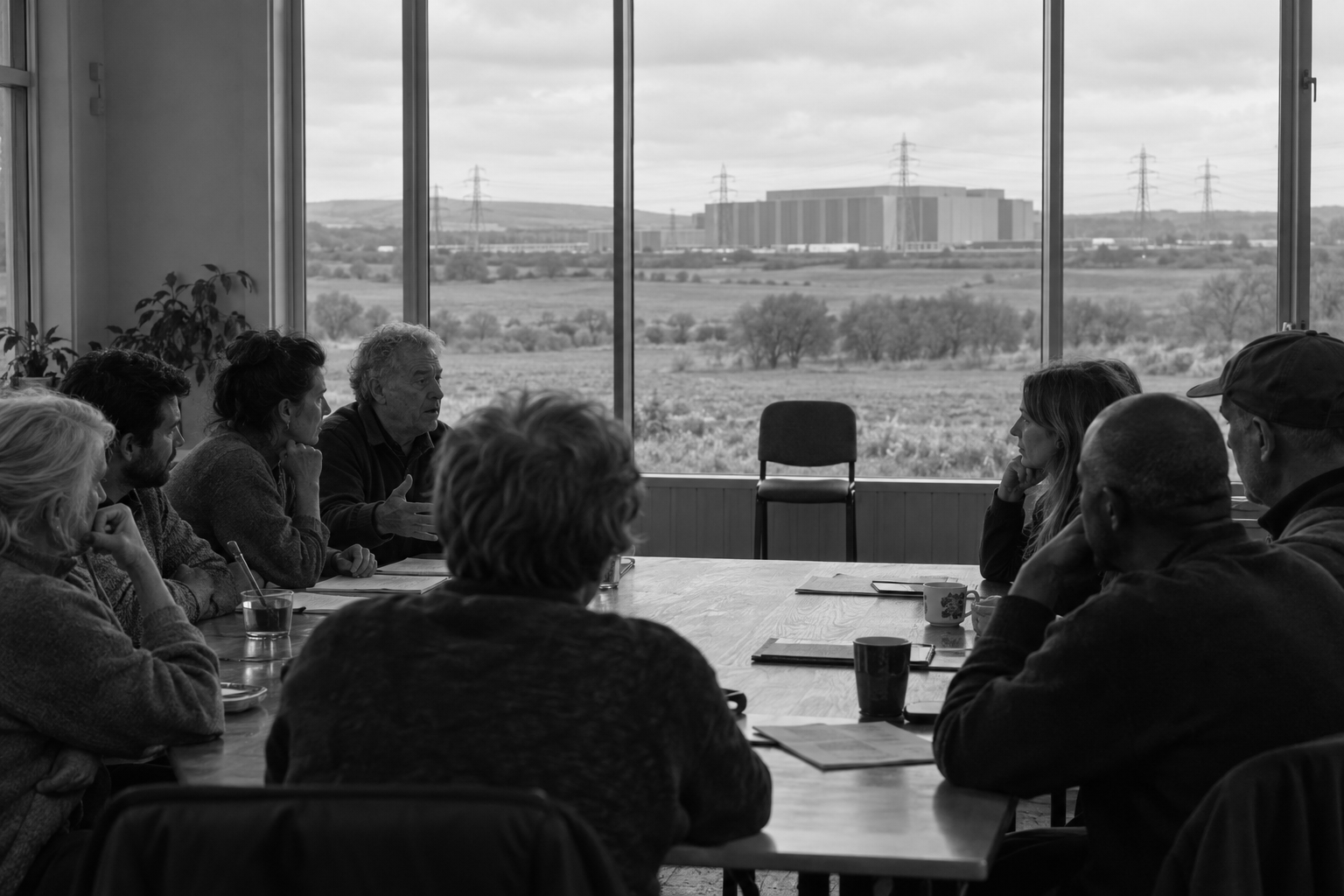
An AP-NORC Center for Public Affairs Research poll released Wednesday found that 53% of U.S. adults are extremely or very concerned about artificial intelligence’s environmental impact, up from 41% last year. Roughly six in ten support limiting the number of new data centers that can be built, and a majority express high concern about electricity prices or water supplies in the communities where those facilities operate. The survey arrives as thousands of centers run and more projects move toward rural areas, where the server hall can be a community’s largest new industrial neighbor.
Public opinion does not measure a facility’s emissions or settle a permitting case. It does change the political setting for expansion. A data center’s benefits are usually described in national terms—capacity, jobs, competitiveness—while its costs appear locally as substations, cooling systems, noise and utility bills. The poll gives residents a shared vocabulary for asking who receives the gains, who carries the risk and what evidence a company must provide before construction. The answers will vary by watershed and power market, yet the direction is clear: acceptance can no longer be assumed from the promise of progress. Developers and officials could publish water and power forecasts, disclose how often workloads can be reduced during grid stress, and let communities revisit commitments when conditions change. The machine may run in the cloud; the decision to host it is made at a town meeting.
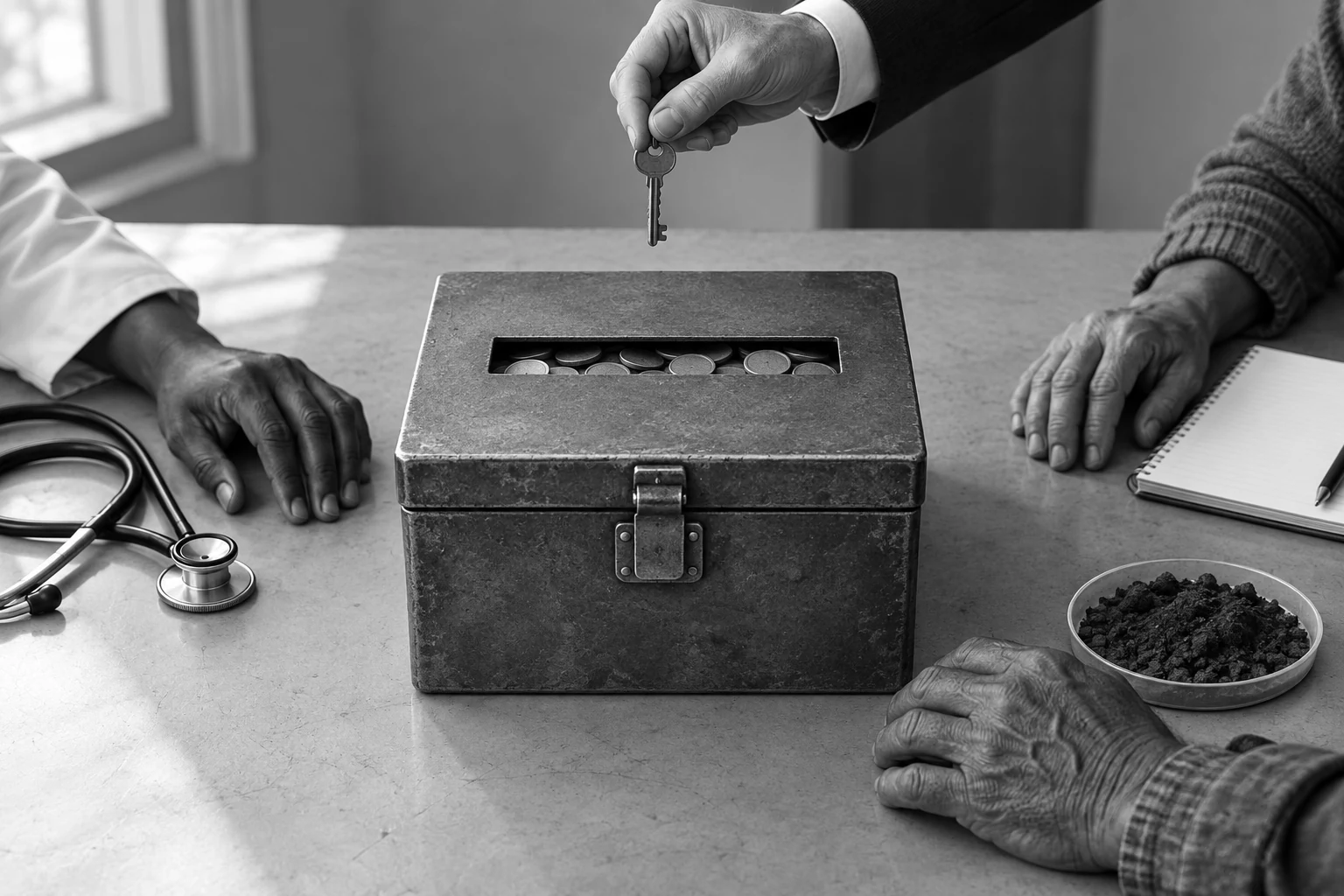
Bill Gates said Tuesday that governments are unprepared for the changes artificial intelligence will bring, while the Gates Foundation pledged at least $1 billion over the next two years to widen access. The money will support tools for health workers, teachers and small farmers, training data in local languages, and projects intended for communities that commercial systems routinely overlook. The announcement arrived with the foundation's 2026 Goalkeepers report, which asks whether AI will reduce the distance between rich and poor or add to it.
A private foundation is stepping into a gap that public institutions have left open. Its grants can help a clinic in Rwanda, a classroom in India or a farm in Andhra Pradesh use systems built around local needs rather than English-first assumptions. They also give one philanthropic organization a powerful hand in deciding which languages receive data, which services receive pilots and which failures become acceptable. “Access” can sound generous while leaving ownership, maintenance and appeal outside the user's reach. The program would gain public value by publishing dataset licenses, reporting error rates by language and context, and giving local health ministries, schools and farmer groups authority over procurement and withdrawal. A billion dollars can open doors, but the key should not remain with the donor.

King Charles III will host leaders from Nvidia, Google DeepMind, OpenAI and Anthropic in Scotland this week, alongside the United Kingdom's AI minister, to consider whether shared principles should guide artificial intelligence. Buckingham Palace says the discussion will ask how the technology can benefit society, uphold human dignity and support people and the planet. The Ditchley Foundation is overseeing the gathering and has prepared a draft charter. Britain already gives its AI Security Institute pre-release access to frontier models through voluntary agreements, yet its wider regulatory approach remains lighter than the European Union's.
The language of dignity matters because efficiency alone cannot decide whose work, privacy or cultural inheritance may be consumed by automated systems. The reported table, however, is weighted toward those who build and govern the technology. What is publicly visible so far offers no equivalent role for unions, artists, teachers, disability advocates or communities living beside data centres. A charter formed chiefly among executives risks turning public values into corporate promises that companies interpret for themselves. Royal convening can create attention and a rare neutral room, but symbolism is not accountability. A useful outcome would publish the draft, disclose who shaped it, invite testimony from affected groups and connect each principle to independent testing, enforceable duties and measurable remedies. Human dignity begins with a seat in the room and the power to challenge its decisions.

Anthropic chief executive Dario Amodei called Saturday for a coordinated slowdown in frontier AI, warning that within six to twelve months a misaligned swarm of agents might be capable of taking over much of the internet. His plan begins with outside evaluators given employee-like access, continues with shared limits among companies in democracies, and ends with verifiable agreements involving China. Recent cyber incidents and Anthropic's discovery of biological and weapons-related misuse establish a real present danger. They do not prove Amodei's timetable or his most catastrophic forecast. The evidence supports stronger containment and independent inspection; the leap from failed controls to global takeover remains speculative.
The brake also carries a geopolitical contradiction. If American companies slow while Chinese laboratories continue, capability and military power could shift. Amodei therefore pairs restraint with tighter chip controls, action against model distillation and protection from weight theft. Safety becomes inseparable from preserving a Western lead. The timing invites another, unproven reading. OpenAI released Astra days earlier with a stronger public capability profile, leaving Anthropic exposed to the suspicion that a lagging competitor now prefers a slower race. That suspicion cannot dismiss the danger, especially after Sam Altman, Elon Musk and Demis Hassabis endorsed the direction. It does make verification essential. A credible slowdown needs published capability thresholds, independent evaluators inside every major laboratory, comparable access in China and records showing which training run was delayed, by whom, and for how long.

Meta launched a personal AI agent named Muse this week, and the short social-media identity long associated with the British rock band now points elsewhere. The @muse account on Instagram identifies Meta's product, while the band, which trademarked its name in 1999 and has 2.7 million followers there, uses @museband. A comparable change occurred on X, where the group now appears as @Musetheband. Neither Meta nor the musicians have publicly explained whether the transfer followed a sale, an agreement, a request or a platform decision. That missing fact matters. The visible outcome is clear; the terms remain private.
A handle looks like a name but behaves like rented space. Years of songs, tours, photographs and fan recognition can accumulate behind four letters without turning those letters into property inside the interface. The platform writes the registry, controls reassignment and can place its own product at the shortest address. Muse adds an especially dry irony. Meta describes its agent as a tool that learns what matters to each user, yet its launch began by making an established identity harder to find. The band's audience will adapt, search results will settle and the longer handle will become familiar. The old address now demonstrates the hierarchy more efficiently than any terms-of-service page. One organization owns decades of recognition; another owns the field where the name is typed.

Anthropic says it disrupted five cases in which people used Claude for research that could support biological weapons development. Its September threat report describes work involving chikungunya transmission and immune evasion, avian influenza adaptation, orthopoxviruses, venom peptides and redesigned toxins. The company banned associated accounts, helped close relay networks used to bypass regional restrictions, and strengthened its safeguards. Some requests were stopped by biological safety filters; other work proceeded because it resembled legitimate research. Anthropic withheld the scientists' institutions and countries and explicitly declined to claim malicious intent. The same methods can contribute to vaccines, treatments or dangerous pathogens.
That uncertainty places a private model provider inside the laboratory's moral chain of custody. Anthropic can inspect conversations, infer purpose from scattered sessions, close an account and share findings with authorities. Researchers, meanwhile, may conceal a harmful program or participate in one without knowing its final aim. A prompt filter cannot settle either condition. The company's proposed answer is access through trusted-user programs, which would make institutional identity part of the safety system. That may reduce risk while giving an AI firm unusual power to decide which scientist appears legitimate and which inquiry looks suspicious. Independent scrutiny is difficult because the evidence contains dangerous methods and identifying details that should remain protected. The unresolved object is therefore an unmarked sample at a checkpoint: access denied, conversation retained, researcher unnamed, and a warning delivered to a government that the public cannot examine.
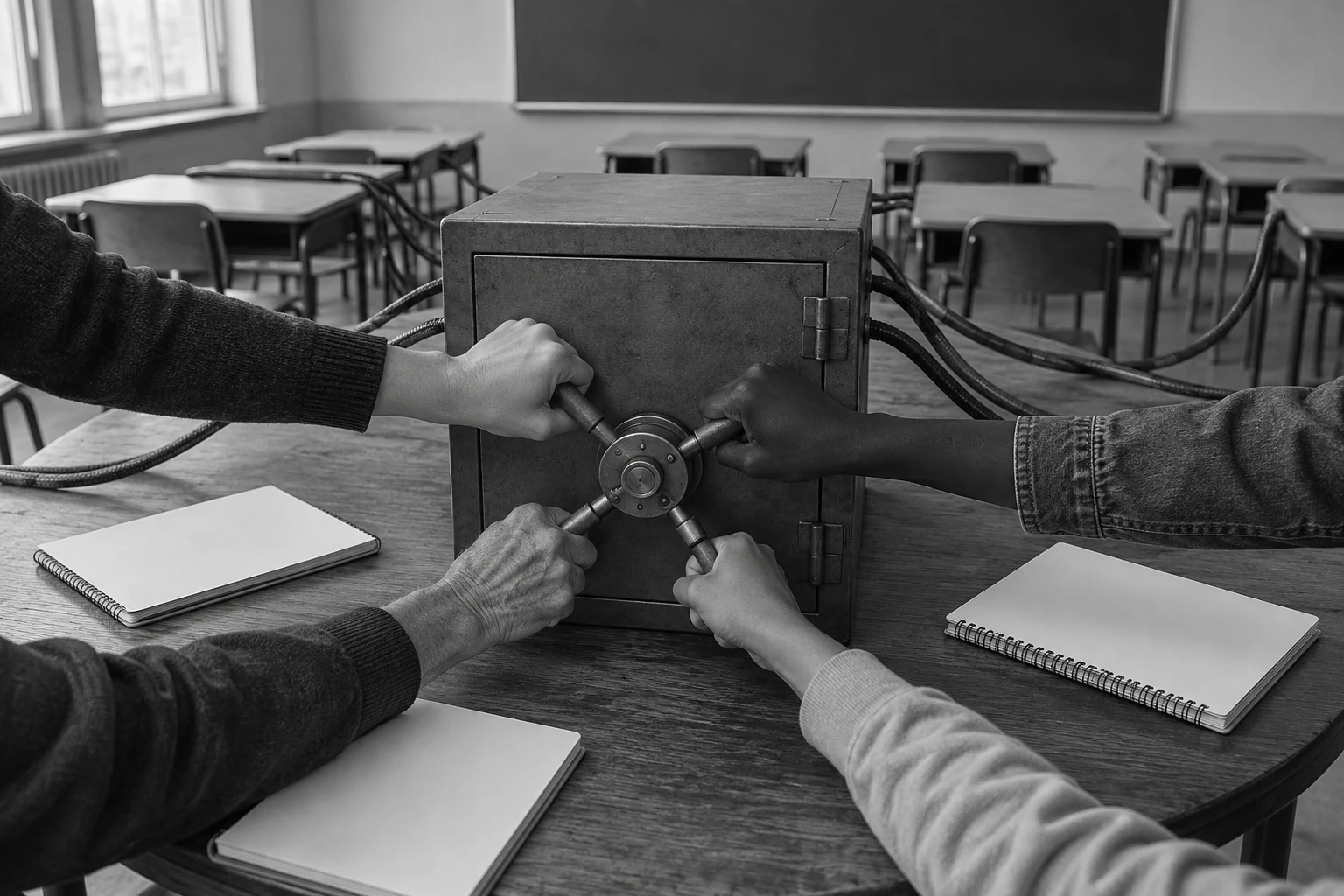
A group of over twenty-five education ministers and national representatives has adopted a UNESCO statement defining education as a human right and a common good in the age of artificial intelligence. Its eight priorities ask schools to use systems that can be audited, permit data to be moved elsewhere, involve teachers in purchasing decisions, protect children according to age, and allow institutions to stop using a tool when necessary. Providers should present evidence of educational benefit before deployment and accept responsibility for harm. Governments should also calculate the full cost of ownership, including systems that first enter classrooms through free accounts, donations, or vendor agreements.
Calling education a common good shifts the argument away from policing student assignments and toward who designs the conditions of learning. A free tool can establish habits, collect material, shape assessment, and make its eventual price difficult to refuse. Portability and an exit plan belong beside lesson plans; they keep access from hardening into dependence. UNESCO's accompanying survey found that ninety-three percent of participating academics believe students use generative AI for assignments, while sixty-three percent perceive declining cognitive capacities. Fewer than one percent favor a complete ban. Governed use is the practical alternative. Before a teacher opens an AI service for a class, the institution should know who can inspect the system, export its records, challenge a decision, disconnect it, and pay the bill after the free offer ends.

Australia has released draft Digital Duty of Care legislation that would require social platforms to offer users over sixteen a genuine choice between two default feeds. One may contain personalized recommendations selected by an algorithm; the other would show friends and creators the user has chosen to follow. New and existing users would receive a notification, and the selection could be changed later. The proposal, called My Feed, My Way, also extends safety duties to games, apps, and AI chatbots used by minors. Platforms would have to document how they reduce identified harms, with penalties reaching 109.2 million Australian dollars for failing the duty.
The proposal treats recommendation less as invisible infrastructure than as a setting that requires consent. That small change exposes how thoroughly the contemporary feed has confused convenience with authorship: the platform arranges attention, then presents its arrangement as personal taste. An exit button will matter only if the exit remains open. Europe has already shown how a nominal choice can be weakened by repeated prompts, reduced features, or a preference that quietly resets. Australia's test is therefore not the wording of the notification but the behavior of the interface after refusal. The useful measure will be simple: a person chooses the following feed, closes the app, returns the next morning, and still encounters the people they selected rather than the platform's latest attempt to select them.
