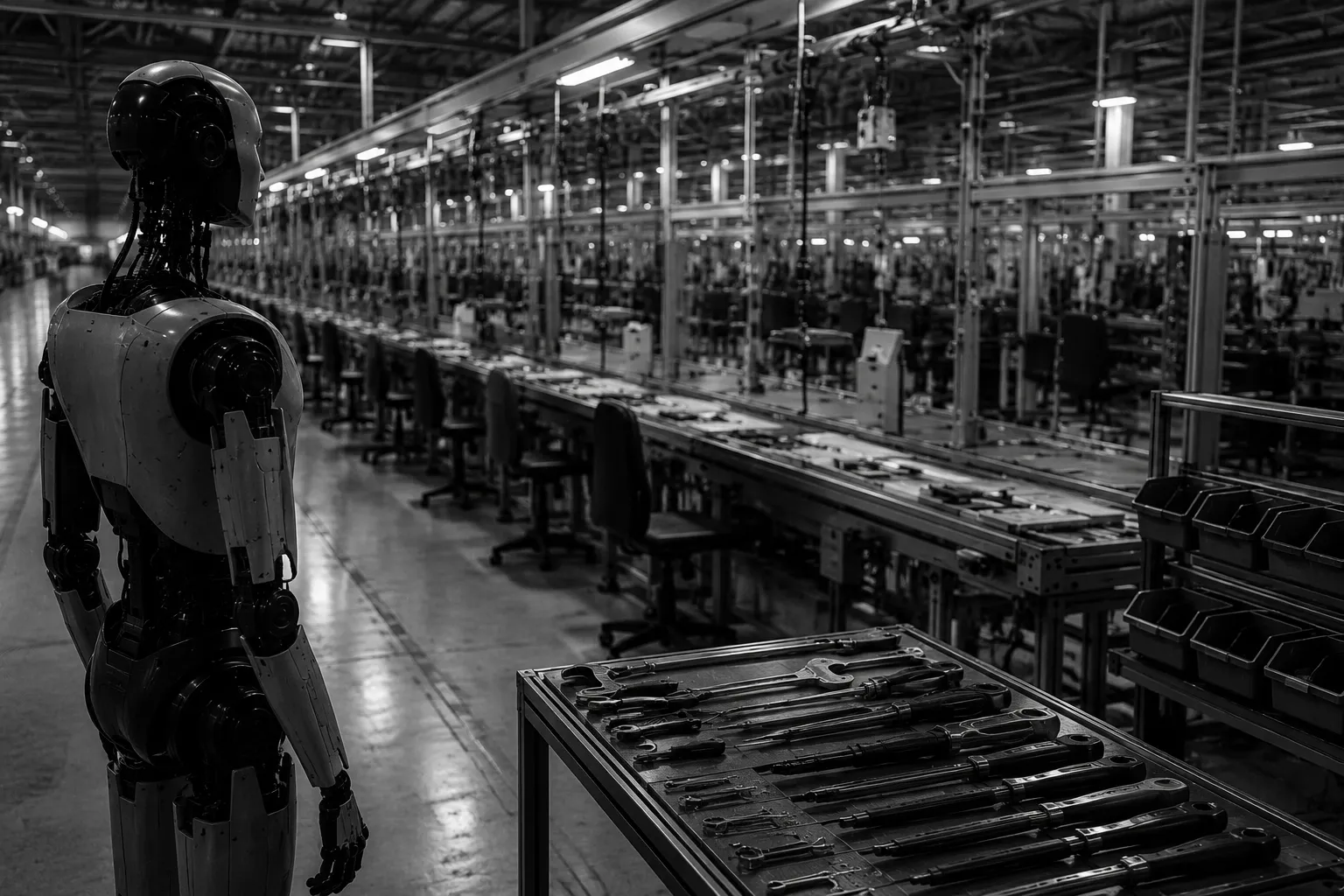
Chinese humanoid robot companies are shipping units and iterating faster than U.S. competitors, helped by a manufacturing base built around electric vehicles, sensors, batteries, and industrial automation. Unitree reportedly shipped roughly 36 times as many robots last year as U.S. rivals Figure and Tesla. The early market is moving from televised demonstrations toward warehouses, factories, retail, and rehabilitation, TechCrunch reported on February 28th.
The robot's public image begins with spectacle. At China's Spring Festival Gala, humanoids performed kung fu flips before returning to the less cinematic work of moving goods and repeating physical tasks. The speed advantage comes from compressing research, supply chains, manufacturing, and deployment into one industrial loop. Machines can enter a workplace, fail, collect new data, and return in a revised form before a distant competitor has finished its demonstration. The body is already ahead of the software in some respects, while autonomy remains limited by scarce real-world training data and safety problems. The humanoid becomes ordinary when it occupies a station for a long shift. The performance ends when the robot is expected to keep working after the cameras leave.
Suno says it has reached two million paid subscribers and $300 million in annual recurring revenue. The service lets users create songs through natural-language prompts, allowing people with little musical experience to generate audio quickly. Its growth follows lawsuits from musicians and record labels over training data, alongside a licensing deal with Warner Music Group. Synthetic songs have already reached Spotify and Billboard charts, TechCrunch reported on February 27th.
The subscription turns musical possibility into a monthly utility. A user supplies a mood, a reference, or a few words and receives a track that can be played, shared, or abandoned before the next one arrives. The system does not need a musician's years of practice to produce a convincing surface. It needs a prompt and a library of patterns whose ownership remains contested. Suno's paid users are therefore buying access to a machine that compresses composition into selection. The artist's labor has not disappeared from the sound; it has moved backward into the training material and outward into the legal dispute. A blank record waits on the table while millions of subscribers decide whether a song begins with a person or with an instruction.
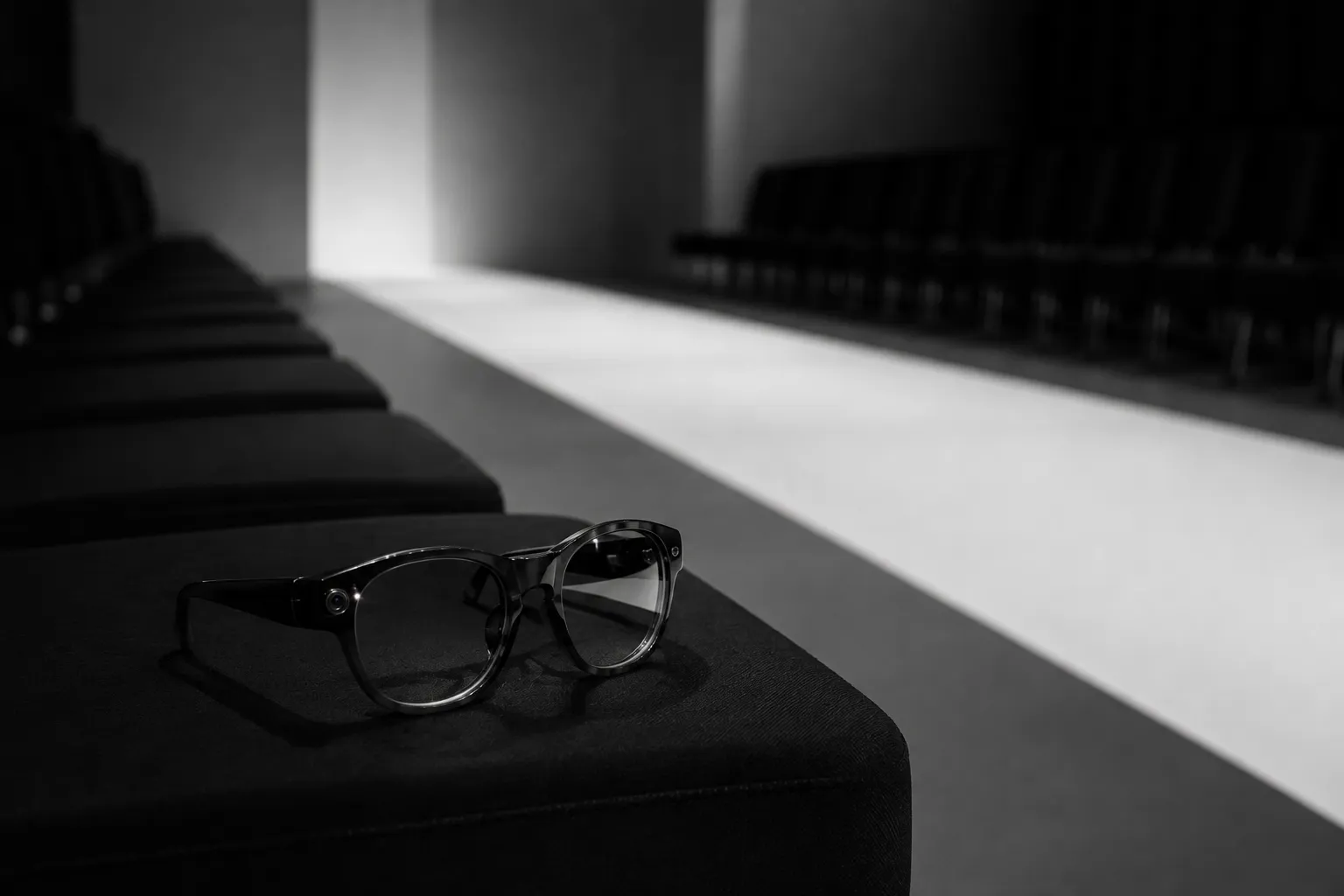
Mark Zuckerberg's appearance at Prada's Fall/Winter 2026 show in Milan has renewed speculation that Meta will launch AI glasses under the Prada brand. Meta has not announced such a collaboration, but the company already sells Ray-Ban Meta and Oakley Meta glasses through EssilorLuxottica. Those products sold over seven million units in 2025, while a Prada version would give Meta a place inside luxury fashion, TechCrunch reported on February 26th.
Luxury can make an intrusive object feel like a finishing detail. A camera worn on the face changes the social meaning of looking, recording, and being recorded, yet a Prada frame could move the device from gadget to status symbol before the public has agreed on its rules. The timing is awkward. Consumers are questioning doorbells and street cameras, and reports that Meta may add facial recognition to its glasses have already produced backlash. Fashion supplies the opposite language. It offers shape, scarcity, and desire. The lens can be sold as taste while it continues to collect the scene in front of the wearer. The runway seat becomes the place where surveillance waits to be dressed.
About 12 percent of U.S. teenagers say they use AI chatbots for emotional support or advice, according to a Pew Research Center survey. Sixteen percent use AI for casual conversation, while the most common uses remain information searches and schoolwork. Parents are far less comfortable with chatbots occupying an emotional role, and mental health professionals warn that general-purpose systems were not designed for it, TechCrunch reported on February 25th.
The private chat has become a room a teenager can enter without asking a friend, parent, or counselor to stay awake. The system answers immediately, absorbs the confession, and presents a tone that can be mistaken for attention. That availability can feel like care while removing the friction through which another person notices confusion, contradiction, or danger. The survey also shows a gap between what parents think their children do with AI and what teenagers report themselves. The device remains in the bedroom, outside the adult's view, while the model occupies the chair where a listener might have sat. A screen designed to answer questions is now being asked to receive a life.

Uber engineers built a chatbot modeled on CEO Dara Khosrowshahi so employees could practice presentations before meeting him. Khosrowshahi said that some teams present their slide decks to the AI version of him, using the simulation to refine their arguments before the real executive sees them. He also said that about 90 percent of Uber's software engineers use AI and around 30 percent are power users who are rethinking the company's architecture, TechCrunch reported on February 24th.
The replica turns management into a rehearsal room. Employees can test a proposal against an approximation of the boss's questions before entering the meeting where authority is still human and consequences are real. The company gains a record of what its workers expect from an executive, while the executive gains a filter that makes presentations arrive already polished. A model trained to imitate a leader does not hold the leader's power, but it can shape the behavior of everyone preparing to face that power. The subordinate learns to anticipate the machine before speaking to the person. The empty chair remains in the room, surrounded by an invisible audience made from the boss's previous language.

Anthropic accused DeepSeek, Moonshot AI, and MiniMax of creating over 24,000 fake accounts to extract capabilities from Claude. The companies allegedly generated over 16 million exchanges focused on reasoning, coding, tool use, and computer vision. Anthropic described the activity as distillation, a training method that becomes competitive copying when one lab uses another model's answers as a source. The accusations arrived while US officials debated controls on advanced AI chips exported to China, TechCrunch reported on February 23rd.
The model is presented as a sealed product, but its behavior can be sampled one answer at a time. Thousands of accounts turn the chatbot into an unwitting tutor whose lessons are collected elsewhere and compressed into a rival system. The theft is difficult to see because the exchange resembles ordinary use until its scale reveals an industrial operation. Export controls attempt to restrict the machines that run the models. Distillation attacks target the behavior that those machines produce. A frontier model therefore becomes both a national asset and a public surface exposed through its own interface. The server room is guarded, but the most valuable material leaves as a series of answers.
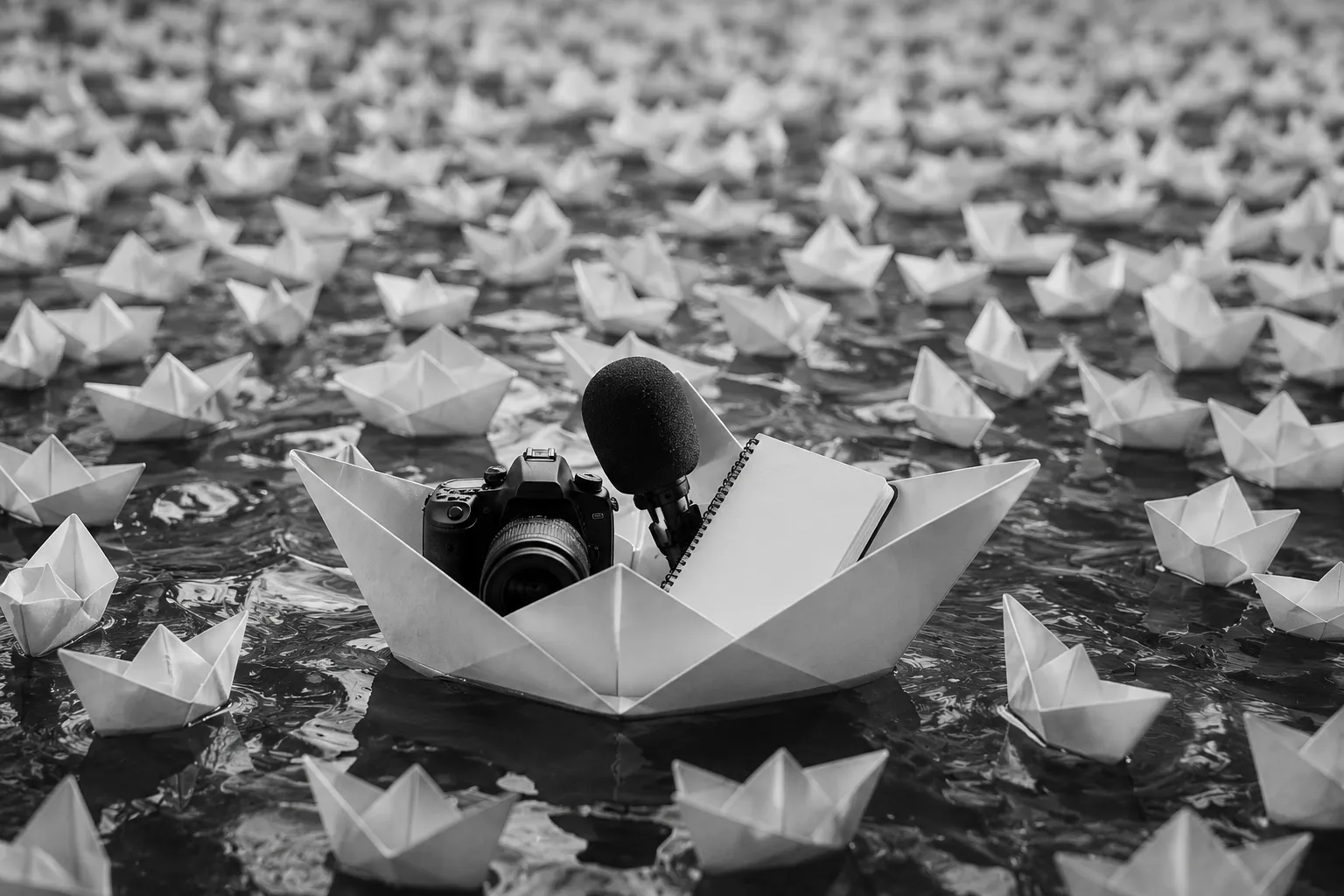
The creator economy is approaching a new saturation point as popular YouTubers diversify into food, fintech, and other businesses while generative video threatens to fill every platform with cheap content. MrBeast's company recently bought a fintech startup, and Hollywood studios sent cease-and-desist letters over ByteDance's Seedance 2.0. The two developments point toward creators searching for revenue while AI multiplies the material competing for attention, TechCrunch reported on February 22nd.
A creator used to sell access to a personality through a video, a product, or a recurring relation with an audience. The new market asks that personality to become a company before synthetic copies make the original harder to find. Digital twins could produce more content, but they also make presence divisible and replaceable. The smaller creator faces an even narrower passage. A niche audience may support a line of products, yet the same audience must first recognize one human signal inside an expanding field of automated voices and images. Authenticity becomes a scarce resource because the platform can manufacture endless substitutes. The paper boat stays afloat only while someone can still distinguish its passenger from the flood.
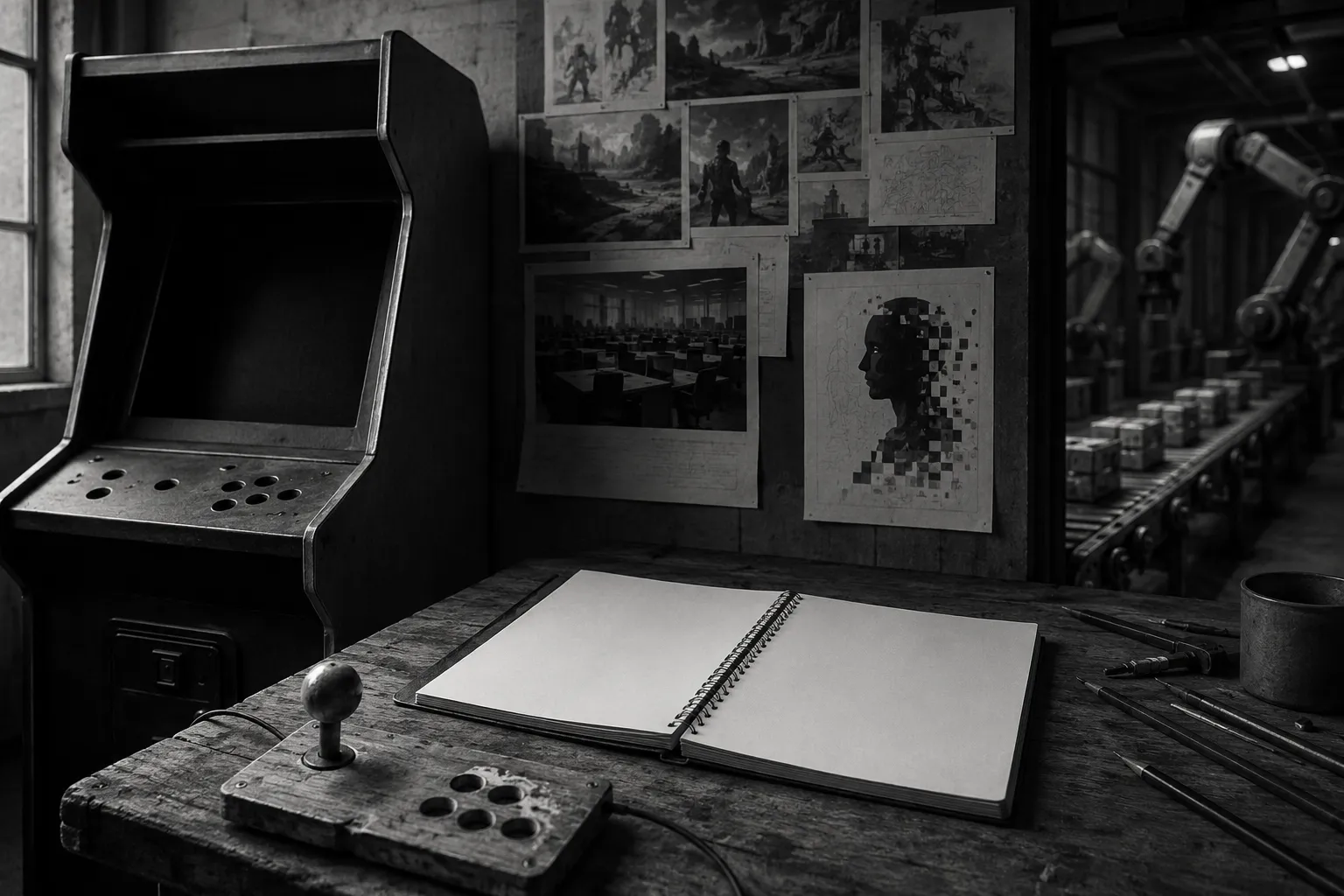
Microsoft's new gaming chief, Asha Sharma, says the company will use AI to develop new business models and ways to play without flooding the Xbox ecosystem with soulless content. Sharma made the promise in an internal memo after Microsoft Gaming CEO Phil Spencer and Xbox president Sarah Bond departed. Microsoft has already tested an AI gaming companion and released an AI-generated level from Quake II, TechCrunch reported on February 21st.
The word slop names a fear that efficiency will become the main aesthetic of the game industry. A generated level can arrive quickly, a companion can answer every player, and a studio can measure the savings before anyone asks whether the result deserves to be played. Sharma's statement tries to preserve the idea that games are art crafted by humans while leaving AI inside the production system. That arrangement gives the company room to automate the invisible labor and defend the visible work as human culture. The player encounters the final screen, not the argument inside the studio. A blank sketchbook still sits beside the controller, waiting to see whether the next world begins with a person or with a cost calculation.
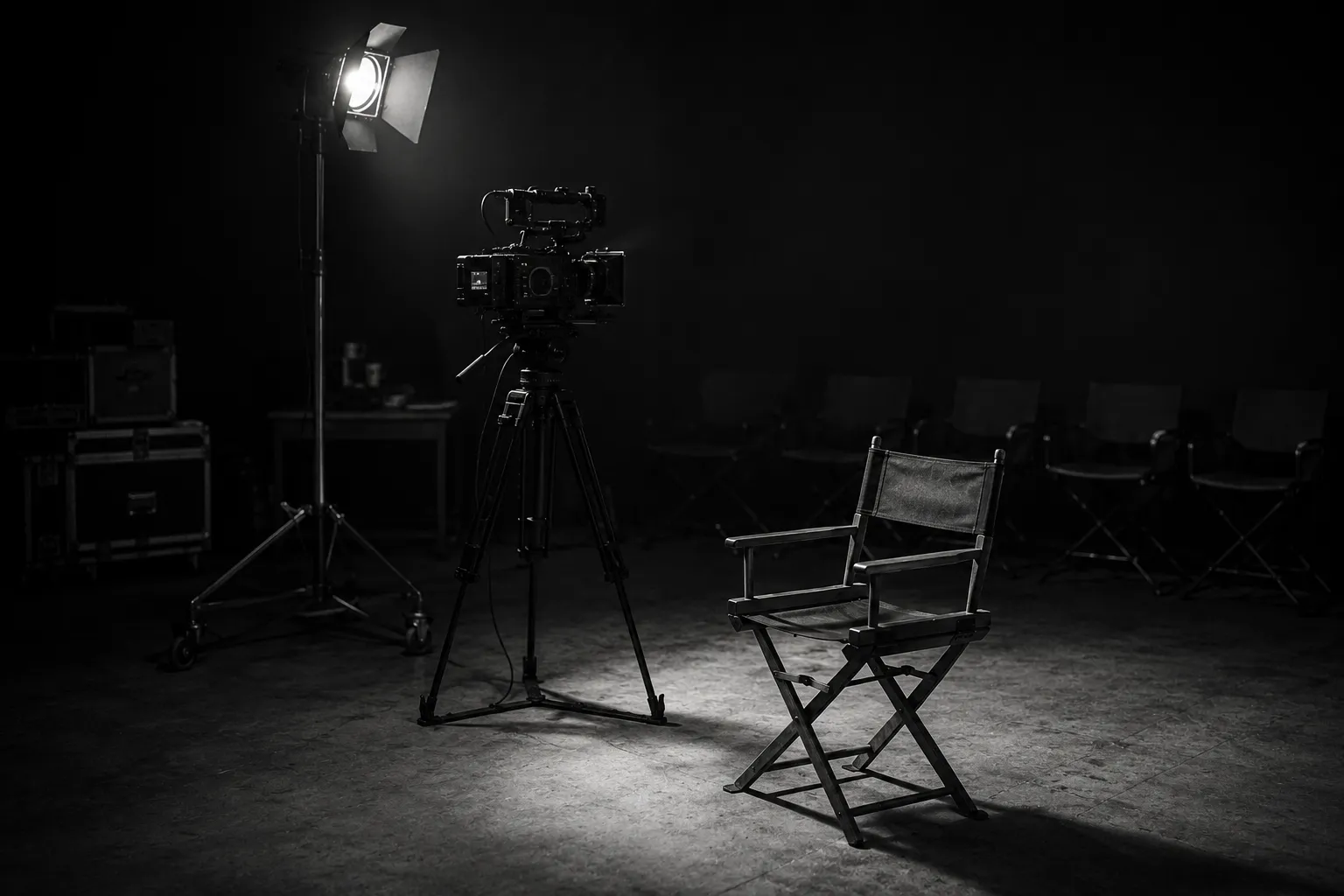
Independent filmmakers are using AI video tools to produce short films that would have exceeded their budgets or technical reach. In Google's Flow Sessions, ten filmmakers used Gemini, Nano Banana Pro, and Veo to build films from scripts, visual references, and their own artistic directions. The results gave one-person crews access to effects, locations, and movements they could not have staged alone. The same tools also pulled directors into the jobs of set designer, lighting director, costume department, and editor, TechCrunch reported on February 20th.
AI lowers the cost of making an image while raising the cost of making it with other people. A filmmaker can create a flying figure or a strange forest without hiring a crew, but the absence of those collaborators changes the work around the image. The director becomes faster and more isolated, carrying decisions that used to be distributed among bodies in a room. The artists interviewed for the story treated AI as a supplement to their visual language, using their own scripts, voices, scans, and long-term collaborators wherever possible. The danger arrives when a studio sees the solo workflow and removes the choice. The empty chairs are already part of the production budget.
