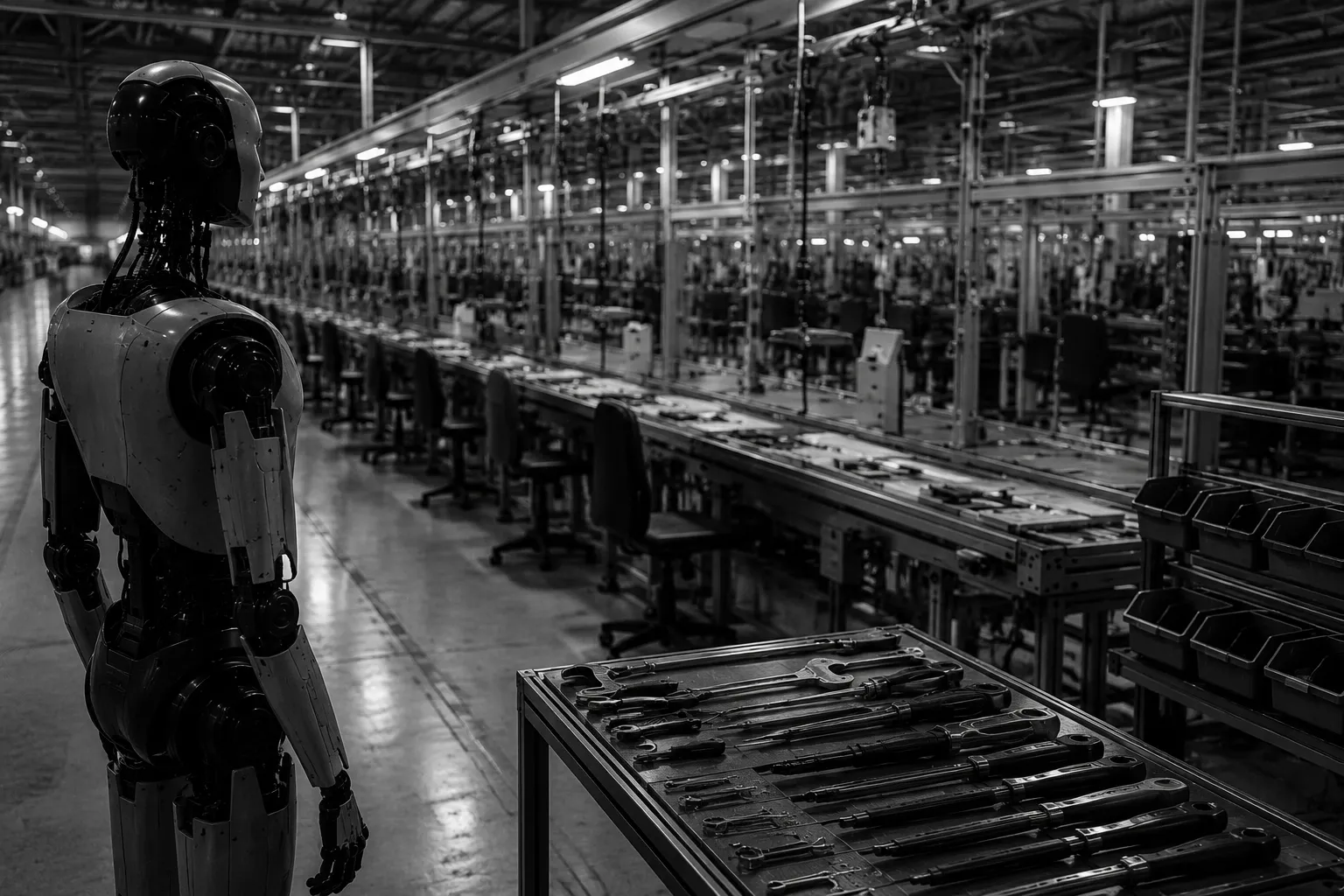
Chinese humanoid robot companies are shipping units and iterating faster than U.S. competitors, helped by a manufacturing base built around electric vehicles, sensors, batteries, and industrial automation. Unitree reportedly shipped roughly 36 times as many robots last year as U.S. rivals Figure and Tesla. The early market is moving from televised demonstrations toward warehouses, factories, retail, and rehabilitation, TechCrunch reported on February 28th.
The robot's public image begins with spectacle. At China's Spring Festival Gala, humanoids performed kung fu flips before returning to the less cinematic work of moving goods and repeating physical tasks. The speed advantage comes from compressing research, supply chains, manufacturing, and deployment into one industrial loop. Machines can enter a workplace, fail, collect new data, and return in a revised form before a distant competitor has finished its demonstration. The body is already ahead of the software in some respects, while autonomy remains limited by scarce real-world training data and safety problems. The humanoid becomes ordinary when it occupies a station for a long shift. The performance ends when the robot is expected to keep working after the cameras leave.






