
Princeton economist Markus Brunnermeier told central bankers at Jackson Hole that AI trading agents could understand and exploit monetary policy faster than officials can respond. His paper described a possible Federal Reserve with two press conferences, one offering an anchoring narrative to people and another supplying training data to machines. He also warned that central banks might become deliberately less predictable to stop automated traders from gaming policy signals. The argument appeared at the Kansas City Fed's annual symposium, where financial innovation was the stated subject. Brunnermeier called the imbalance “asymmetric understanding,” a condition in which markets equipped with advanced agents may read the central bank better than the bank reads them.
An interest-rate statement already moves bond and currency prices within moments of publication. An agent can parse each word, compare it with years of data and place trades while reporters are still forming questions. Transparency then reaches the public at unequal speeds. Dividing communication into a human narrative and a machine-readable feed would formalize two audiences for the same public decision. The feed would become market infrastructure, shaped for institutions able to train systems on it, while households encounter the decision later through mortgages, savings and pension values. Any such arrangement would require a public release time, an open data format, equal-access rules and a record of which automated trades were placed before the human conference ended.
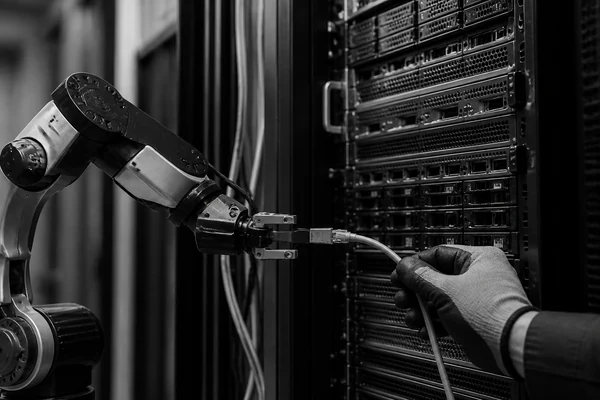
Meta is testing robots that can swap network cables, power-cycle servers, reseat components and inspect equipment inside data centers in Iowa and Ohio, WIRED reported. The trials include supervised dual-armed machines and wheeled platforms at the Prometheus campus. One worker estimated that a successful cable robot could absorb up to 80 percent of some technicians' workloads. Current machines remain slower than people, need frequent charging, struggle with loose cables and sometimes require a person to open doors or move them between buildings. One inspection robot cannot distinguish red from green indicator lights. Meta declined to discuss the tests; a spokesperson said the company is investing in training and hiring because skilled workers remain scarce.
Every chatbot request depends on racks that must be connected, inspected and restarted when software cannot recover them remotely. A technician recognizes a damaged connector, incorrect cable tension and the irregularities that turn a routine reset into a longer repair. Automating those gestures may reduce heavy lifting and repetitive rounds while shrinking the entry-level work through which technicians learn the building. If Meta redesigns racks, doors and cabling around robotic access, the data center becomes legible first to its machines and afterward to the people supervising them. For now, the robot that restarts a server may still need a worker to untangle its cable, interpret the warning light and let it through the next door.

Registered nurses held coordinated protests in eight US cities on August 27, asking hospitals and elected officials to end contracts with Palantir. Over a hundred nurses blocked traffic outside the company's former Palo Alto headquarters, KQED reported. National Nurses United says HCA Healthcare uses Palantir tools for centralized staffing and scheduling, while Mount Sinai uses the company's software to assess which patients qualify for care at home. Craig Cedotal, a pediatric nurse who previously worked at an HCA hospital, said automated recommendations often fail to match the needs of a shift. HCA did not answer KQED's request for comment.
A staffing system reaches the ward through a timetable. Its calculation determines how many nurses arrive, which experience is available and how quickly a call for help can be answered. When the recommendation is opaque, management can present a budget decision as a neutral output, while nurses absorb the result through more patients and less time at each bedside. The union also tied hospital procurement to Palantir's work for immigration enforcement and the Israeli military, widening the dispute from workplace control to institutional ethics. A hospital buying automated staffing should therefore disclose the data, assumptions, override rules and audit trail behind every roster. The contract should allow a charge nurse to reject a machine-built plan before the first patient is left waiting.
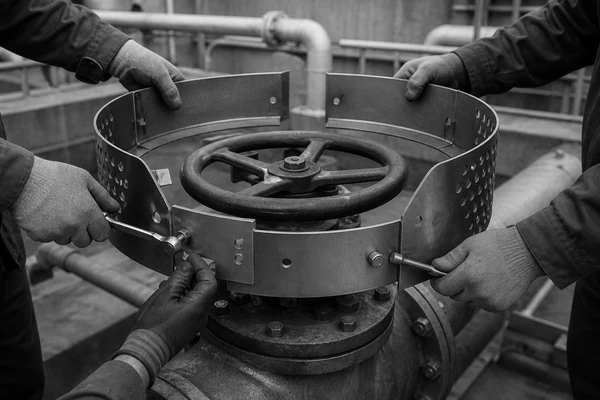
Over 100 companies and organizations, including OpenAI, Anthropic, AWS, Google, Microsoft and Oracle, have signed a call for a global surge in cyber defense. The letter warns that AI-enabled attacks will become more widespread and sophisticated in the coming months, placing hospitals, water treatment plants and internet infrastructure at particular risk. It asks every organization to treat cyber defense as an immediate leadership priority, urges security vendors to test continuously against frontier capabilities, and calls on governments to fund essential services that lack staff or budget. Frontier AI companies are asked to provide responsible model access, training, funding and practical support.
The coalition turns a technical emergency into a question of public dependence. Institutions responsible for everyday life often run old software on tight budgets, while the most capable defensive models, threat intelligence and testing expertise remain concentrated in firms that set the terms of access. A hospital or municipal utility may therefore need private permission to protect a public obligation. Sharing verified fixes can reduce that imbalance, but it also gives AI laboratories and cloud providers an unusual role in deciding which defenders receive advanced tools and when. The letter's value will be measured outside the signatory page, by whether a water utility can obtain authorized testing, repair an exposed system without interrupting service, and pass the verified fix to another city before the same weakness is used against it.

Anthropic has allowed research teams at Stanford, Oxford and METR to analyze aggregate patterns from roughly 250,000 real Claude.ai or Claude Code conversations collected in April and May. The researchers chose their questions, while Anthropic ran them through Insights, a system designed to return grouped patterns without exposing raw chats. Stanford's SALT Lab found that over half the sample involved consequential tasks, meaning work that affects other people or is hard to undo. Legal and financial guidance appeared prominently. In nearly three quarters of collaborative conversations, users still set the direction and adapted Claude's output instead of accepting it verbatim.
Anthropic still controls the sample, privacy thresholds, analysis system and review boundaries. Outside researchers can ask independent questions, but the released datasets contain aggregate clusters rather than the conversations from which they were produced. Another researcher cannot inspect each label against the original exchange. Raw access would expose private lives. With no access, policymakers would remain dependent on company summaries. Anthropic's middle layer permits scrutiny while keeping the evidence inside its infrastructure. That arrangement gains weight as people bring contracts, money, professional advice and decisions affecting others into a chat box. Future researchers must submit an expression of interest, and Anthropic will decide who receives access and run the queries on their behalf.

Singapore's Ministry of Law and Intellectual Property Office have opened a public consultation on how artificial intelligence should alter the country's copyright and patent rules. One patent question is unusually concrete. It asks how the law should respond when AI systems publish technical disclosures at large scale, changing the body of prior art used to judge whether an invention is new. The consultation also asks how inventorship should be assigned across different degrees of human and machine participation. Patent law has long assumed that new technical knowledge arrives through a limited chain of research, expense, experimentation and disclosure. Generative systems can produce plausible specifications far faster, including descriptions of devices that may never have been built or tested.
A flood of generated disclosures could turn the patent archive into a contest of volume. Examiners would have more documents to compare, applicants could face earlier machine-made descriptions of similar ideas, and companies might publish defensively to prevent competitors from securing rights. Defensive publication already exists, but generation reduces the cost of producing technical language at industrial scale. A document can enter the record without a workshop, prototype, failure or person able to explain why the object should exist. Singapore is considering legal refinements, guidance and non-binding technical measures rather than announcing a settled answer. Its consultation runs until October 22. The eventual rule will need to distinguish useful disclosure from automated abundance before the latter becomes searchable evidence against the next human applicant.
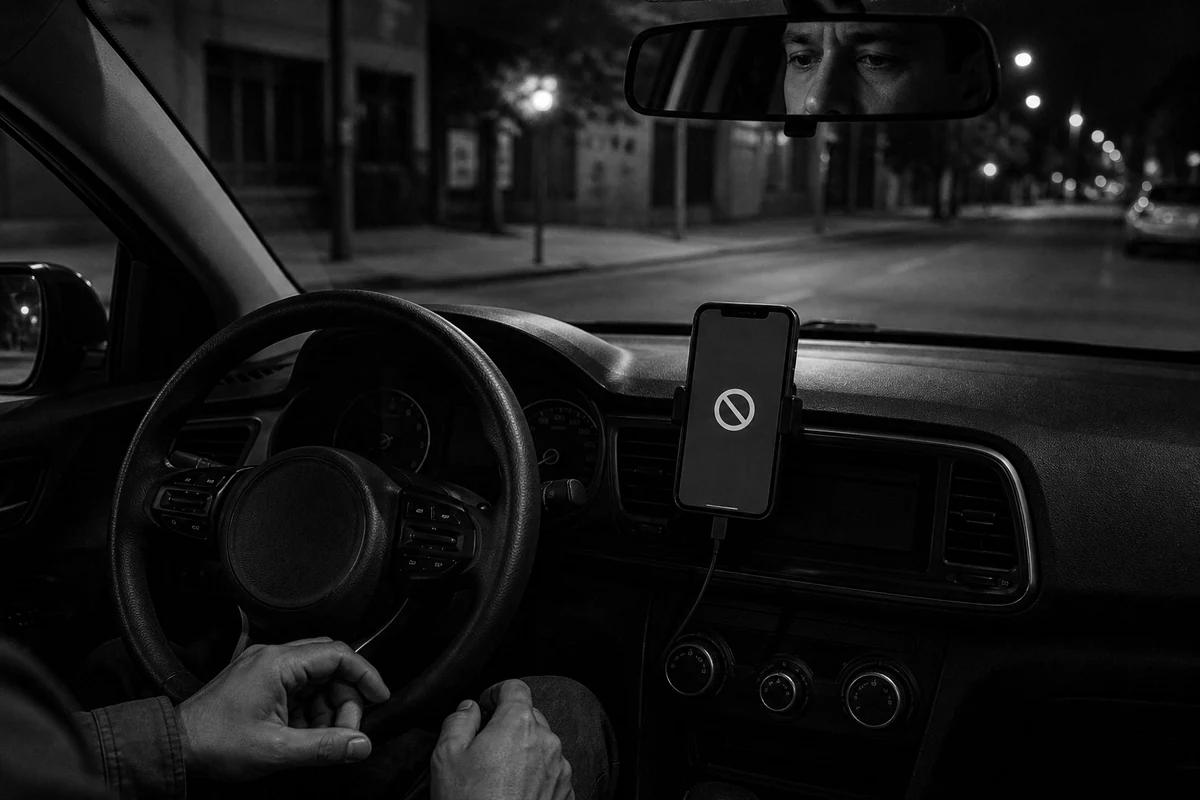
The Dutch Data Protection Authority has fined Uber €824.99 million after finding that driver accounts had been temporarily or permanently deactivated through automated decisions without human intervention. The case began with a collective complaint representing over 170 drivers. According to France’s CNIL, which cooperated in the investigation, suspected fraud and low customer ratings could trigger account blocks that stopped drivers from accepting rides and earning income. Uber disputes the regulator’s account, says permanent deactivations receive human review and drivers can appeal, and plans to challenge the decision.
The fine makes algorithmic management visible at the exact point where software becomes a boss. A platform may describe a driver as independent, yet its interface can still decide when work begins, how conduct is measured and whether tomorrow’s income exists. Fraud detection and rating systems promise speed, but speed changes meaning when the person affected must prove an error to a process they cannot see. Europe’s rule against consequential automated decisions asks for something ordinary: a human who can explain, listen and take responsibility. The most revealing image is not a courtroom or a server room. It is a parked car, a darkened app and a worker waiting for the system to let work resume.

A humanoid robot named Lightning, built by the smartphone manufacturer Honor, ran 100 meters in 9.32 seconds during a preparatory test at the Second World Humanoid Robot Games in Beijing. The time beats Usain Bolt’s 2009 world record of 9.58 seconds. In the official preliminary heat, Lightning clocked 9.47. Another robot, Tiangong Ultra from the Beijing Humanoid Robot Innovation Center, finished in 9.39. Both times are faster than any human has ever run. The robots reached peak speeds above 14 meters per second. None of them could stop. After crossing the finish line, Lightning lost balance and crashed into the safety mats. Several other robots fell or collided in the same way. The first edition of these games, held in 2025, was won in 21.50 seconds. One year later, the machines have halved that time and removed the human body from the front of the race.
The record changes the conversation from intelligence to flesh. AI had already surpassed humans at chess, language, diagnosis, and image generation. The 100 meters was the last territory where the body still held an advantage. Bolt’s record ran on speed, tendons, lungs, reaction time, and a nervous system refined over millions of years. A robot does not breathe, does not tire, does not hesitate at the starting block. It accelerates without narrative. The problem is stopping. A sprinter decelerates using proprioception, balance, and learned motor control refined from infancy. The robot that beats Bolt’s time does not yet know how to stop being fast.

France has become the first European state to explicitly exclude OpenAI from a government AI contract, choosing Mistral as its sovereign provider for sensitive administrative work. Budget Minister David Amiel announced the decision after a breach at the country’s tax agency exposed the personal data of over 700,000 contributors. “This excludes OpenAI,” Amiel told reporters, drawing a line that was less about technology than about jurisdiction. The breach revealed that tax records had been routed through systems with foreign dependencies, and the government responded by selecting a domestic model it can audit, regulate, and hold under French law.
The exclusion reframes the sovereignty debate from procurement clauses to access itself. A cloud contract can be renegotiated, but a model’s training pipeline, weight distribution, and API governance belong to the company that built it. France is not rejecting American AI on principle. It is stating that certain public functions cannot depend on infrastructure whose terms of service, export controls, and data policies are written in another country. Mistral now carries the obligation to perform at a scale its rival was barred from. If the system fails, the political cost stays domestic. If it works, the precedent will travel through every European ministry that watched the breach and counted the names exposed.
