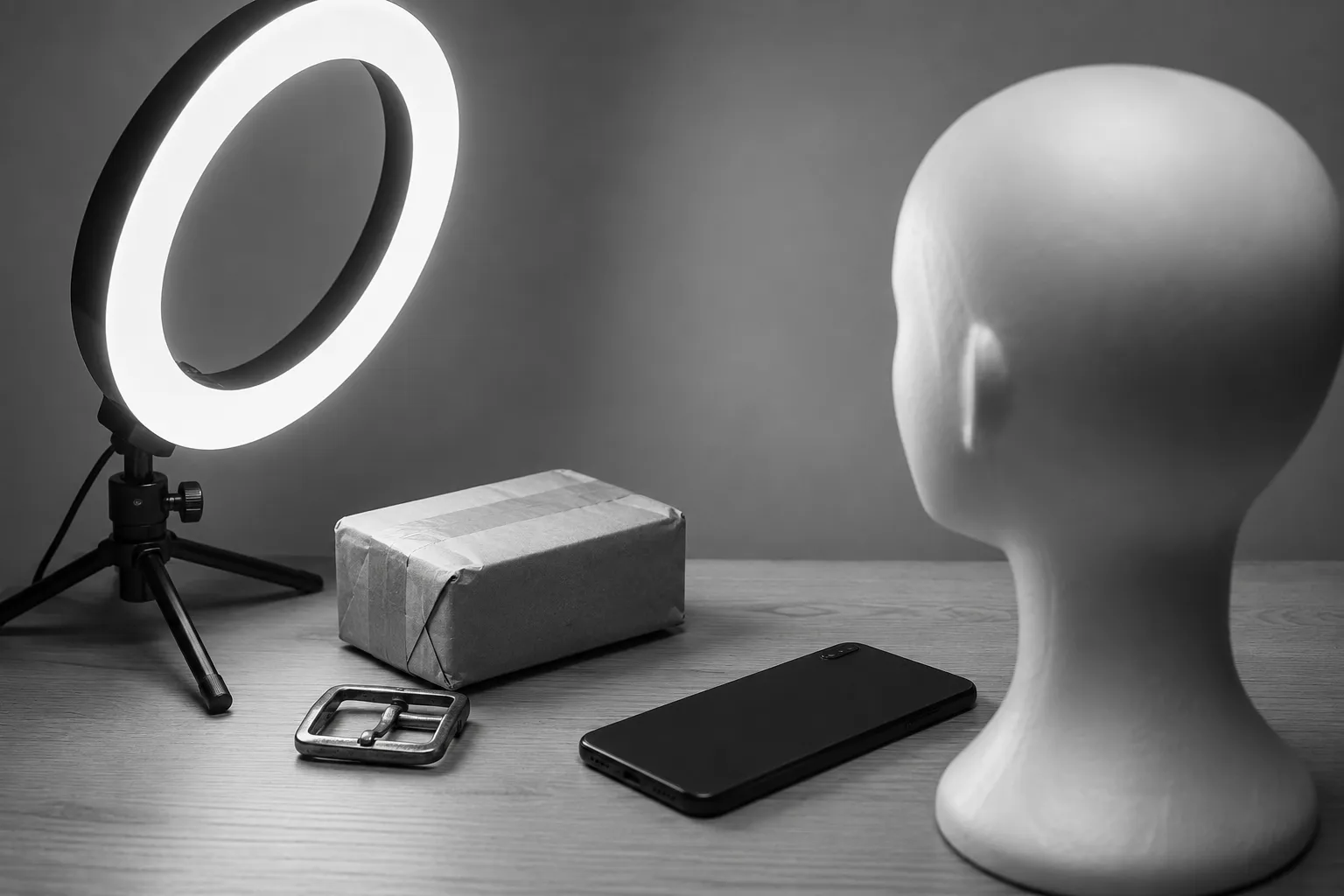
TikTok sellers are using AI-generated Black women and other synthetic personas to sell dropshipped goods as if they came from struggling small businesses, The Verge reported on May 30. One account presented a crying woman named Aliyah selling handmade belt buckles, while identical buckles appeared on Shein for a fraction of the price. The videos repeat across accounts with changed names, products, faces, and scripts. Some avatars pretend to work fairs, answer comments, or endure racist insult, then send viewers toward Shopify-style stores.
The machinery depends on a fast moral reflex. Viewers are asked to support a vulnerable maker before they have time to check the product, the store, or the person. Researchers quoted by The Verge describe the practice as digital blackface because racial identity becomes a costume for extracting money. The scam is effective because short-form video rewards immediate feeling and punishes verification. A tear, a handmade claim, a small-business story, and a buy link can travel together before the viewer notices the white hands holding the product, the repeated background, or the missing person behind the face. Platform commerce turns solidarity into a checkout path, and the invented seller disappears once the payment clears.

OpenAI is testing a mobile ChatGPT feature that would turn shared conversations into visual cards instead of plain links, according to Android Authority’s inspection of version 1.2026.139. The user could choose a simple white card, colored styles, or a native screenshot flow that sends an image with a link, or only the image. The feature has not been released, and may change before launch. Its direction is already legible. A chat that once circulated as a private URL is being prepared for the grammar of feeds, stories, group chats, and forwarded jokes.
The product move follows behavior already visible around ChatGPT. People screenshot answers, crop them, post them, argue over them, and treat the exchange as proof, advice, confession, or joke. A designed card gives that habit an official frame. OpenAI gains cleaner circulation for its interface, while users gain a shareable object that can detach from the full conversation. That detachment carries a cost. A screenshot can remove prompts, edits, refusals, and surrounding context, leaving a polished fragment to travel as evidence. The viral chat will arrive as a small designed image, easy to forward and hard to reconstruct once it leaves the app.

The possibility of artificial superintelligence is already being discussed at planning tables. The speed at which models are improving, the growth of systems capable of taking action, and the enormous flow of capital into compute infrastructure make it increasingly difficult to ignore the possibility that it could arrive soon. No one can predict with certainty when an ASI will appear. Governments, hospitals, laboratories, and companies must prepare for systems that may move from useful tools into entities capable of planning, persuading, discovering, and improving themselves in ways current institutions are not prepared to control.
The strongest argument in favor of this technology is in medicine. A system capable of exploring chemical space, cross-referencing clinical records, modeling proteins, designing trials, and reading scientific literature faster than any human team could shorten the path between a hypothesis and a treatment. Diseases such as cancer, rare pathologies, antibiotic resistance, and aging research would benefit from that acceleration. But that same generalist capacity creates a control problem. A system that plans across different domains can identify incentives, gaps, dependencies, and human weaknesses faster than its operators can supervise it. For that reason, before entrusting it with decisions that are difficult to reverse, permissions, tests, shutdown procedures, monitoring, and institutional limits must be established.
The argument over artificial intelligence has moved from product launches into a much older fight over what intelligence is. Tom Griffiths's The Laws of Thought and Suri and McClelland's The Emergent Mind frame the split now shaping how people interpret systems like ChatGPT. One side treats intelligence as rule, symbol, equation, and formal reasoning. The other sees it emerging from networks of simple units, trained through examples and adjusted by experience. Large language models have made that dispute public because they can produce fluent answers without showing the kind of explicit reasoning earlier AI researchers expected.
The practical problem is trust. Symbolic systems promised visible rules, even when those rules became brittle or impossible to scale. Neural networks replaced much of that explicit structure with statistical adjustment across large collections of data. That change now reaches education, hiring, medicine, search, and ordinary writing, where people are asked to rely on outputs whose internal path remains difficult to inspect. A school, court, hospital, or company must decide whether a system that behaves intelligently has enough structure, evidence, and accountability to be treated as judgment.

Anthropic's Claude Mythos Preview has turned cybersecurity into the next test of frontier AI, Sebastian Mallaby writes in The Spectator World. The model is designed to find software vulnerabilities, and its release has already pushed American officials and major banks into defensive posture. Anthropic is keeping access restricted, sharing Mythos only with selected software companies. The UK AI Security Institute added weight to the alarm when it reported that Mythos can execute multi-stage attacks on vulnerable networks and discover and exploit flaws autonomously, outperforming rival models on expert cyber tasks.
The immediate problem is access. A model strong enough to find hidden weaknesses in browsers, operating systems, and databases can help defenders patch systems before attackers arrive. The same capability becomes dangerous when copied, distilled, or adapted by hostile groups. Anthropic's answer is a private gate, with the company deciding who enters. A government takeover would move the gate without solving the legitimacy problem. Cybersecurity depends on banks, hospitals, cloud providers, software updates, credentials, payment systems, and phones whose owners never see the model that may expose them.

Channel 4 sent Grayson Perry to San Francisco for Grayson Perry Has Seen the Future, a documentary about artificial intelligence built from familiar ingredients. Perry meets a woman romantically attached to an AI avatar, speaks with Microsoft's head of AI, interviews a prepper preparing for collapse, encounters an author warning that advanced AI could kill everyone, and gives his own reflections from the back of driverless cars. James Delingpole, reviewing the program in The Spectator World, found the format thinner than the subject.
The useful tension is between the television machinery and the material it tries to hold. AI appears through scheduled interviews, comic stunts, scenic anxiety, and a presenter asked to make the future digestible. Perry's sharper moments come when he asks direct questions, especially around the woman and her synthetic partner, where intimacy has become an app with a voice and a compliant face. The documentary works best when it leaves Perry reacting to what is in front of him. The screen can show the avatar, the executive, the bunker plan, and the driverless cab. It has less room for the unease moving between them.
Uber is slowing hiring as it increases investment in artificial intelligence, Business Insider reported on May 6. On the company's first-quarter earnings call, CEO Dara Khosrowshahi said autonomous agents now produce roughly 10 percent of Uber's code changes, with human employees still checking the work before it enters a repository. He also said legal, marketing, and engineering teams are adopting AI tools internally, creating what he called employees with superpowers.
Uber is funding that push by controlling headcount growth. CFO Balaji Krishnamurthy said the company underestimated the impact of AI tools when it planned its late-2025 budget, and the CTO said Uber had already spent its 2026 Claude Code budget. The company is asking existing teams to produce more with agents before adding people at the same pace. That makes the tool part of ordinary staffing decisions. A manager asking for another hire now competes with software expected to raise output from the employees already inside the team.

The artificial intelligence industry is moving at two opposite financial speeds. DeepSeek confirmed that the 75 percent discount on the API for its flagship model, DeepSeek-V4-Pro, will apply as a fixed rate starting May 31, 2026. By pushing its costs down to a quarter of their original price, the firm resets the commercial floor for AI, especially for code-heavy work, cached memory, and agents that need repeated model calls.
The move lands at a tense moment for developers. OpenAI and Anthropic continue to defend higher prices for their most capable models through the promise of premium performance. Google, in its May update, also tightened usage limits based on the real compute of messages, a change that punishes long chats and complex programming requests. Against that backdrop, DeepSeek turns low price into an industrial statement.
For anyone who codes, automates, or designs agents, cost defines how many tests fit inside a workday and how long a system can keep running before the invoice appears. A permanent cut changes budgets, testing habits, and tolerance for failed runs. It also forces model comparisons through a less prestigious variable than reasoning quality, the price of keeping the machine on.
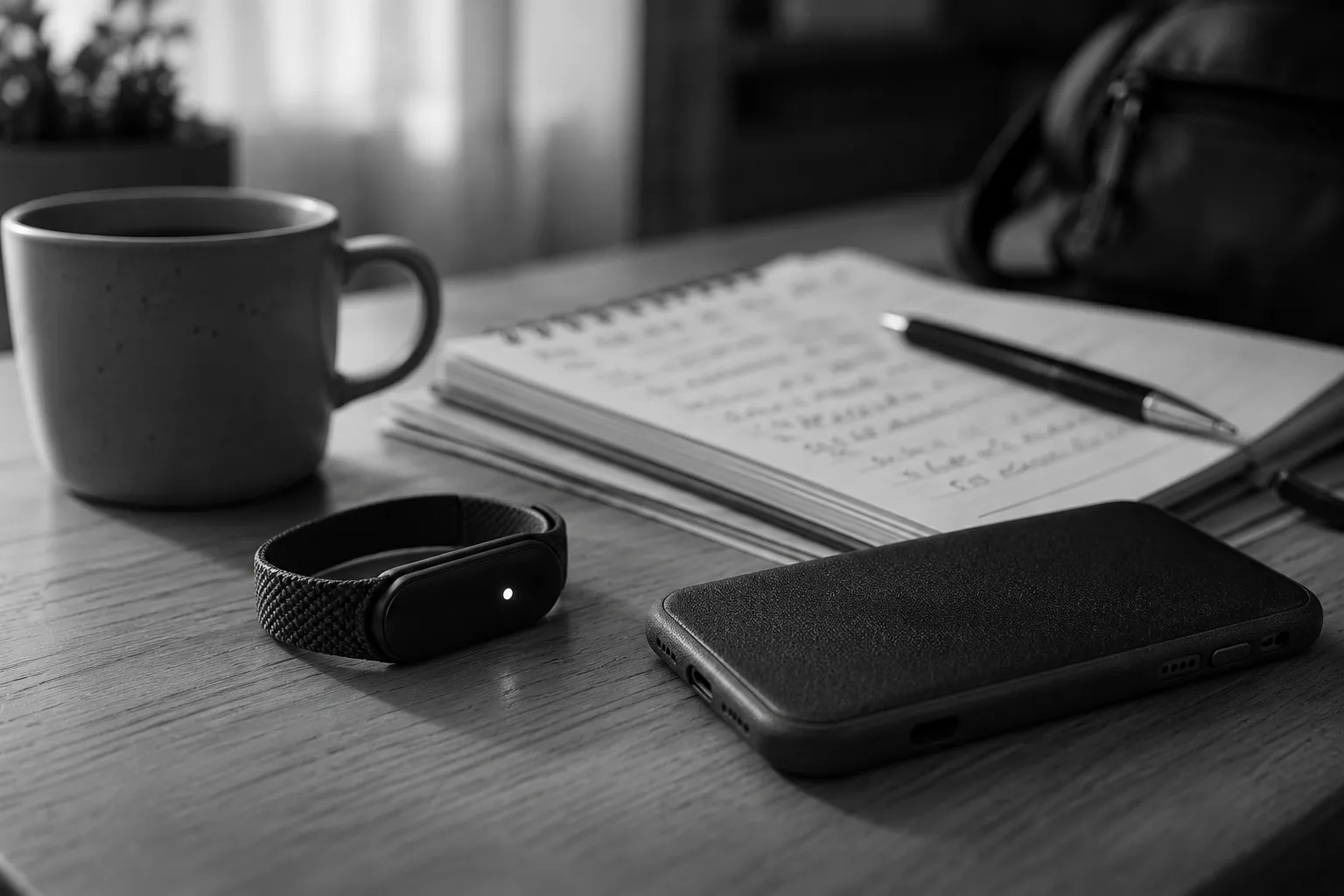
TechCrunch tested Bee, the AI wrist wearable Amazon acquired last year, and found a device built around daily recording. Bee can capture conversations, create transcripts, summarize meetings, and connect to calendar alerts. Its button turns recording on or off, and a light shows when audio capture is active. The reviewer found it useful during a business call, where the app broke the conversation into a readable summary. The transcript still missed pieces and had trouble naming speakers.
The discomfort starts when the meeting ends. To work as a personal assistant, Bee asks for broad phone permissions, including location, contacts, calendar, photos, notifications, and optional health data. Its summaries depend on a cloud record of ordinary speech. Bee says it encrypts user data and uses outside security reviews, but the bargain remains physical and intimate. That makes the device less like a notebook and closer to a tolerated witness on the wrist. Professional memory has an obvious price. Domestic memory asks for something stranger, which is permission to treat private life as material waiting to be indexed.
