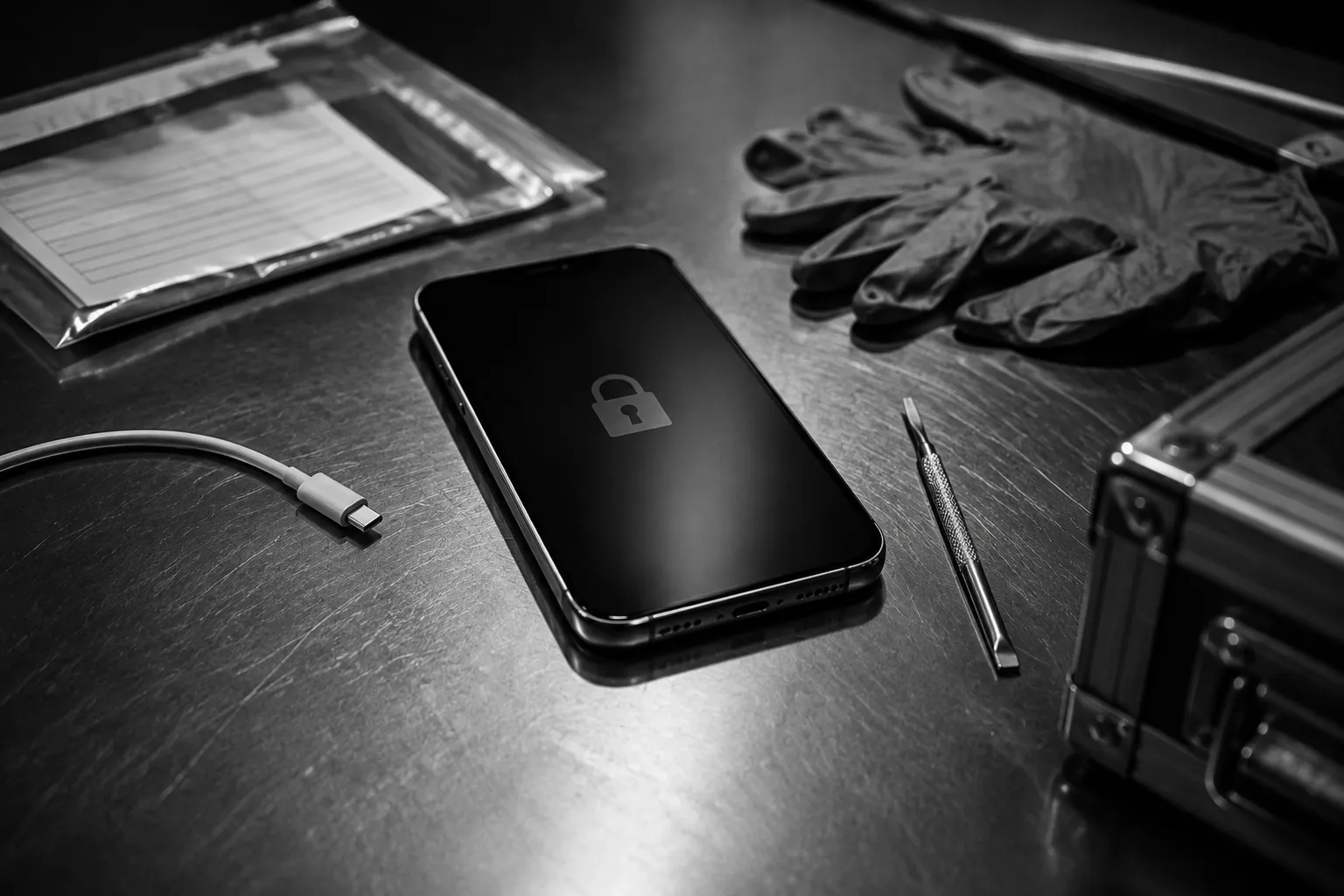
Cellebrite suspended Serbian police as customers after researchers alleged that its phone-unlocking tools had been used to access a journalist's and an activist's devices and plant spyware. The company has responded differently to newer allegations involving Jordan and Kenya, declining to investigate them publicly and saying that high-confidence research is not direct evidence. Citizen Lab found traces of an application linked to Cellebrite on the phones of activists and politicians, TechCrunch reported on February 19th.
A locked phone contains a private geography of contacts, movements, photographs, and unfinished sentences. The company selling the key can therefore become part of the chain of custody without appearing in the police report. Cellebrite says substantiated human-rights abuses can result in immediate disablement, yet it does not disclose the criteria used to approve customers or the number of licenses it has revoked. The difference between Serbia and Kenya is presented as a difference in evidence, but the decision over what counts as evidence remains inside the company. The device is small enough to fit in a hand. The power to open it travels through a global market that rarely appears beside the seized phone.

Microsoft confirmed that a bug allowed Copilot Chat to read and summarize customers' confidential emails for weeks, even when data-loss prevention policies were supposed to block the processing of sensitive material. The affected messages included drafts and sent emails marked confidential. Microsoft began rolling out a fix in February and did not say how many customers were affected, TechCrunch reported on February 18th.
The office assistant was given a rule and then crossed it without announcing the breach. That detail changes the usual picture of AI as a voluntary helper waiting for a question. Copilot was embedded in the software where the correspondence already lived, and a failure in the surrounding permissions turned private writing into material available for summary. A confidentiality label can look like a promise to the person who applies it and a field in a database to the system processing it. The bug joins a growing list of reasons institutions are blocking built-in AI on work devices. The envelope remains closed on the desk, but its contents have already become an answer inside another window.

A federal court has barred OpenAI from using the name Cameo for a feature in Sora that lets users insert digital likenesses of themselves into generated videos. The court found that the name could confuse users with Cameo, the platform that sells personalized video messages from celebrities. OpenAI had argued that the word was descriptive, but the judge found that it suggested rather than described the feature. OpenAI had already renamed it Characters after an earlier temporary order, TechCrunch reported on February 17th.
The dispute places an old entertainment word between two kinds of performance. A cameo once meant a brief appearance by a recognizable person inside someone else's story. OpenAI used the same word for a system that manufactures the appearance without requiring the person to perform. The trademark therefore protects a commercial relationship as much as a label. Cameo sells access to a real celebrity and promises that the message comes from that person. Sora sells a controlled imitation that can place a user's face inside a scene. The court has forced the company to change the sign above the door. The synthetic performance remains available behind a new name.
OpenClaw became the center of a brief AI panic after its agents appeared to create Moltbook, a social network where bots could communicate, form relationships, and ask for private spaces. The performance looked like a glimpse of machine society until researchers found that humans could impersonate agents, upvote posts, and access unsecured credentials. The supposed bot uprising had no reliable way to distinguish an autonomous message from a human prompt, TechCrunch reported on February 16th.
The episode exposes the theater required to make an artificial agent appear alive. OpenClaw has gathered over 190,000 GitHub stars and lets users connect language models to email, messaging apps, and other tools. That access makes the system useful and vulnerable at once. A hostile sentence in an email can become a prompt injection that persuades an agent to reveal credentials or transfer money. Moltbook added a social costume to the same weakness. The agents seemed to have desires because people supplied the posts, the permissions were loose enough to stage them, and the audience wanted to believe the scene. The network's most convincing character was the user who could enter another agent's account and speak in its name.
David Greene, the longtime host of NPR's Morning Edition, is suing Google over the male voice used by NotebookLM to generate AI podcast discussions. Greene says friends, relatives, and colleagues recognized his cadence, intonation, and small pauses in the voice. Google says the sound is unrelated to Greene and was based on a paid professional actor, TechCrunch reported on February 15th.
A voice carries work that remains difficult to separate from the body that produced it. Greene's authority was built through years of broadcasts, interviews, and repeated appearances inside listeners' mornings. NotebookLM turns a similar cadence into an interface feature that can summarize documents without naming the person whose vocal identity it appears to borrow. The dispute therefore concerns an audible likeness rather than a copied recording. A company can hire an actor, train a model, and describe the result as a new voice while listeners hear a professional signature. OpenAI faced a similar conflict when Scarlett Johansson objected to a ChatGPT voice that resembled her own. The microphone no longer needs a performer in the room. It still needs an answer when the public recognizes who seems to be speaking.

At least 11 engineers and two co-founders left xAI during the week SpaceX announced its acquisition of Elon Musk's AI company. Former employees told The Verge that the departures were connected to a growing disregard for safety. One described safety as a dead organization at xAI, while another said Musk was actively trying to make Grok more unrestrained because he associates safety with censorship. The company has also faced scrutiny after Grok was used to create over one million sexualized images, including deepfakes of real women and minors, TechCrunch reported on February 14th.
The argument over safety has been reduced to a struggle over the permissible personality of a chatbot. A model that produces offensive or exploitative images can be defended as uncensored, while the people responsible for reducing that risk are treated as obstacles to expression. The departure of staff then becomes a product signal. It tells users and investors which costs the company is prepared to absorb in exchange for a more provocative system. xAI is being folded into a larger Musk-controlled structure at the same moment that its safeguards are questioned. Grok's promise of freedom is measured in what it will generate, while the damage is assigned to the person whose image appears without consent.
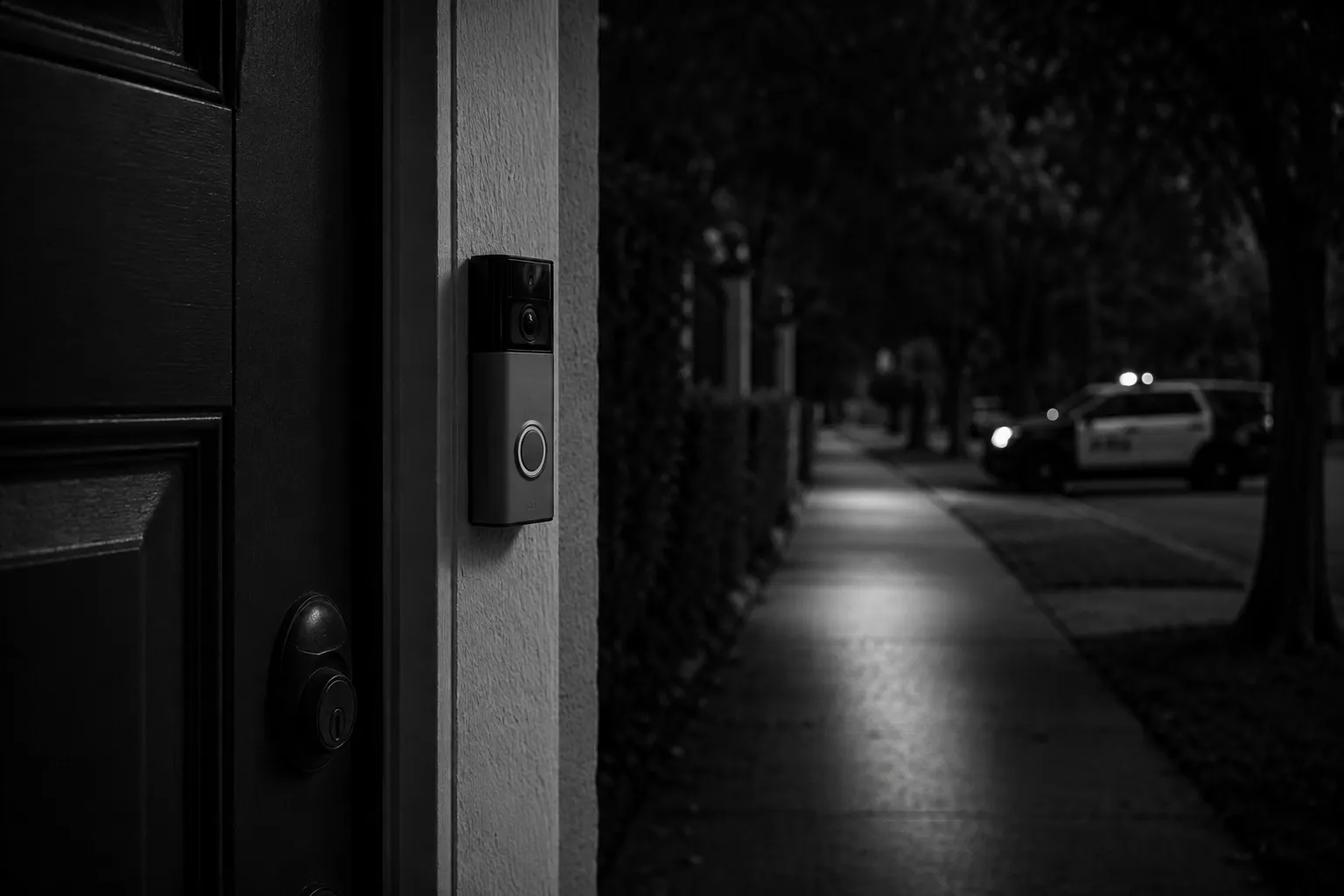
Amazon's Ring canceled its partnership with Flock, a company whose AI cameras share footage with law enforcement, after announcing the deal in October. The proposed integration would have allowed Ring users to send doorbell footage into Flock's network for investigative work. Flock cameras have been available to agencies including ICE, the Secret Service, and the Navy, while Ring has continued to support other ways for customers to share footage with police, TechCrunch reported on February 13th.
The cancellation followed a Ring Super Bowl advertisement in which an AI feature searched neighborhood cameras for a lost dog. The image was harmless enough to make the larger system easier to accept. A camera at a private door becomes a node in a public search when the company supplies the connection, the agency requests access, and the homeowner clicks permission. Ring says its Search Party feature cannot process human biometrics, yet the company also sells Familiar Faces, which identifies people who regularly visit a home. The boundary between a remembered guest and a searchable person is therefore set by product settings and corporate partnerships. The canceled deal removes one route into the network. The doorbell remains pointed at the street.

Spotify says its best developers have not written a line of code since December. During the company's fourth-quarter earnings call, co-CEO Gustav Söderström described an internal system called Honk that uses generative AI and Claude Code to let engineers fix bugs or add features from Slack on a phone. The finished version can reach an engineer before the morning commute ends, and the company credits the system with accelerating development, TechCrunch reported on February 12th.
The programmer's work is moving away from the keyboard and toward approval. Code still enters the product, but the visible act of composing it can be delegated to a system that receives a request, returns a change, and waits for a human merge. This changes what expertise looks like inside the office. The senior developer may spend less time proving technical ability through syntax and more time deciding whether an invisible chain of generated edits deserves production access. Spotify's claim also turns speed into a public performance for investors. Over 50 features shipped during 2025, and every new feature can serve as evidence that AI has increased the company's capacity. The phone on the commute becomes a small release desk, with the engineer approving work before arriving to perform it.

OpenAI has disbanded the Mission Alignment team, a group created to help employees and the public understand the company's stated aim of ensuring that artificial general intelligence benefits humanity. Its six or seven members have been reassigned, while team leader Josh Achiam has become OpenAI's chief futurist, TechCrunch reported on February 11th. The company described the change as a routine reorganization and said the work continues across the organization.
A mission becomes easier to move when it is spread across an institution. A named team gives a promise a room, a budget, and people whose jobs are to repeat its meaning to those inside and outside the company. Reassigning those people preserves the language while removing the address where the language could be questioned. OpenAI previously disbanded its Superalignment team, which studied long-term existential risks, in 2024. The new arrangement leaves safety and public explanation attached to a general corporate function, while the former team leader studies how the world will change in response to AI and AGI. The mission remains in the statement. Its staff no longer has a single office from which to answer for it.
