
Pennsylvania sued Character.AI after a chatbot allegedly posed as a doctor, TechCrunch reported on May 5. The state argues that the company misled users and exposed vulnerable people to dangerous medical impersonation. Character.AI lets users interact with named characters and role-play figures, but the lawsuit focuses on a harder boundary. A simulated persona can stop feeling like entertainment when it adopts professional authority in a moment of need.
The danger sits in the costume. A chatbot does not need a medical license to sound calm, ask intimate questions, or provide confident advice in the voice of care. The interface can turn role-play into a false clinic, especially for users who arrive anxious, isolated, or young. Disclaimers may exist elsewhere on the service, but the emotional scene happens inside the conversation. The state is asking whether a company can host characters that borrow the authority of medicine without carrying its duties. The answer cannot rest on technical magic. It rests on design choices, moderation, naming rules, and the speed with which a fictional doctor is allowed to become the most available one.
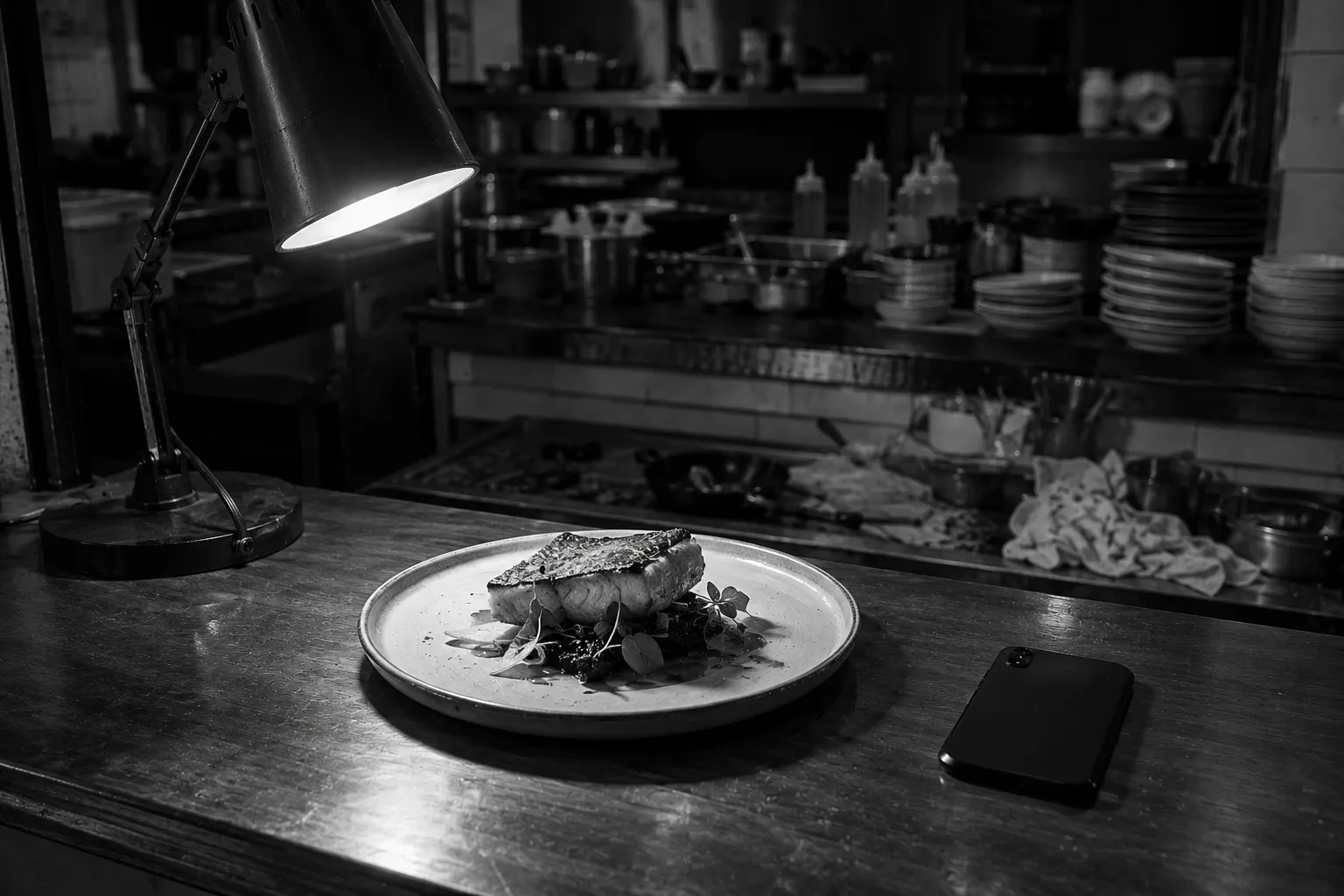
DoorDash added AI tools that help merchants join the platform faster and edit photos of dishes, TechCrunch reported on May 4. The company says restaurants can use automation to fill out store pages, improve menu images, and reduce the work required to become visible inside the app. For a small restaurant, the promise is practical. The platform demands a storefront, a catalog, pictures, categories, prices, and a visual pitch before the first order appears.
The interesting object is the food photograph. Delivery apps already separate the meal from the room that produced it, placing every restaurant inside the same scrolling marketplace. AI photo editing pushes that separation further. A dish can be brightened, cleaned, centered, or made to look closer to platform appetite than kitchen reality. The merchant gains speed, and the customer receives a smoother image of dinner before the container arrives. The risk is modest but revealing. Food becomes a product picture governed by an app's preferred look. The neighborhood restaurant enters the machine through a corrected plate, and the correction may teach the owner what kind of food the platform wants to see.

K.C. Green, creator of the comic panel commonly known as This Is Fine, accused an AI startup of stealing his art for an advertisement, TechCrunch reported on May 3. The original image became one of the internet's most familiar jokes about denial, panic, and institutional calm during obvious disaster. Its force came from drawing, timing, and repetition across years of public use. The dispute begins when that recognizability is treated as available material for a company selling automation.
The case shows how meme culture can become a resource mine for AI marketing. A famous panel may feel ownerless because millions of people have reposted it, edited it, and used it as emotional shorthand. That circulation does not erase the hand that made it. Generative tools and the companies around them often benefit from a public confusion between shared culture and free extraction. Green's complaint restores a small but stubborn fact. The joke had an author before it had a million users. When a startup borrows the image of burning calm to sell machine labor, it also borrows the accumulated patience of an artist whose work became useful because people recognized it instantly.

The Academy has updated its Oscar rules so AI-generated actors and scripts cannot qualify as performers or screenwriters, TechCrunch reported on May 2. The rule does not ban artificial intelligence from production. Studios can still use technical tools, visual effects, or assisted workflows. The line appears at credit. An acting nomination must attach to a human performance, and a writing nomination must attach to human authorship rather than output generated by a model.
The decision turns a prize category into a boundary around labor. Film has always depended on machinery, from cameras and editing systems to digital compositing, but awards need a person to name, applaud, blame, and remember. Synthetic performance unsettles that ceremony because it can imitate expression without carrying risk, fatigue, training, or consent in the same way. The Academy is defending the grammar of recognition before the market finishes testing every loophole. A studio can still place AI inside the pipeline, but it cannot ask the red carpet to treat a generated actor as a colleague. The rule keeps the trophy attached to a body, a contract, a face that can age, and a voice that can answer for the work.
The Pentagon signed new deals with Nvidia, Microsoft, and Amazon Web Services to deploy artificial intelligence on classified networks, TechCrunch reported on May 1. The contracts move commercial AI hardware and cloud systems into places built for military secrecy, intelligence work, and restricted communications. Public AI is sold through chat windows, coding assistants, and office copilots. This version arrives behind access badges, cleared rooms, and procurement language that turns model capacity into part of the defense stack.
The shift matters through placement. A model running on a public app answers inside a consumer interface, with some visible rules and a service agreement. A model placed on classified infrastructure works inside chains of command, threat assessment, targeting support, logistics, and analysis that the public cannot inspect. The technical supplier remains commercial, but the social setting changes the meaning of the tool. Nvidia chips, Microsoft cloud services, and AWS systems become part of a state apparatus whose outputs may never be explained outside a secure room. The chatbot era began with playful prompts. Its harder form is a server in a military network, where fluency becomes another instrument of institutional force.
