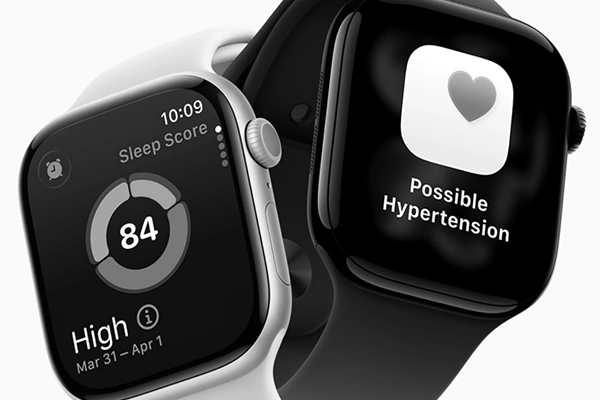
On September 9, Apple introduced the Apple Watch Series 11 in Cupertino. Among its new features, the most notable is blood pressure monitoring. What makes this launch significant is that the feature carries official approval in the United States. Its AI algorithms will analyze data collected by an optical heart sensor over a period of one month, allowing the watch to identify patterns consistent with hypertension—without the need for traditional pressure cuffs. The function has been validated in studies involving more than 100,000 volunteers and a clinical trial with an additional 2,000 participants. Results showed the system’s ability to detect even advanced stages of the condition with a minimal rate of false positives. Apple expects the feature to help identify more than one million previously undiagnosed cases of hypertension in its first year.
The potential impact is considerable, given that hypertension affects over one billion adults worldwide and often goes unnoticed due to its asymptomatic nature. Apple emphasizes, however, that any alert should be confirmed using conventional medical equipment under professional supervision. Experts welcome the possibility of broadening access to early diagnostics, while warning that the feature should not create false reassurance among those who receive no alerts. Ultimately, this new function underscores the evolution of smartwatches from mere fitness accessories into devices with clinical relevance. It also adds a fresh dimension to the ongoing debate: is mass-market technology an ally of traditional medicine, or a potential source of interference?






