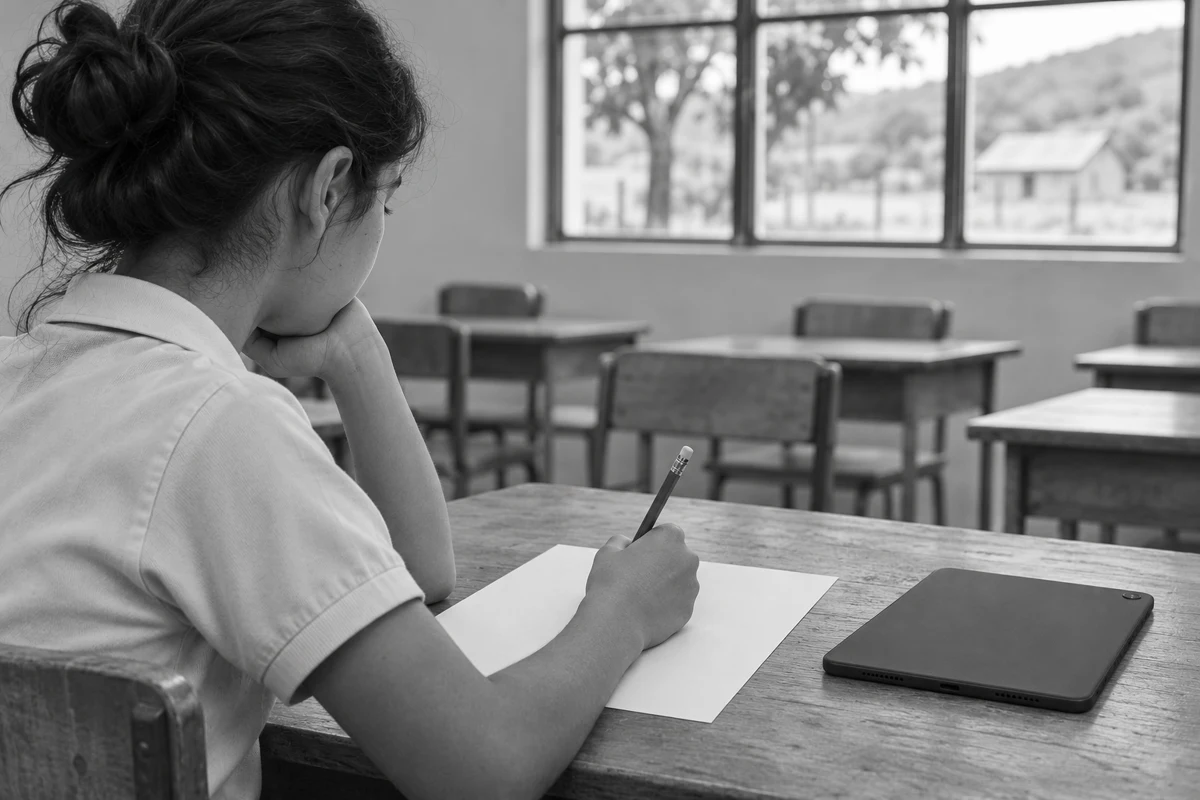
China wants every schoolchild to be AI-literate by 2030, and a Reuters investigation published on November 16 shows how unevenly that goal is being pursued. The country has almost 200 million students in primary and secondary school, and nearly half of its provinces and municipalities now have binding plans. Shanghai requires at least 30 hours of AI lessons a year in every grade, and Ningxia and Gansu plan to put AI literacy into high-stakes school entrance exams by 2027. In rural Anhui province, Funan County Qinqing High School, which lacks qualified teachers, teaches its 4,000 pupils, most of them children of migrant workers, core subjects through AI-generated lessons on tablets. Its headmaster, Yang Tianliang, credits the system with raising university admission rates, a claim Reuters could not verify.
The early evidence is mixed. One study of nearly 27,000 Chinese teenagers found that using AI was linked to homework scores 18% higher but monthly exam scores 20% lower within six months. A survey of more than 320,000 pupils found that those using AI at least three times a week scored lower on memory, comprehension and creativity. Neither study shows that AI caused the drop, and China still has no standard way to measure AI literacy. Some parents set their own rules: Beijing mother Rita Luan makes her 11-year-old daughter try a hard math problem for 15 minutes before asking a chatbot, then has her solve it again days later without help.