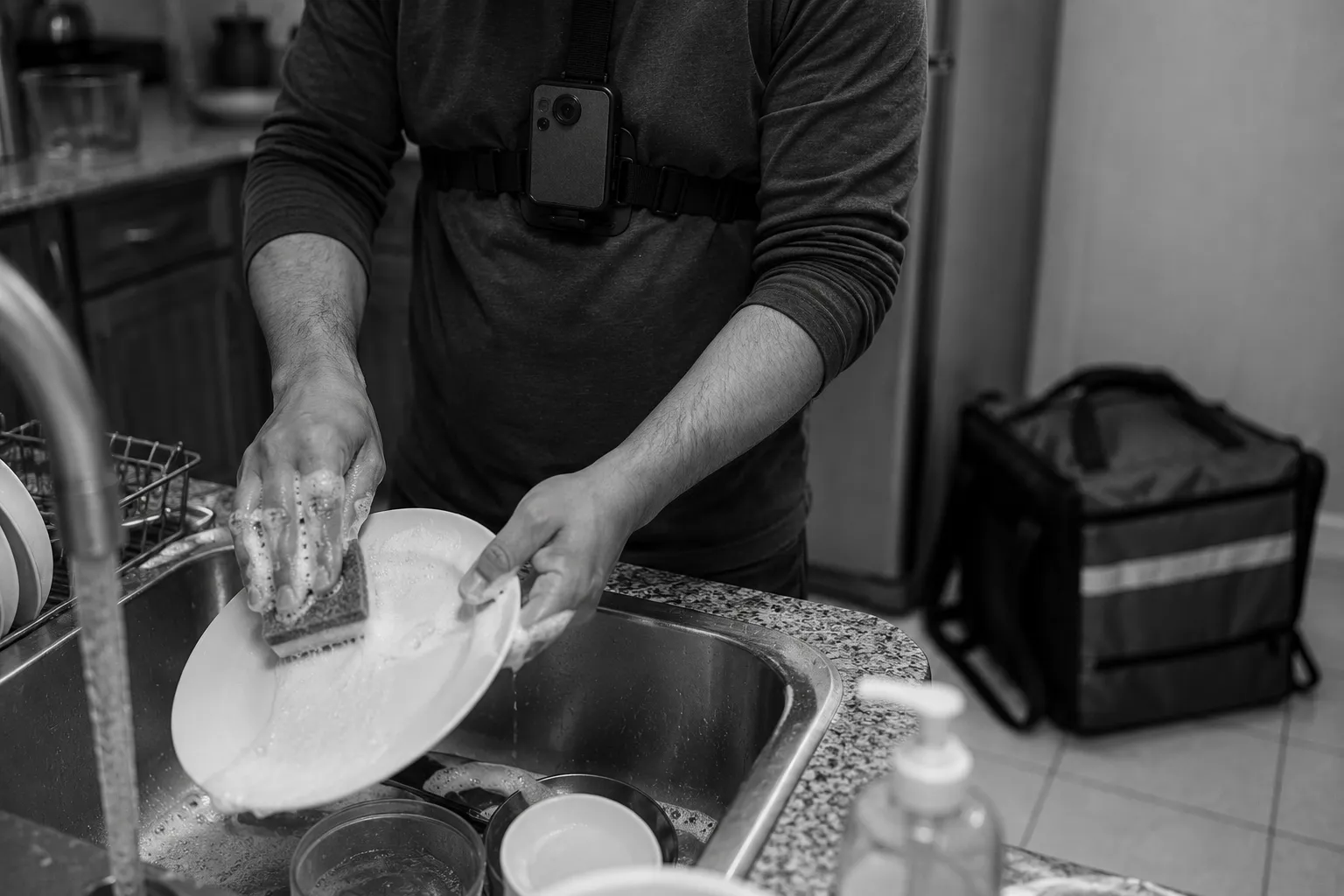
DoorDash is launching Tasks, an app that pays delivery couriers to film ordinary activities and record speech for AI and robotics training. One assignment asks a worker wearing a body camera to film washing dishes, holding each clean plate in view. The courier’s route through the city becomes a route through the physical world, collecting gestures that models cannot learn from polished demonstrations alone.
The arrangement extends platform labor into data production. A worker who already supplies location, timing, and delivery evidence can now sell images of hands, kitchens, entrances, and accents. DoorDash calls this flexible income, and the payment is shown before the assignment begins. The language of choice is real, but the bargaining position remains shaped by a platform that decides which tasks exist and what they are worth. Ordinary labor becomes training material through a short contract and a phone camera. The future robot may learn to wash a plate from footage made by someone paid to deliver food, while the worker’s own body remains outside the story of the machine being taught.






