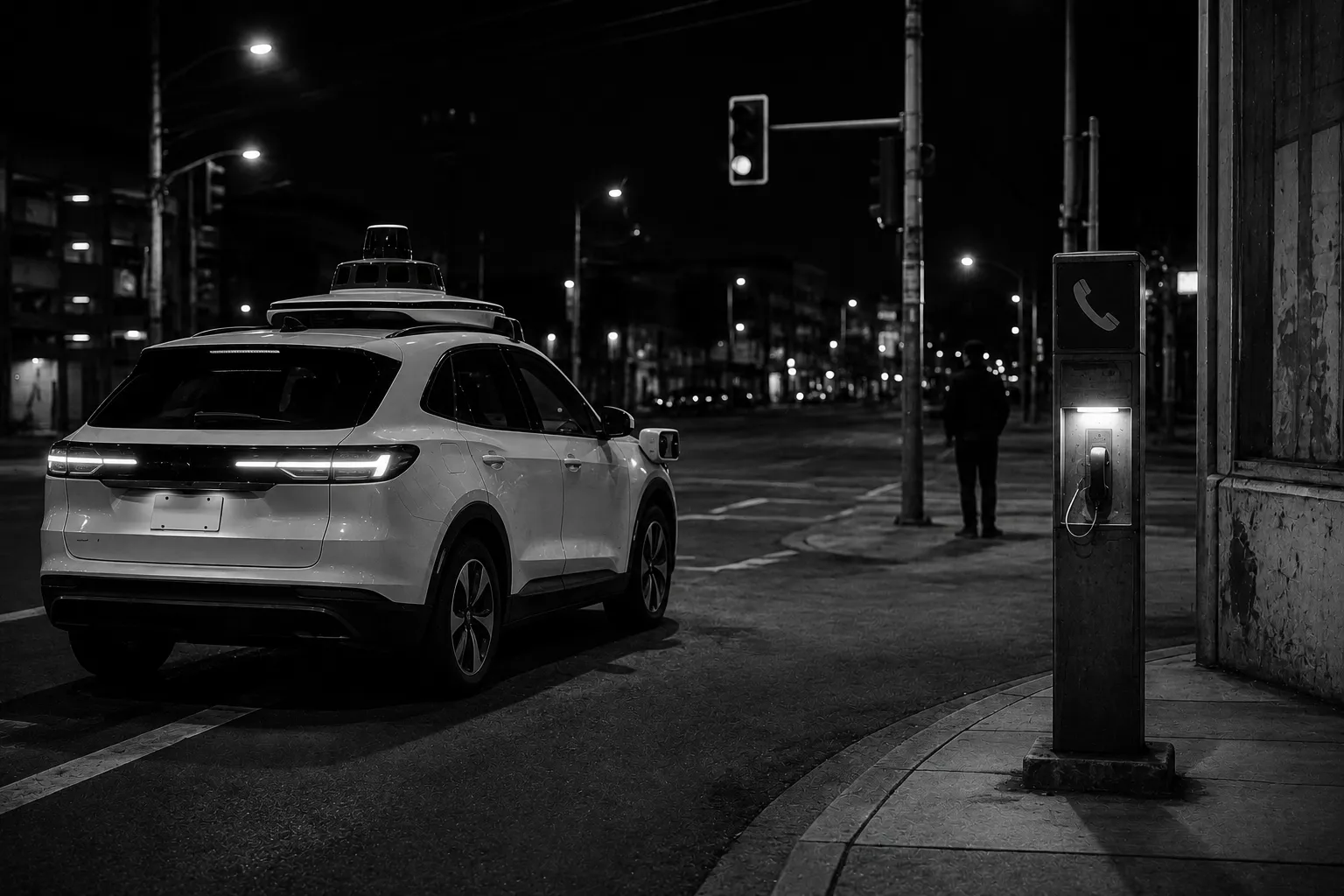
Waymo now provides about 500,000 paid robotaxi rides each week, but its growing fleet has exposed a less automated layer of the service. TechCrunch documented at least six incidents in which first responders had to enter and manually move disabled vehicles. In Austin, an officer responding to a mass shooting was diverted to clear a Waymo from the route. The company has roadside assistance and remote support, yet unusual street conditions can still transfer the final physical task to public workers.
The invisible driver is therefore not absent. It has been distributed across software, remote operators, maintenance teams, police officers, firefighters, road design, and the patience of everyone waiting behind a stalled car. Autonomy looks complete when a trip proceeds normally because this supporting labor remains outside the passenger’s frame. Failure makes the arrangement visible. A private mobility service can collect the fare while the city absorbs part of the cost of exceptions, especially when an immobilized machine becomes an obstacle during an emergency. As more companies deploy robotaxis, the question is no longer whether a vehicle can drive most routes without a person at the wheel. It is who must arrive when it cannot, how quickly they can take control, and whether emergency services should become the roadside crew for an industry built around removing the driver.






