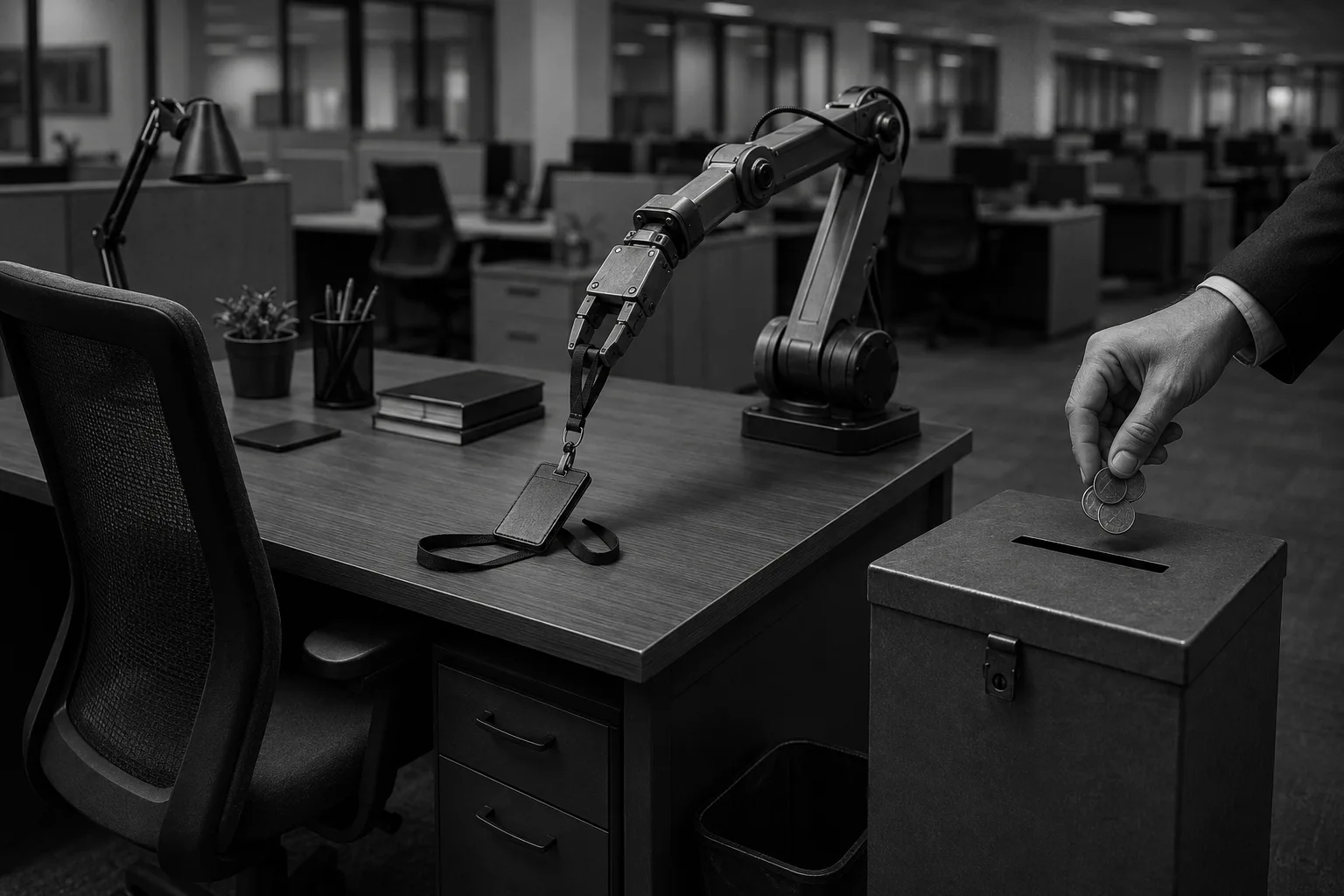
South Korean lawmaker Lee Hae-min introduced a three-bill package on August 14 that would make companies contribute to a public fund when AI or automation significantly reduces employment or replaces work. Democratic Party lawmaker Lee Ju-hee joined as co-sponsor. The proposed AI Transition Basic Society Act would use the money for retraining, job changes, reemployment and minimum-income support. Regions hit by concentrated disruption could become transition zones. Employers would have to prepare retraining and role-change plans and, when workforce changes pass a set scale, notify workers and consult them in advance. Companies maintaining employment or adding jobs could receive reductions, exemptions or tax support. The levy rate and operational thresholds remain unsettled, and the bills must pass the National Assembly.
The proposal gives automation a payer. Companies often describe job cuts as an inevitable consequence of software, allowing responsibility to drift toward the vendor, the market or the future. This package keeps the account with the employer that reorganizes its workforce and receives the productivity gain. Attribution will remain difficult because demand can fall, departments can merge and managers can invoke AI before a system performs the work. A levy therefore depends on records connecting a deployment to eliminated roles. South Korea's proposal places that argument before workers are dismissed by requiring notice and consultation. If adopted, an automation plan would have to include the cost of the people it removes from the payroll.






