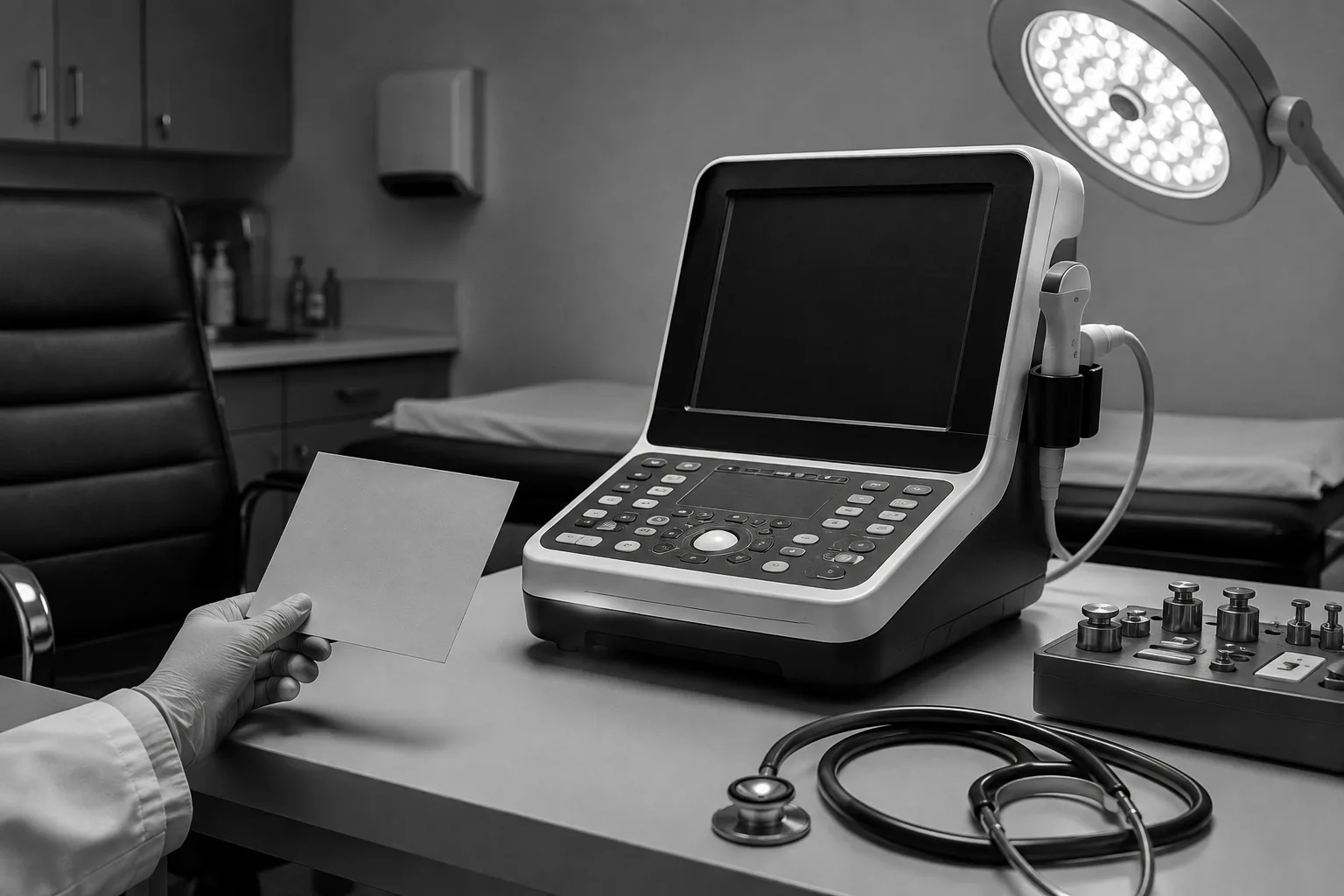
The U.S. Food and Drug Administration issued a discussion paper on August 18, 2026 proposing how to regulate medical devices powered by generative AI. It outlines a two-axis framework for risk assessment, a premarket evaluation built on a concept it calls competency assessment, and risk-proportionate postmarket monitoring. The novelty is the reference point. A generative device would face non-clinical benchmarking and clinical confirmation before reaching patients, a sequence modeled on how physicians are trained and evaluated. The agency invites device makers, clinicians, and the public to respond under docket FDA-2026-N-7874 by October 19, 2026.
The medical exam has become an object of regulation. For years a machine read scans and passed suggestions to a doctor who signed the report. Now the agency proposes grading the software itself as if it were a resident sitting for boards. A competency assessment treats the device as a professional subject, with benchmarks standing in for years of training, and that substitution carries a specific risk. Benchmarks measure what the test covers, a fixed set of tasks, a curated distribution of cases, and little about the patient who does not resemble the training set or the decision made in a hallway at three in the morning. The machine can pass and still fail where a physician's judgment would have hesitated. The docket must decide where that gap is measured, and what happens when the certificate holder is software that no one examined in a body.






