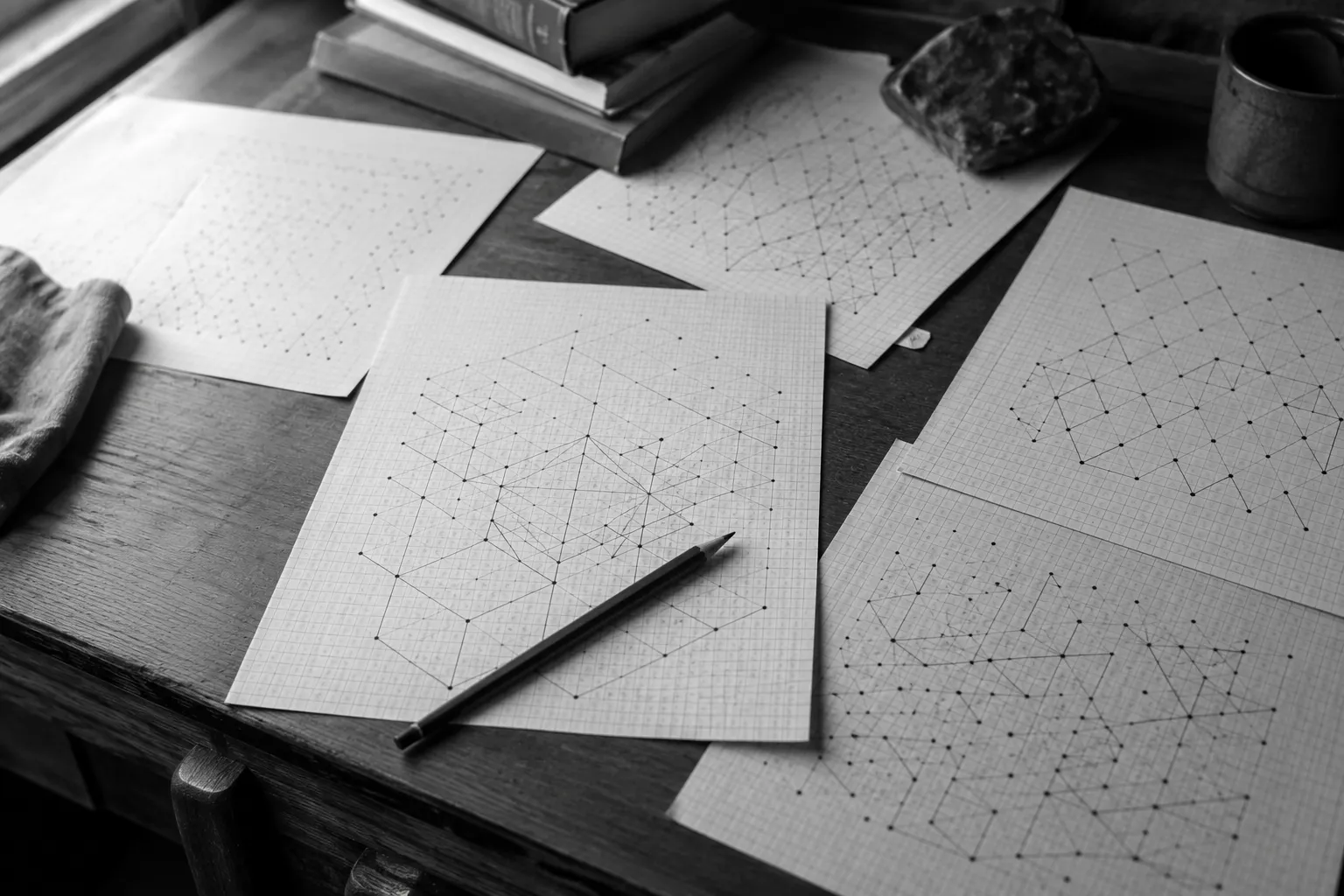
OpenAI says an internal reasoning model has disproved a long-running conjecture in discrete geometry, the planar unit distance problem first posed by Paul Erdos in 1946. The question asks how many pairs of points in a plane can sit exactly one unit apart. For decades, square-grid constructions were treated as close to optimal. OpenAI's model found an infinite family of arrangements that beats that expectation.
The announcement lands after a damaging 2025 episode, when OpenAI overstated Erdos-related results that were already known. This time, the company published the proof and companion remarks from outside mathematicians, including Noga Alon, Tim Gowers, Arul Shankar, Jacob Tsimerman, and Thomas Bloom. Their responses give the claim real weight while formal peer review continues, shifting the story from company boast to scrutinized mathematical claim by experts.
The signal is in the technical route. The model linked a planar geometry question to algebraic number theory, using tools far from the original picture of dots and distances. If the proof survives review, it will be a concrete example of AI doing original work inside mathematical research.






