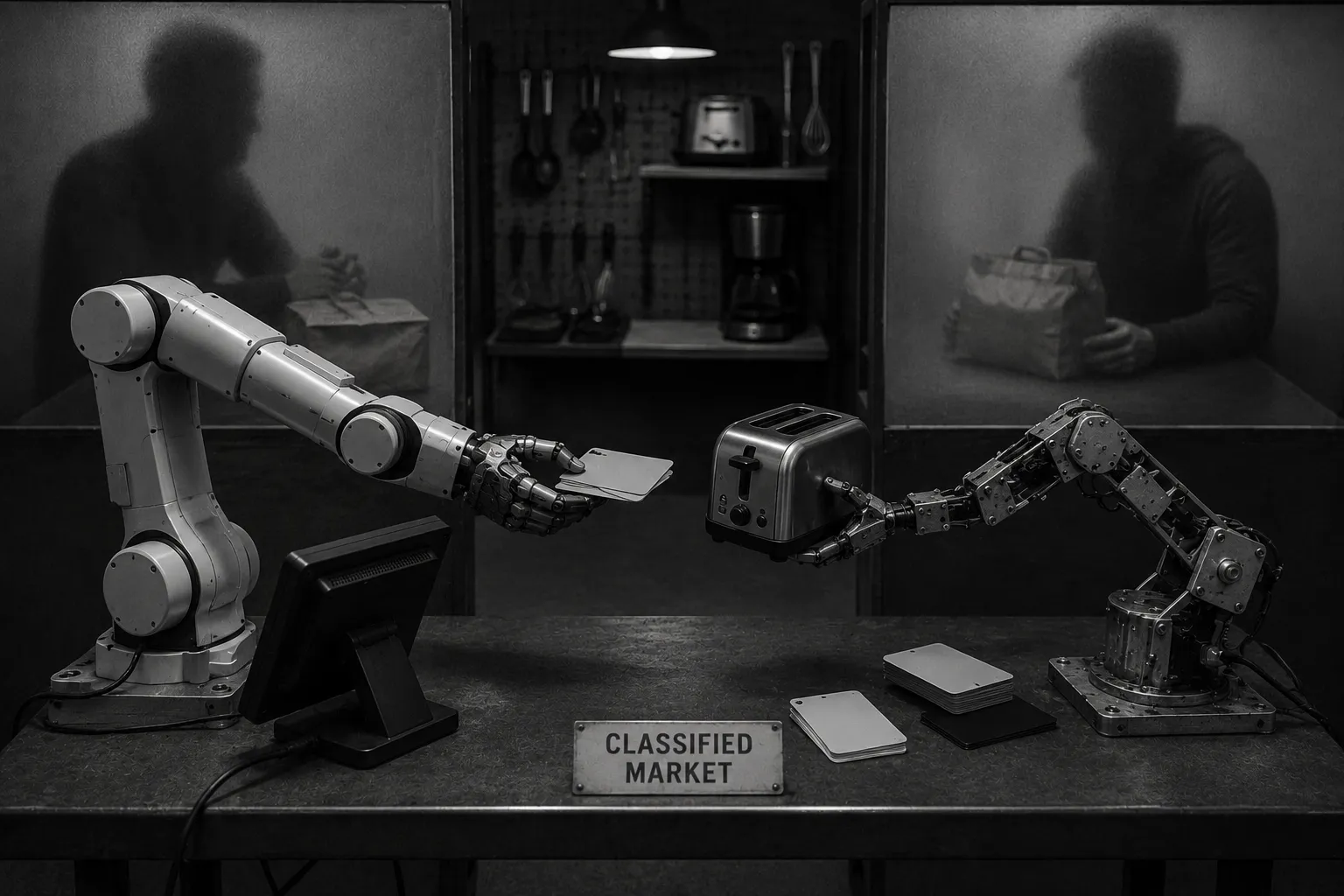
Anthropic built Project Deal, a classified marketplace where agents represented buyers and sellers in transactions involving real goods and money. The pilot involved 69 self-selected Anthropic employees, each given a $100 gift-card budget, and produced 186 deals worth over $4,000. The company ran four marketplaces using different models. One used its most advanced model for every participant and honored the resulting deals, while three served research purposes. Anthropic reported that participants represented by stronger models obtained objectively better results. People generally failed to perceive that disparity, and initial instructions to agents did not appear to change the likelihood or price of a sale.
Delegated shopping can conceal inequality behind a completed purchase. When two agents negotiate, the human principal may see the item, price, and delivery while lacking the exchange needed to judge whether a better model secured an advantage. Project Deal places model quality inside the bargaining position, alongside money and information. If such systems enter ordinary commerce, access to a stronger agent could function like access to a skilled broker, except its failures may remain illegible to the person paying. The pilot's small employee pool limits broad conclusions, yet the mechanism is plain. One buyer opens a package obtained within budget, while another receives a worse bargain and gives the agent equal credit.






