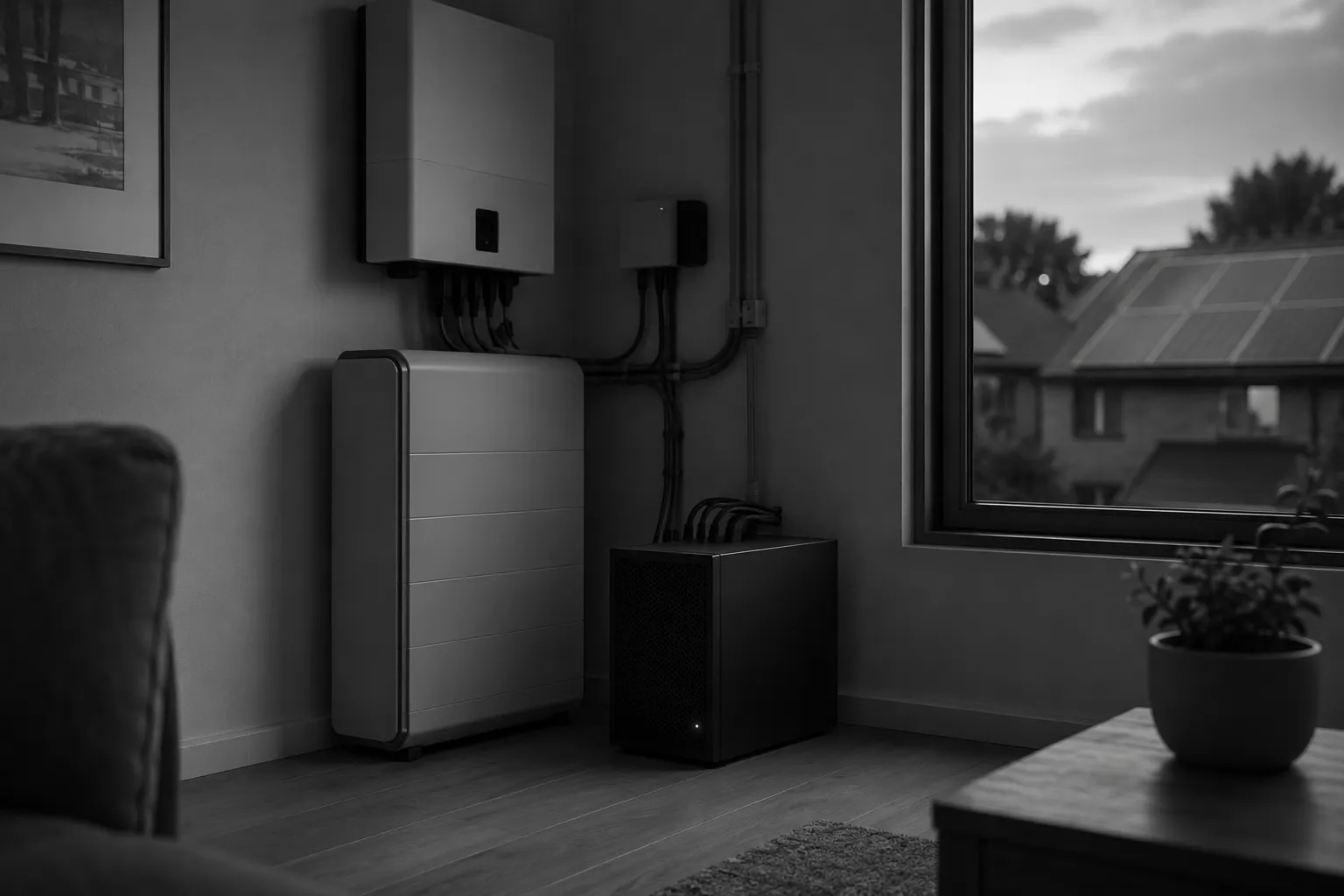
Sunrun is testing a distributed AI compute program that would place small compute nodes inside homes equipped with its solar panels and battery storage, The Verge reported on July 10th. The company says participating customers will be compensated, while Sunrun sells the combined compute power to enterprise buyers such as AI companies. The proposal arrives as large data centers face public resistance over electricity use, water demand, noise, pollution, and the pressure they place on local grids. Instead of concentrating machines in one visible facility, Sunrun wants to scatter them through houses already connected to its energy systems.
The server house changes the address of artificial intelligence. The data center no longer has to appear as a fenced industrial box at the edge of town. It can enter through the garage, the utility room, the wall beside the battery, and the monthly payment promised to the owner. Domestic infrastructure becomes leasable computation. A home that once fed solar power back to the grid can also feed model work into an invisible market of enterprise demand. The bargain may look clean because the box is small and the customer is paid. The real shift is spatial. AI's appetite for power and hardware moves closer to the living room, where infrastructure can pass as an appliance.






