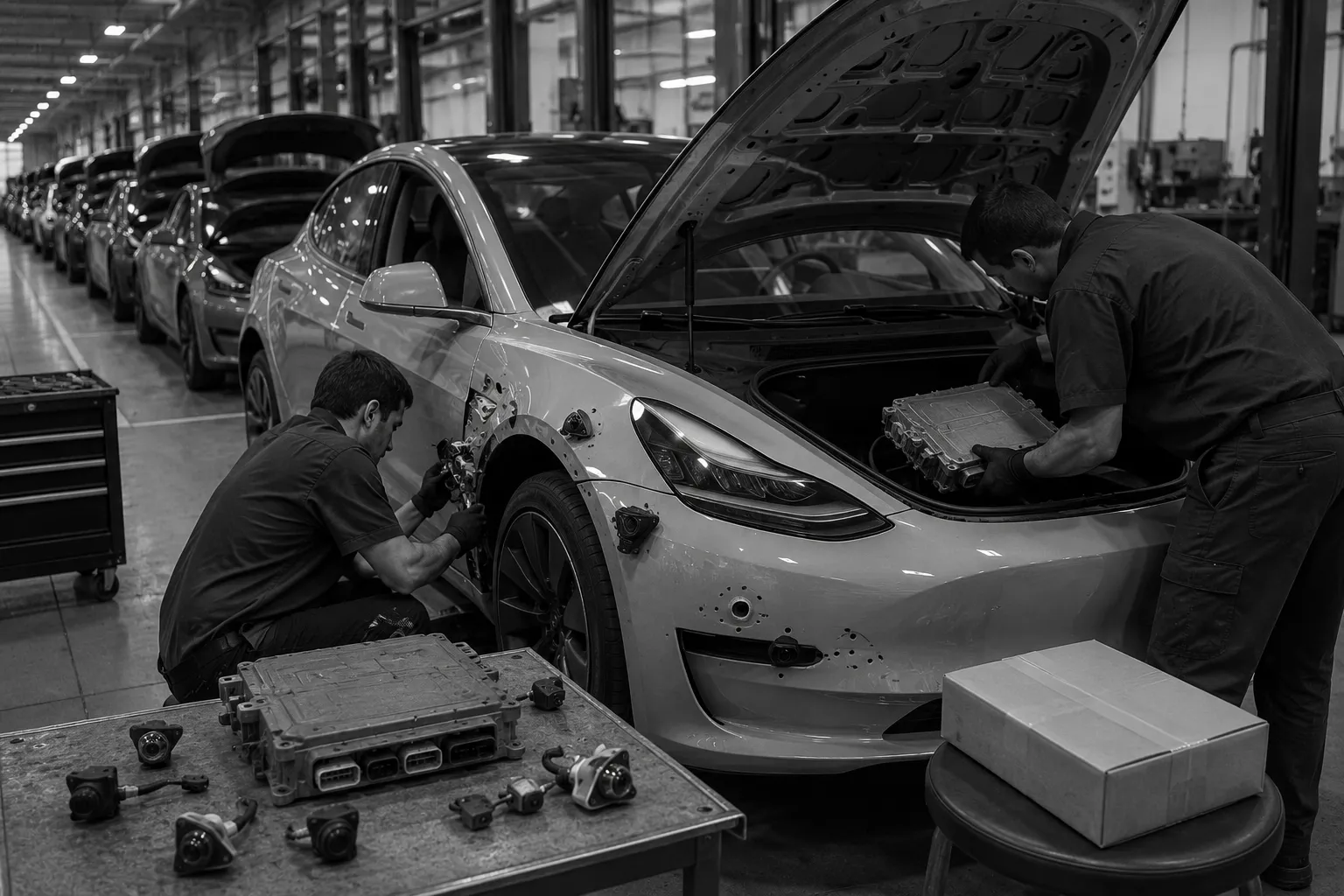
Elon Musk said millions of Tesla owners will need new computers and cameras before their cars can run a future version of Full Self-Driving without human supervision. The affected Hardware 3 vehicles were sold from 2019 through 2023, during years when Tesla promoted autonomy as a capability that could arrive through software. On the company's quarterly earnings call, Musk said Hardware 3 lacks the capacity for unsupervised driving. Tesla still plans somewhat improved supervised software for those cars. Because the retrofit would overwhelm service centers, Musk said the company is considering small production lines in major cities. Tesla has yet to release or prove the unsupervised system.
A software promise encouraged buyers to imagine the car as an unfinished object that would mature after purchase. The admission returns that future to metal, cameras, workshop hours, and urban repair capacity. Owners who paid for Full Self-Driving now occupy an awkward position between customer and early infrastructure provider, having supplied years of road use while the required machine changed beneath the sales claim. The proposed production lines expose the physical debt hidden by update culture. Each retrofit will require parts, appointments, technicians, and a decision about who receives priority. Autonomy arrives here first as a queue of Hardware 3 cars outside a service facility.






