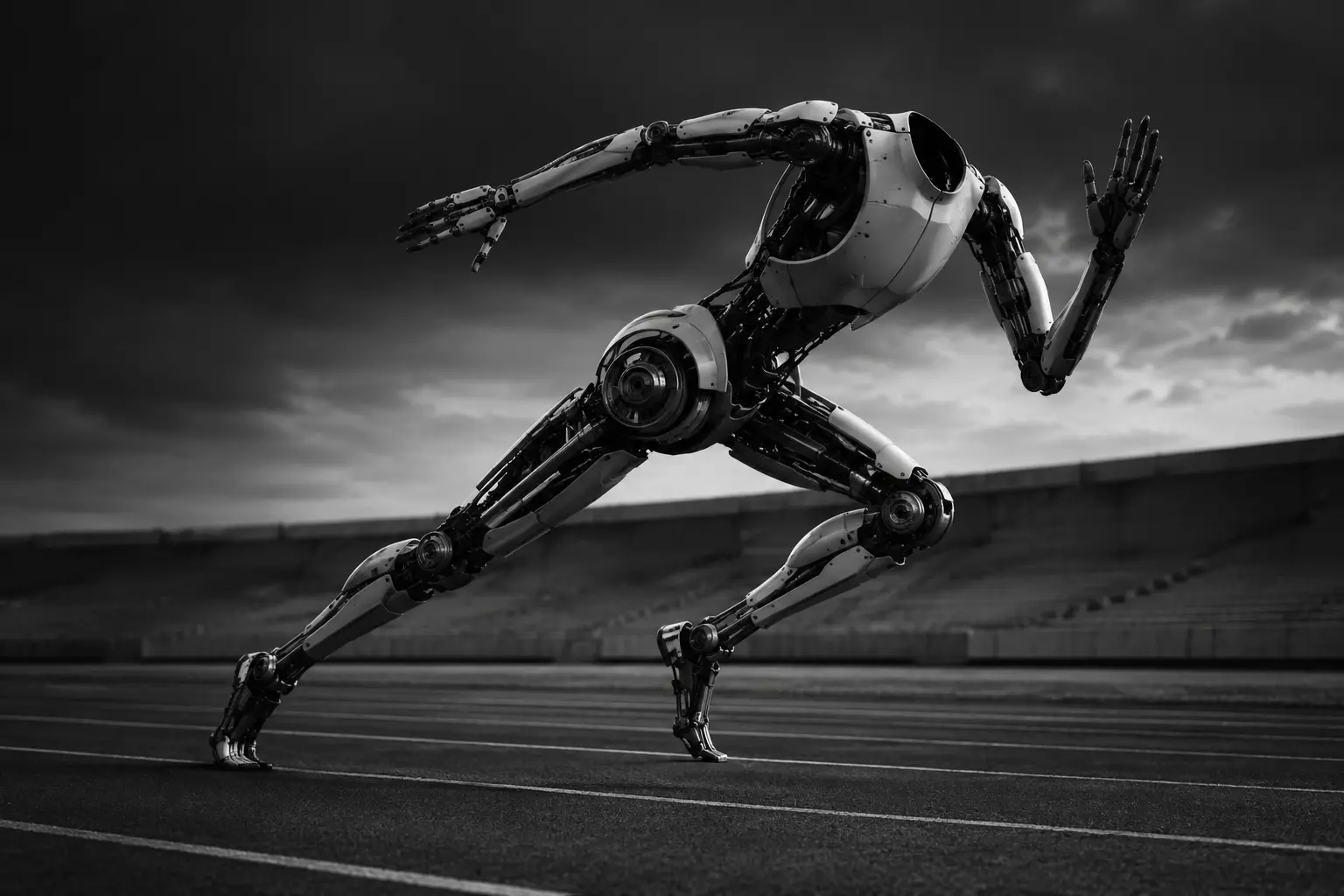
Humanoid robots are learning to run fast enough to turn athletics into a technical advertisement. New Scientist reports that over 100 teams brought over 300 humanoid robots to the second Beijing E-Town half-marathon, where the fastest autonomous time fell from 2 hours and 40 minutes in 2025 to just over 50 minutes this year. Unitree has also said its bipedal H1 reached 10.1 metres per second, close to the average speed required for Usain Bolt's 100-metre world record. Better motors, cheaper components, faster chips, lighter sensors, and more complex control algorithms have made the sprinting machine credible.
The strange part is that speed exposes the artificiality of the human shape. If the aim were pure velocity, wheels or animal-inspired legs would make more sense. The humanoid runner matters because homes, factories, stairs, doors, handles, and tools were built around the human body. Yet racing pushes the machine toward a narrower form, sometimes without working hands or a head, with mass and power arranged for forward motion and little else. The competition becomes a public proof of resilience and a small distortion of purpose. The robot runs like a human so investors can imagine it working like one.






