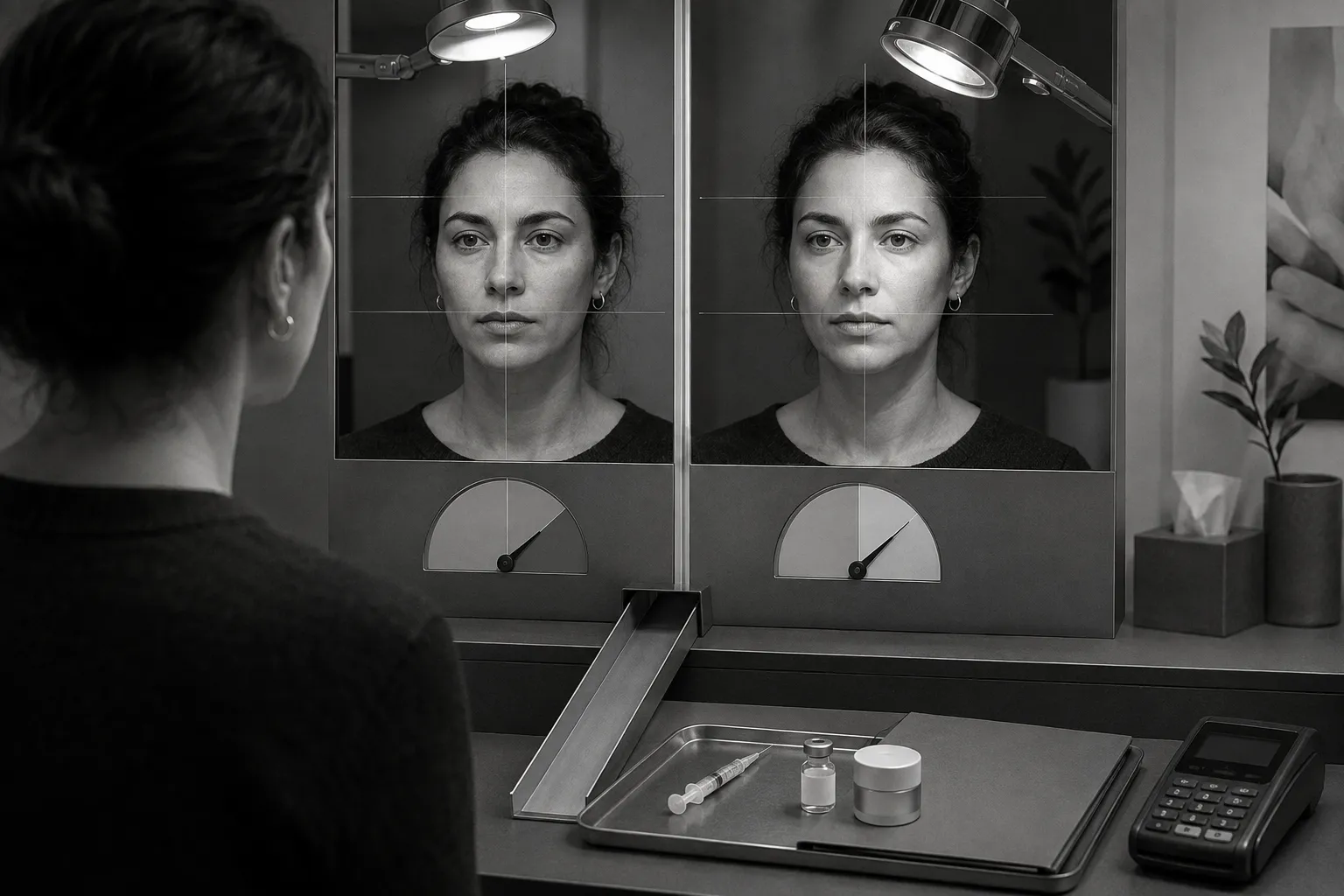
After two years without work had lowered her confidence, Danielle found a facial analysis service promoted on TikTok as science-backed self-improvement and paid $330. She sent Qoves selfies and received a 30-page report scoring details from her ears to the femininity of her features. It proposed changes across her face and work on her brows and lashes. Qoves says attractive people receive better treatment at work and elsewhere. Danielle linked that promise to financial security. It belongs to looksmaxxing, which treats appearance as measurable and improvable. Facemaxify and Epica use AI to score faces against hidden standards. Qoves sells a $150 report and a $180 surgery upgrade, though its method and use of AI remain unclear.
Laura O'Connor exposed the mechanism. Epica gave the reporter's selfie a skin score of 61, marked uneven texture and displayed serum offers. She changed the lighting, took another selfie and scored 81. Epica kept its method secret. Researchers Justin Mogilski and Mitch Brown say limited studies cannot support universal beauty advice across cultures. Such uncertainty still supports a sales path. The service names a defect, assigns a number and offers a procedure, subscription or affiliate product. An unstable measure sounds like a diagnosis, making ordinary variation an expense. Danielle has consulted an injector and may travel for procedures after clearing her unemployment debt. O'Connor's higher score left her beside another set of serum links.






