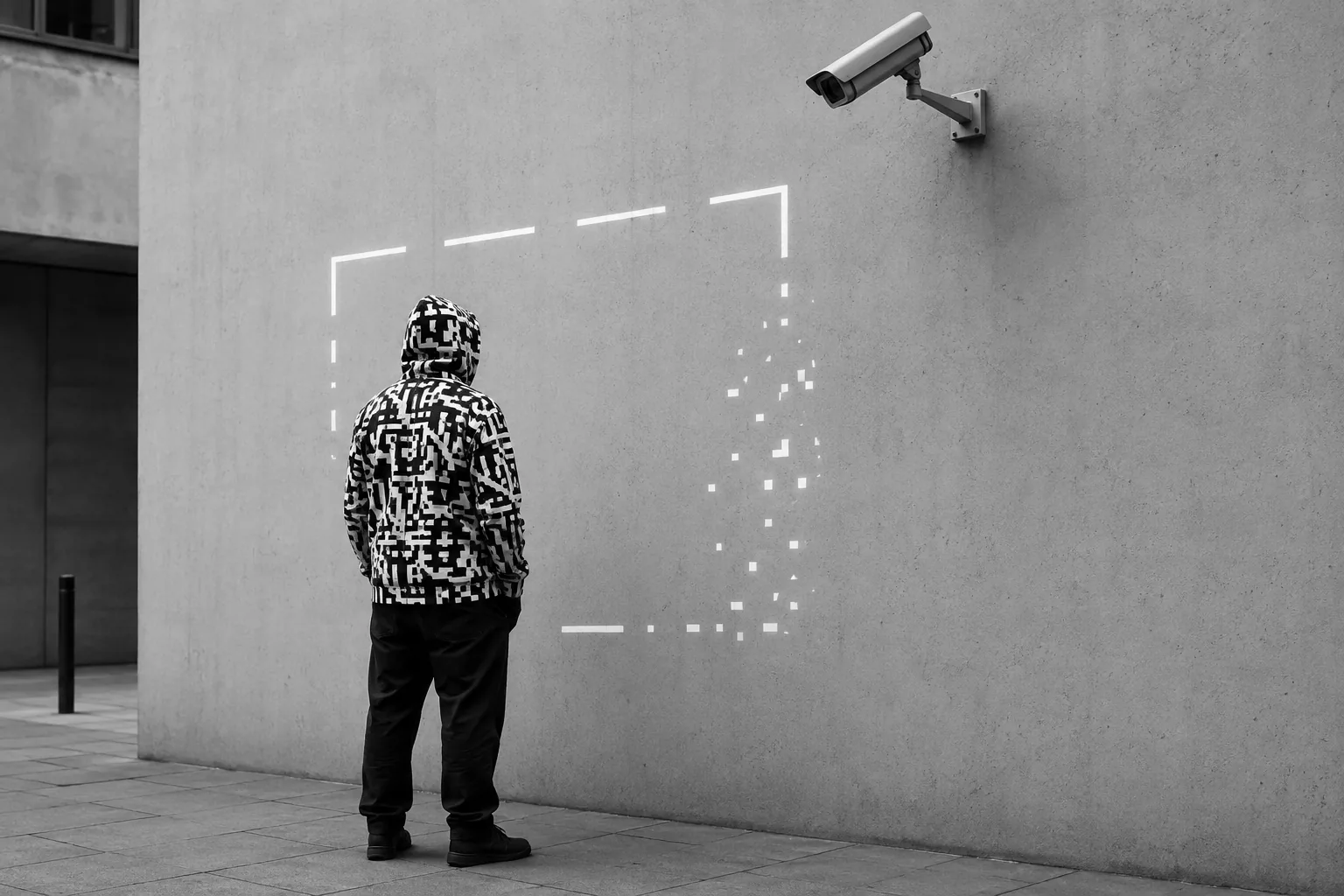
Researcher Bill Swearingen spent a year developing printed patterns designed to interfere with surveillance. His noRecognition project reports 31.7 million tests against 11 computer-vision models. The cameras continue recording, but the pattern can disrupt the software that labels a shape as a person or vehicle and generates an alert. A training system repeatedly changed each design after detection failures. Swearingen told TechCrunch that his patterns defeated all 11 models in laboratory tests. At Def Con in Las Vegas, his team covered a 2009 Toyota Yaris with one pattern and tested it against a Flock camera. He says the car avoided automatic detection, although its wheels remained difficult to conceal. The demonstration video is unavailable, and the results have not been independently reproduced.
The project turns privacy into something worn on the body's surface. A hoodie can place friction between a visible person and the database trying to classify that person at a protest or on a street. The protection remains temporary and uneven. Lighting, distance, camera angle and software updates can change the result. Swearingen is keeping his strongest designs private because camera companies could use public samples to retrain their systems. He plans to sell shirts, hoodies and neck gaiters through Kickstarter, including unique patterns never released online. Each garment enters a contest that continues after purchase. A camera vendor updates its detector, and the wearer needs another print.






