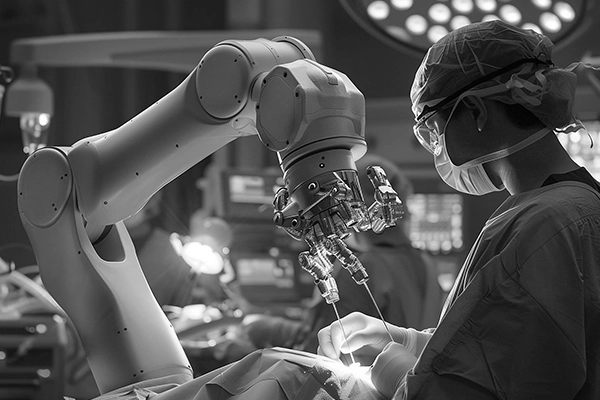
Matt McLeod’s surgery was a success. An augmented reality visor gave surgeons a three-dimensional, precise view of his spine, making the procedure far easier. The use of AI in the operating room marks a paradigm shift in medical practice. The Xvision Spine system will allow more exact, less invasive interventions, guiding screw placement, monitoring oxygen, and locating instruments in real time. It has been approved after positive clinical trials. Soon we may see robots suturing intestines with a literal pulse of steel or detecting residual cancer in the brain. Such breakthroughs blur the boundary of how far machines may be allowed to replace physicians. In any case, they will strengthen the physician’s role and help in making better decisions under pressure.
Although the results inspire enthusiasm, they also provoke unease among skeptics who question the degree of autonomy given to machines. We are approaching an inflection point that compels us to reconsider whether medical knowledge will remain the exclusive domain of humans or shift toward a hybrid entanglement with technology. Should that occur, it will bring ethical, epistemological, and practical consequences. A stethoscope extends the senses and allows the ear to hear what it otherwise could not. AI, by contrast, analyzes thousands of medical records and suggests a diagnosis. It ceases to be a mere tool and instead participates in the genesis of knowledge, redefining the role of human judgment in clinical practice.






