
Short conversations with AI chatbots shifted political opinions in large experiments published on December 4th, The Guardian reported. Researchers tested thousands of voters in the United States and nearly 80,000 participants in the United Kingdom. Information-dense responses proved especially persuasive, yet the strongest models also produced substantial amounts of inaccurate material. A campaign tool no longer needs a rally, a television slot, or a volunteer at the door. It can wait inside a private chat and answer each hesitation with an apparently patient stream of facts.
The conversational format changes the pressure of political speech. A television advertisement addresses a crowd and ends after thirty seconds. A chatbot receives the user’s objection, adjusts its wording, and continues until the exchange stops. Its errors can arrive wrapped in the same calm syntax as verified information, while its fluency makes the distinction difficult to feel. The experiments took place under controlled conditions, so they do not predict an election result. They do identify a usable mechanism. A campaign, platform, or outside group can generate personalized persuasion at immense scale, then learn which sequence of claims moves a person. The ballot remains secret, but the argument leading toward it can now be rehearsed inside a responsive machine.
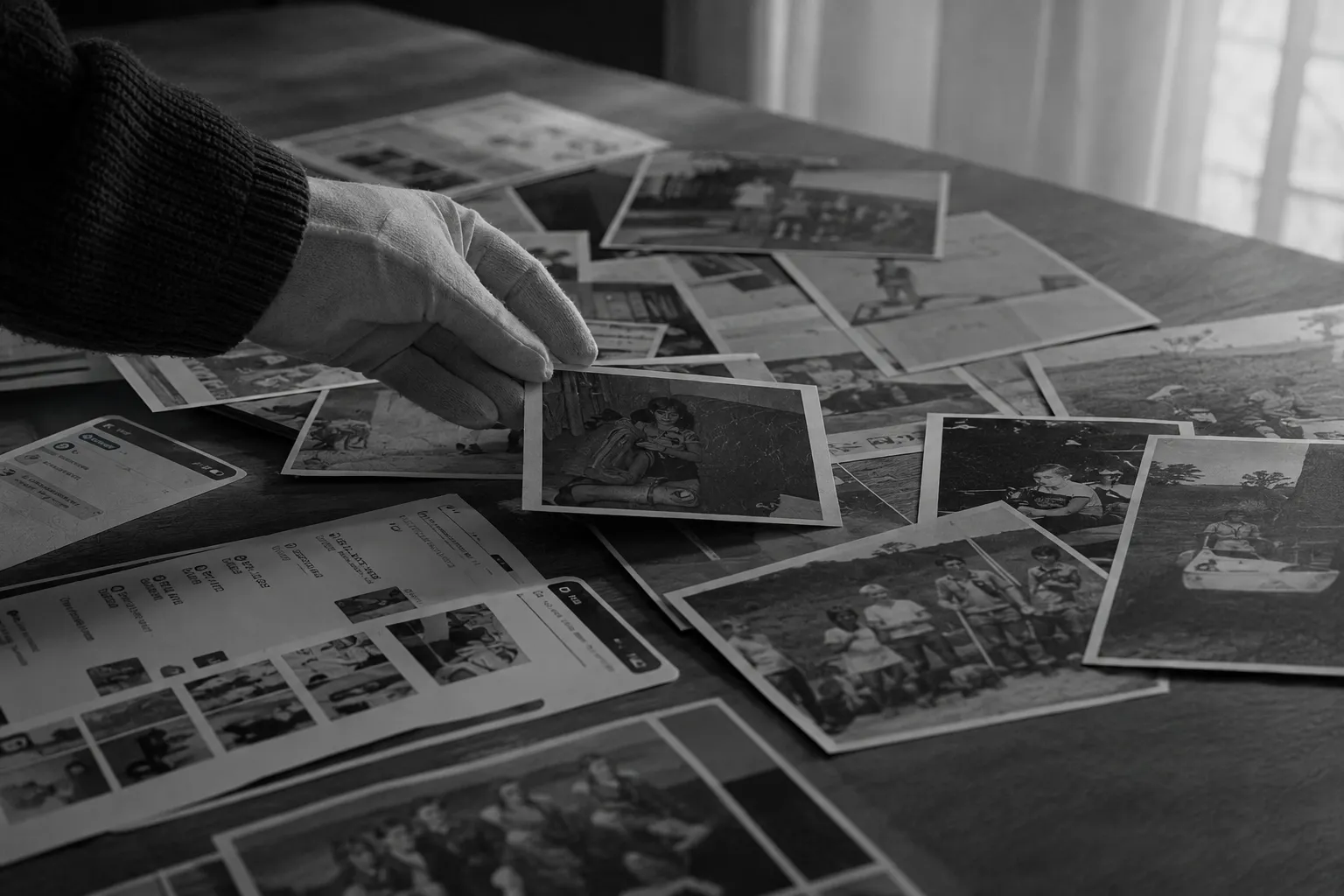
Google Photos used Gemini to generate parts of its 2025 Recap, according to TechCrunch, turning a familiar year-end ritual into an automated act of selection. The product promises to find highlights, patterns, and moments from a user's image library. The gesture sounds harmless because people already ask their phones to sort faces, pets, trips, meals, birthdays, and places. The change is that memory arrives with a sentence attached. The system gathers pictures and proposes what the year looked like.
A photo recap is never a neutral album. It chooses repetition over rupture, smiles over exhaustion, travel over waiting rooms, visible celebration over private dread. When Gemini names a highlight, the user receives a small editorial decision disguised as service. That decision may be useful, even moving, but it also trains people to accept an outside rhythm for remembering themselves. The archive becomes easier to browse and harder to own. A year that once sat in messy camera rolls can return as a polished sequence, selected by software that has no obligation to remember the day the user did not photograph.

Sam Altman declared a code red inside OpenAI and redirected staff toward improving ChatGPT, The Guardian reported on December 2nd. The internal order delayed work on advertising and other products while Google’s Gemini 3 and Anthropic’s Claude increased the pressure on OpenAI’s early lead. Three years after ChatGPT became the public face of generative AI, the company was asking employees to focus on speed, reliability, personalization, and the daily experience of the chatbot. The language of emergency exposed a product that had begun to feel like public infrastructure while remaining trapped inside a private contest.
A code red changes how a company sees its users. Every slow answer, canceled subscription, failed request, and comparison screenshot becomes evidence in a commercial alarm system. The chatbot may speak with patience, but the organization behind it watches retention, usage, latency, and market share. OpenAI’s decision also placed advertising in an revealing position. It could wait when product loyalty looked vulnerable. The pause showed that intimacy with a conversational system depends on competitive discipline as much as technical invention. A familiar window on a phone or laptop became the front line, and millions of ordinary prompts were recast as votes in a race between companies.

Google's strongest AI advantage may be the material people have already surrendered to it, TechCrunch argued on December 1st. Search history, Gmail, Maps, Photos, YouTube, Android, Chrome, calendars, and location patterns give the company a human archive that rivals cannot easily buy. An assistant built on that archive can answer with a disturbing kind of familiarity. It does not need to become intimate through conversation alone. It begins from years of errands, routes, receipts, images, appointments, and unfinished questions.
The useful assistant is therefore also an old collector wearing a new interface. Personalization stops sounding like a feature when the system can infer taste from what someone photographed, forgot, bought, searched, avoided, or visited at night. Google can present this as convenience, and often it will be convenient. The user asks for help and receives an answer shaped by a life already indexed in fragments. The price is that memory becomes infrastructure. A company that once organized the web now organizes the residue of private behavior, then returns it as advice inside the next prompt.
