Apple Music may introduce transparency tags that identify songs created with artificial intelligence. The proposal sounds simple until a song's production history is considered. A voice may be synthetic while the lyrics are human. A model may generate a sample that a producer later edits, rearranges, and performs around. Restoration tools, mastering systems, and imitation vocals can all involve AI without playing the same creative role. One small label must compress those differences into a category that listeners can understand at a glance.
Music platforms have spent years making authorship nearly invisible behind frictionless playback. AI now forces them to restore context because listeners, artists, and rights holders want to know what kind of labor produced the sound. A useful tag cannot function as a vague warning or a marketing badge. It needs a consistent definition, meaningful detail, and information supplied by parties with incentives to be honest. Transparency will not settle whether synthetic music is valuable or fair, but it can preserve the listener's ability to make that judgment. Without it, the platform knows how a track entered the catalog while the audience hears only the finished surface.

X says creators may lose access to revenue sharing if they post unlabeled AI-generated images or video of armed conflict. The policy connects visual truth to an economic penalty: disclose the synthetic material or forfeit the possibility of payment. That may discourage some deception, but it also exposes the platform's underlying structure. Images of war travel inside an attention market where speed, shock, and engagement can be rewarded before verification catches up. A label is asked to carry the burden of separating evidence from simulation.
The difficulty is temporal. A false image can circulate widely, shape fear, and enter political argument long before a moderation decision or suspension occurs. Even a correctly applied label may be cropped away when the material moves elsewhere. The policy treats disclosure as creator behavior, while the public encounters the result as apparent documentation. Financial sanctions are useful only if enforcement is consistent and fast enough to alter incentives. Otherwise, the system leaves viewers to perform emergency forensics during moments when reliable information matters most. The image arrives first; its status, provenance, and consequences follow later.
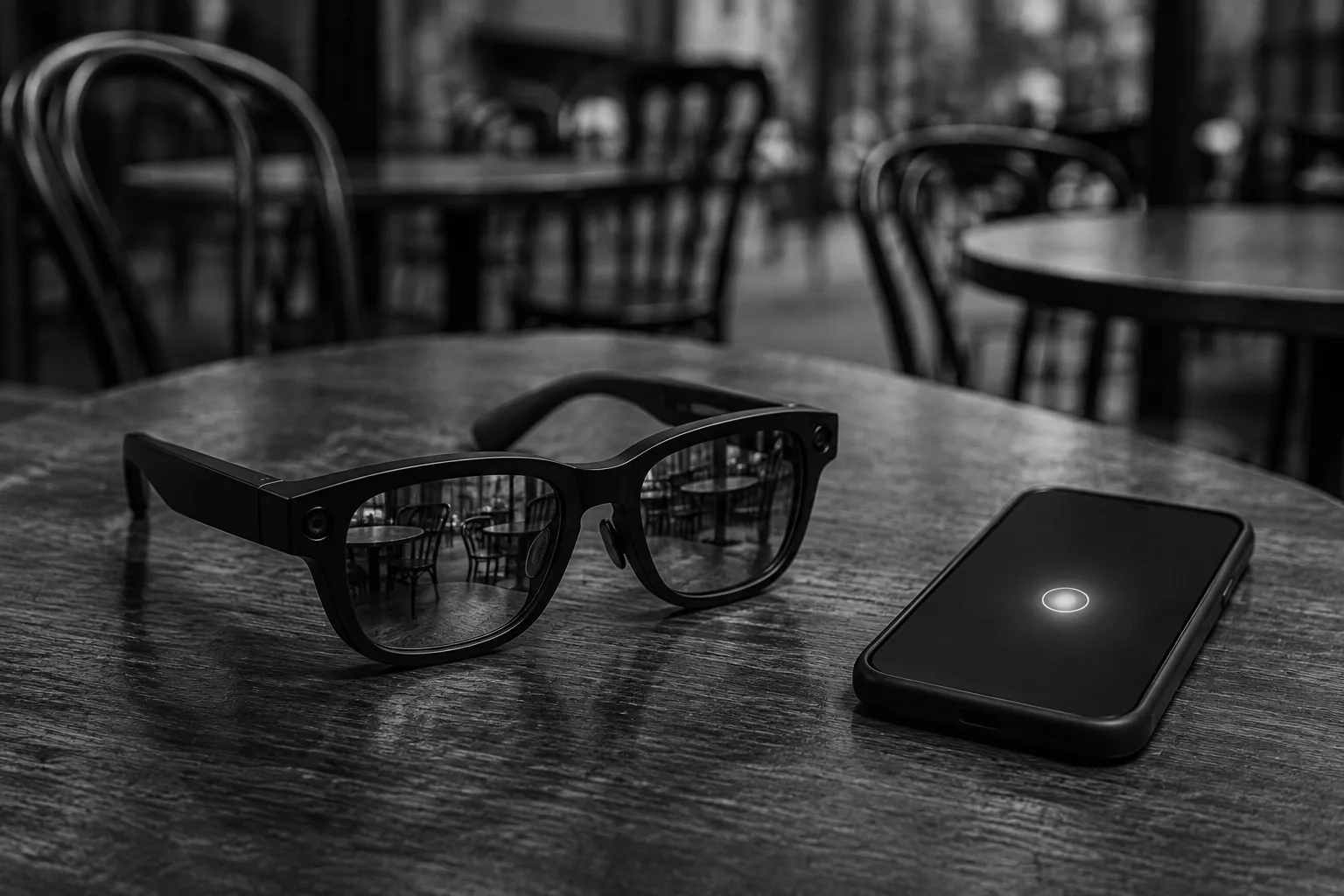
A new app called Nearby Glasses uses Bluetooth signals to warn people when smart glasses may be close. Its existence reveals a social problem that the eyewear industry has not solved: a camera can now look almost identical to an ordinary pair of glasses. The person being observed may have no reliable way to know whether a lens is recording, processing faces, or simply idle. Detection therefore becomes another consumer service, running in the background to restore a fragment of the awareness that discreet hardware removed.
The arrangement is strangely circular. One connected device is required to disclose the possible presence of another, and neither can provide complete certainty. Bluetooth can be disabled, identifiers can change, and an alert cannot explain the intent of the wearer. Yet the app matters because it expresses a demand for reciprocal visibility. Smart glasses give their owner information about the surrounding world; people in that world want information about the glasses in return. Without shared conventions, public space becomes a contest between sensors and sensor detectors, while consent is reduced to a notification that may arrive after the encounter has already begun.

Honor's latest robot-phone concept gives its camera an articulated arm and enough choreography to dance along with music. The movement is playful, but it changes the meaning of a familiar object. A phone camera once waited for a hand to aim it. Now the lens can turn, follow, and perform on its own, borrowing the gestures of a curious pet or attentive companion. The mechanism makes observation visible, yet wraps that observation in charm. Surveillance becomes easier to accept when it appears to have a personality.
This is a recurring ambition in consumer AI: turning sensors into characters. A moving lens can hold a subject in frame, react during a call, or create the impression that the device is listening with its whole body. Those gestures may feel intimate even when they are generated by software. The important question is not whether a camera can dance convincingly. It is what users grant a device once its mechanical attention feels social. A lens that seems delighted to see us may be invited into rooms and moments that a visibly indifferent camera would never enter.
