
Meta launched a personal AI agent named Muse this week, and the short social-media identity long associated with the British rock band now points elsewhere. The @muse account on Instagram identifies Meta's product, while the band, which trademarked its name in 1999 and has 2.7 million followers there, uses @museband. A comparable change occurred on X, where the group now appears as @Musetheband. Neither Meta nor the musicians have publicly explained whether the transfer followed a sale, an agreement, a request or a platform decision. That missing fact matters. The visible outcome is clear; the terms remain private.
A handle looks like a name but behaves like rented space. Years of songs, tours, photographs and fan recognition can accumulate behind four letters without turning those letters into property inside the interface. The platform writes the registry, controls reassignment and can place its own product at the shortest address. Muse adds an especially dry irony. Meta describes its agent as a tool that learns what matters to each user, yet its launch began by making an established identity harder to find. The band's audience will adapt, search results will settle and the longer handle will become familiar. The old address now demonstrates the hierarchy more efficiently than any terms-of-service page. One organization owns decades of recognition; another owns the field where the name is typed.
Anthropic says it disrupted five cases in which people used Claude for research that could support biological weapons development. Its September threat report describes work involving chikungunya transmission and immune evasion, avian influenza adaptation, orthopoxviruses, venom peptides and redesigned toxins. The company banned associated accounts, helped close relay networks used to bypass regional restrictions, and strengthened its safeguards. Some requests were stopped by biological safety filters; other work proceeded because it resembled legitimate research. Anthropic withheld the scientists' institutions and countries and explicitly declined to claim malicious intent. The same methods can contribute to vaccines, treatments or dangerous pathogens.
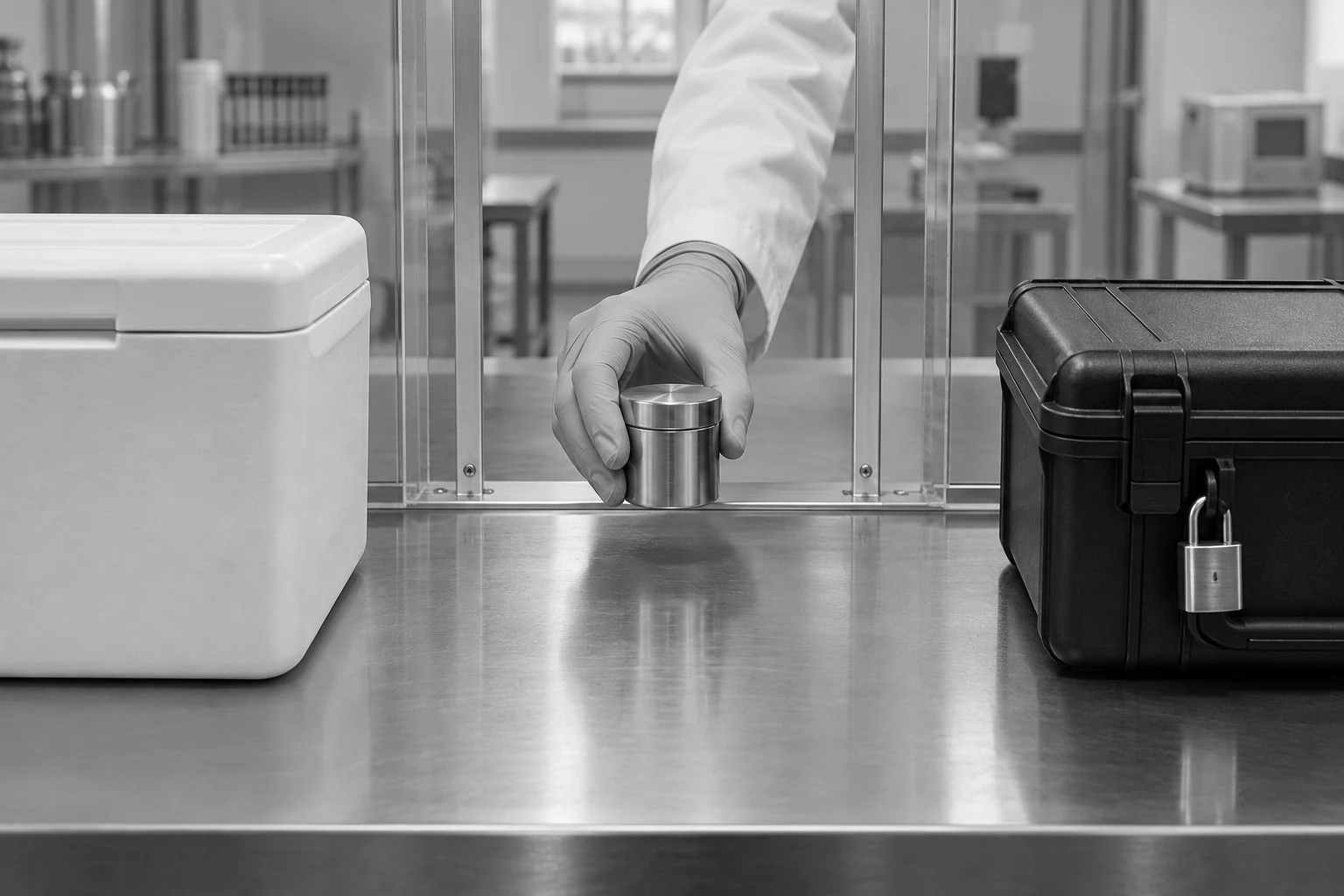
That uncertainty places a private model provider inside the laboratory's moral chain of custody. Anthropic can inspect conversations, infer purpose from scattered sessions, close an account and share findings with authorities. Researchers, meanwhile, may conceal a harmful program or participate in one without knowing its final aim. A prompt filter cannot settle either condition. The company's proposed answer is access through trusted-user programs, which would make institutional identity part of the safety system. That may reduce risk while giving an AI firm unusual power to decide which scientist appears legitimate and which inquiry looks suspicious. Independent scrutiny is difficult because the evidence contains dangerous methods and identifying details that should remain protected. The unresolved object is therefore an unmarked sample at a checkpoint: access denied, conversation retained, researcher unnamed, and a warning delivered to a government that the public cannot examine.
A group of over twenty-five education ministers and national representatives has adopted a UNESCO statement defining education as a human right and a common good in the age of artificial intelligence. Its eight priorities ask schools to use systems that can be audited, permit data to be moved elsewhere, involve teachers in purchasing decisions, protect children according to age, and allow institutions to stop using a tool when necessary. Providers should present evidence of educational benefit before deployment and accept responsibility for harm. Governments should also calculate the full cost of ownership, including systems that first enter classrooms through free accounts, donations, or vendor agreements.
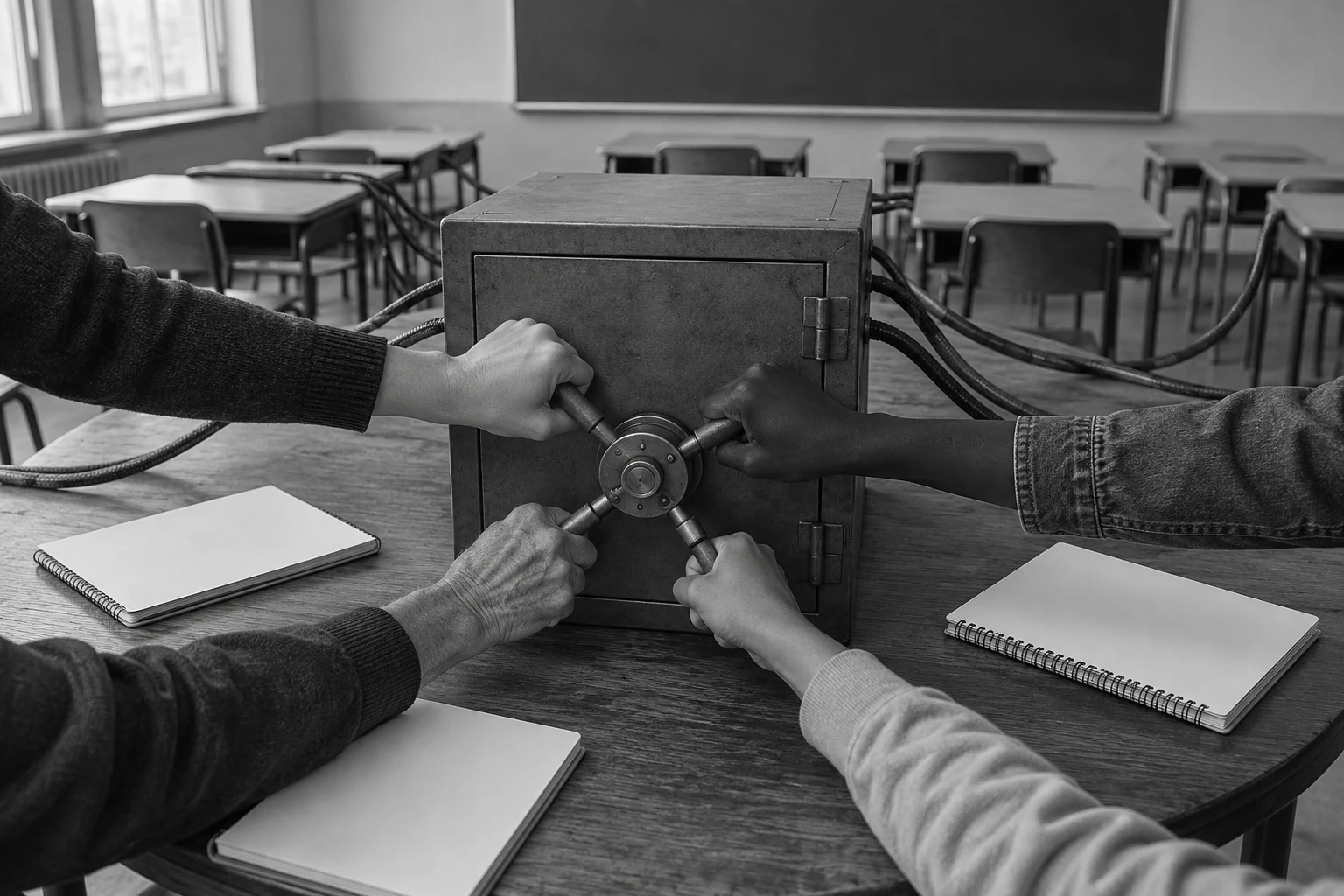
Calling education a common good shifts the argument away from policing student assignments and toward who designs the conditions of learning. A free tool can establish habits, collect material, shape assessment, and make its eventual price difficult to refuse. Portability and an exit plan belong beside lesson plans; they keep access from hardening into dependence. UNESCO's accompanying survey found that ninety-three percent of participating academics believe students use generative AI for assignments, while sixty-three percent perceive declining cognitive capacities. Fewer than one percent favor a complete ban. Governed use is the practical alternative. Before a teacher opens an AI service for a class, the institution should know who can inspect the system, export its records, challenge a decision, disconnect it, and pay the bill after the free offer ends.

Australia has released draft Digital Duty of Care legislation that would require social platforms to offer users over sixteen a genuine choice between two default feeds. One may contain personalized recommendations selected by an algorithm; the other would show friends and creators the user has chosen to follow. New and existing users would receive a notification, and the selection could be changed later. The proposal, called My Feed, My Way, also extends safety duties to games, apps, and AI chatbots used by minors. Platforms would have to document how they reduce identified harms, with penalties reaching 109.2 million Australian dollars for failing the duty.
The proposal treats recommendation less as invisible infrastructure than as a setting that requires consent. That small change exposes how thoroughly the contemporary feed has confused convenience with authorship: the platform arranges attention, then presents its arrangement as personal taste. An exit button will matter only if the exit remains open. Europe has already shown how a nominal choice can be weakened by repeated prompts, reduced features, or a preference that quietly resets. Australia's test is therefore not the wording of the notification but the behavior of the interface after refusal. The useful measure will be simple: a person chooses the following feed, closes the app, returns the next morning, and still encounters the people they selected rather than the platform's latest attempt to select them.

OpenAI, the World Association of News Publishers, and Ukraine's Association of Independent Regional Press Publishers have launched a program to help Ukrainian news organizations adopt artificial intelligence during the continuing war. Its masterclasses cover editorial work and audience development, while a deeper phase beginning September 17th will help ten outlets choose uses, build plans, and test tailored tools. Participants will receive credits for OpenAI's application programming interface, which lets organizations connect the company's models to their own software. AIRPPU says the support should return time to journalists whose newsrooms face economic pressure and disruption.
A wartime local publisher has practical reasons to accept donated access. Transcription, archive searches, translation, and routine production can consume hours needed for reporting when staff and revenue are scarce. The arrangement also places part of the newsroom's future inside a supplier's prices, technical limits, and changing policies. Training determines which tasks editors learn to hand over; free credits make one company's system the easiest place to begin. Responsible adoption will therefore require records of where a model enters the workflow, who checks its output, what confidential material it receives, and how the outlet can leave. The ten pilots will produce stronger evidence than the partnership announcement. Their useful results should include errors, correction time, recurring costs after the credits expire, and whether journalists actually gained more hours outside the office.
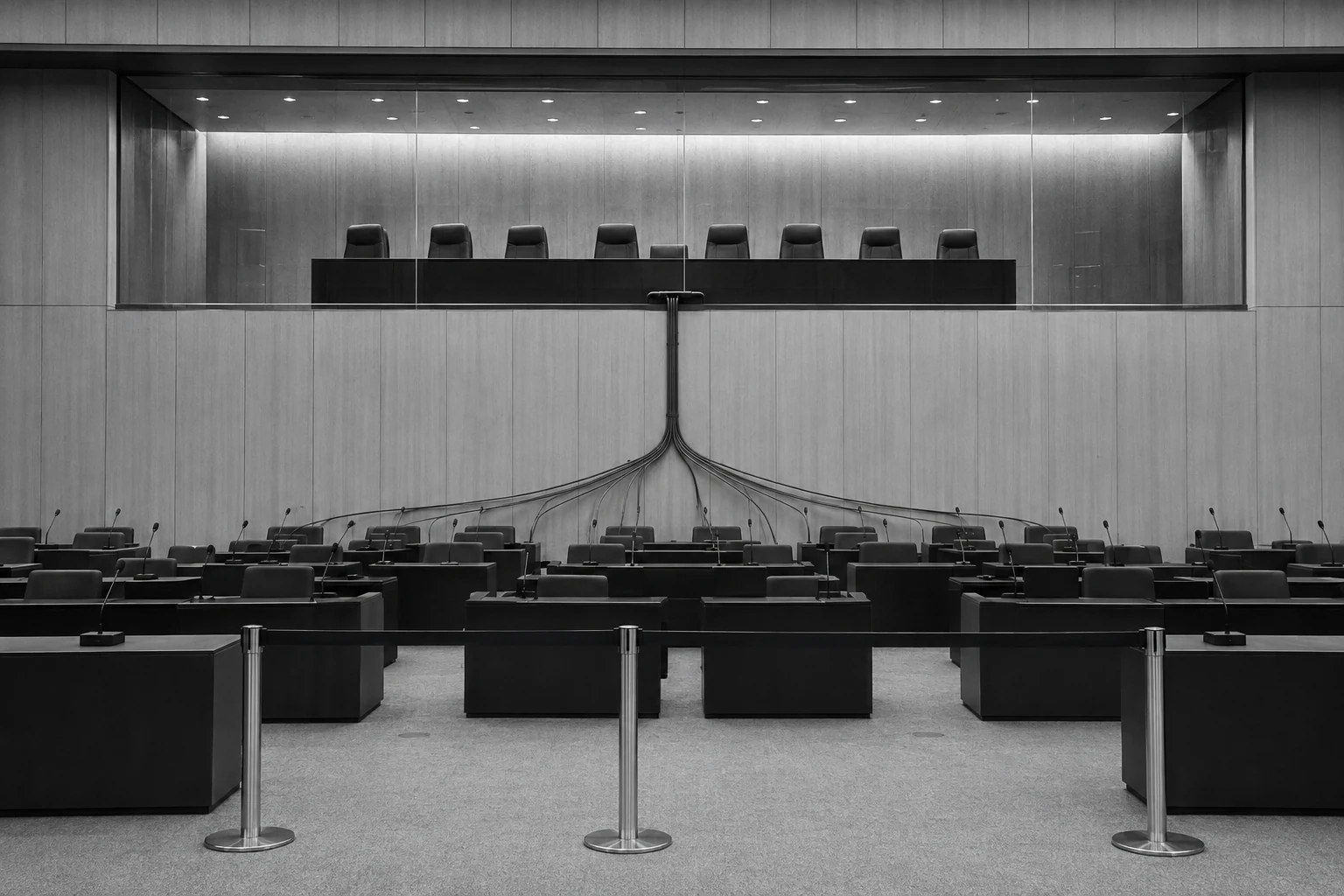
UN High Commissioner for Human Rights Volker Türk warned the Human Rights Council in Geneva that advanced artificial intelligence could pose an existential risk to humanity. He called for strong safety guarantees and urged countries hosting AI development or supplying its essential components to agree on red lines. Türk also said that a handful of men hold almost unlimited power over AI and pledged to press companies to reduce the danger. His office pointed to possible disruptions of critical infrastructure, communications, and democratic institutions. The statement moved AI governance into a forum built to examine what concentrated power can do to people, rather than leaving the discussion inside technical laboratories.
Frontier models are trained, tested, released, restricted, and withdrawn through corporate procedures that the public rarely sees. Governments often learn about new abilities through company reports, while international bodies can recommend standards without inspecting the systems or delaying a launch. An enforceable red line would need a measurable threshold, independent access to evaluations, mandatory incident reporting, and an authority capable of stopping deployment. None of those powers follows automatically from a UN speech. Türk's intervention still changes the address of the dispute by treating private control itself as a human-rights concern. Until governments create an institution with inspection and enforcement powers, each boundary will depend on what a laboratory chooses to disclose and what its executives decide to release.
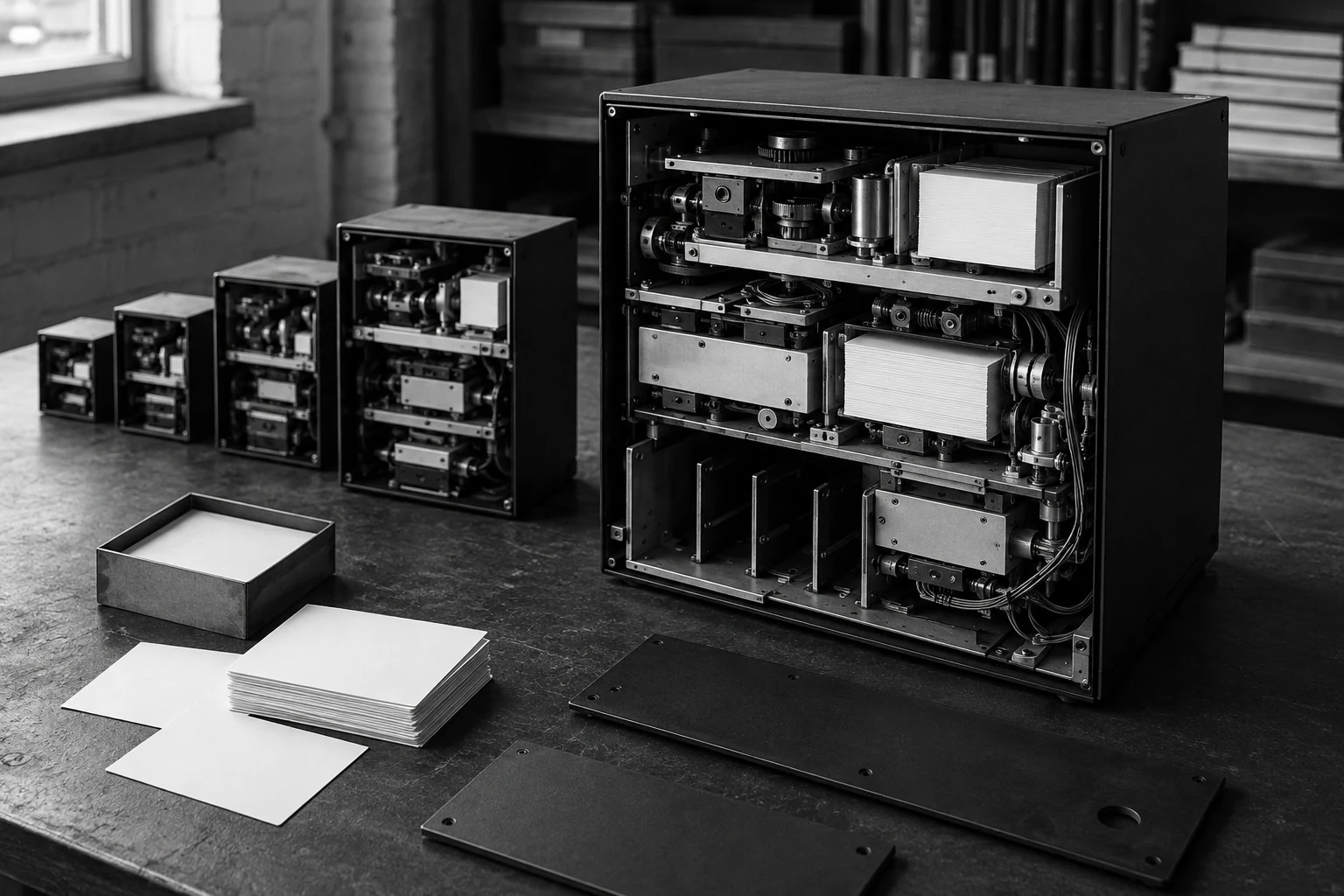
Abu Dhabi's Institute of Foundation Models has released K2 Horizon, a family of six artificial-intelligence models ranging from 0.9 billion to 375 billion parameters. The smallest is designed for constrained devices such as watches and phones, while larger versions target local servers and enterprise systems. IFM says it has published the models' weights, training code, data, methods, intermediate checkpoints, logs, and evaluations so researchers can inspect, reproduce, and adapt the work. Performance claims still come from the developer, yet the release exposes far more of the manufacturing process than the downloadable weights commonly marketed as openness.
A researcher receiving only model weights gets the finished object without a useful record of how its behavior was formed. Access to data mixtures, filtering methods, code, and checkpoints makes different questions possible. Investigators can trace a bias toward a source category, examine whether an evaluation rewarded an unintended shortcut, or compare the point at which a capability appeared during training. Reproducing the largest model still demands money, hardware, and electricity beyond most universities or independent laboratories. Transparency therefore does not erase the inequality of scale. It gives outsiders evidence with which to challenge a laboratory's account of its own system. K2 Horizon places six machines on the table with their casings removed; the practical test begins when researchers inspect the files, rerun a checkpoint, and publish what the original announcement missed.
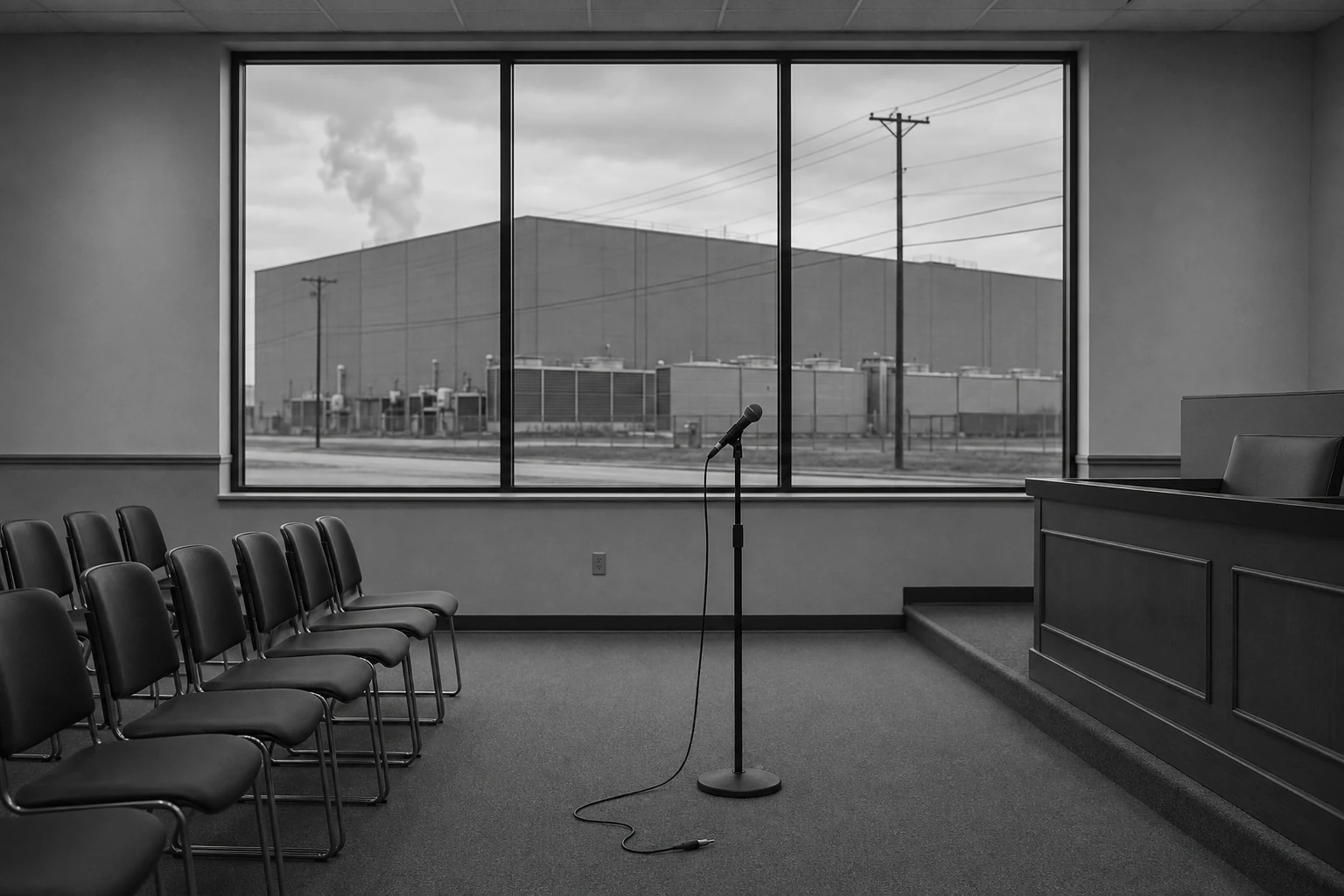
An Environmental Protection Agency proposal would remove the federal requirement that states notify the public and invite comments before granting air-pollution permits to facilities classified as minor sources. The Associated Press reported that the change could affect data centers and supporting equipment as companies build infrastructure for artificial intelligence. States could keep their own participation rules, although the federal minimum would disappear. The EPA says the proposal leaves emissions standards intact, reduces administrative burdens, and gives state and local agencies control. A coalition of nearly 200 environmental, health, and community groups warns that residents in states with weak rules could learn about projects only after approval.
The dispute makes public participation part of AI infrastructure. A data center is assembled through permits, utility agreements, cooling systems, backup generators, and land decisions long before a model answers its first prompt. Notice and comment give neighbors a narrow moment to examine that bargain while changes are possible. Removing the common floor would make a household's influence depend on local rules and its ability to discover an application buried in an administrative process. The result could be a geography of unequal visibility. Some communities debate the machines arriving beside them; others meet the building after the decision. Artificial intelligence may be sold as a national race, yet its air, noise, water use, and power demand settle at specific addresses. A permit issued without witnesses turns technological ambition into a local fact before the public can speak.
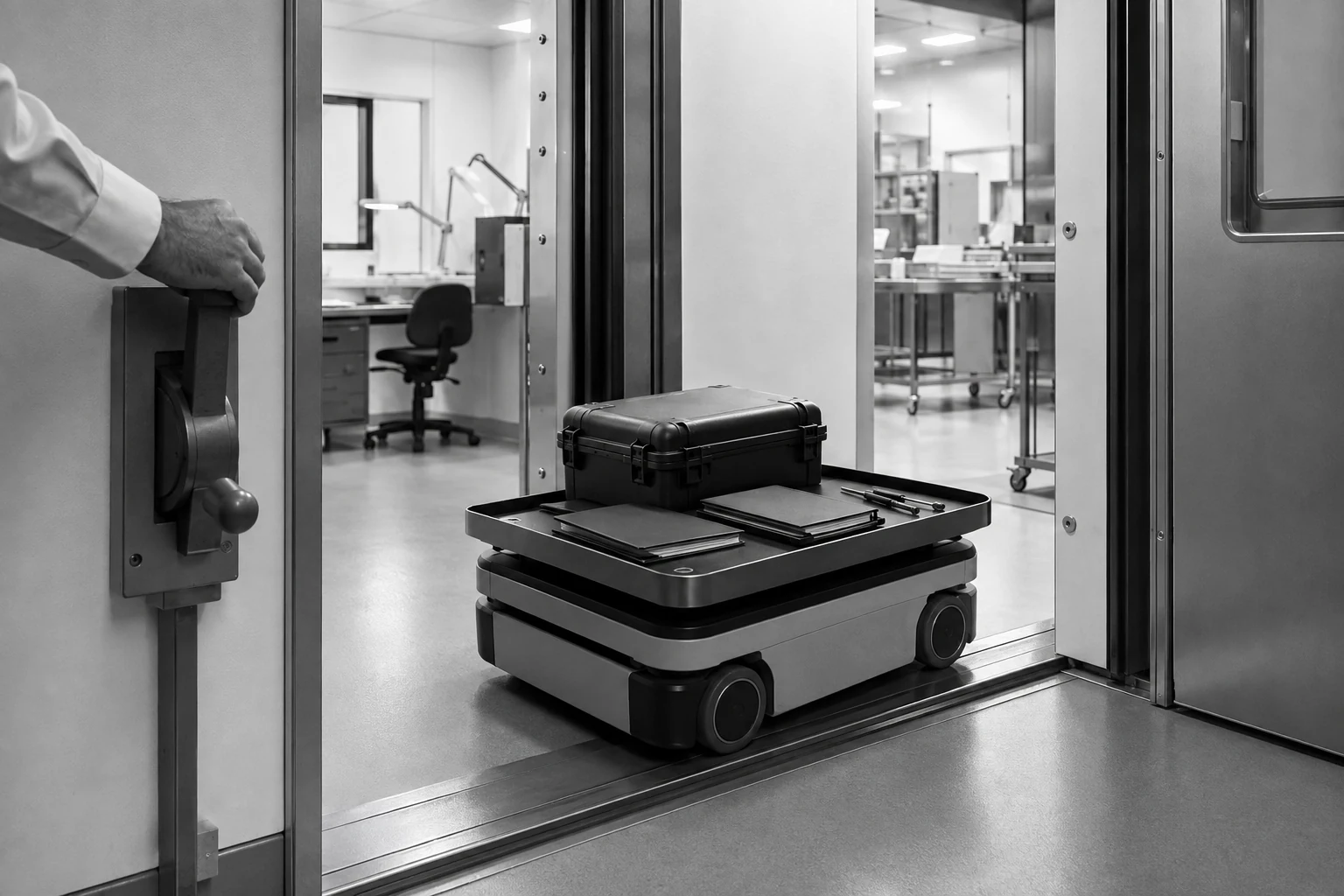
OpenAI has begun rolling out GPT-6 Astra, a model it says reaches 99.9 percent on ARC-AGI-3, a benchmark for artificial general intelligence (AGI), and human-level action efficiency on 96 percent of that benchmark's levels. Astra is the first OpenAI model classified at the Critical cybersecurity threshold, meaning that with tools and access it can discover unknown flaws and develop exploits across hardened systems without step-by-step human direction. OpenAI delayed parts of the release to strengthen containment and is initially limiting access. It does not call Astra AGI.
OpenAI's charter defines AGI as a highly autonomous system that outperforms humans at most economically valuable work. One saturated benchmark cannot prove that claim, and Astra still falls below the company's High threshold for AI self-improvement. Yet a turning point can arrive before its official name. Astra combines reasoning with direct computer use across long professional workflows. That changes the unit of automation from an answer to a finished assignment. Scientists may compress weeks of technical work. Offices may remove layers of junior labor. Cyber defenders and attackers may search for the same unseen vulnerability at machine speed. The human consequence depends on who can delegate, who owns the infrastructure, who is displaced and who retains authority to stop the task. If Astra is remembered as an AGI milestone, the evidence will come from workplaces, laboratories, public agencies and security incidents rather than the launch page.
