This year’s Lexington Art League Nude show exhibits portraiture and figurative work with a marked emphasis on conceptual undercurrents of personal and sexual identity, the body as object, the body as experience, societal pressures, politics and violence.
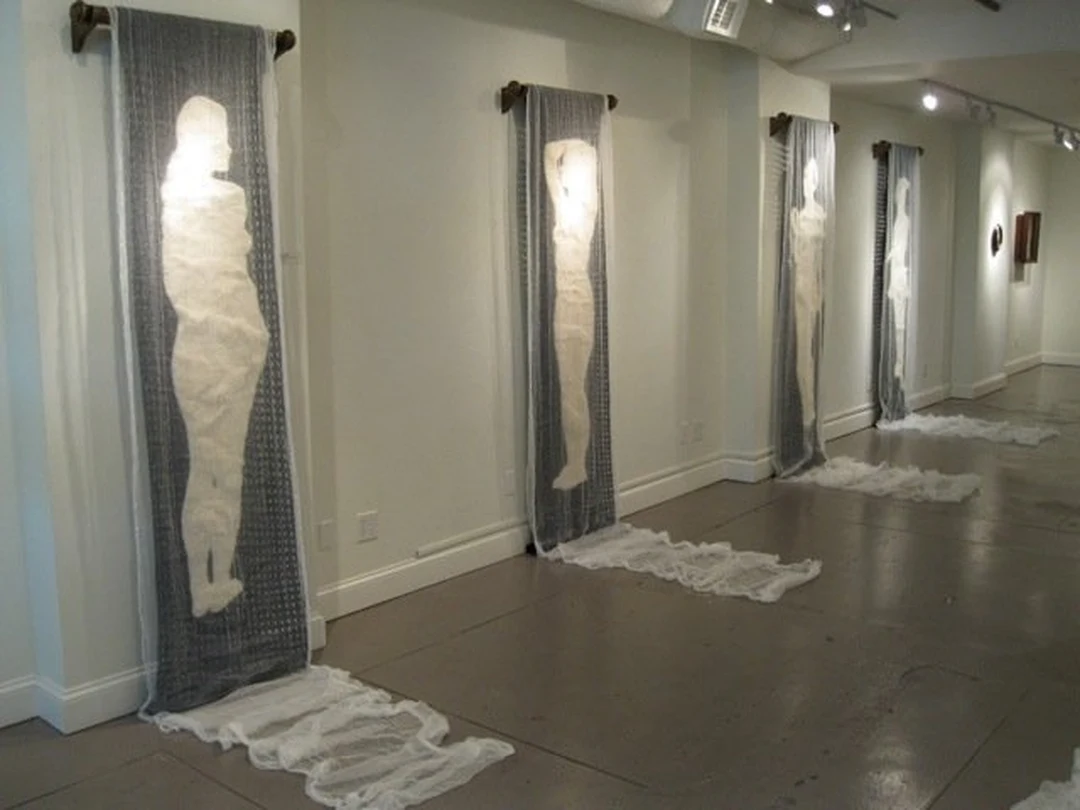
The first hall presents a series of figure wall hangings by Candice Reilly. Seven near- lifesized venuses whose various standing poses suggest fright, rage and serenity in white felt are layered over open black knitting. A nebulous gauze glaze that overspreads the wall and shivers on the floor integrates the harsh values within the work to the structure of the room and alludes to a scrim of falling water. Cloud-like torn and frayed felt pieces layered within the felt silhouettes lend a nuance of interior space or sky, relieving the flatness of the wall hanging and adding to the natural references within the pieces. Reilly pays homage to “woman craft” of sewing, knitting and materiality. Her figures allude to the female roles of model, muse, companion and embodiment of nature.
The concept of objectification of women’s bodies is exemplified in several pieces including the large gestural oil painting by Casey Lard. “Tossing” explores women and their physical possessions as objects of male gaze with no censorship or privacy. A jutting foot leads the eye into the tumultuous mounding of rolling breasts, torsos and intertwining limbs executed in a slashing painting style.
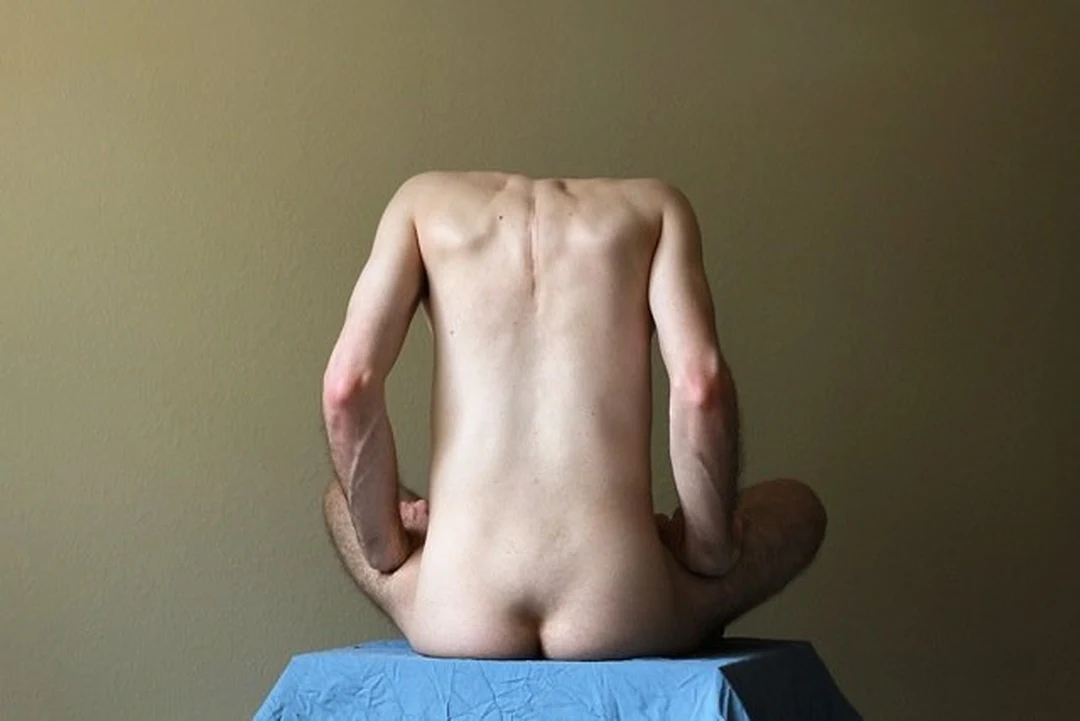
The color photograph self portrait series of David Werkstatt are also headless and reveal the artist’s process of managing/concealing a severe case of kyphosis which results in curvature of the spine. Three views of his back against a uniform olive green background appear ‘normal’ except for the scar between the shoulder blades. His headless figure is posed on a pedestal implying a correlation to classic sculptural display and invokes the notion of ‘perfection’. The artist discusses his effort to counterbalance and mimic his struggle to maintain normal and socially acceptable appearances while grappling with the insidious disease. In “Untitled #2”, the shoulder girdle is raised, aligning the pink accented elbows alongside the tensed, elongated torso while pinching the scar of surgery, making a strong sculptural statement with ties to modern aesthetics.
David Werkstatt, Untitled 3.
Cox’s “Untitled” from the series “I am a cutter”, “Rip” and “Bruised” both by Alison Oakes and “Package” by Valle comment of the issues of violence, the victim being both self inflicted and imposed upon.
Several works juried into this year’s exhibit have a jarring lack of craft and aesthetic and add little if anything to the professed aims of the exhibit. I cite the painting “Self portrait” by Medina on bulging fraying paper, poorly framed, and ” Karen Klein’s Arm #2″, a globby mass of latex and foam. The bent armature alluding to the anatomical elbow hangs from the ceiling making no impact on the architectural space of the small bay. Purcell’s series of 4 posterized nude figures displayed with punctuated stream of thought texts dealing with gender issues and social pressures dominate the second floor hallway. The crassly presented figures and partially cropped text in skimpy black frames offer no enticement to consider or digest the message. These pieces overwhelmingly contrast with a few well executed works with thoughtful and insightful underpinnings.
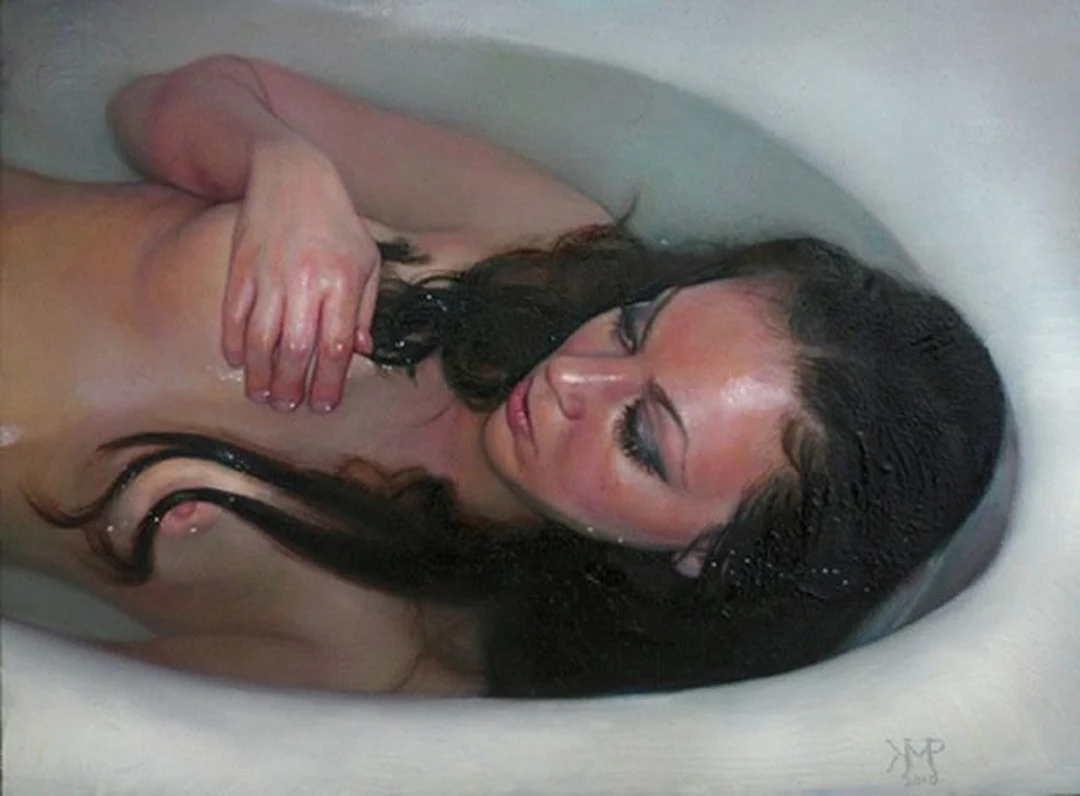
Kelly Phelps beautifully renders a submerged female half figure in a 9×12″ oil painting entitled “Transition”. We delight in the multiple raised bubbled accents delineating the edges of submersion on the illusional surfaces of flesh and hair. In a gesture of tender modesty, one hand covers the breast in the bath as the voyeuristic viewer is treated to a seamlessly painted surface.
Kelly Phelps, Transition, oil on panel, 9 x 12.
MY MOTHER, MY SISTER, MY SELF: Portraits by Gaela Erwin
It was truly pleasurable to discover this solo show by Louisville native Gaela Erwin. Influenced by her studies in Italy and Caravaggio’s sublime use of light, Erwin explores in sumptuous pastel her relationships with her aging, disoriented mother and sister. The portrait statements are penetrating, unflattering exposures captured in a lush surface technique.
Three larger double figured pieces portray the relationship between mother and daughter in various stages of acceptance and denial. Truly painterly in handling and depth, the pieces do not deny the pastel medium. Partially revealed underdrawing and surface finger smudging by the artist lend an urgent honesty to the work that draws you in. Erwin uses rich pastel technique to document her personal experiences and comment on contemporary issues of female identity and loss with gravity.
“Winter Mother”
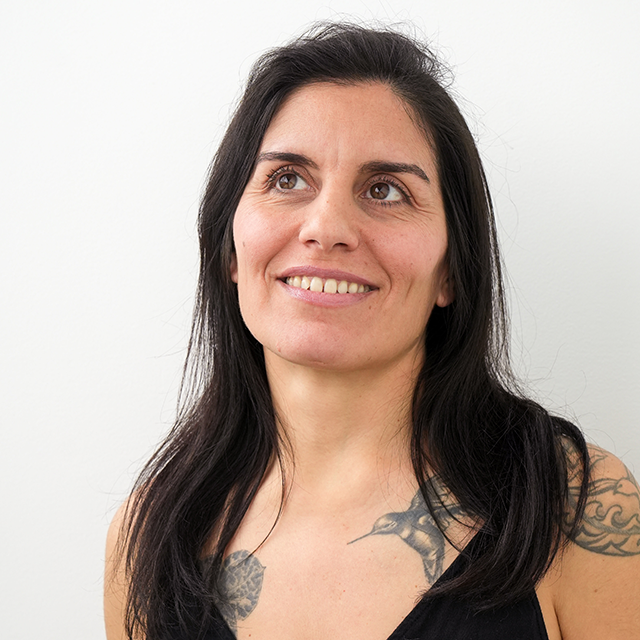
“My Sister Looking Up”
Artist Marlene Steele paints and teaches in Cincinnati, Ohio









Comments powered by Talkyard.