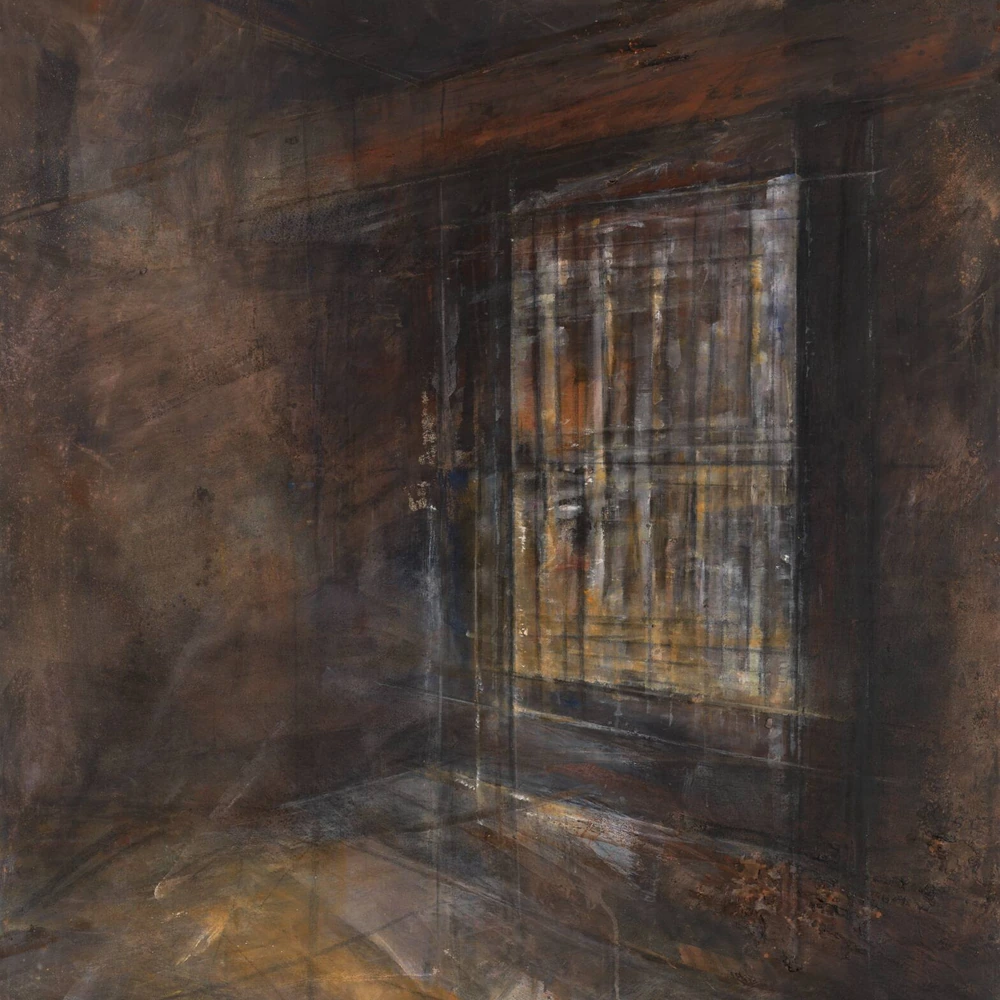
All of the arts have been refreshed by waves of painters, writers, musicians and dancers, who fled their countries of origin between approximately 1933 and the present. The same may be said of Korean born artist Bukang Kim, whose paintings are an admixture of Asian art and American Abstract Expressionism, a style I have elsewhere called “Calligraphic Expressionism”.
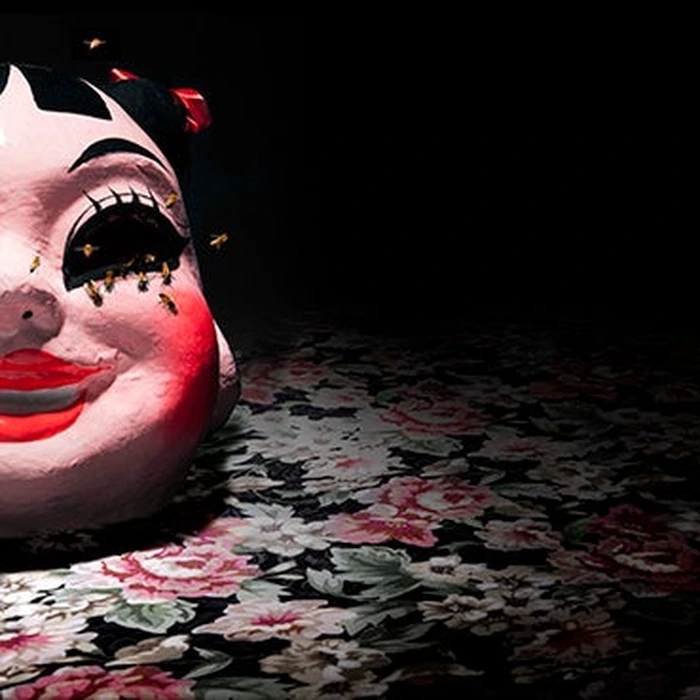
Dennis Harrington hasn’t used his artistic training to create much of his own art lately. He instead makes it his mission to optimize the artistic visions of others.
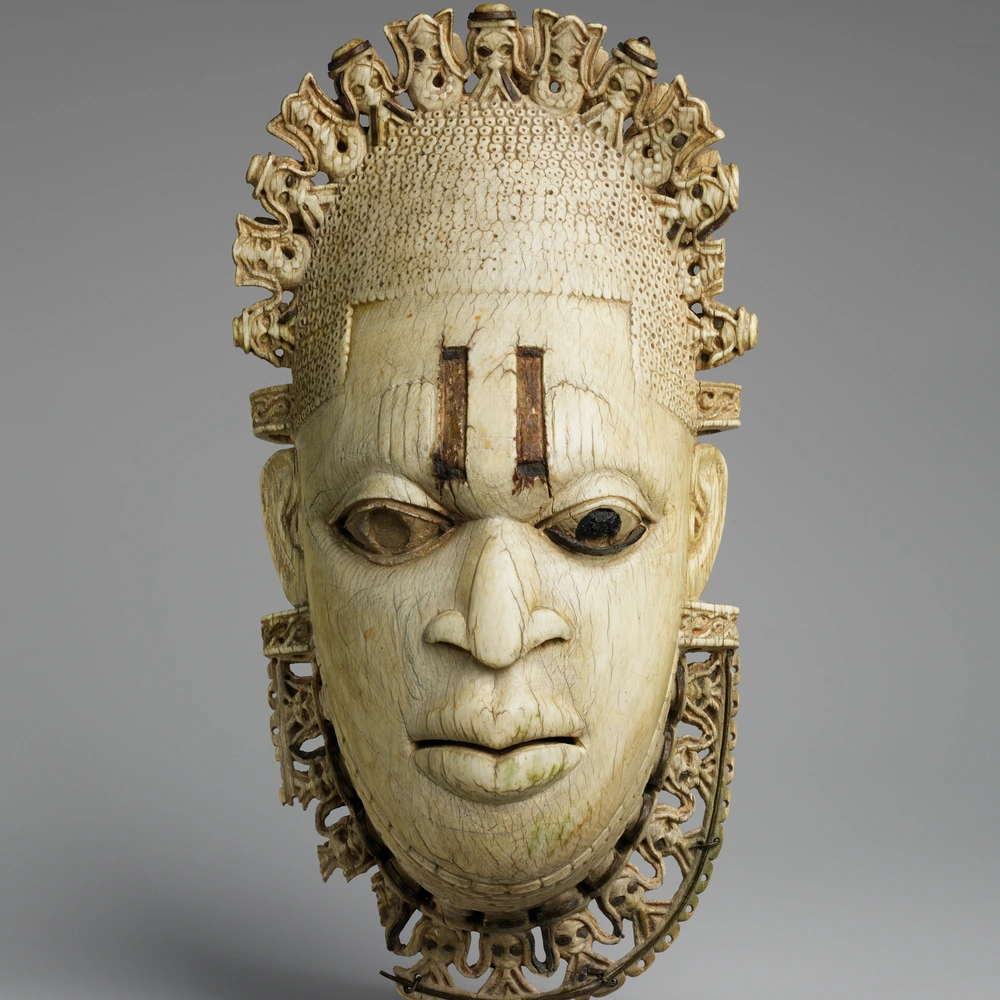
Originally from Nigeria in West Africa, Eboigbe grew up in the small town of Aba where he attended a Catholic private school, Princess Day School. At age seven, he knew he wanted to be an artist, but his father, a Benin chief (or mayor) of Aba discouraged him. His dad wanted him to be a physician.
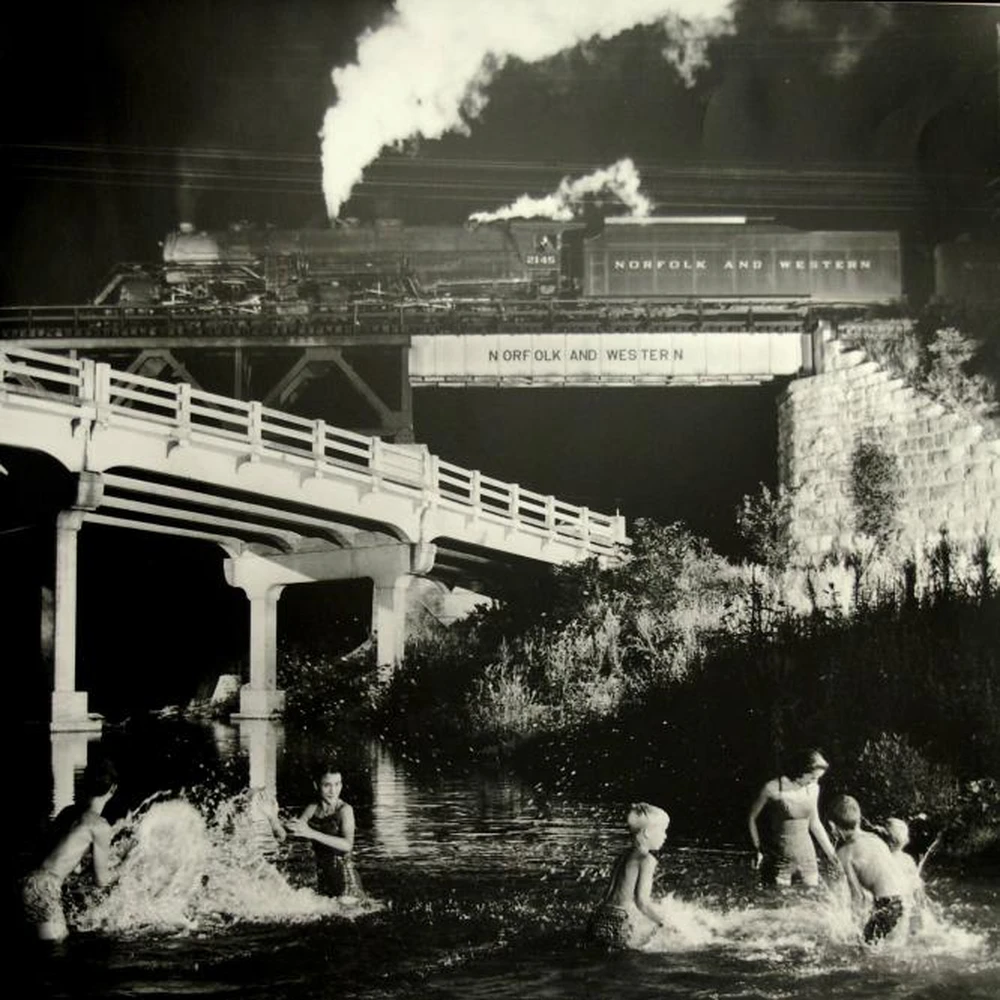
Brian Sholis, the new Associate Curator of Photography at the Cincinnati Art Museum, says from the start that he has no training—“none at all”—in Art History. He sees himself as “a contemporary art person who zeroed in on photography,” as he explained in an interview with Aeqai earlier this year.

“C A M P G R O U N D evokes a billboard one may still discover along a country highway. It advertises with the familiar vacation icons of tire swings and sparking campfires.
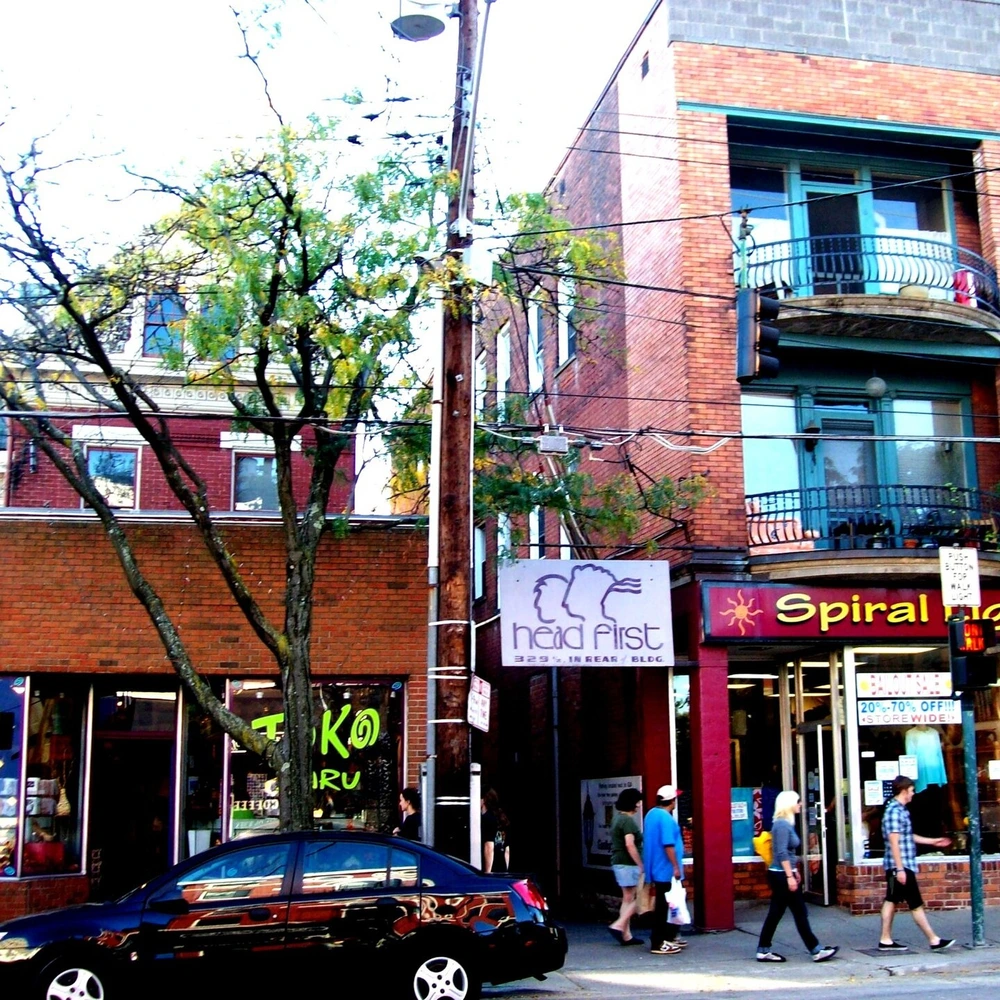
“Contemporary Narrative” is up through January 10, 2014 at the Clifton Cultural Arts Center, and it’s worth a look just to wander through the big space and appreciate some easy-on-the-eye drawings, paintings, ceramics, and other pieces that really don’t seem to narrate a contemporary story as much as convey whimsical little vignettes across a rainbow spectrum of birds, houses, ghosts and moonlight.
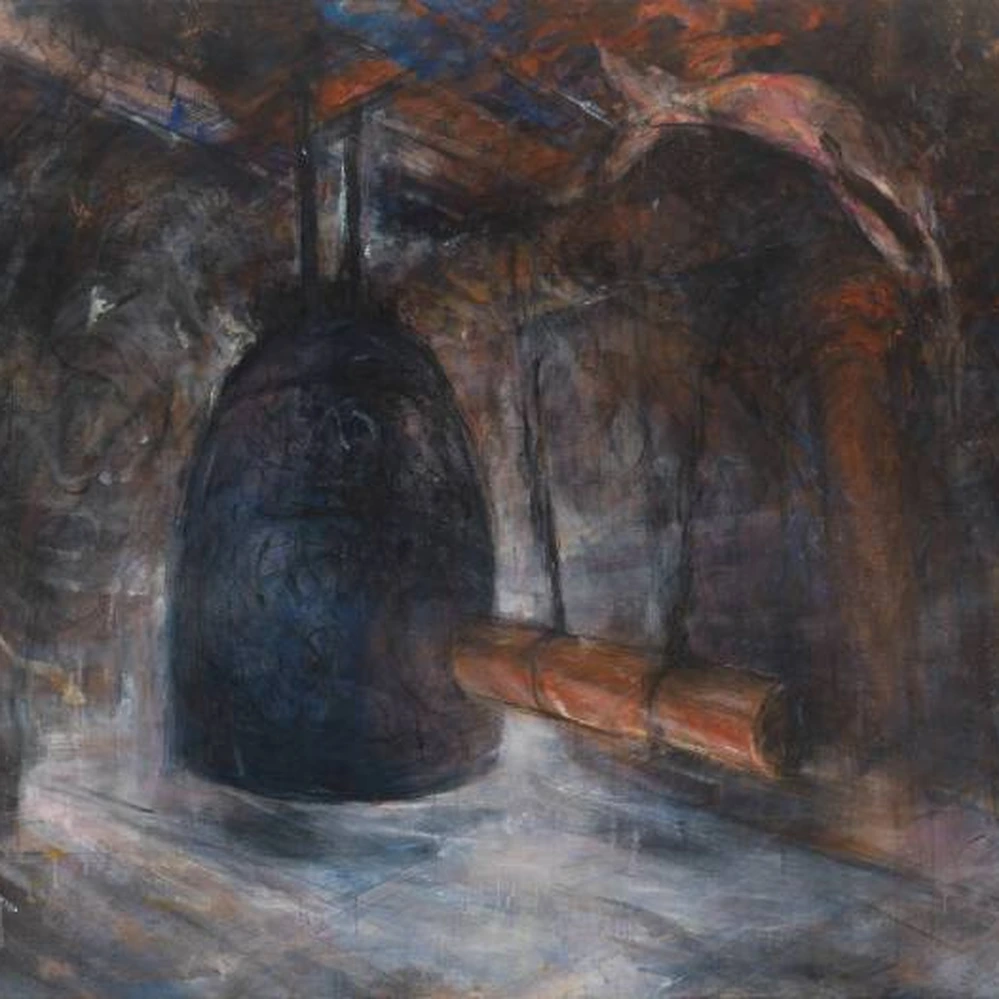
Aeqai is back with our December issue. We’ve taken this opportunity to give you more profiles this month, as so many galleries and nonprofits are showing their holiday wares/exhibitions/displays, though we also offer some key reviews.
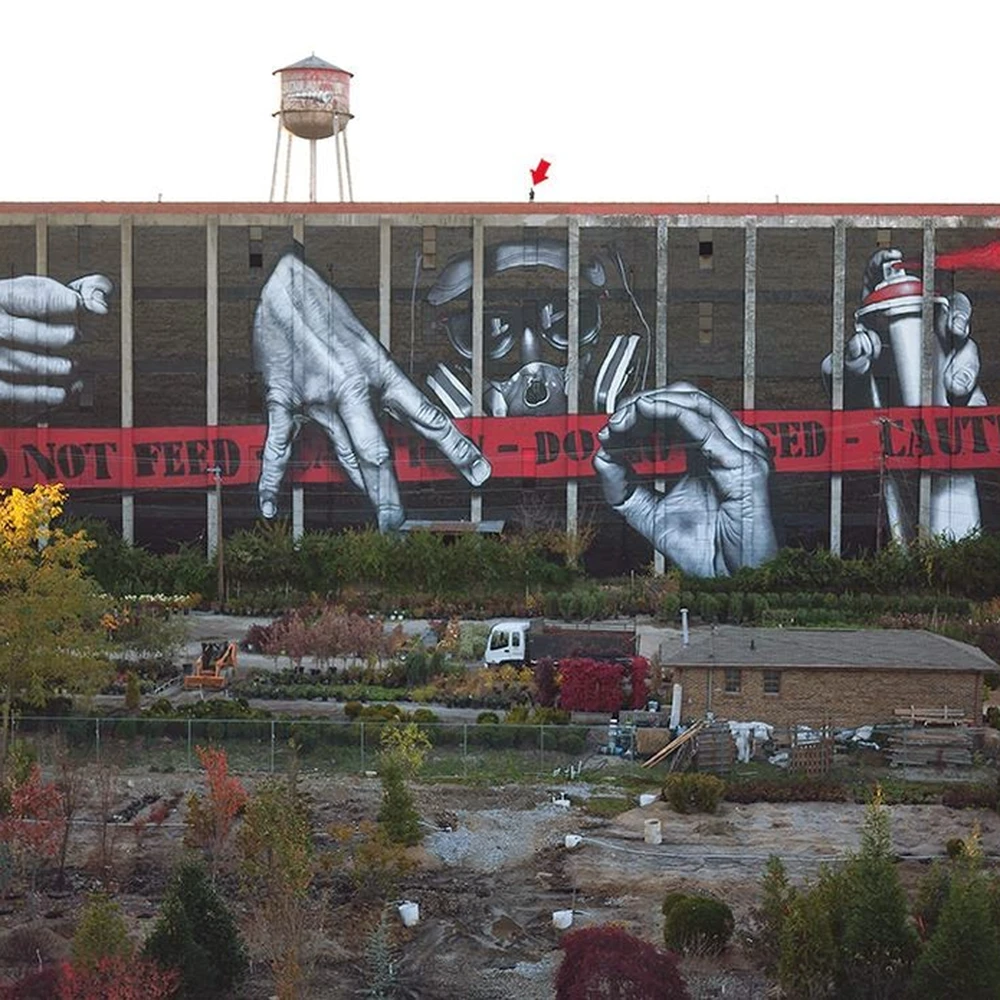
Over the years, Lexington, Kentucky has come to appreciate the value of art placed in our public realm. It has been a coughing, sort of sputtering-to-life kind of affair.
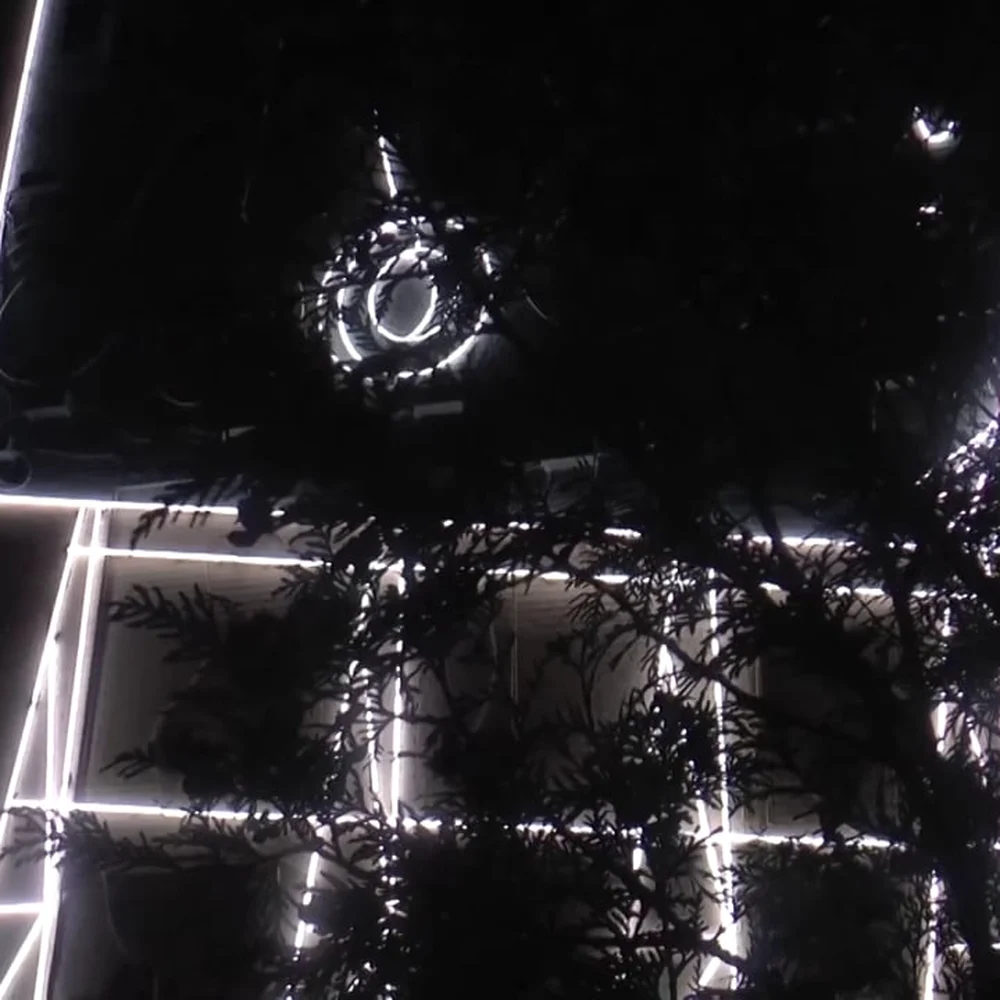
A short video by the Art Academy of Cincinnati’s Film, Video and Audio minor on Anthony Luensman’s C A M P G R O U N D, his 2014 neon installation at the Cincinnati Art Museum, with the artist speaking about the work.
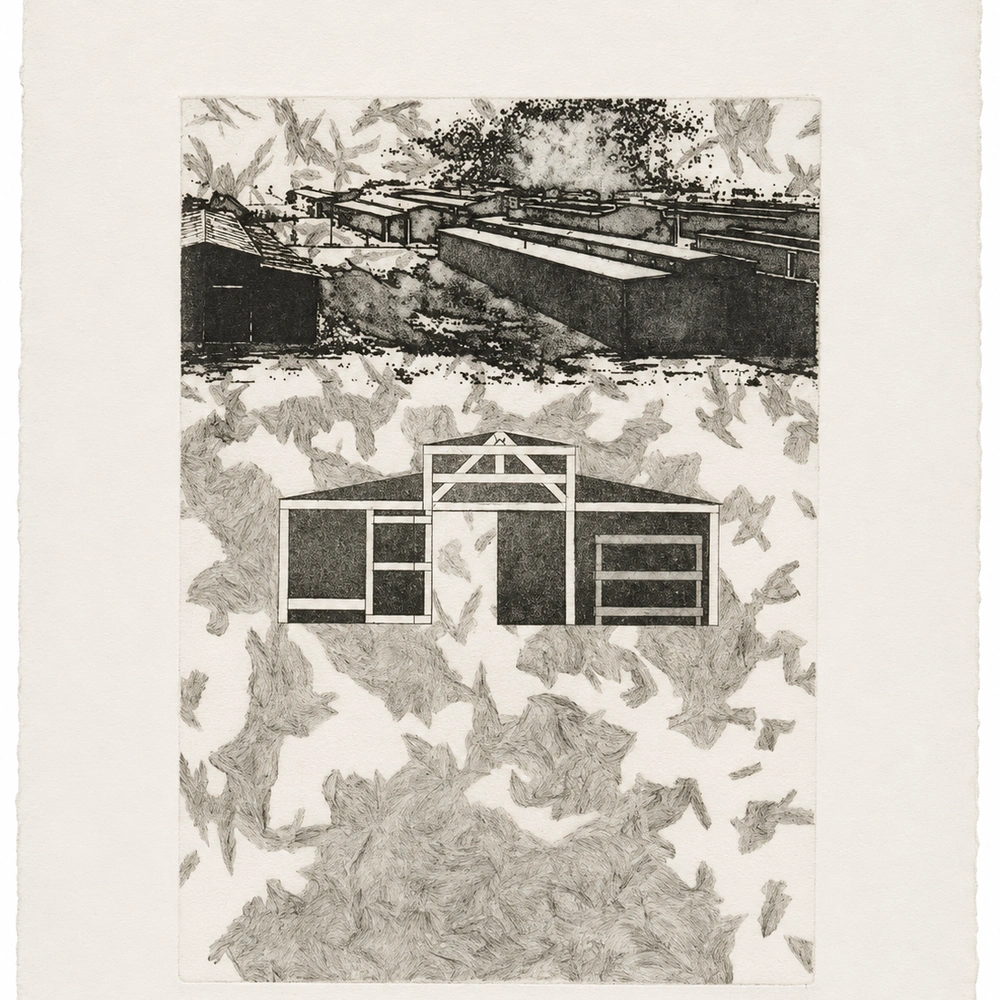
Mark Patsfall started the Clay Street Press in 1981 as a printer of small edition art prints produced in a variety of media—etching, screen printing, lithography and woodcut. Clay Street has worked with published artists from the region, nationally and internationally. Most recently Clay Street has been engaged in printing Jay Bolotin’s latest portfolio of woodcuts with etching, “The Book of Only Enoch”.
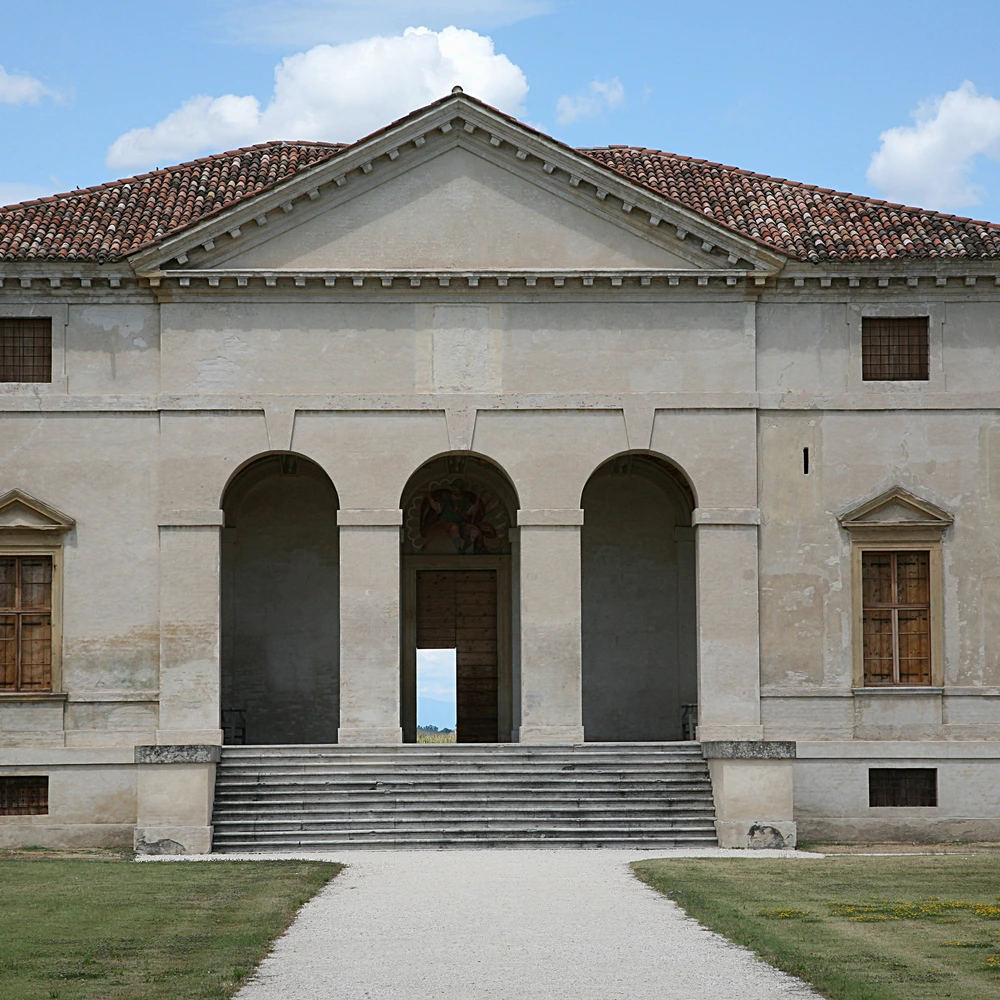
We were in three cars, and two of them had missed a turn. It was foggy, it was dark, it didn’t seem like Italy although that was where we were. The American cell phone, incompatible with the English one, only accommodated text messages but those of us in the two lost cars communicated by the children’s walkie-talkies.
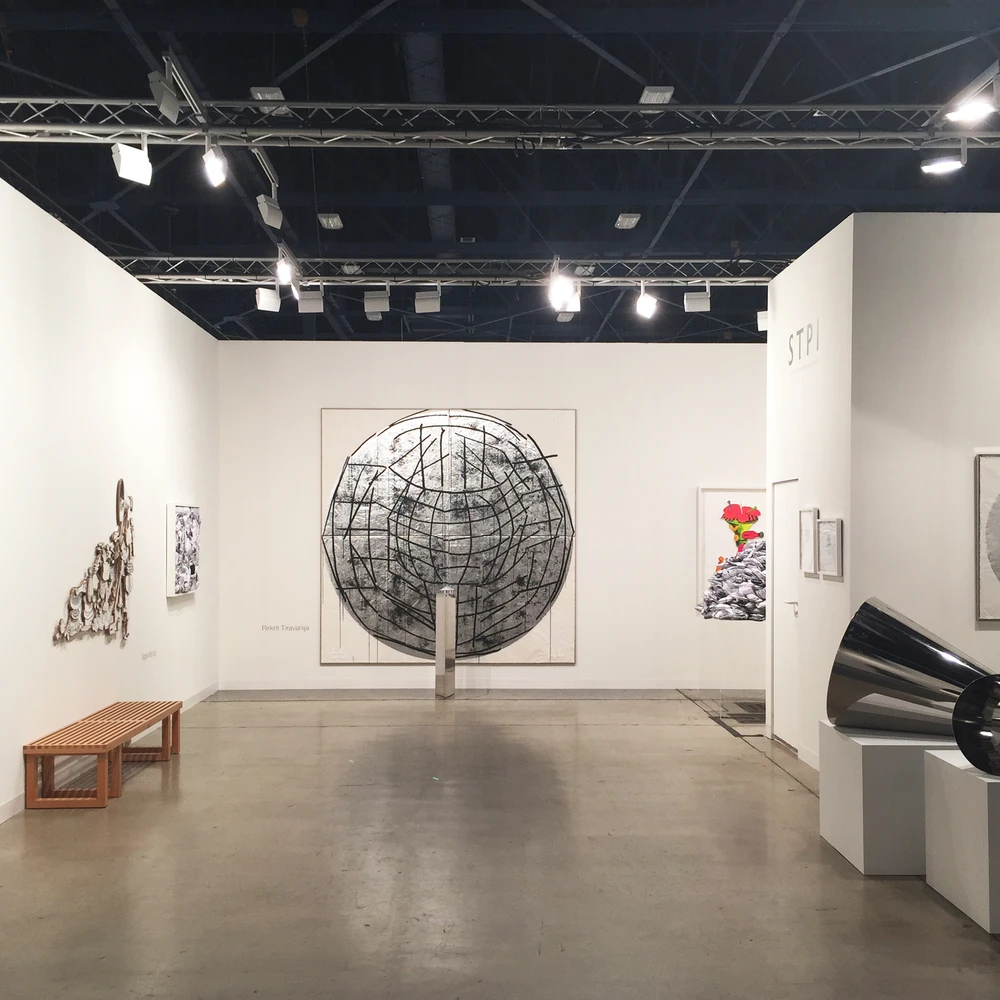
Art Basel Miami, the most flamboyant art fair in North America ran December 3-7, 2014, at the Miami Beach Convention Center. More than 70,000 people attended this 17th annual event, which features a curated collection of international galleries that specialize in cutting-edge contemporary art. The art attracts collectors, art professionals, and celebrities who come to browse, buy, sell, and learn.
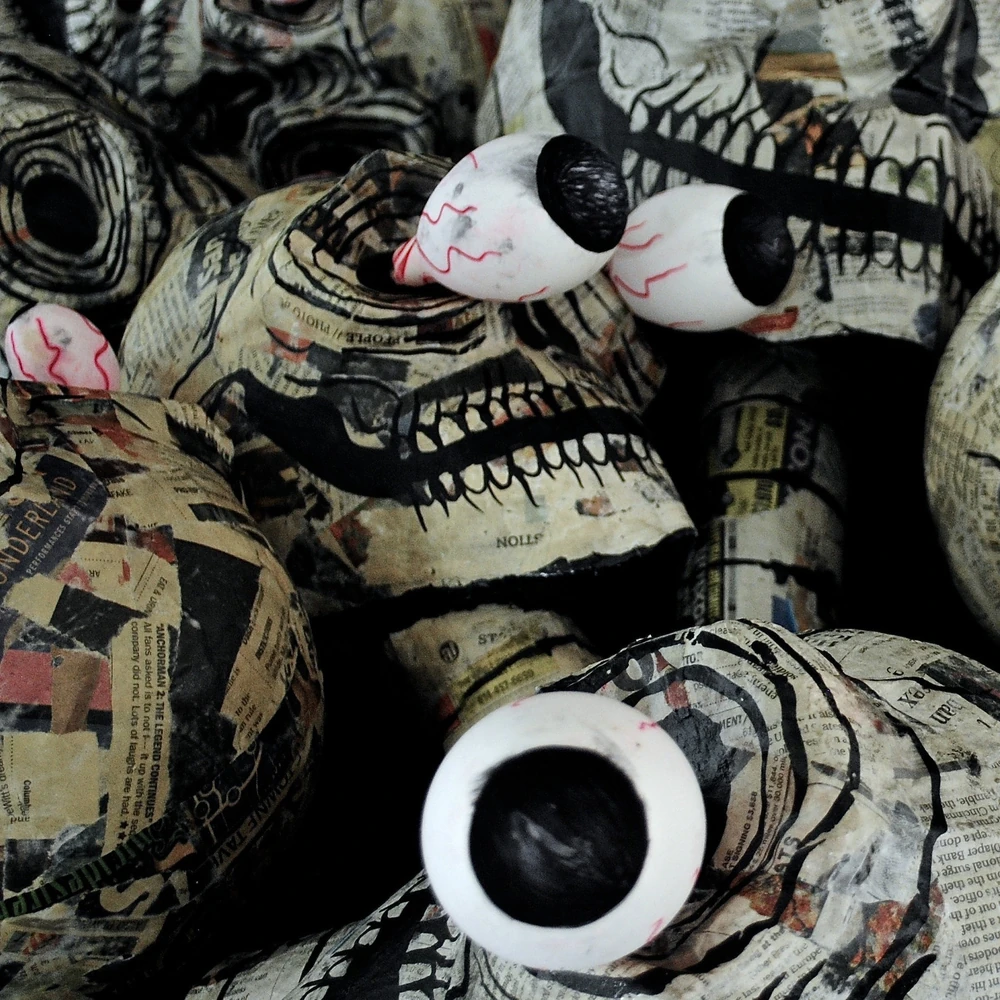
Dennis Harrington, director of the Alice F. and Harris K. Weston Art Gallery, Downtown at the Cincinnati Arts Association’s Aronoff Center for the Arts, has put together a provocative and witty show for this holiday season. The three featured artists offer contrasting views on design and the human spirit.
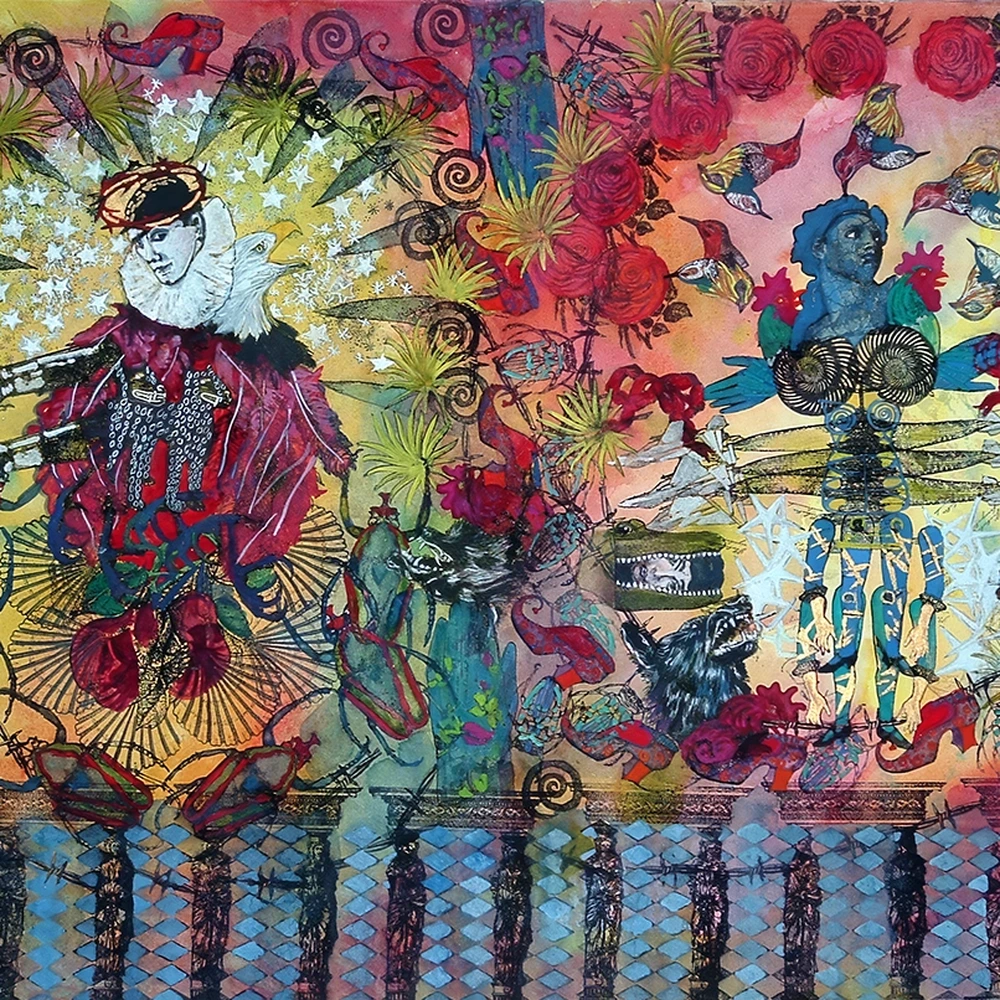
In 1988 Cincinnati-born visual artist Halena Cline visited a retrospective exhibition of Umberto Boccioni’s paintings at the Metropolitan Museum of Art in New York City. At the time she felt strongly the strength of his futuristic ideals and those of his comrades, ideals about moving beyond the past and establishing a strong future.
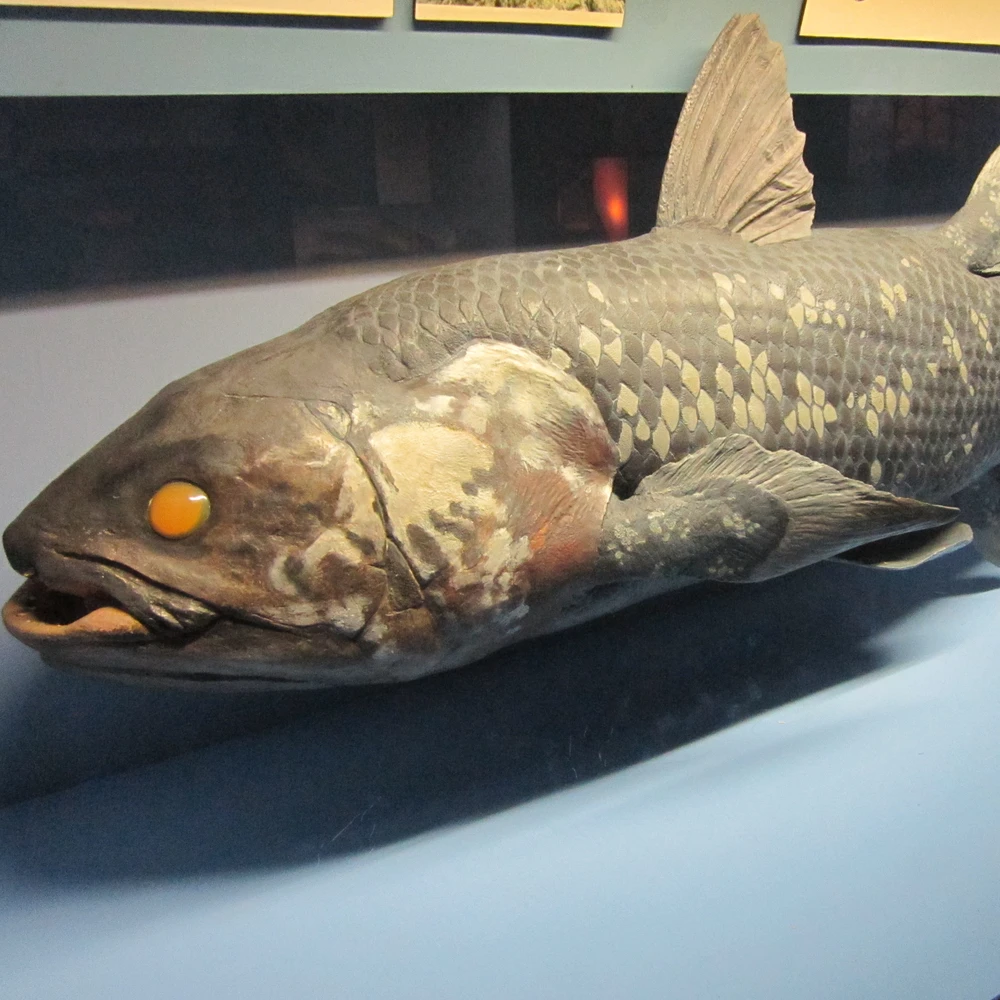
Four poems by Huck Fairman, published in December 2014: Mourning Chant, Mr. Boodles #1, The Coelacanth and To a Mourning Friend, presented here in the order of the original page.
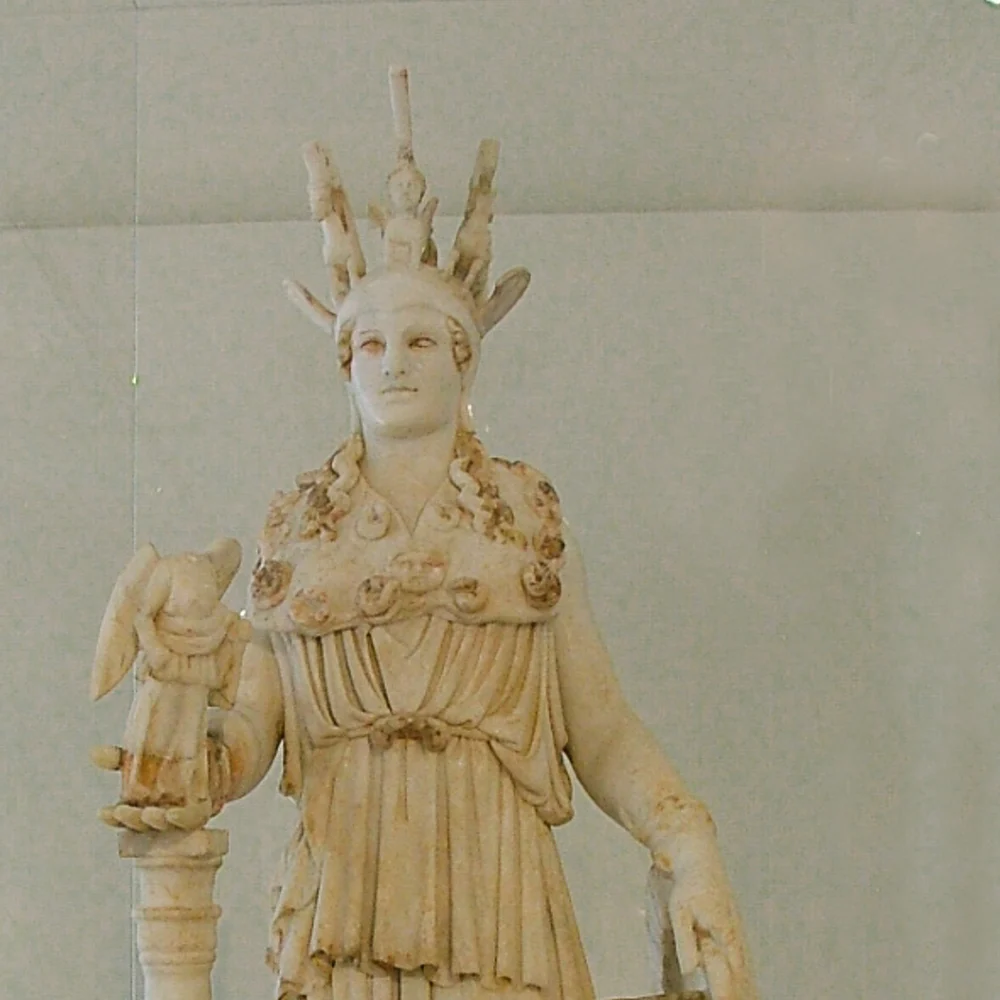
Huck Fairman takes a look at a declining contemporary American marriage through the lens of a vacation in Greece that is a “let’s give it one more try” getaway. He uses a fascinating plot device, or series of them, by putting this couple at a party, where everyone pretends to have a name of an ancient Greek god or goddess, whose attributes reflect the psychology of his characters.

Three new poems by Maxwell Redder: “Guillian-Barre Onset,” an account of waking one morning with a sudden palsy that leaves one eye stuck to the side and a cheeseburger too heavy to raise to his mouth; “Nesting,” about sleeping in a nest of his grandmother’s quilt on a shared bunk; and “Shooting Star Sonnet,” a sonnet about a meteor seen from a bench by the ocean, shared with someone close.
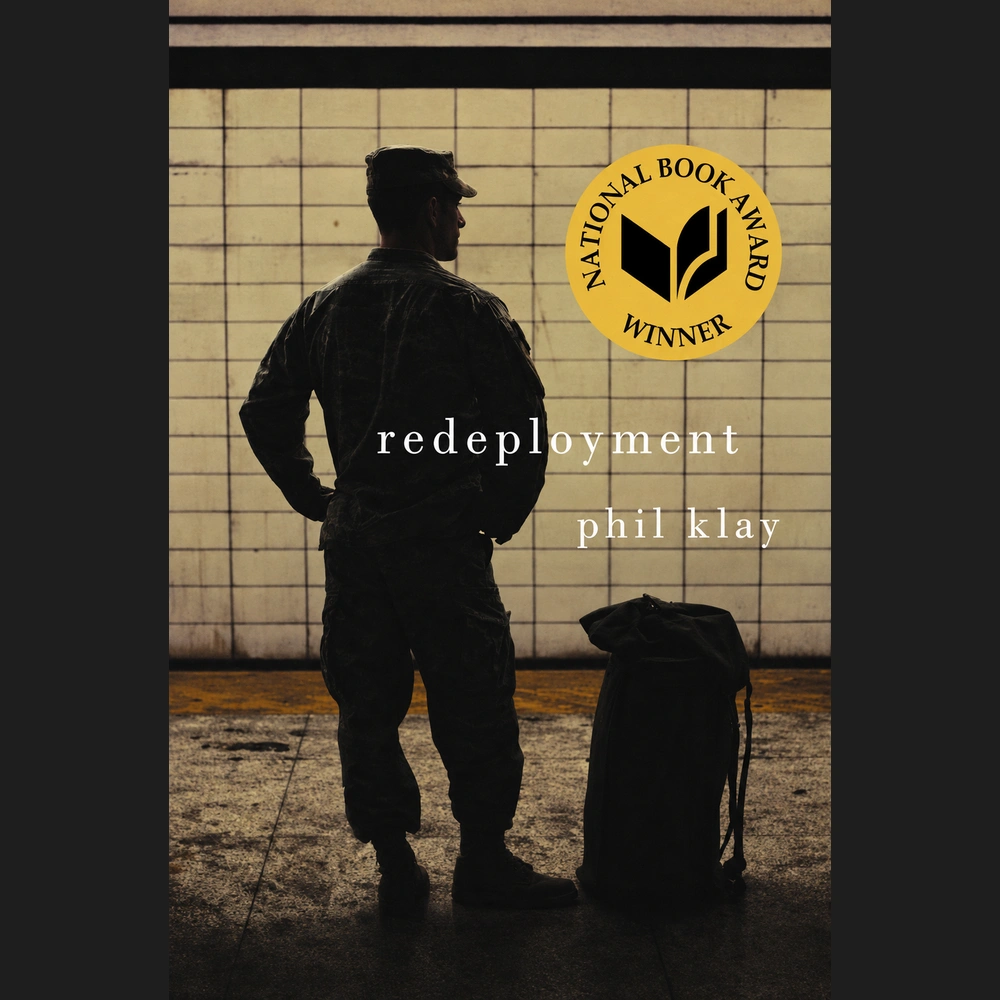
Daniel Brown’s list of the best fiction of 2014: twelve novels and story collections, from Francine Prose’s The Chameleon Club, Paris, 1932 and Anthony Doerr’s All the Light We Cannot See to Phil Klay’s Redeployment, each with a short review, plus nine further recommendations.
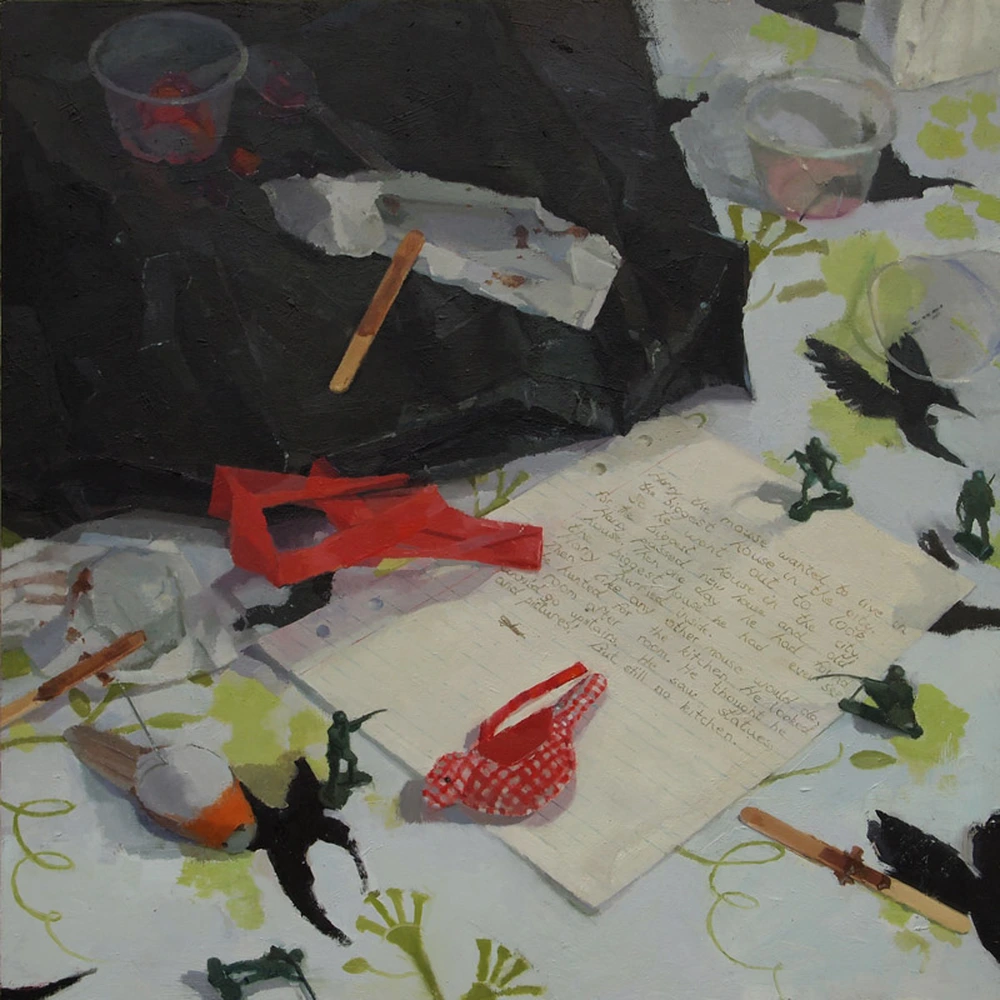
How odd – not one of the artists whose works comprise The Urban Landscape: Six Artists – Six Views at the Clifton Cultural Arts Center through December 5 indicates that people occupy the spaces they portray. This seems to be a curatorial decision, as the show’s defining statement says “Six contemporary painters explore the urban landscape and interstitial spaces found within.”
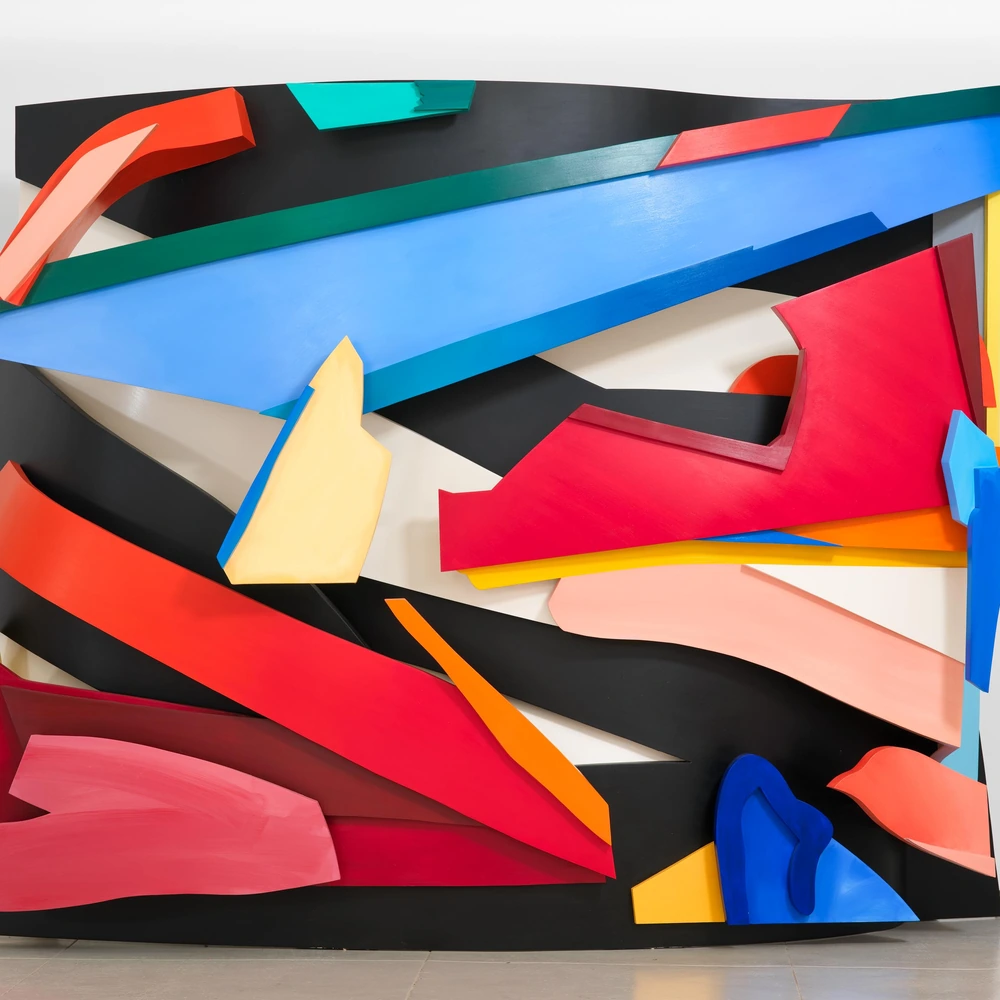
I was invited to attend the Founder’s Opening of “Beyond Pop: A Tom Wesselmann Retrospective” at the Cincinnati Art Museum, which for me, felt like both a homecoming and a reunion. It was heartwarming to see the hometown museum of one of the greatest masters of Twentieth Century Art celebrate the dedication and achievement of his long and successful career.
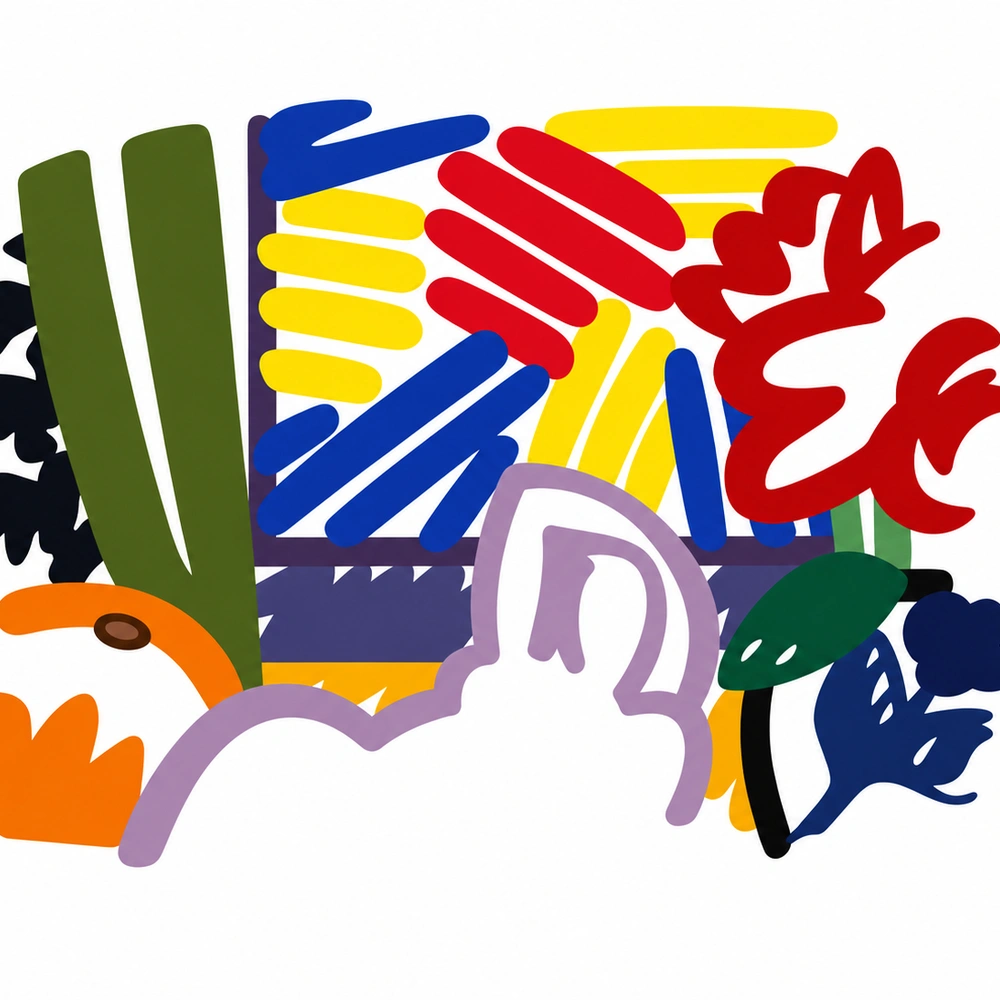
To a millennial, the term ‘Feminist’ has negative connotations; it brings up images of Birkenstocks, short hair, and radical views that make most conservative Midwesterners cringe. I’ve never considered myself a feminist but after seeing Tom Wesselmann’s work at the Carl Solway Gallery I have no choice but to lump myself into the category.
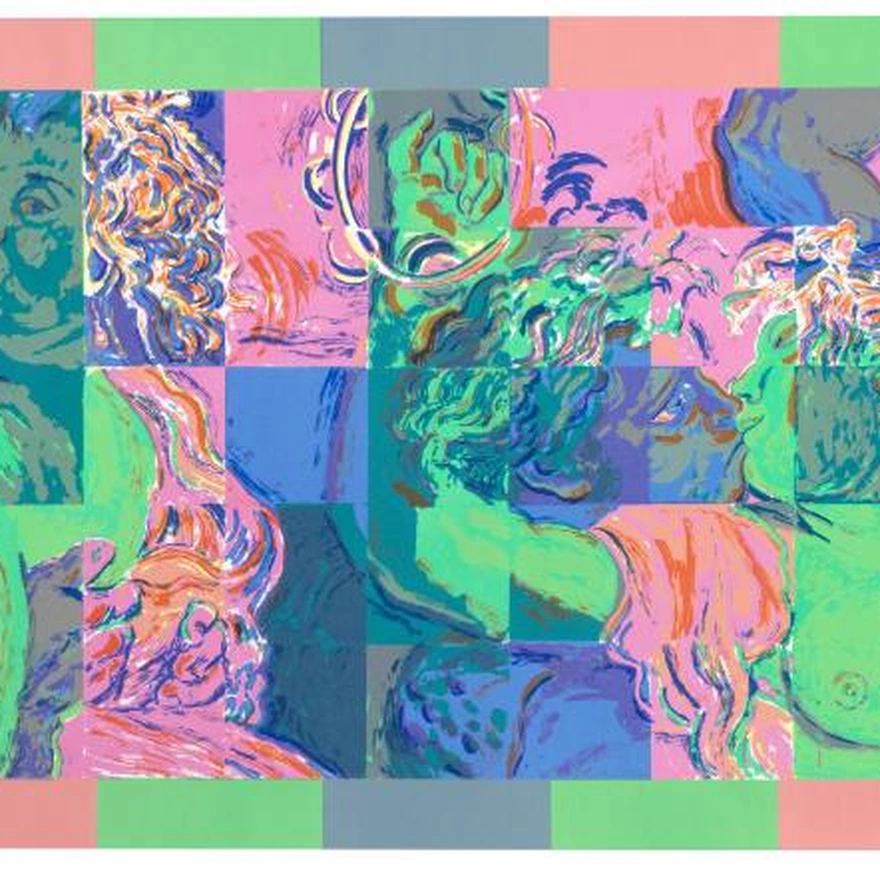
Stewart Goldman’s career has shown many variations during more than 50 years of painting and drawing. Through it all, color has driven his art. Perhaps a bigger force behind his creations, although not always as obvious, have been absences, or memories of things that no longer are.
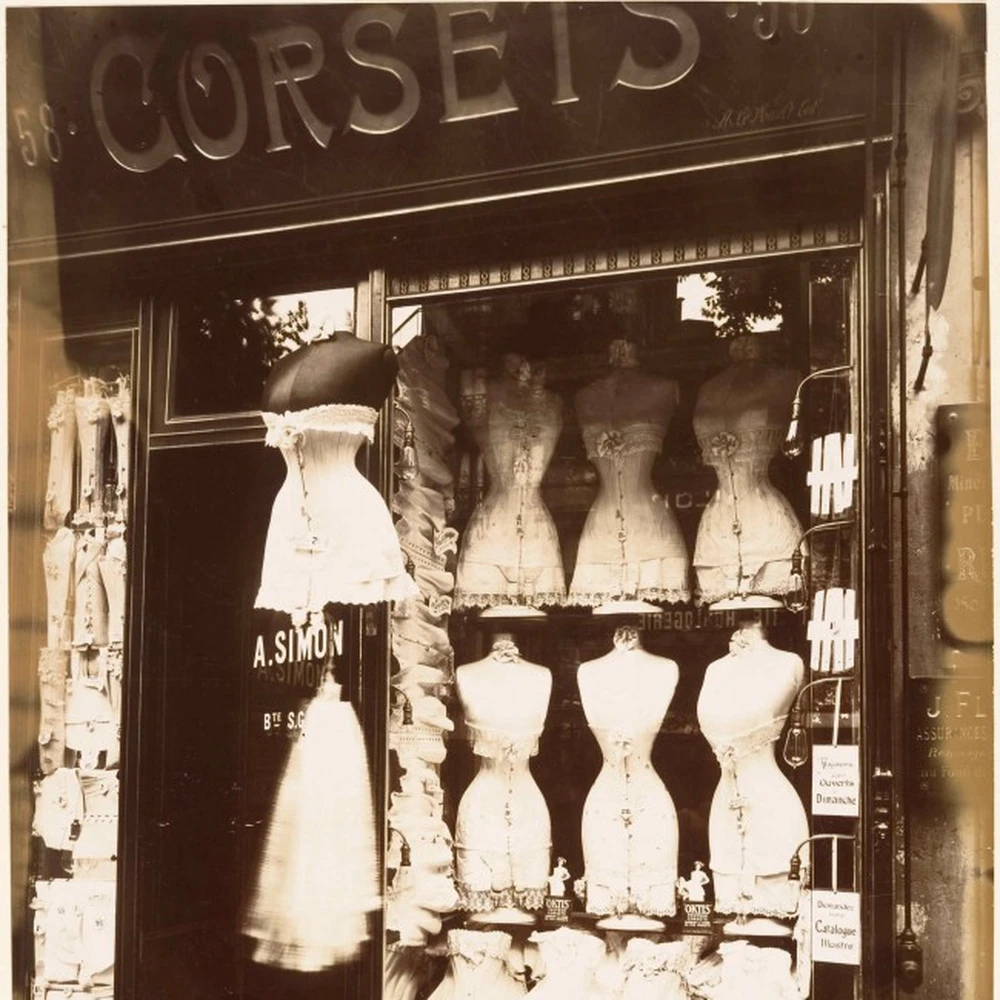
The art historical narratives of the history of photography and the advent of modernism are often intertwined, though in some of those narratives, photography helps facilitate modernism, and in others, modernism gives photography the nudge it needs to outgrow its 19th century roots.
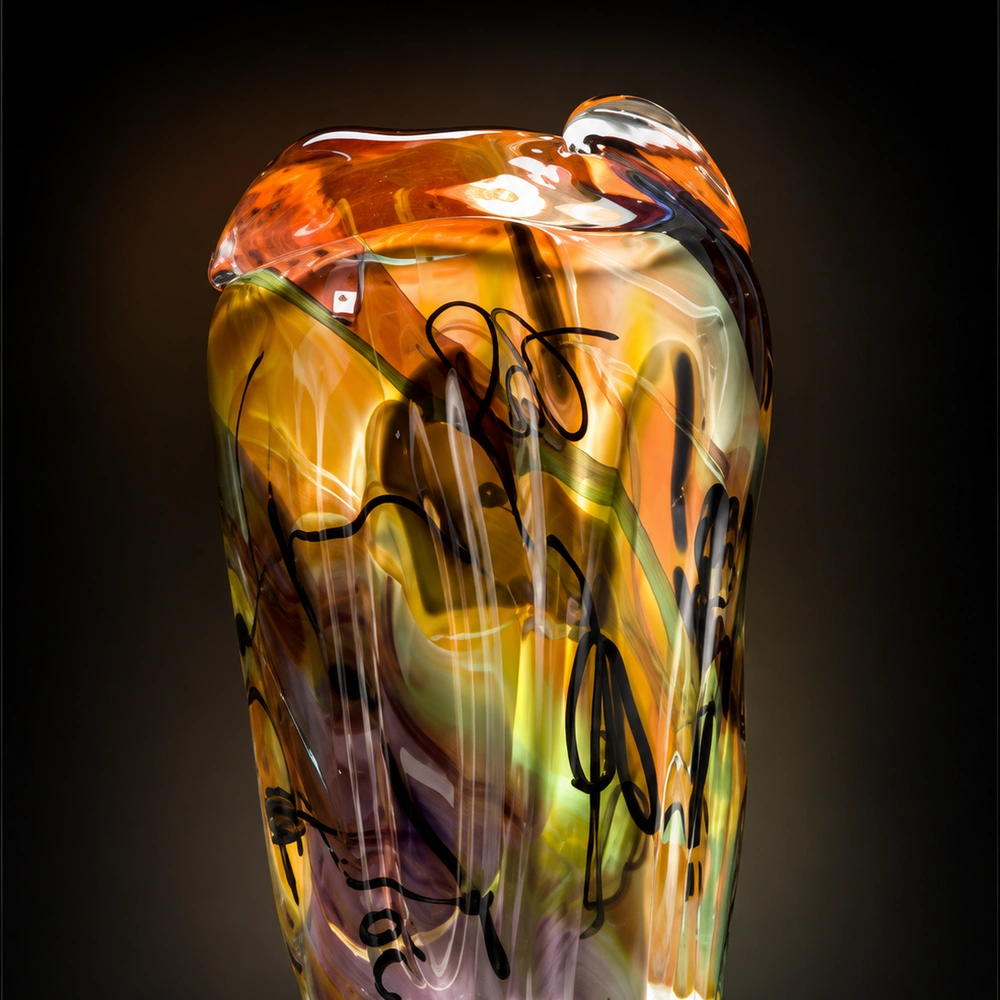
The Neusole Glassworks has moved from Walnut Hills to Forest Park, from a neighborhood where police crime scene tape and chalk outlines are common to a verdant college-campus-like industrial park.
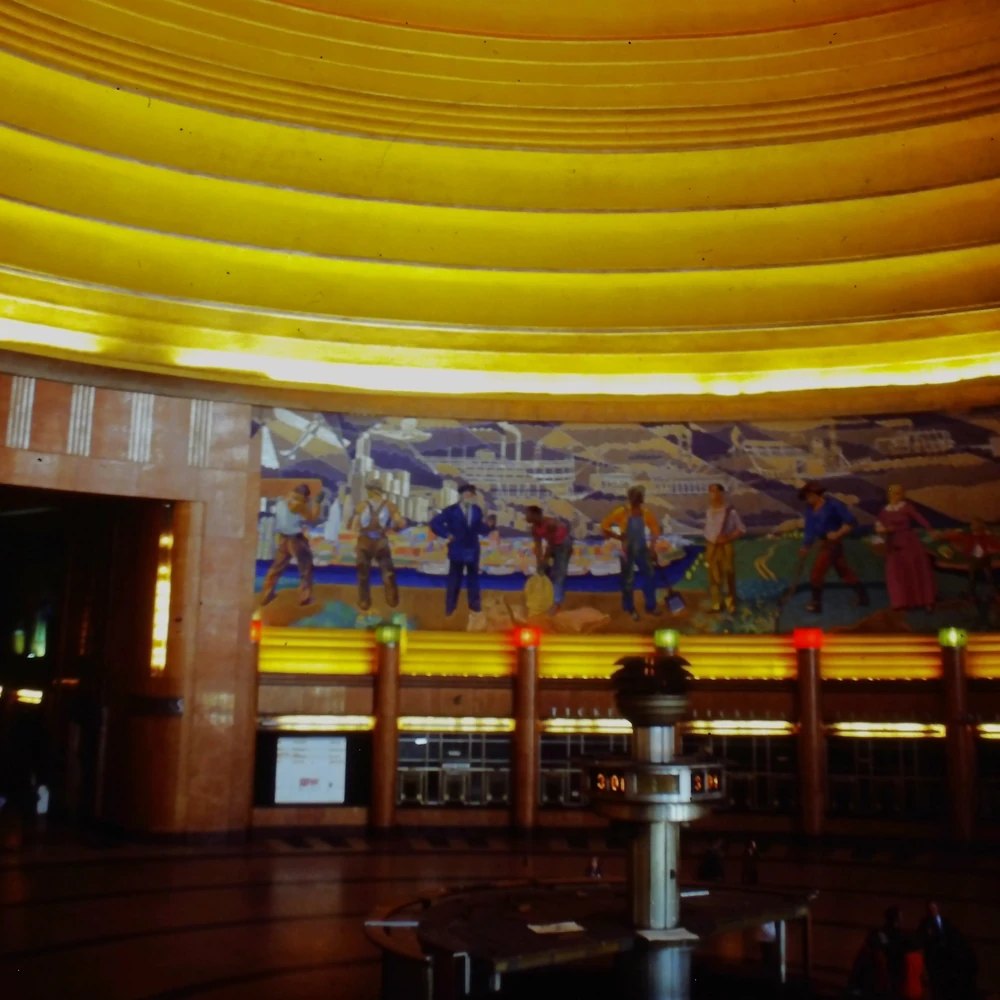
The November issue of aeqai has just posted. November was a very busy month in the visual arts, with some FotoFocus shows still going strong, and fine offerings from many nonprofits and commercial galleries. We offer, again, a wide swath of the arts community in this issue.
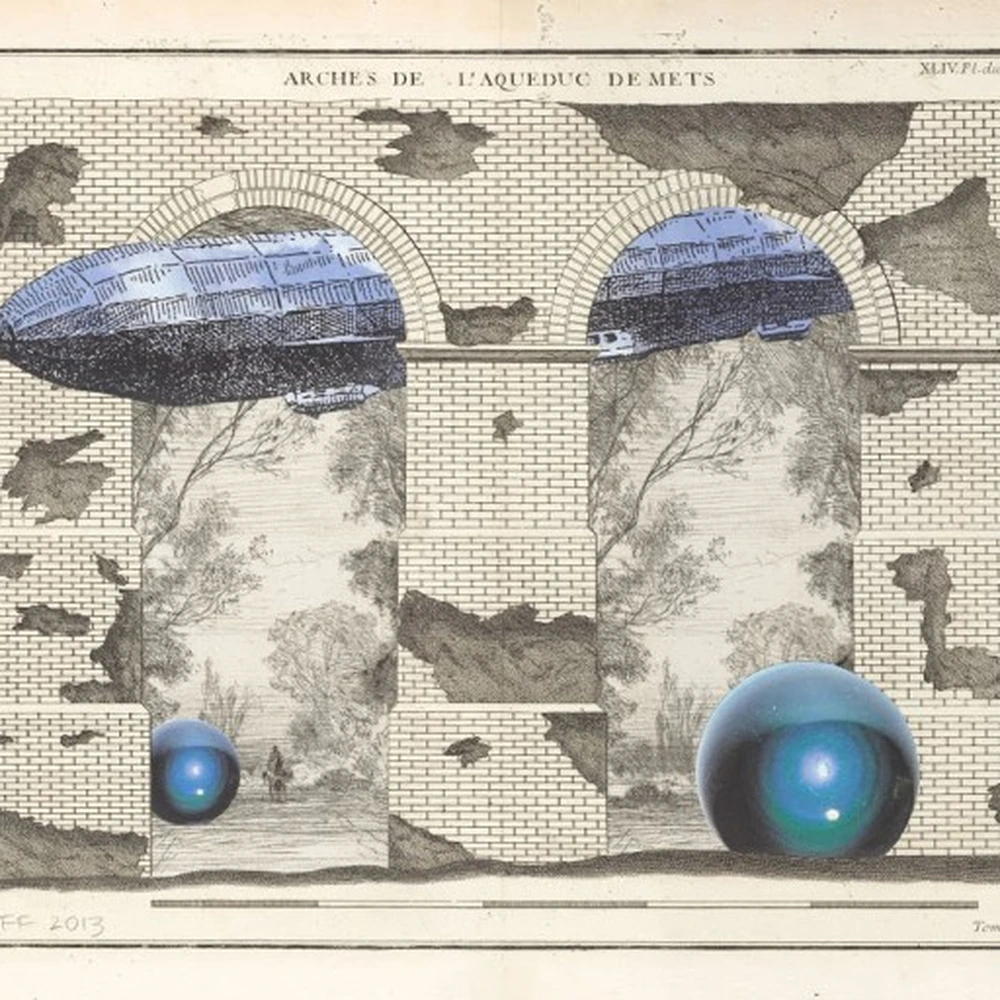
Cincinnati should be proud that it has produced some of the most important artists of the latter half of the 20th century: Tom Wesselmann (1931-2004), Jim Dine (b. 1935), and Marcus Ratliff (b. 1935). It may seem like hyperbole to include Ratliff because he was a commercial artist, a term that seems quaint today.
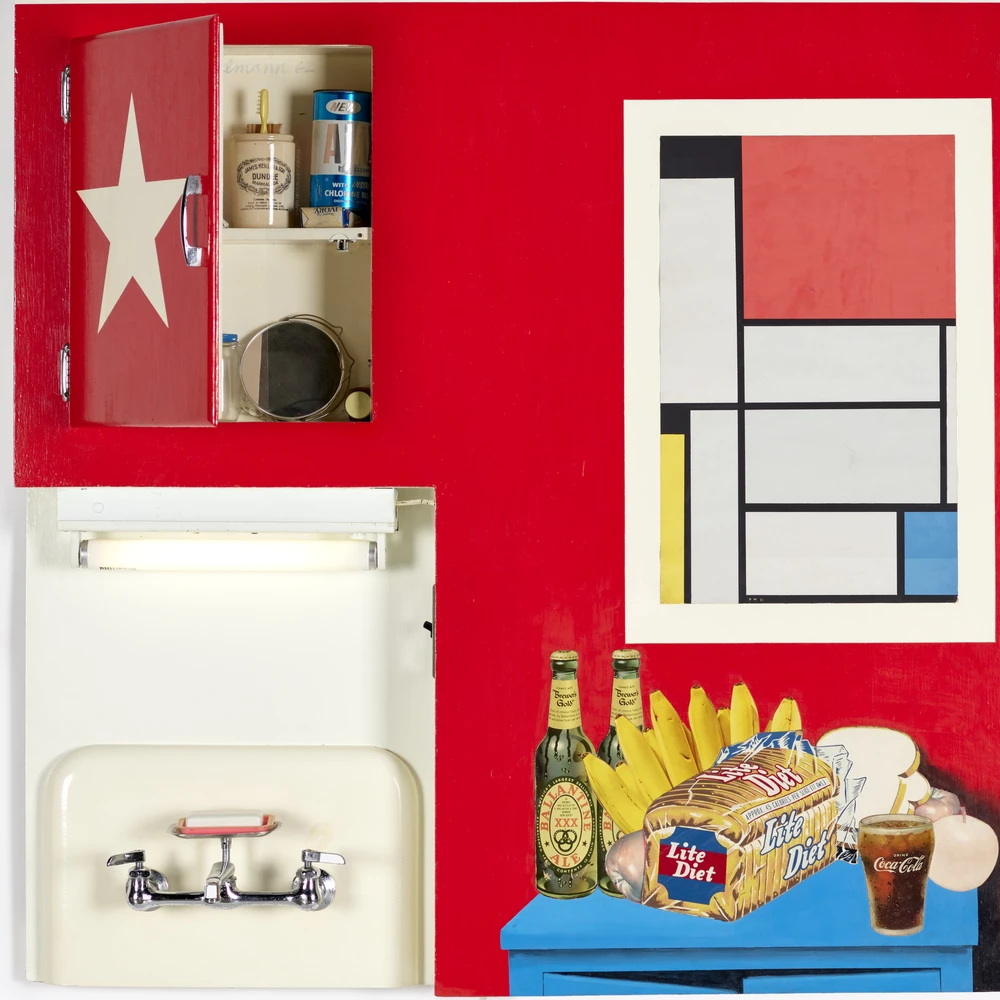
When I think about Andy Warhol, I don’t just think about Liz Taylor. I often remember his series of car-crash and electric-chair screen-prints (plus those ones of the people jumping to their deaths off of skyscrapers) just as much as his over-the-top prints that both parody and enthrone superstars like Liz, Farrah Fawcett, Elvis, and so on.

Hanavan’s exhibit is titled and marketed to make a statement connecting the concept of self with the virtual self of social media and internet technologies. While the constant comment of Twitter, FB, the image clutter of Instagram and other technologies teeter on the edge of the diluvial, the virtual technological presence is not without its obscuring scrim.

Cincinnati Preservation Association was founded in 1964 as the Miami Purchase Association. An attractive exhibition about CPA and its work, “Celebrating 50 Years of Working Together to Save Historic Places,” which was curated by CPA and the Cincinnati History Museum, is on display in the Culture Gallery of the Cincinnati Museum Center. It s free to the public during museum hours.
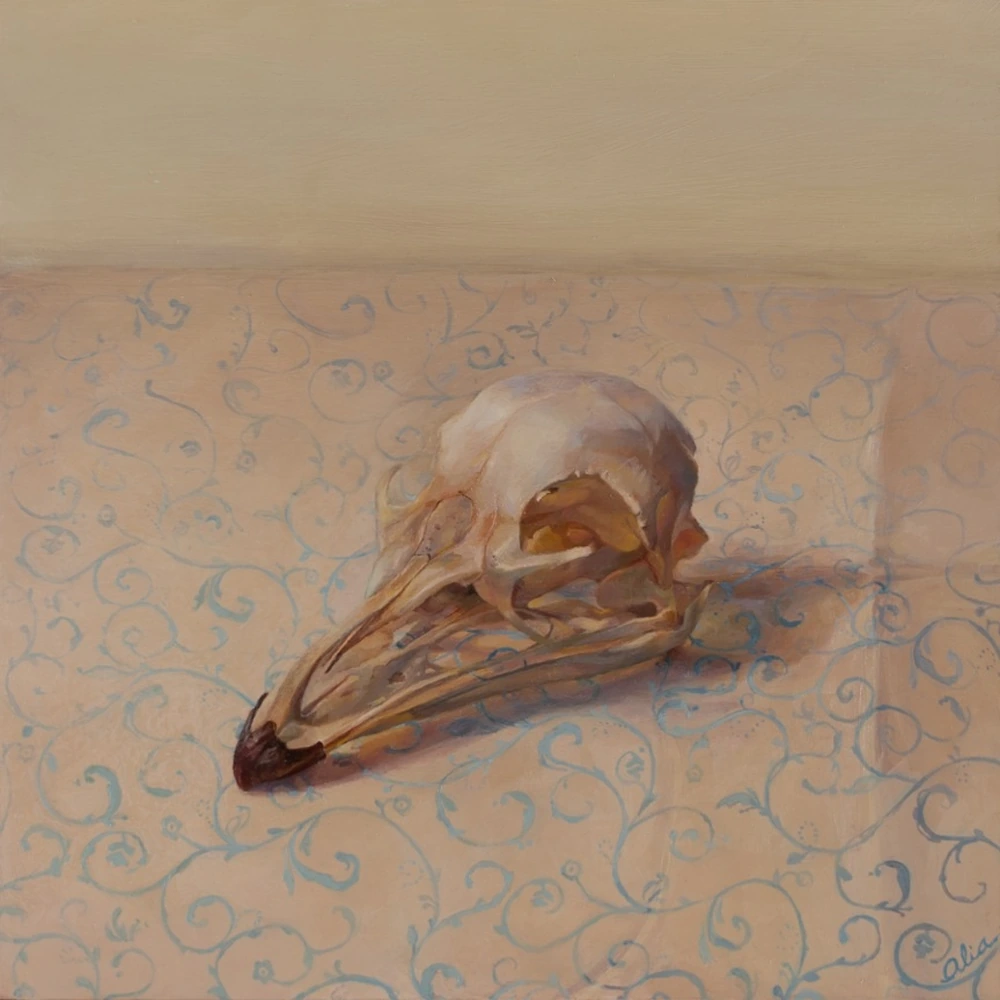
Through a multi-dimensional compilation of works, Manifest Gallery presents a topically divided but conceptually supportive examination of the human form in three exhibitions. Indulging in long pursued studies of humanity, the artists of Face First, Extremities, and Losing Your Head, give way to surprising and didactic work.
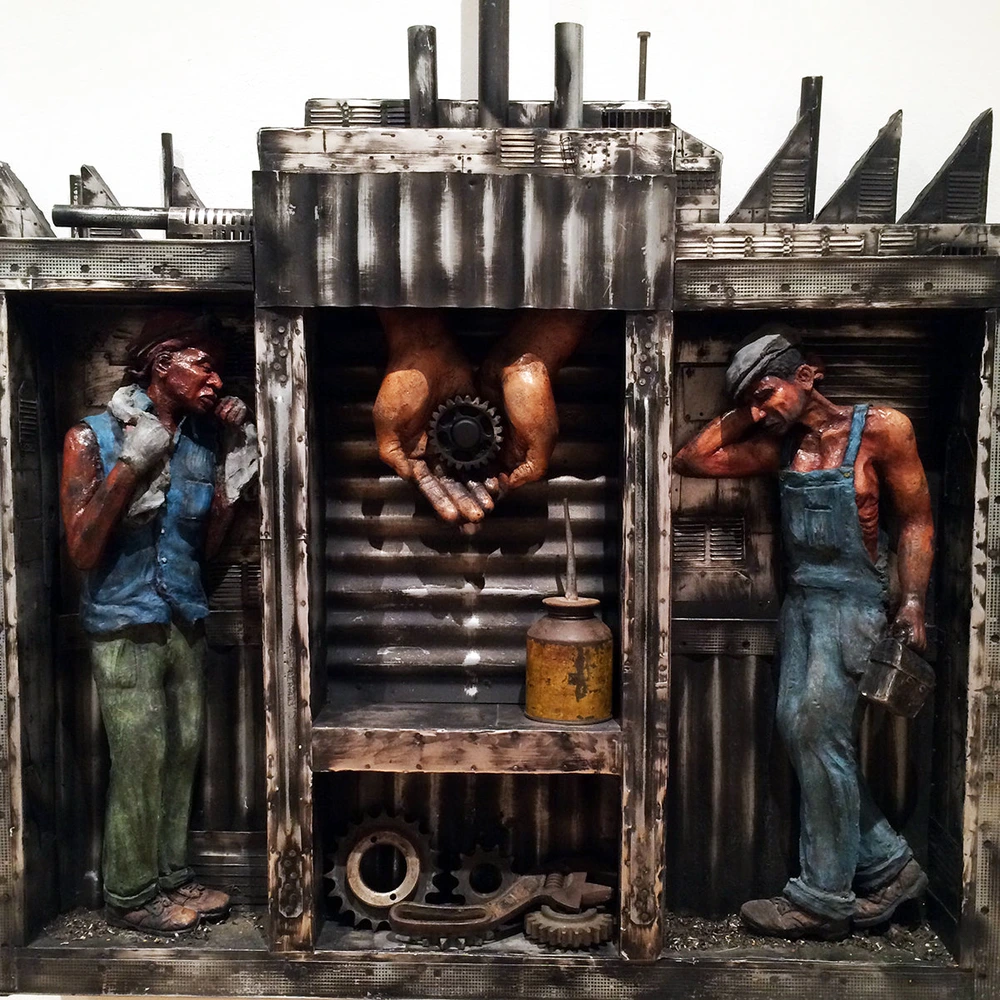
Identical twin brothers Kelly and Kyle Phelps are Associate Professors at private Catholic universities in Ohio. Kelly is an Associate Professor and Chair at Xavier University (Cincinnati, OH) where he oversees the sculpture department; Kyle is an Associate Professor at University Dayton (Dayton, OH) where he is the head of the ceramic department.
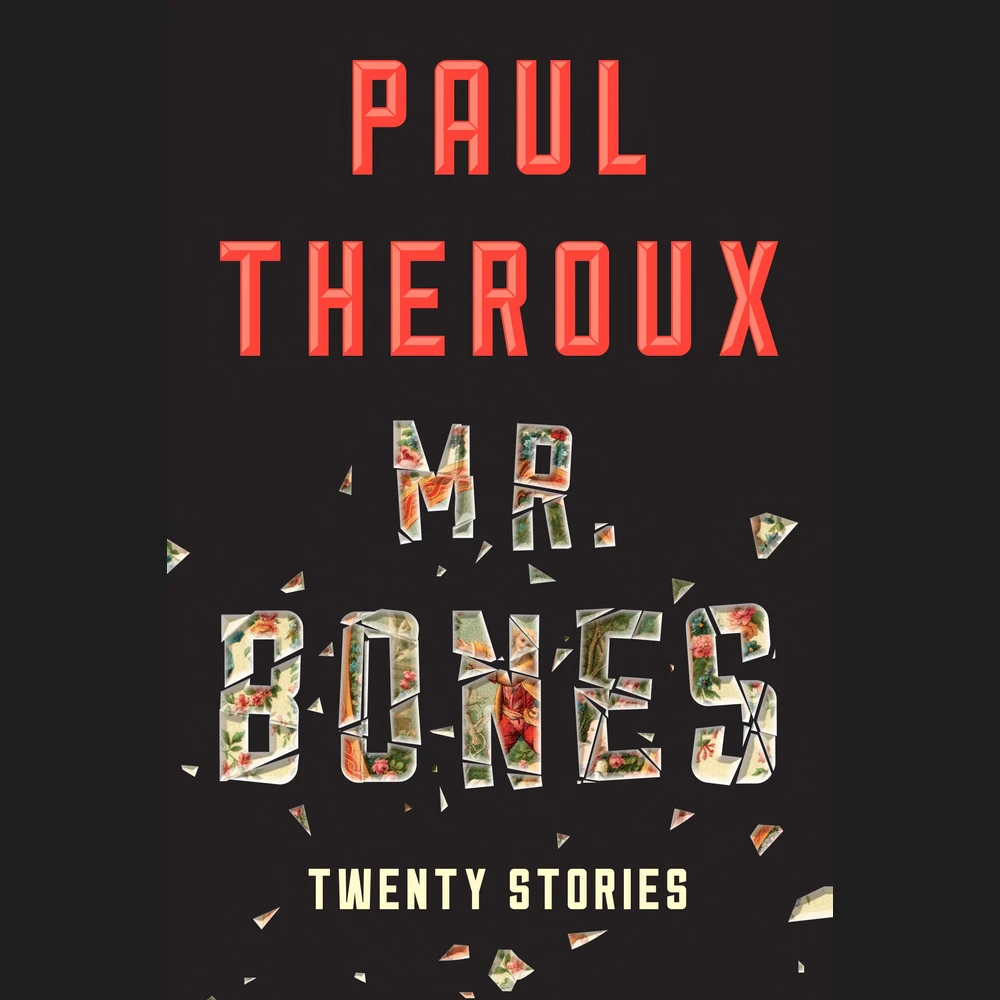
Books of short stories are often difficult to review, particularly when the stories do not overlap, one to another, almost like a novel in short stories. But I have long considered Paul Theroux to be one of America’s most important writers in three different genres: travel writing, fiction, and short fiction.
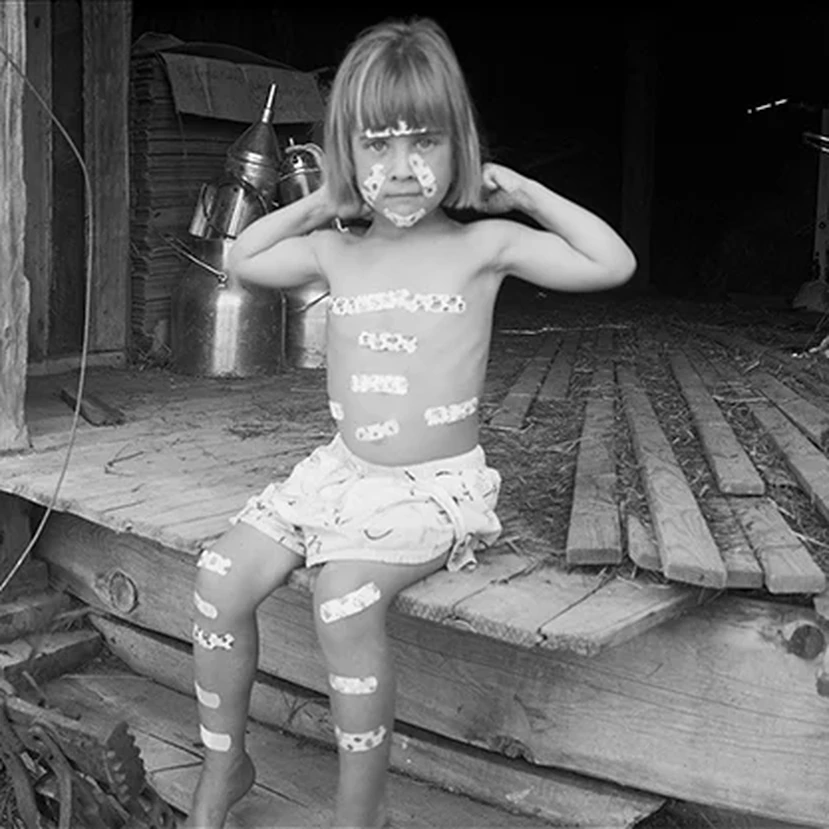
“Creativity is a lifelong process which requires courage, perseverance and hard work,” said Jane Alden Stevens. Winner of the university-wide Dolly B. Cohen Award for Excellence in Teaching at the entire university in 1991, Stevens had an illustrious career as a teacher of photography at University of Cincinnati’s College of DAAP. Stevens was described in her nomination as having the quiet power to change lives.
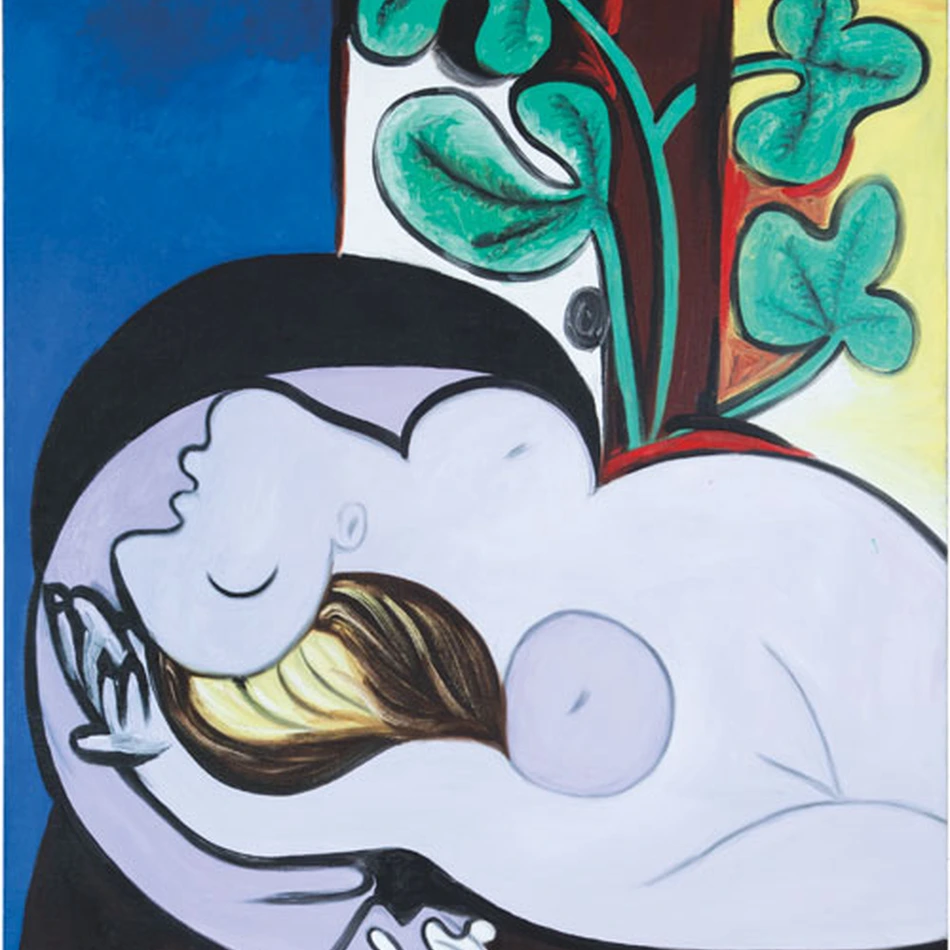
COLUMBUS – Any time you can bask in the presence of 19 superb works by Pablo Picasso within 111 miles of Fountain Square, you should do it. To say nothing of 19 generally better pieces by Alberto Giacometti, 14 very nice works by Jean Dubuffet and an excellent sculpture of a 14-year-old female ballet dancer by Edgar Degas.
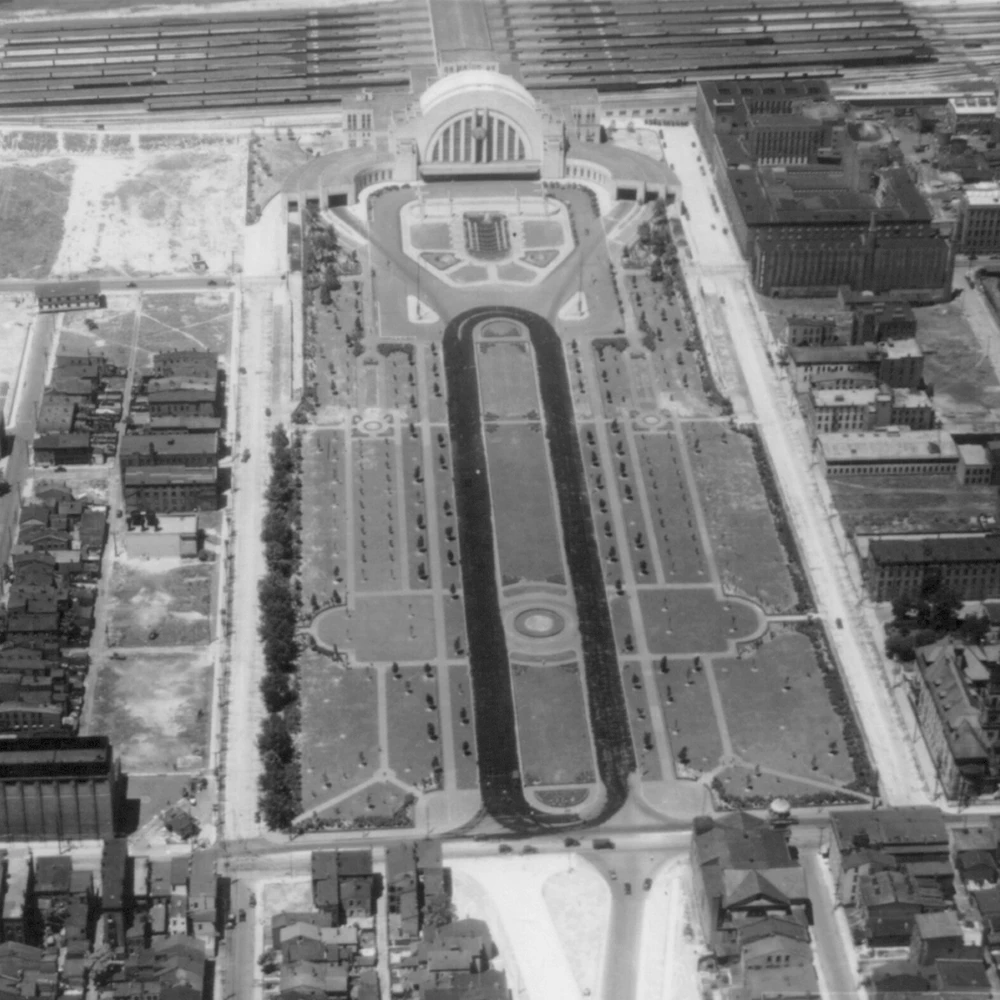
Cincinnatians have heard a lot lately about saving our architectural icons, namely Cincinnati Union Terminal and Music Hall. A number of people have asked me who and what determines an icon? These are fascinating questions, and I have given them some thought and scholarly inquiry, which I share here with our readers. My Merriman-Webster dictionary defines “icon” as a pictorial representation, an emblem, or a symbol.
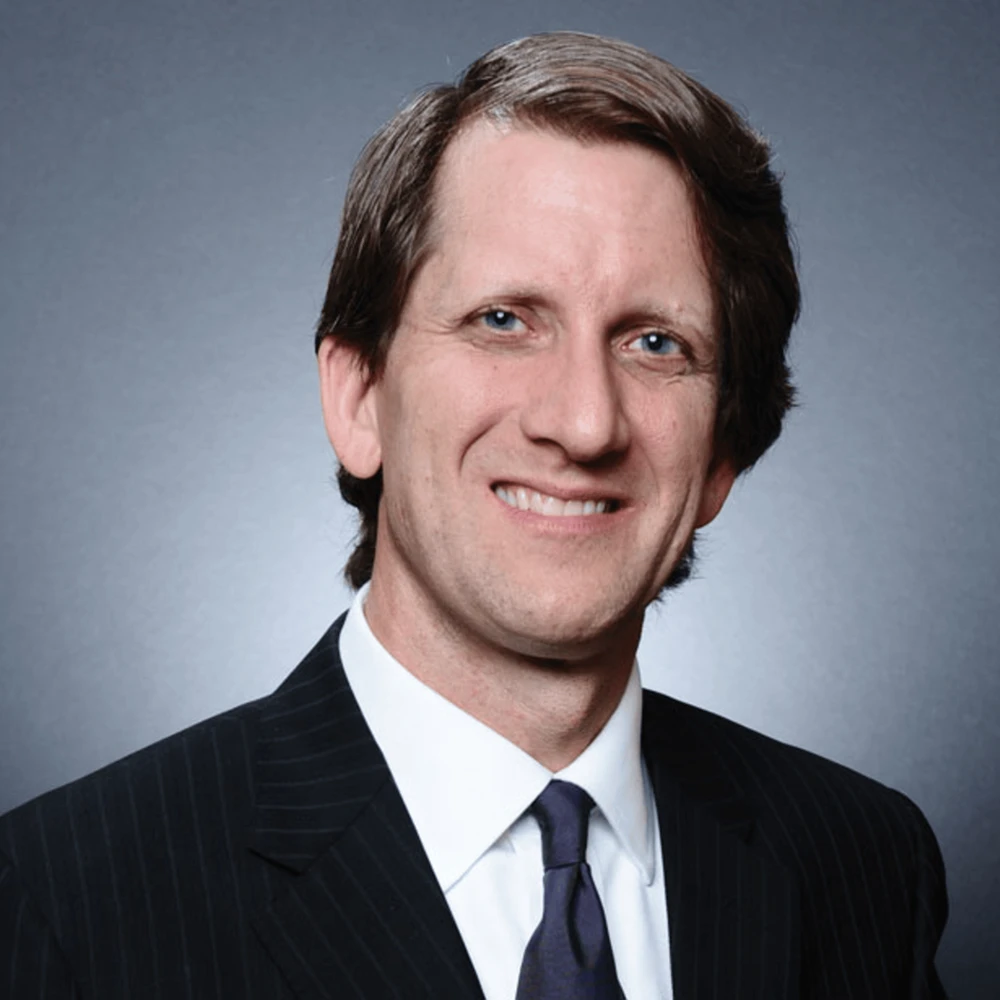
Cameron Kitchin, the new director of The Cincinnati Art Museum, firmly believes that “public service is in the DNA of this institution”, referring to the museum itself. He and I sat down for a combined conversation/interview on Monday, November 3rd, which lasted for just under two hours.
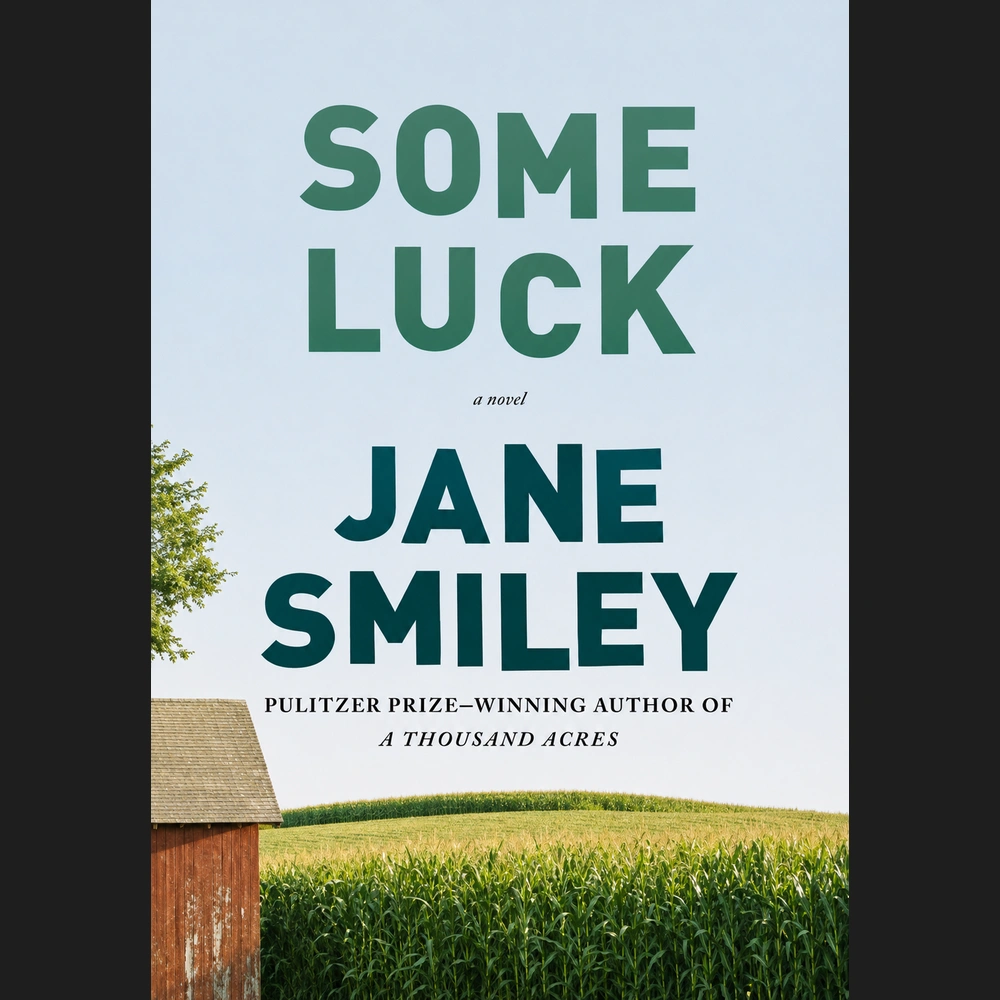
Jane Smiley’s novel One Thousand Acres, which won the Pulitzer Prize, is compelling and gripping not only because the book builds to a surprise and horrifying climax, but also because Smiley understands the rhythms of farm life, the influence of weather, the very soil of Iowa, in which her characters are seeded and grow. Smiley returns to farm life in Iowa with the first of a projected trilogy, Some Luck.
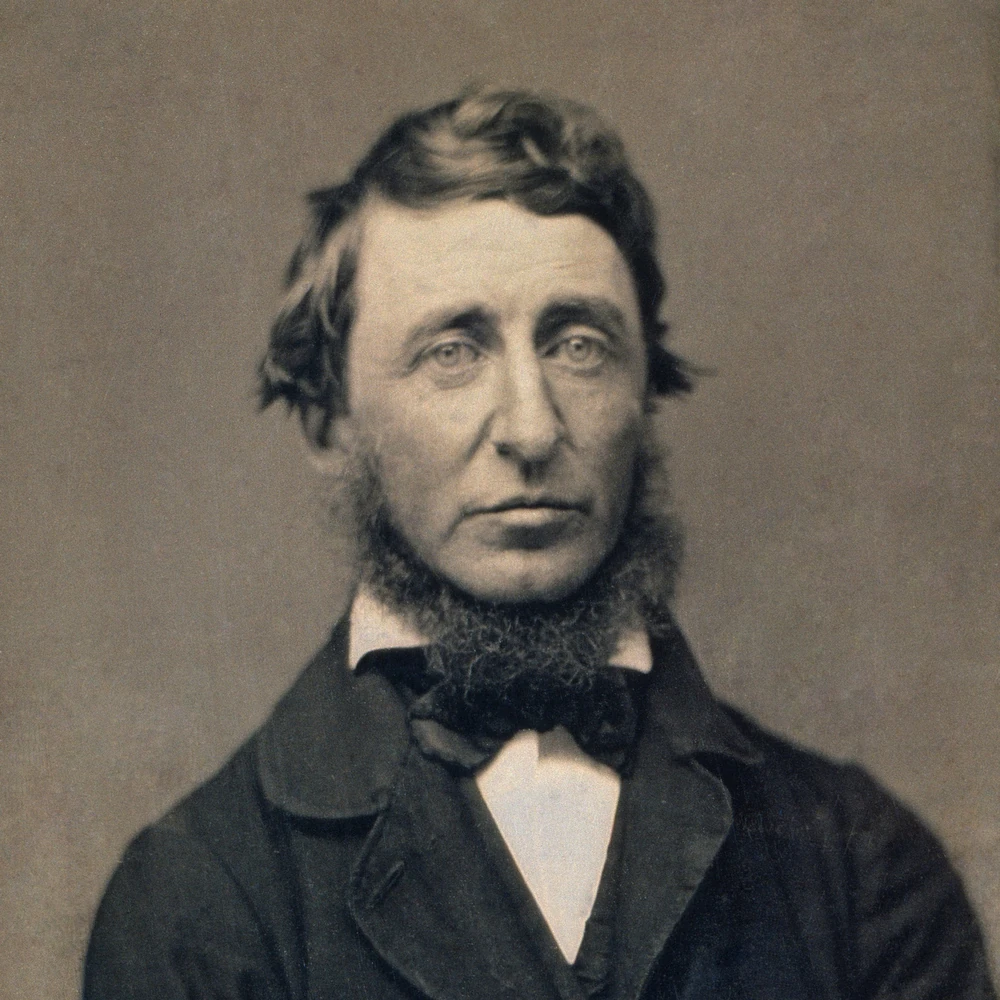
Everyone in the working world is busy, overwhelmed. Even students’ days are filled to the brim. Yet if many are living comfortable, engaging lives, is there a problem, a downside, to being ever busy? A number of observers, from the ancient, democratic Athenians, to Henry David Thoreau, to several contemporary observers and historians all point to a social value of profound importance, leisure.
