When I think about Andy Warhol, I don’t just think about Liz Taylor. I often remember his series of car-crash and electric-chair screen-prints (plus those ones of the people jumping to their deaths off of skyscrapers) just as much as his over-the-top prints that both parody and enthrone superstars like Liz, Farrah Fawcett, Elvis, and so on. His version of Pop art was about a lot of things, but the engine inside the gloss was Warhol’s sense of death and violence, the unsettling unknown, that lion-mean whisper behind all of the glamor and the desire to be applauded and adored. The juxtaposition of misery and ecstasy, lipstick and broken windshield, made Warhol’s whole oeuvre transform outside of itself into kinky, creepy poetry, finally encapsulating an era dominated by advertising, movies, TV, and newspapers, all of these media letting us see ourselves both as the way we want to be and the way we end up.
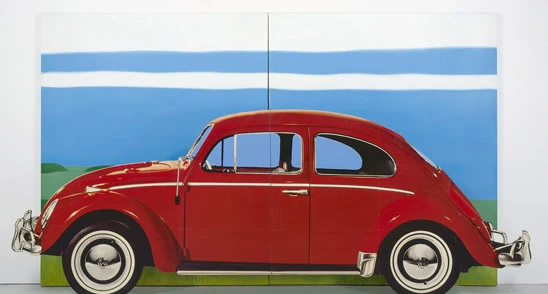
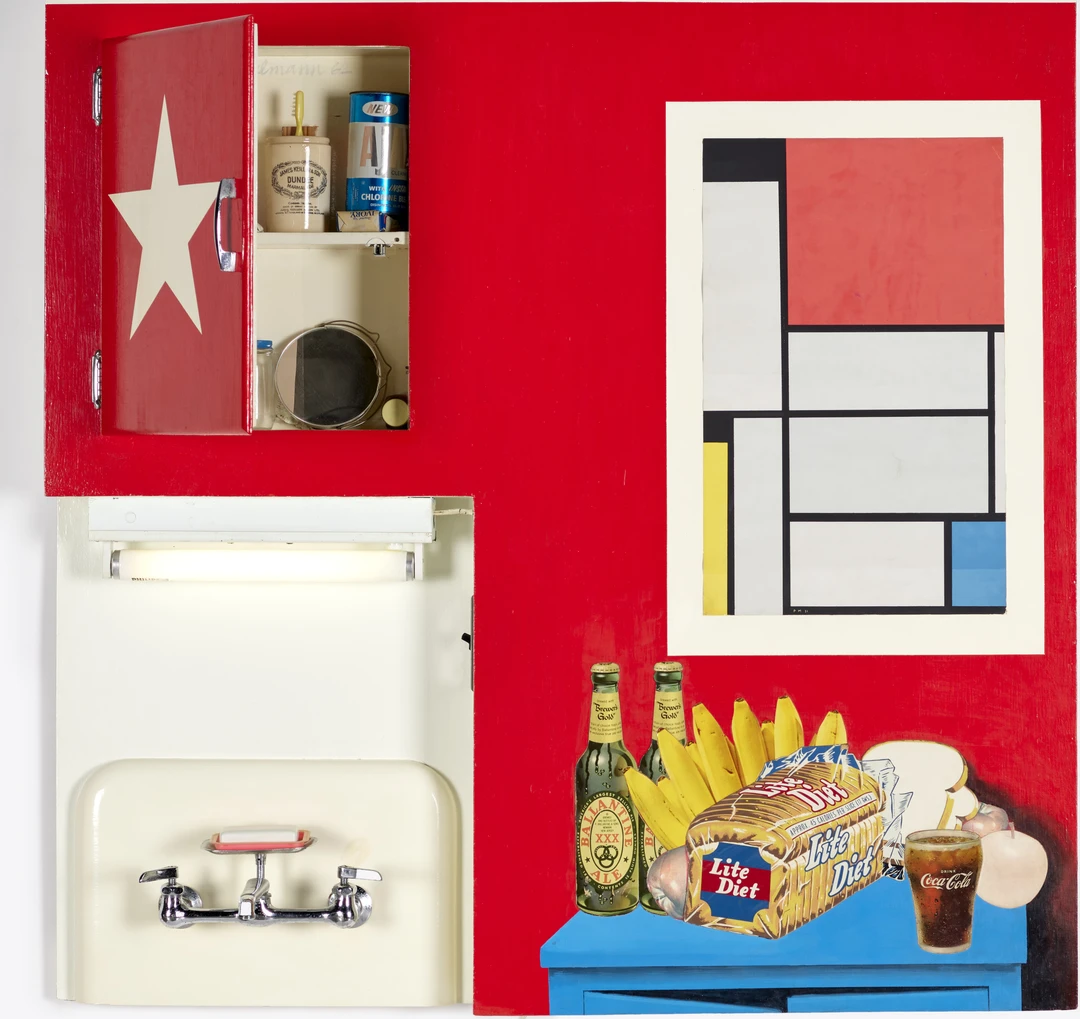
I kept going back to why I love Warhol while wandering through “Beyond Pop Art: A Retrospective of Tom Wesselmann,” at the Cincinnati Museum of Art, up through January 18, 2015. It’s a vast exhibit, chockfull of a lot of marvelous paintings, drawings (many accomplished in steel), sculptures, collages, and so on. That vastness is very impressive, but it also allows you to take a look at a trajectory that doesn’t seem to be there. Wesselmann’s work doesn’t seem beyond Pop art exactly; in fact it seems kind of totally and a little too much in sync with it, stylishly old-fashioned and beholden to an aesthetic straight out of a previous era. Matisse is Wesselmann’s role model, not American billboards or tabloid photos, and definitely not ironic, zeitgeist drama.
Wesselmann’s reaction to Pop is to contain it in a very tidy realm of supreme competence. In his vibrant works, the subject matter is often either resplendent anonymous naked ladies or the consumer goods that make them that way, and through his slavish adherence to his own codes Wesselmann verifies beauty, doesn’t double-check it and never questions it. His muse is the same Matisse muse doing an old-school odalisque. Mainly he seems to want to “Matisse-ify” Pop’s icons and symbols. More interested in elevating than in investigating, he finds inspiration on a grand but somehow unchallenging scale, connecting to Pop’s desire for sumptuousness and size, finalizing all the subject matter (billboard mayonnaise jars, lipsticks, cigarettes, lips, etc.) into a mausoleum of aesthetic bliss, almost like nostalgia but without the wistfulness, the letdown of desire.
There’s no engine inside this gloss.