
During ESPN's July broadcast of the 2026 WSOP Main Event, Luke Geel's system displayed movement metrics beside players. WIRED identifies Geel as an AI engineer for the US Air Force, with no report of institutional sponsorship or endorsement. Inputs covered eye movement, blinking, posture, chip handling and hand fidgeting, generating estimates of hand categories, including possible bluffs. Outputs remained estimates, never established detections of bluffing, lying, intention or hand strength. Footage came from three televised tables within a field over 9,000 entrants, leaving uneven records. Finalist Michael Gagliano doubted the streams held actionable information. Geel reported mixed blind-test results on other competitions. Omaha Productions withheld the system from the final table.
For each hand, software matched movement with outcomes, added associations to a database, then fed ESPN's overlay live readouts and a hand strength model chart estimating categories such as made hands and bluffs. This sequence presents provisional correlation with the graphic finish of a score. Shaun Deeb, twice WSOP Player of the Year, called the feature a swing and a miss, noting cameras omit physical tells involving breathing and pulse. Posture may register nerves or the stakes, allowing one motion to accompany different cards. Viewers receive the chart before inspecting its sample and may read graphic polish as knowledge. On screen, a player's fidget reaches a camera, returns as a chart, and enters the viewer's judgment as an estimate.
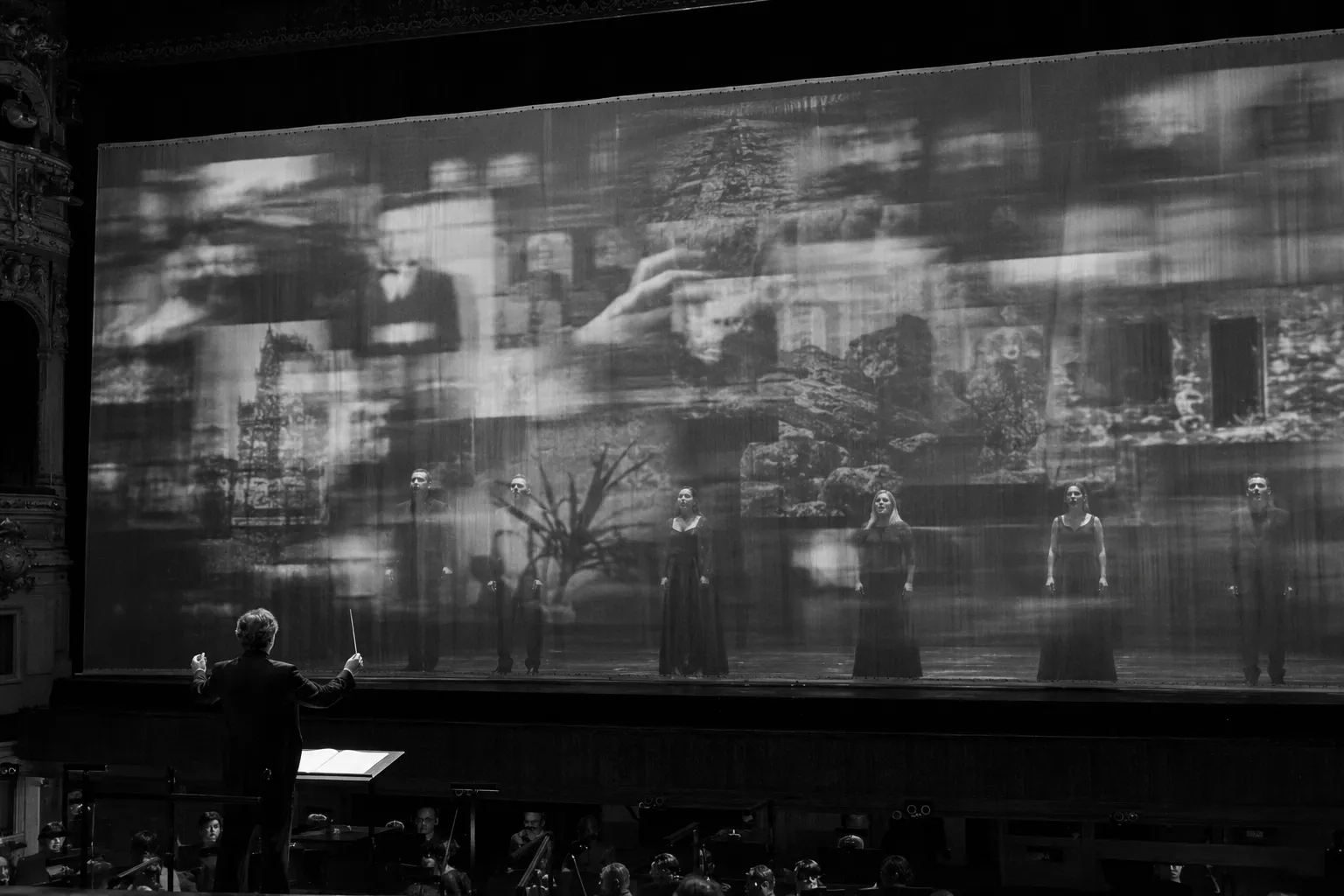
For Bayreuth’s 150th anniversary, a creative team led by Marcus Lobbes called Wagner’s four-opera Ring of the Nibelungen a “curated” production. A screen filled the proscenium while real-time projections drew on Bayreuth’s archive of Ring stagings and a chronology of events. AP independently reported that Lobbes’s team preselected images, that the collage included Helmut Kohl, the World Trade Center after September 11, and a German-reunification stamp, and, citing dpa, that boos and whistles met the team after Götterdämmerung. The Guardian’s Flora Willson supplied the harsher judgments, calling the rapid association “mindless scrolling” and visual bric-a-brac. Those terms identify Willson’s critical response.
Each scene began with material from the 1876 premiere, after which the system determined the sequence during performance. Faces blurred and hands acquired surplus fingers. Rocks changed into bodies while historical images passed among abandoned rooms and scrap metal. The screen’s placement established a physical hierarchy. It occupied the proscenium’s full width and height; singers performed behind it, mostly stationary, with murders reduced to exits and erotic climaxes to clasped hands. Willson observed that even the silence conductor Christian Thielemann left in Wotan’s monologue could not arrest the projections. Their continuous motion dispersed the dramatic tension she heard in the music, because each image morphed before a gesture could gather force. During Thielemann’s silence, the screen kept moving in front of the singer.

Pippa is offering illustrators a royalty whenever subscribers generate media derived from their styles. The platform pays half a cent per image, three-tenths of a cent per second of video, and a share of a pool funded with 5 percent of subscription revenue. Plans cost between $14.99 and $99.99 a month. Pippa has about 800 paying subscribers and licensing agreements with four artists, with four others in discussion. Approved illustrators can use pseudonyms if they fear being treated as collaborators with an industry many artists regard as predatory.
The payment system gives consent a meter, but its smallest unit exposes the bargain. A recognizable style becomes an option in a generation menu, and compensation accumulates only when customers request enough imitations. Pippa compares its structure to Spotify, a service already criticized for turning enormous circulation into meager artist payments. The company also admits that its current tools rely on open models initially trained on a broad supply of internet content. The licensed artist therefore enters near the end of a production chain whose foundation may still contain unlicensed work. Pippa can verify the four people joining its portal and count every generation attached to them. It cannot return permission to the unknown illustrators absorbed earlier. Each subscriber click produces a fresh image, adds half a cent to one ledger, and leaves the older training debt without an owner.
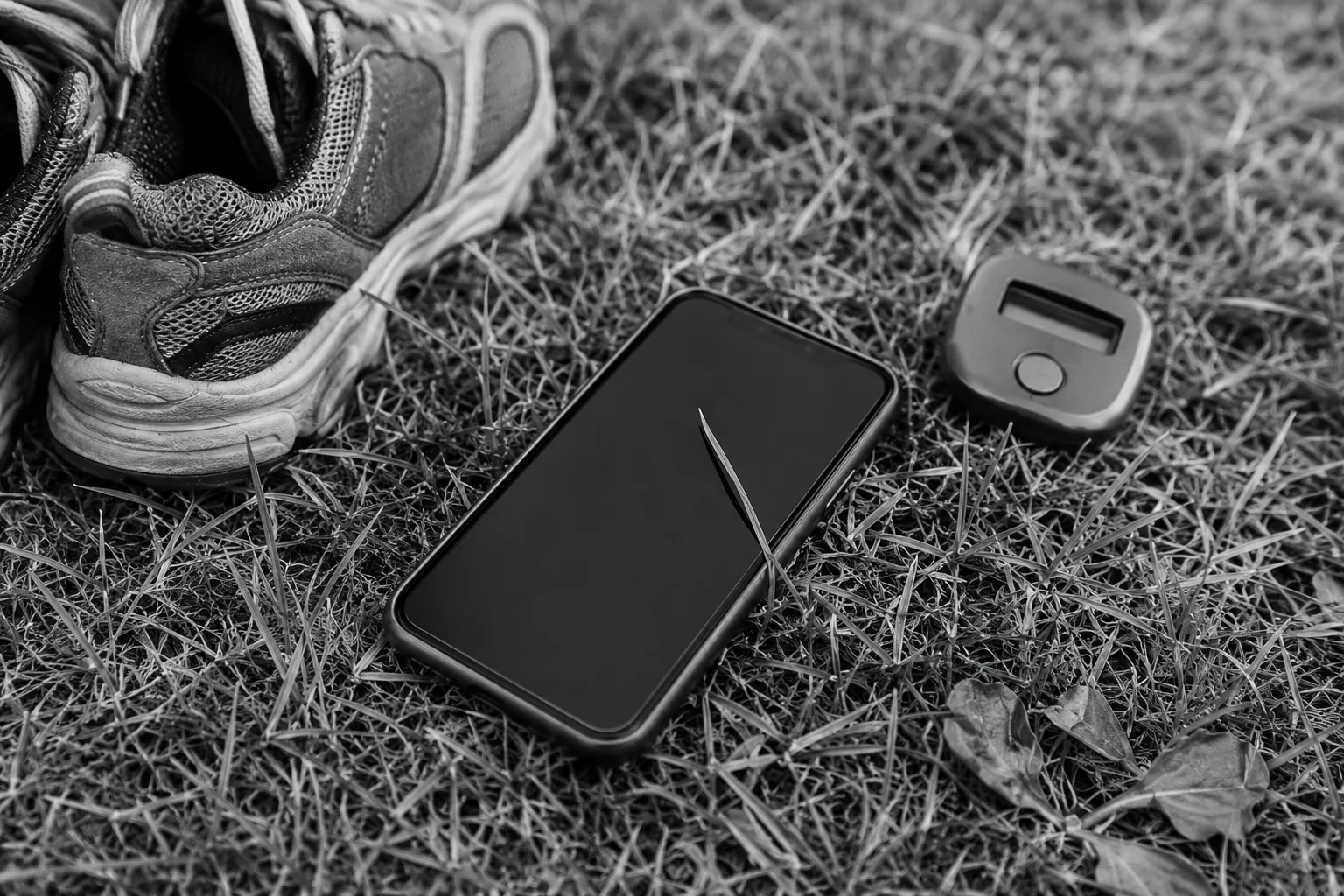
A group of new apps is trying to interrupt doomscrolling by making physical movement a condition for screen access. Digital Carrot blocks distracting apps until users reach goals such as 6,000 steps or a workout at a specific location. StepBloc unlocks Instagram, TikTok, YouTube, or games after a walk or a set of exercises. TouchGrass requires users to photograph grass, then uses computer vision to decide whether the image qualifies, TechCrunch reported on August 1st.
The phone has become both the object of compulsion and the device that administers its cure. Earlier screen-time tools measured duration and displayed the accusation after the habit had already happened. These apps install a small border before the feed. The user must walk, perform, travel, or point a camera at the ground before the familiar surfaces return. TouchGrass makes the ritual especially literal. A person leaves the house to prove to a machine that a plant is present, as if contact with the world required digital certification. The screen is locked until the body produces evidence. Exercise becomes a password, and grass becomes the image that opens the gate.
