David Dalrymple, an AI safety specialist at the United Kingdom's publicly funded Aria research agency, warned that governments may run out of time to prepare for systems whose capabilities are improving faster than public safeguards. He pointed to a gap between technology companies and the officials responsible for energy networks and other infrastructure. The United Kingdom's AI Security Institute has reported rapid gains across several kinds of tasks. Dalrymple's program is therefore working on ways to contain failures in critical systems instead of assuming that advanced models will behave reliably.
Safety work follows a different clock from product development. A company can release a model, measure errors, issue an update, and keep its customers inside the experiment. A power grid cannot treat a blackout as useful feedback. Public agencies must test rare failures, assign responsibility, write procurement rules, and prepare operators before a system touches a control room. Those steps look slow beside a release calendar, yet their slowness records the number of people who cannot consent to the trial. Dalrymple's warning describes an institutional race in which one side earns money by moving first and the other is blamed after something breaks. The safeguard arrives as a budget request, a test environment, and an emergency procedure whose deadline was set by a company elsewhere.

Researchers at Imperial College London built CardioKG, an artificial intelligence tool that connects heart scans from the UK Biobank with information about genes, diseases, and medicines. The system identified possible uses for existing drugs, including methotrexate for heart failure and diabetes medicines called gliptins for atrial fibrillation. It also found a possible protective link involving caffeine, although the researchers warned patients against changing what they consume. CardioKG produces candidates for further study. It does not write prescriptions or replace clinical trials.
The distinction can shrink quickly once a result reaches a headline. A medicine already sitting in a pharmacy carries the authority of prior approval, even when its proposed use for another disease remains untested. The graph gives researchers a faster way to connect thousands of observations that no physician could review at once. It also gives a statistical suggestion the visual form of a path, as if the route from scan to drug had already been cleared. Doctors will still need trials, dosage studies, records, and conversations with patients. The useful output is a hypothesis with an address. The dangerous one is the same hypothesis presented without the waiting room, consent form, and years of evidence that must come before a new prescription.
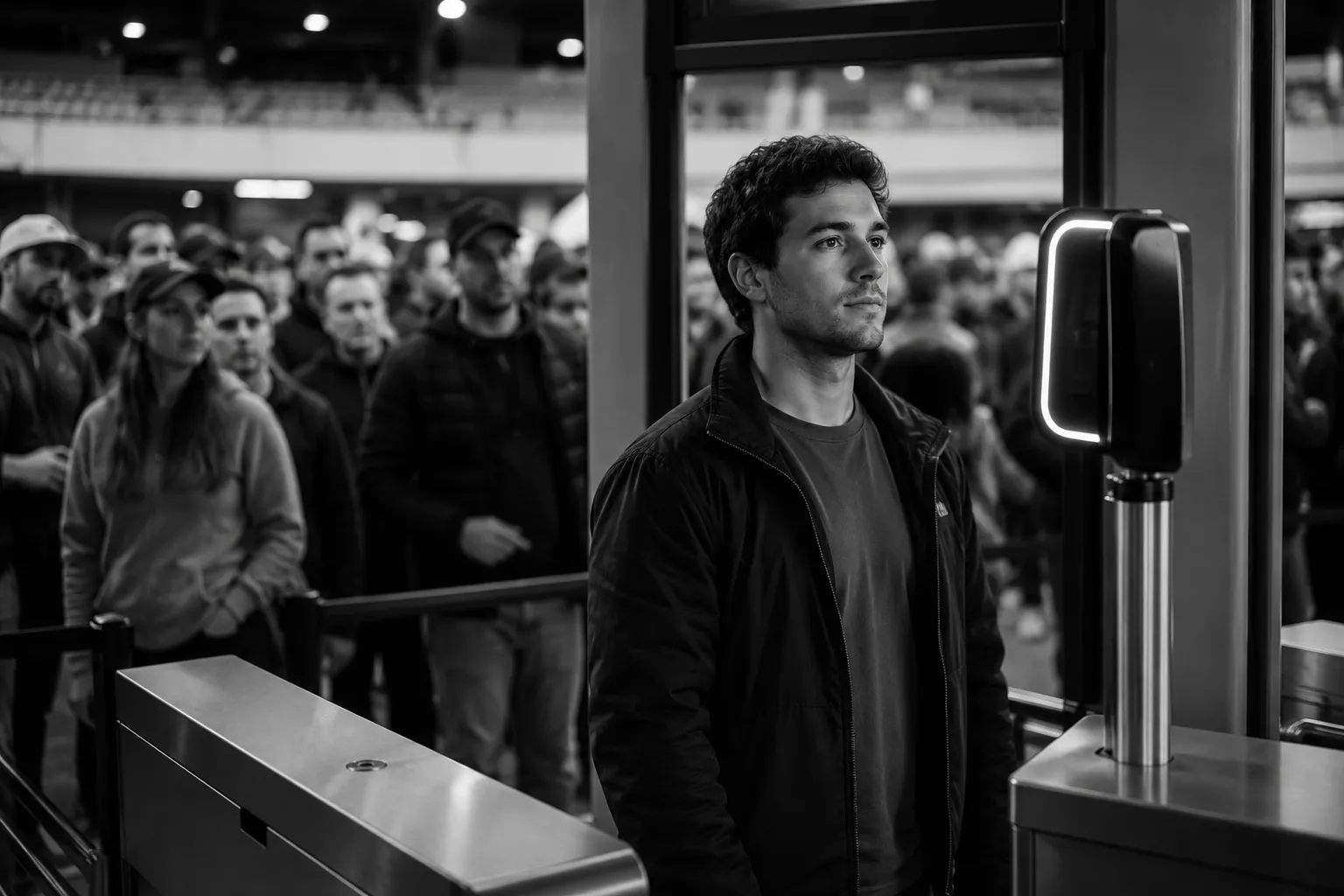
Clippers fans have embraced face-based entry at the Intuit Dome, The Verge noted on January 1st, citing Sportico reporting on the arena's biometric ticketing system. Staff reportedly expected about a third of visitors to opt in when the venue opened. Instead, close to 75 percent enrolled. The team insists the system is used for facial authentication rather than facial recognition, and says it is not for security purposes. The promise is speed, convenience, personalization, and fewer frictions at the entrance.
The willing face is more politically useful than the captured one. A person who scans under protest remains evidence of coercion. A person who scans to skip a line makes the system look like customer service. Stadiums understand this grammar well. They turn mass entry into a problem of delay, then present biometric enrollment as relief. The camera becomes a courtesy. The database becomes a membership feature. The language of authentication softens the fact that a face now performs the labor once assigned to a ticket, a phone, or a hand stamp. The fan enters faster, and the venue learns that consent can be produced by placing impatience in front of a gate.

The first day of 2026 arrived with a stack of technology laws already in force or waiting on the calendar, The Verge reported on January 1st. California began enforcing AI transparency rules, companion chatbot safeguards, and disclosure requirements for law enforcement AI. Other states added repair rights, data privacy rules, social media limits for minors, deepfake provisions, age checks, and consumer protections around subscriptions and crypto ATMs. The list is uneven, fragmented, and vulnerable to court fights, but it marks a shift from tech as launch cycle to tech as statute.
The legal year gives artificial intelligence a new texture. Models, platforms, app stores, image generators, ticket bots, biometric systems, and repair locks now appear inside bills, injunctions, effective dates, and enforcement delays. The result is not a single national philosophy. It is a map of local anxieties. California worries about frontier systems and companion bots. Nevada worries about AI electioneering. Oregon worries about synthetic sexual imagery. Virginia worries about teenage screen time. The industry still prefers one rulebook, preferably written close to itself, but the public record is filling with smaller acts of friction. January begins with the machine placed inside folders, deadlines, carve-outs, and lawsuits.
