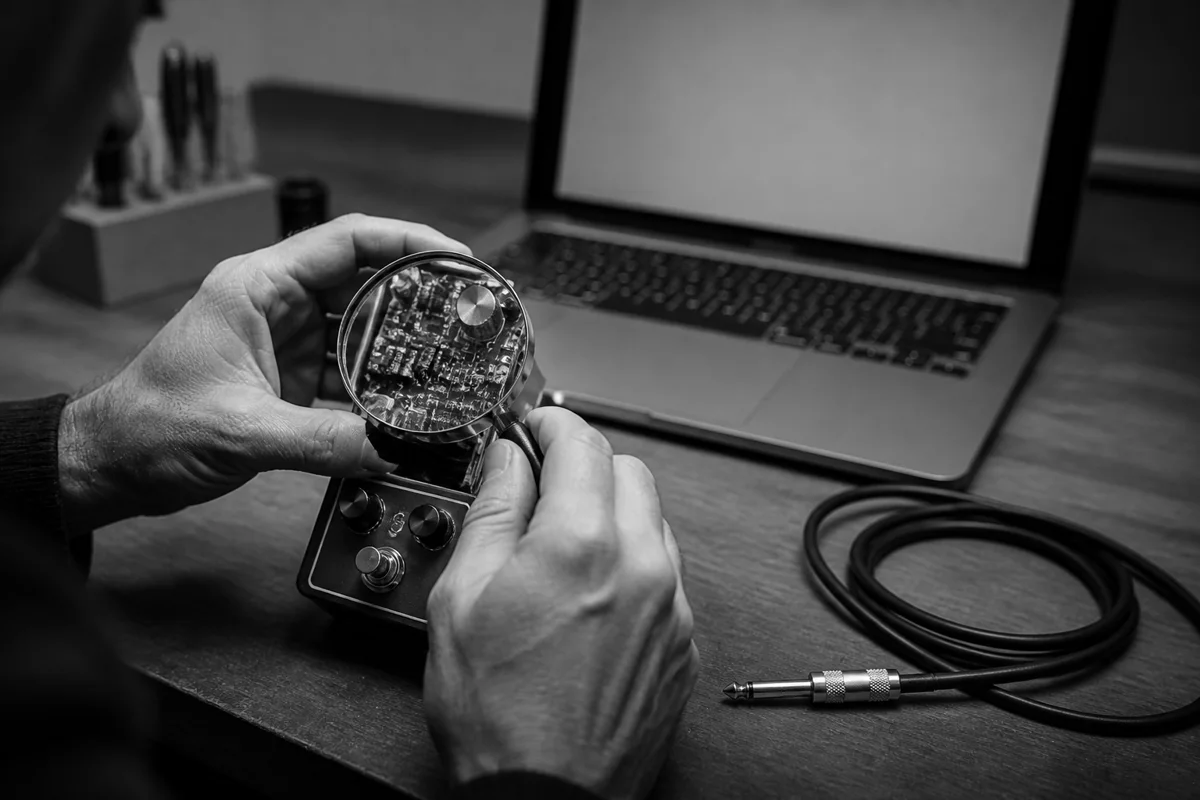
Linus Torvalds used Google's Antigravity coding assistant to build a Python audio visualizer for AudioNoise, his hobby project involving guitar pedals and random digital effects. The creator of Linux admitted that he knew little Python and let the model produce the tool after abandoning his usual search-and-copy routine. His experiment followed an earlier qualification. He was comfortable with so-called vibe coding when the result was kept away from work that carries serious consequences. A small visualizer for a personal electronics project met that boundary.
The episode has been celebrated as permission from one of programming's highest authorities. His authority, however, comes from knowing where the shortcut ends. Torvalds can inspect behavior, recognize a limited task, discard a bad result, and keep generated Python far from the kernel that runs servers and machines around the world. A beginner using the same assistant sees fluent code without the decades of judgment that make the experiment modest. Vibe coding sells the pleasure of obtaining software before acquiring the knowledge needed to evaluate it. In Torvalds's hands, the model fills a gap inside an already disciplined practice. The public lesson will be less careful if his name becomes an endorsement detached from the workbench, the guitar pedal, and the decision that this particular program was allowed to fail.

Hupo, a Singapore startup backed by Meta, has grown after pivoting from mental wellness into AI sales coaching for banks, insurers, and financial services firms, TechCrunch reported on January 12th. The company began as Ami, a platform about pressure, habits, and behavior change. Its current product listens to sales conversations, trains on financial products and common objections, and gives workers coaching inside regulated sales environments where managers cannot sit in on every call.
The sales therapist moves the vocabulary of care into the machinery of persuasion. Resilience, confidence, feedback, and performance once belonged to training rooms, sports psychology, and the softer edges of corporate wellness. Hupo places those words beside insurance scripts, banking products, compliance rules, and targets. The worker is helped, but the help is aimed at conversion. A hesitant employee receives guidance at the moment of pressure, while the institution receives a more consistent voice speaking to the customer. The old wellness platform asked how a person handles stress. The new coaching system asks how that stress can be shaped into a better close.

Google introduced the Universal Commerce Protocol, an open standard designed to let AI shopping agents move through product discovery, checkout, and customer service across different retailers. Shopify, Etsy, Wayfair, Target, and Walmart helped develop it. Google plans to use the protocol in Search's AI Mode and Gemini, where eligible shoppers in the United States will be able to buy from retailers without leaving the conversation. Payment and shipping details can pass from a saved wallet into the transaction while brands offer discounts during the recommendation itself.
The protocol gives conversation a cash register. A shopper can describe a room, a budget, and a habit, then receive a product and complete the purchase inside the same answer. Search once exposed a row of links whose differences could be compared. The agent reduces that field to a recommendation shaped by merchant data, advertising offers, wallet access, and rules written into the protocol. Convenience depends on how quietly those interests are combined. Retailers gain a route into the answer, Google retains the interface, and the customer contributes enough personal detail to make the suggestion feel unusually apt. The final click may disappear, but consent still has to occur somewhere. It will be buried in the moment when a helpful sentence becomes an order confirmation.

Larian Studios said it would not use generative AI for concept art or writing, The Verge reported around the studio's January 9th Reddit AMA after the success of Baldur's Gate 3. The statement matters because game production is under pressure from tools that promise cheaper drafts, faster assets, and endless variations. Larian did not reject software as such. It drew a line around the parts of the game where voice, image, character, and world-building carry the signature of human labor.
The refused shortcut has become a public credential. In a field where publishers can hide automation inside pipelines, a studio's promise of human authorship now works like a mark of origin. Players may never see the internal documents that prove it, but they understand the difference between a world assembled from convenient averages and one argued over by writers, artists, designers, actors, and editors. That difference is economic as much as aesthetic. Refusing generative art and writing means accepting slower labor, higher costs, and fewer disposable variants. It also tells the audience where to place credit when a character speaks, a quest turns, or a fictional city feels made rather than filled.

AI collectibles appeared across CES as companies tried to turn figurines, desk toys, and licensed characters into objects that can speak, remember preferences, and respond to owners, The Verge reported on January 9th. Products such as Buddyo and Heymates framed the collectible as an interactive companion rather than a static ornament. The pitch borrows from Funko Pops, Amiibo, smart speakers, and companion chatbots, then compresses them into a small figure meant to sit on a shelf and answer back.
The speaking object changes the strange contract of collecting. A figurine used to ask for display, care, scarcity, and recognition from other fans. Its silence was part of its dignity. Adding AI gives the object a service layer and gives the company a way to keep charging after the purchase. The collector no longer owns only a character likeness. He owns a device with firmware, accounts, updates, permissions, possible subscriptions, and a voice shaped by licensing rules. Fandom becomes easier to monetize because affection now has an interface. The shelf item can greet, prompt, flatter, and collect small signals from the room where it once merely gathered dust.

The European Commission ordered X to retain documents related to Grok through the end of 2026 as regulators examined the chatbot's ability to generate nonconsensual undressing images, The Verge reported on January 8th, citing Reuters. The same week, UK officials and American lawmakers pressed Apple, Google, and X over the feature and its availability through app stores. The scandal is no longer confined to a model's output. It has become a chain of distribution, custody, logs, screenshots, and corporate responsibility.
The undressing bot exposes the old weakness of platform moderation in a sharper form. Harm can now be produced inside the product, by a user who needs no editing skill and by a system marketed as entertainment or assistance. The victim may never touch the tool, yet the tool uses her image as material. Regulators understand why document retention matters. A synthetic violation leaves traces in prompts, safety filters, moderation queues, app updates, internal warnings, and decisions to keep the feature alive. The image may be fake. The administrative trail around it is real, and it points back to companies that approved the room where the fake body was made.

OpenAI launched ChatGPT Health on January 7th, The Verge reported, encouraging users to connect medical records while warning that the product is not intended for diagnosis or treatment. The service can organize records, explain lab results, prepare questions for doctors, and store health context inside a familiar chat interface. OpenAI also introduced healthcare products for clinical organizations, with templates for discharge summaries, patient instructions, and evidence review. The company is entering medicine through two doors at once: the consumer account and the institutional workflow.
The health account turns medical memory into something portable, conversational, and unusually tempting. A patient who has struggled with portals, PDFs, lab codes, and specialist notes can now ask a system to translate the archive into usable language. That relief has a price. The body becomes another data source waiting to be synchronized, summarized, and kept ready for the next prompt. The interface may say it is not a doctor, but it sits beside the appointment, rehearses the questions, stores the history, and prepares the patient to speak. Medicine does not enter the chatbot as a theory. It arrives as allergies, scans, discharge instructions, and the small panic of an unread result.

A viral Reddit confession about a food delivery app exploiting drivers turned out to be AI-generated, TechCrunch reported on January 6th. The post claimed to come from a drunk developer using public library Wi-Fi to expose company fraud. It reached Reddit's front page, gathered more than 87,000 upvotes, and spread to X with millions of impressions. When Platformer journalist Casey Newton tried to verify the source, the supposed whistleblower sent a fake employee badge and an 18-page internal document describing a driver desperation score. The evidence collapsed under scrutiny.
The false whistleblower is a new figure in the economy of outrage. The story worked because it resembled real abuse. Delivery platforms have been sued over tips, wages, and opaque algorithms, so the fake confession arrived with the right moral shape. Generative tools lowered the cost of producing supporting material: a badge, a technical document, a plausible voice, a scene of nervous exposure. Verification still mattered, but it arrived after the public had already rehearsed belief. The hoax did not need to persuade everyone forever. It only needed to borrow credibility long enough for anger to circulate as fact.
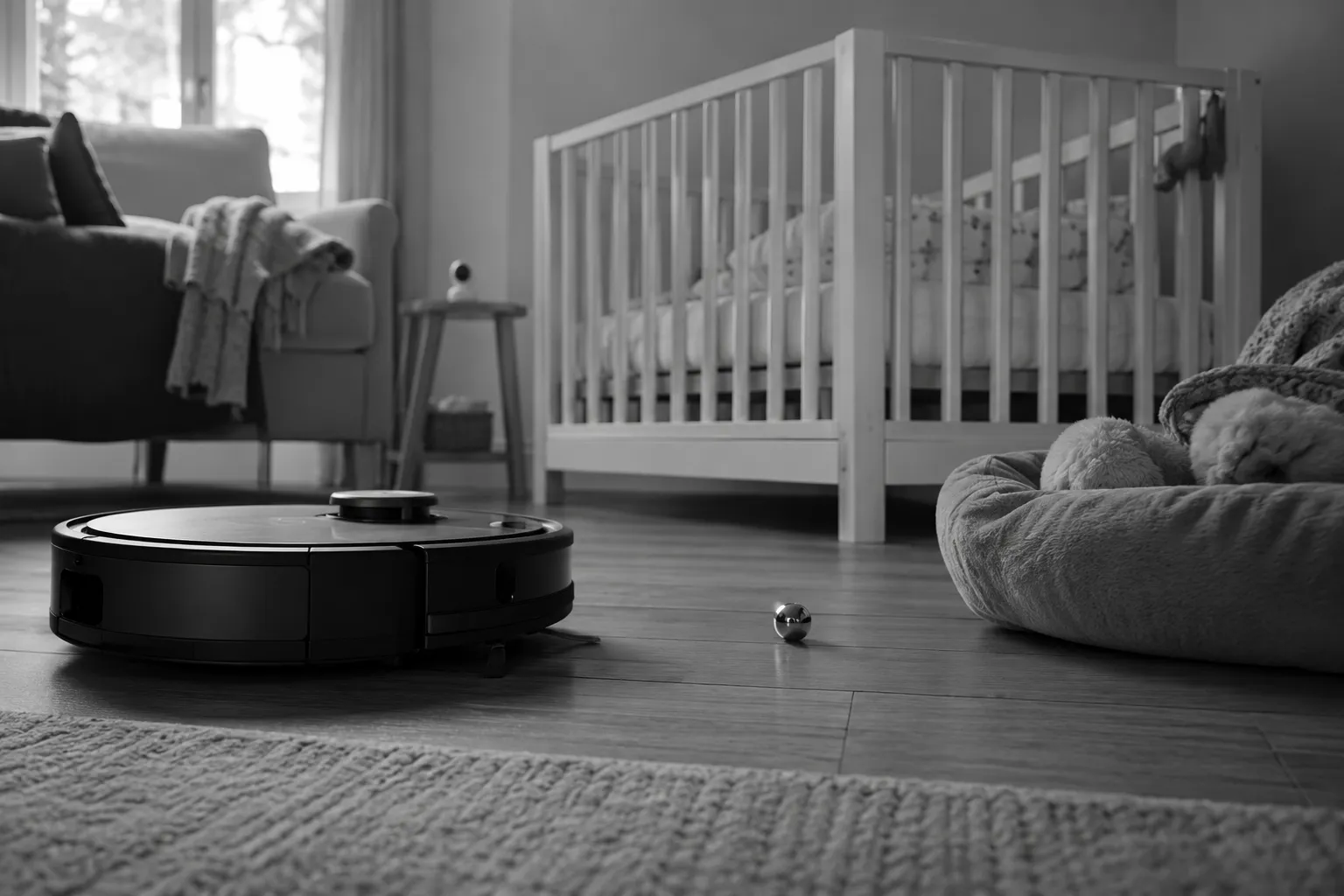
Narwal introduced robot vacuums with AI features that can monitor pets, recognize misplaced toys, switch to quiet mode near a crib, and identify valuable objects such as jewelry, TechCrunch reported on January 5th. The company's Flow 2 uses two 1080p cameras and object-recognition models to map a home. It first tries to identify objects locally, then sends data to the cloud when it cannot find a match. The product is sold as cleaning equipment, but its new pitch depends on watching the domestic floor as a field of signs.
The domestic sensor enters the house low to the ground. It sees what falls, what moves, what rests, and what the family forgot to pick up. That position is useful because the home is full of small emergencies: a pet out of place, a toy near a crib, a ring under a table, dirt that needs a second pass. It is also intimate because those details form a household biography. The vacuum learns the crib's location, the pet's corner, the difference between clutter and value, and the route between them. Assistance arrives as classification. The room is cleaned, but it is also translated into zones, objects, habits, and alerts.
