
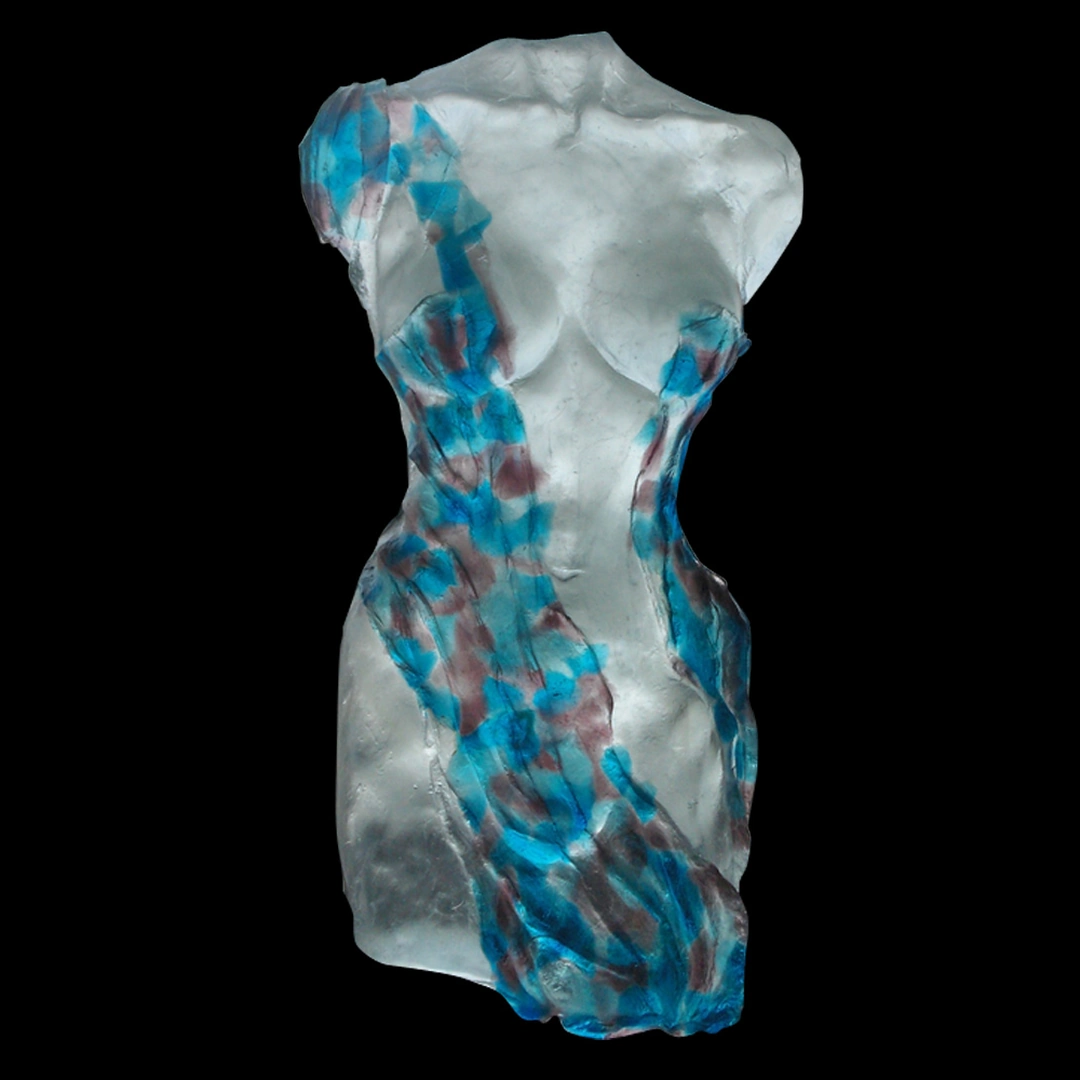
When I was first approached about writing this appreciation of a piece at the Cincinnati Art Museum, I was absolutely confident in my choice. As many times as I had entered through those majestic doors, I knew where I was first drawn. No matter what new exhibit had just opened, I had to make my way to their Classical collection of Greek, Roman, and Near Eastern sculpture. The portrait busts enticed me. How had that sculptor, 2000 plus years ago, chosen to model a nose, a brow, a cheekbone? As a sculptor myself, I am always searching how to simplify yet, at the same time, how to bring power and subtleness to the volumes I create.
As I walked into the hall, I nodded at the tiny (1) Cycladic Female as a warm smile crept over my face. She dates from 2500 BC. How pure, how pared down, how evocative she is. All that is essential is there. To travel into the mind of that sculptor is to wonder how those shapes were arrived at. My journey was beginning! I passed by and then stopped to take a deeper look at (2) the Fragmentary Head of a King from 14 th century B.C. His strong, youthful face; round yet firm, shows the sculptor’s intuitive sensibility. The one remaining eye holds me in its gaze that comes from almost 3500 years ago. Simplicity of form is definitely better.
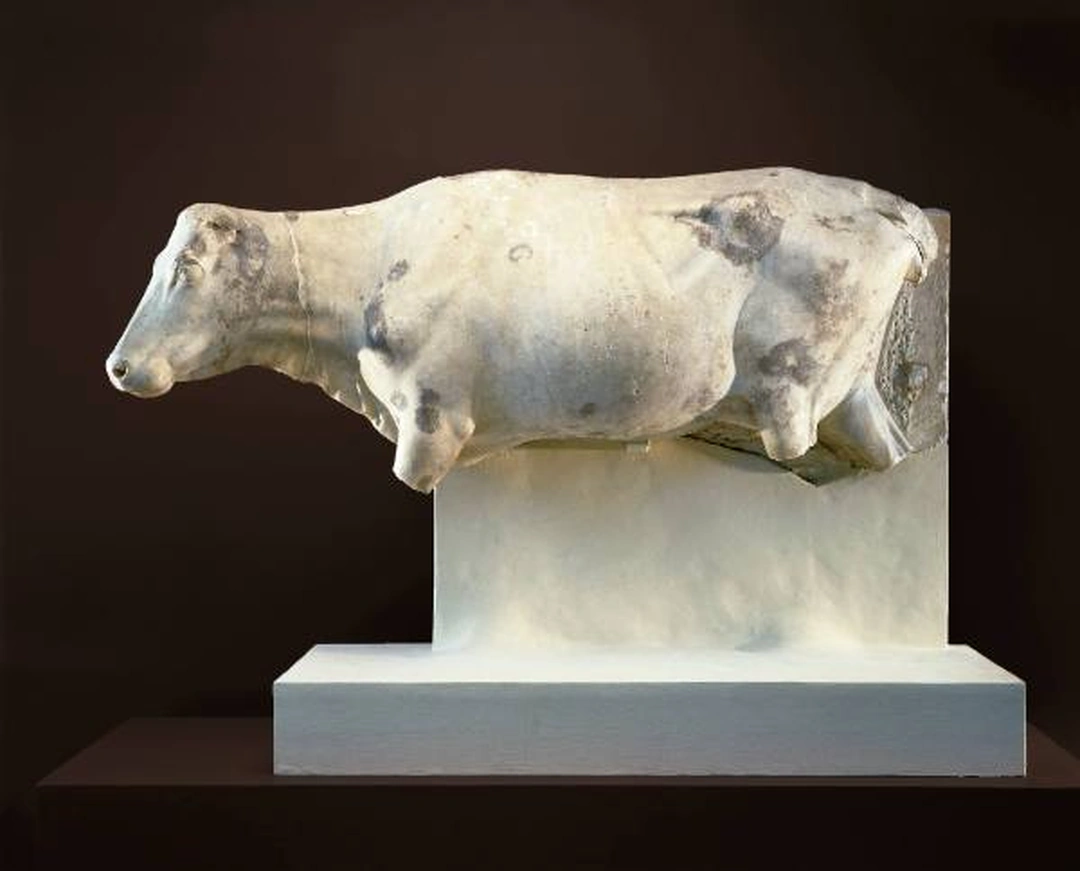
I’m on my way to my favorite piece, the Sacrificial Heifer, 1st century A. D. Roman. But, before I arrive, my eye is caught by the elegant yet strong folds of drapery on a tiny Greek bronze (3) of Asklepios from 150 -50 B. C. The bottom folds are so minimally constructed that they allow the structure of his leg to come through. How is this done, I ask myself, and then linger a few moments to figure out the secret. A bit of excess cloth rippled along his thigh is the answer!
As I walk on, I am grabbed by the gaze of the (4) Greek Head of a Mourning Woman from 350 B. C. Those eyes, with their downward look, have such tenderness and warmth. Her nose and part of her mouth are gone, but what remains is the soul of this woman. The sculptor has brought our attention to her gentle gaze by making both sides of her hairdo a decorative equation that forces our own gaze to look elsewhere for volumetric excitement and that is when one is captivated by her eyes.
On I go, anxious to connect with “My Heifer”, but I am stopped by the (5) Relief of a Persian Guard, 480 B. C., Persepolis. His headdress, with play of light and shadow, catches my eye; but it is his strong forward gaze and curve of his aquiline nose that pull me in. The decorative, concentric curls of his hair and his full beard only contribute to make his eye, nose, and mouth the captivating areas of this ancient relief. Once again, I take it all in and thank this long ago sculptor for giving me such insights.
Suddenly, I must stop. I am entranced by the (6) Relief of Mithras Slaying the Bull, Roman, 150 – 200 A. D. His flying cloak draws me in to this exciting composition. My gaze wanders down to his outstretched leg, then up to his arm holding the dagger that’s plunged into the neck of the strong, struggling bull. The beauty in the simplified volumes of the bull’s head and neck are as alive today as they were almost 2000 years ago. The struggle and torment are there. One has to literally avert one’s eyes. As I do this, my eyes rest upon the personification of the sun, wearing a halo of triangular shaped rays. He holds my gaze for a moment, but I’m torn. I must look again at the bull and his incredible struggle.











Comments powered by Talkyard.