

For years a particular painting, sculpture, a piece of jewelry or a piece of furniture was a badge amongst the cognoscenti-modernism was like a secret club.
In conjunction with its exhibit, “From the Village to Vogue: The Modernist Jewelry of Art Smith” (Feb. 22, 2014 – May 18,2014), the Cincinnati Art Museum recently hosted a symposium, “What’s So Great About Modernism?” on April 12, 2014. The daylong event featured a series of lectures followed by a panel discussion. The lectures ranged from survey to expository and provided an excellent introduction to the subject and nature of Modernism and specifically Midcentury Modernism.
The first lecture, “Welcome, What is Modernism?”, was presented by Cynthia Amnéus, Chief Curator and Curator of Fashion Arts and Textiles, Cincinnati Art Museum. Deftly distilling the broad subject across many disciplines, Amnéus traced the Modern movement to some of its earliest influences such as William Morris/Arts and Crafts in England; Kolomon Moser and Joseph Hoffman/Wiener Werkstätte in Austria; and the dictum, “Form Follows Function” and work of the Chicago architect, Louis Sullivan (a father of the modern skyscraper) in America. Late 19th-century/ early 20th-century societal and technological changes set the stage for Modernism.
From across art, music, architecture and design, a nascent movement grew that placed itself in the present, looked forward and rejected the past. Giving a brief overview of Modernism in general, Amnéus provided a foundation for greater understanding of Midcentury Modernism.
Secondly, Dr. Ann E. Gibson, Professor Emerita, University of Delaware, gave a lecture, “Focus on Painting and Sculpture”. Attempting to condense a vast subject in a relatively short period of time, Dr. Gibson presented both painting and sculpture from the late modernist period to the late 1970’s. The lecture focused primarily on both Abstract Expression (the first American art to receive universal acclaim) and Pop Art and the contemporaneous criticism and acceptance of each. Emphasized was the non-representational, non-historic nature of abstract expressionism that was so championed by the critic Clement Greenberg. Dr. Gibson tried earnestly to place the work of studio jeweler, Art Smith, in context to mixed results.
Smith’s jewelry was given greater context in the whirlwind survey presented by Jeannine Falino, Adjunct Curator, Museum of Arts and Design, in “Focus on Jewelry and Craft”. Critic Blanche Brown noted that diamonds were the badge of the Philistine and they were seemingly not to be found in the work of studio jewelers of the midcentury. Taking a modernist approach, strongly influenced by biomorphicism and organic design, these artisans crafted jewelry, or wearable art, from copper, brass, silver, glass and gemstones and other more “humble” materials. Of particular interest was the way in which these jewelry creations not only took into account the form of the wearer but at times “required” the wearer’s form to complete the totality of the design as best exemplified by many of Smith’s creations. Beginning with examples by a “father” of modern studio jewelry, sculptor/artist Alexander Calder, many of the greats of the studio jewelry movement such as Arieto “Harry” Bertoia, Margaret De Patta, Merry Renk, Claire Falkenstein, Sam Kramer, Jay DeFeo and others were highlighted.
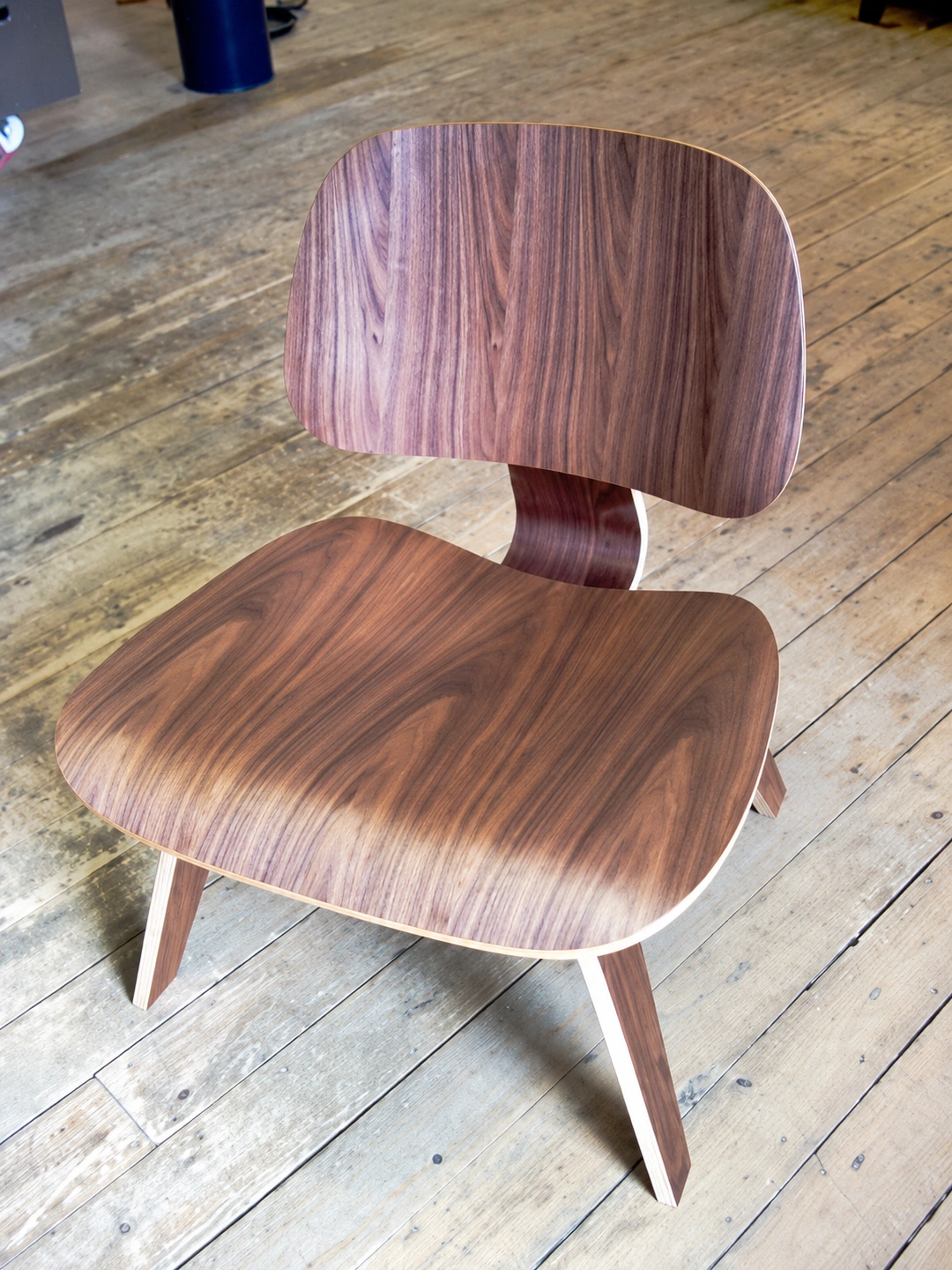
Covering the area of Midcentury Modern most familiar to many was Kevin M. Tucker, The Margot B. Perot Senior Curator of Decorative Arts and Design, Dallas Museum of Art, as he presented “Focus on Architecture and Home Furnishings”. He noted that midcentury modern design was driven by the boom of postwar middle class consumerism. While much of the movement owes its foundations to the earlier International and Bauhaus movements, Mr. Tucker pointed out that the some of the earliest midcentury designs sprang from the biomorphic and the organic such as the works of Charles and Ray Eames and Eero Saarinen. Moving from the Streamline and Machine Age designs of the late 1930’s was like from machines to amoebas: technology to nature. Reviewing the various modern movements from International/Bauhaus, Machine Age and Streamline Modernism, Biomorphic/Organic, Pop Design, Post-Modernism, etc. one could see that a contrast exists between those works of art/design that were designed and conceived as a whole versus those works that merely modified the existing via styling such as much of Streamlined Age and didn’t create anything new. A totality of design resulted in a longevity among the works that the simply styled ones lacked in their datedness.
Taking the lectures of the symposium as a whole, it is interesting to note the interdependency of art and design as one discipline informs and influences another. In response to a question whether modern design had failed in its tenet to provide affordable democratic design to the masses, Mr. Tucker cited Ikea as an example of a success. His points regarding the legacies of midcentury modern design such as open plan, embrace and exploitation of new materials and technologies perhaps encapsulated one answer as to what’s so great about Midcentury Modernism.










Comments powered by Talkyard.