 Go to English Version
When we arrive in a city by the last light of day, our first concern is finding somewhere to spend the night. Owning a private space is a privilege reserved for those who arrived long before us. My history with Cincinnati began in 2017. I spent a few days here, kept coming back for years, and a couple of autumns ago I finally settled in. I did so with the familiar, almost homely feeling of entering a game that had begun a very long time before. Every property had an owner, and one had to enter without arrogance, making as little noise as possible. It is a feeling shared by many exiles, and I bring it up with some reservation, because my own experience has taken a different course, because this city has treated me like a prince.
Over the years, one might end up buying some property—it needn't be a skyscraper—and the next wave of newcomers might find themselves paying to share it. We could take our profits to Egypt to see the pyramids, or to Greece to look at rocks, as my dear nephew likes to say. Then again, perhaps things won't quite work out that way, because the city is full of people born here who don't even have a place to sit. First of all, you need talent, and a nose for business.
One way to practice without staking our lives on the outcome is to play Monopoly, one of the most recognizable board games in the world, where what you learn, above all, is how to lose everything. How to win, only rarely. What better combination than a real city and a Monopoly game that grants us the privilege of buying the whole thing.
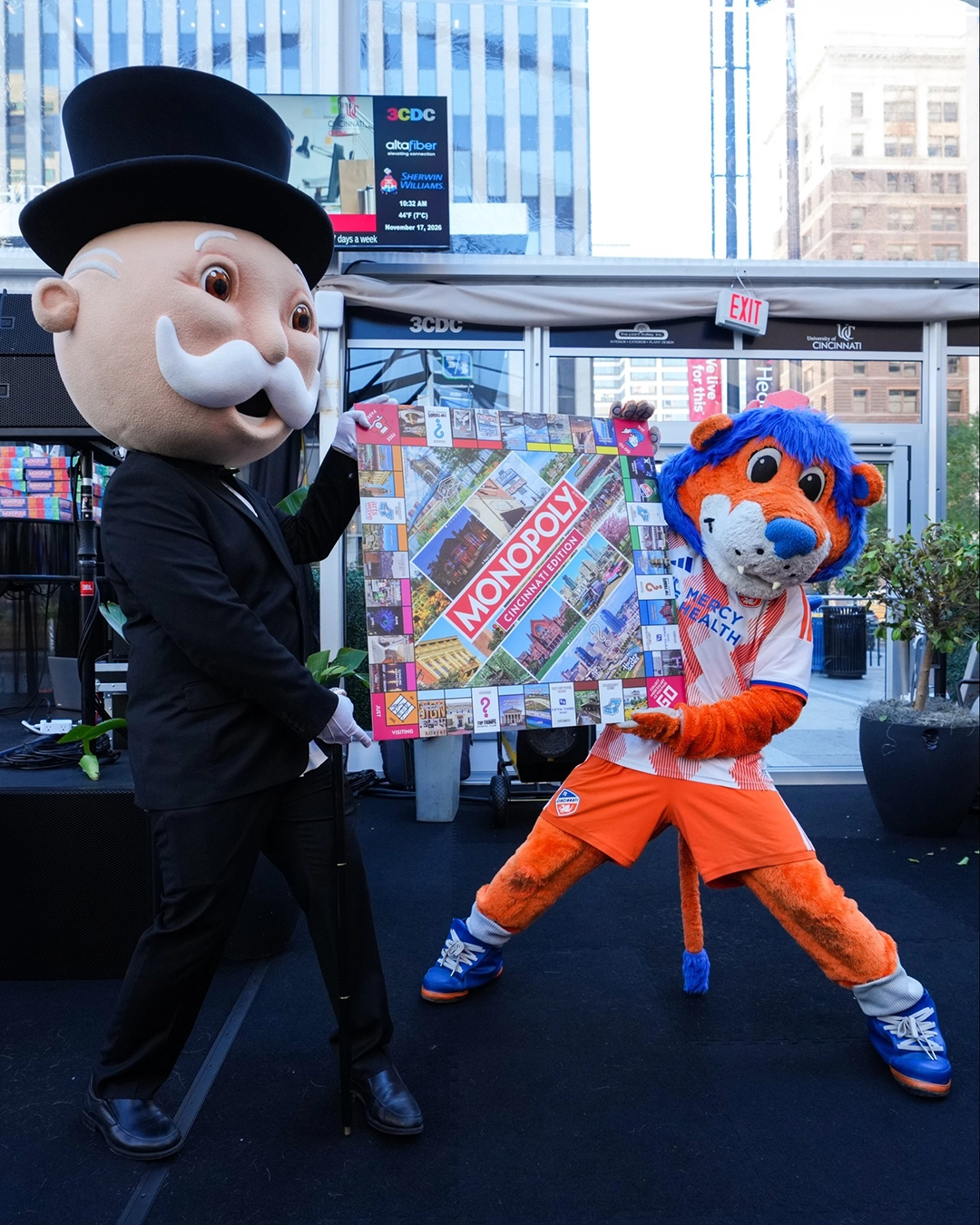
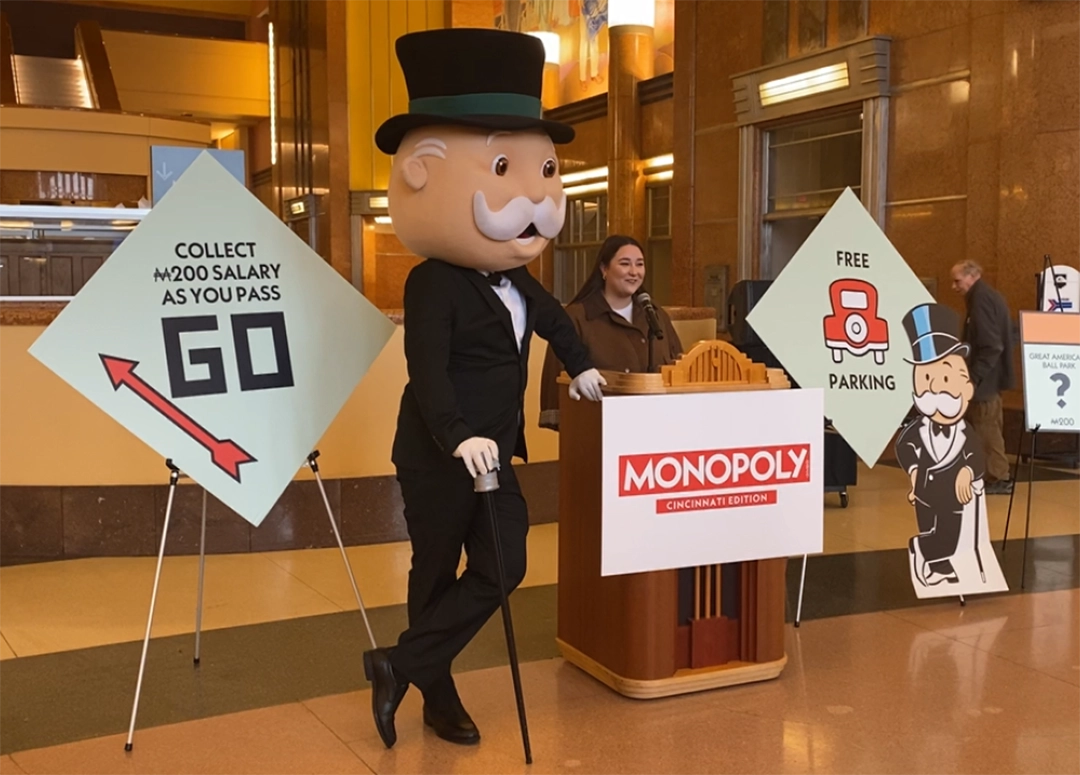
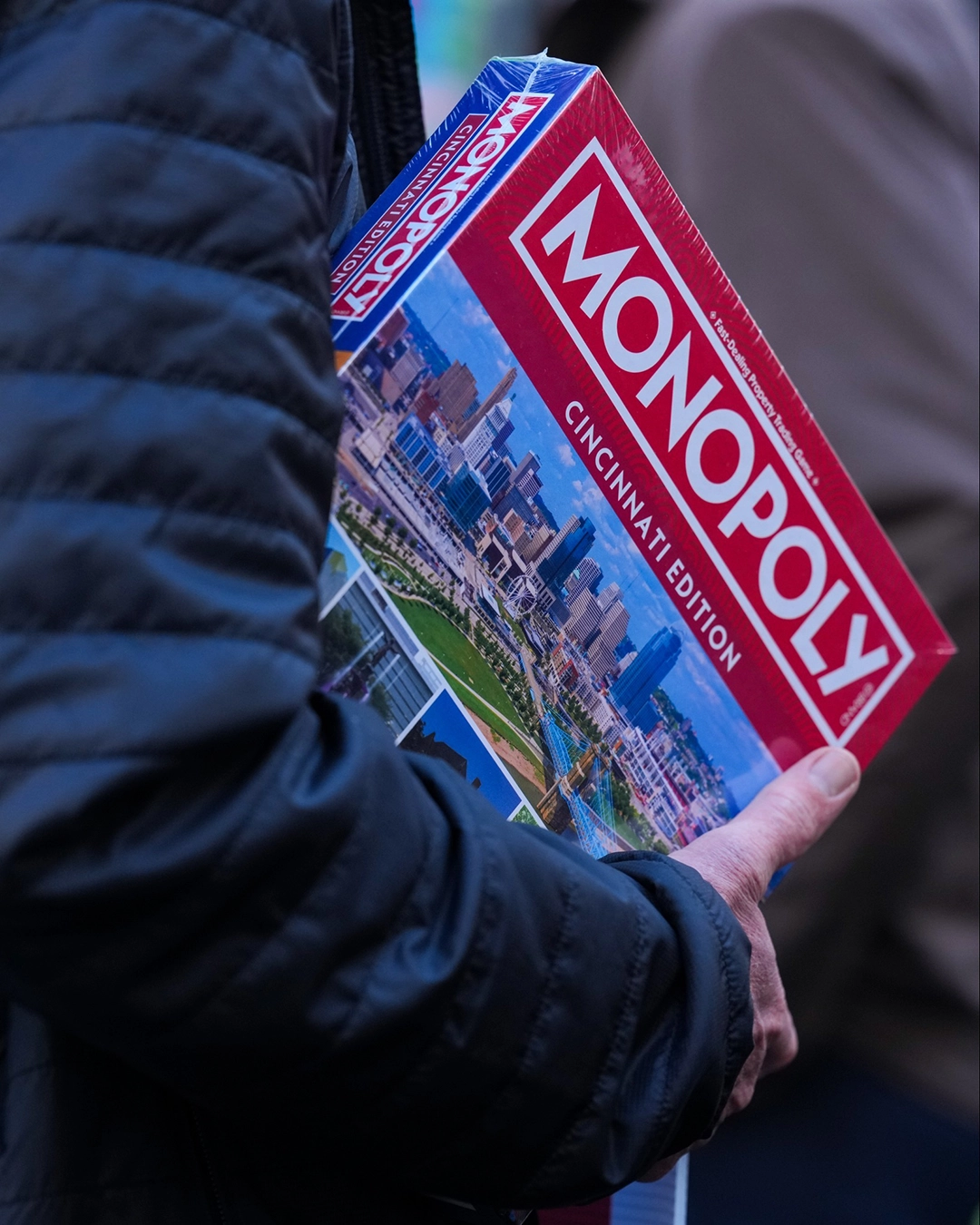
And here is the news. Cincinnati, the Queen City, has just joined the Monopoly universe. On November 17, 2026, an edition dedicated to the city was officially unveiled, with its landmarks, parks, cultural institutions, popular events, and businesses transformed into properties that players can buy, trade, and exploit for profit.
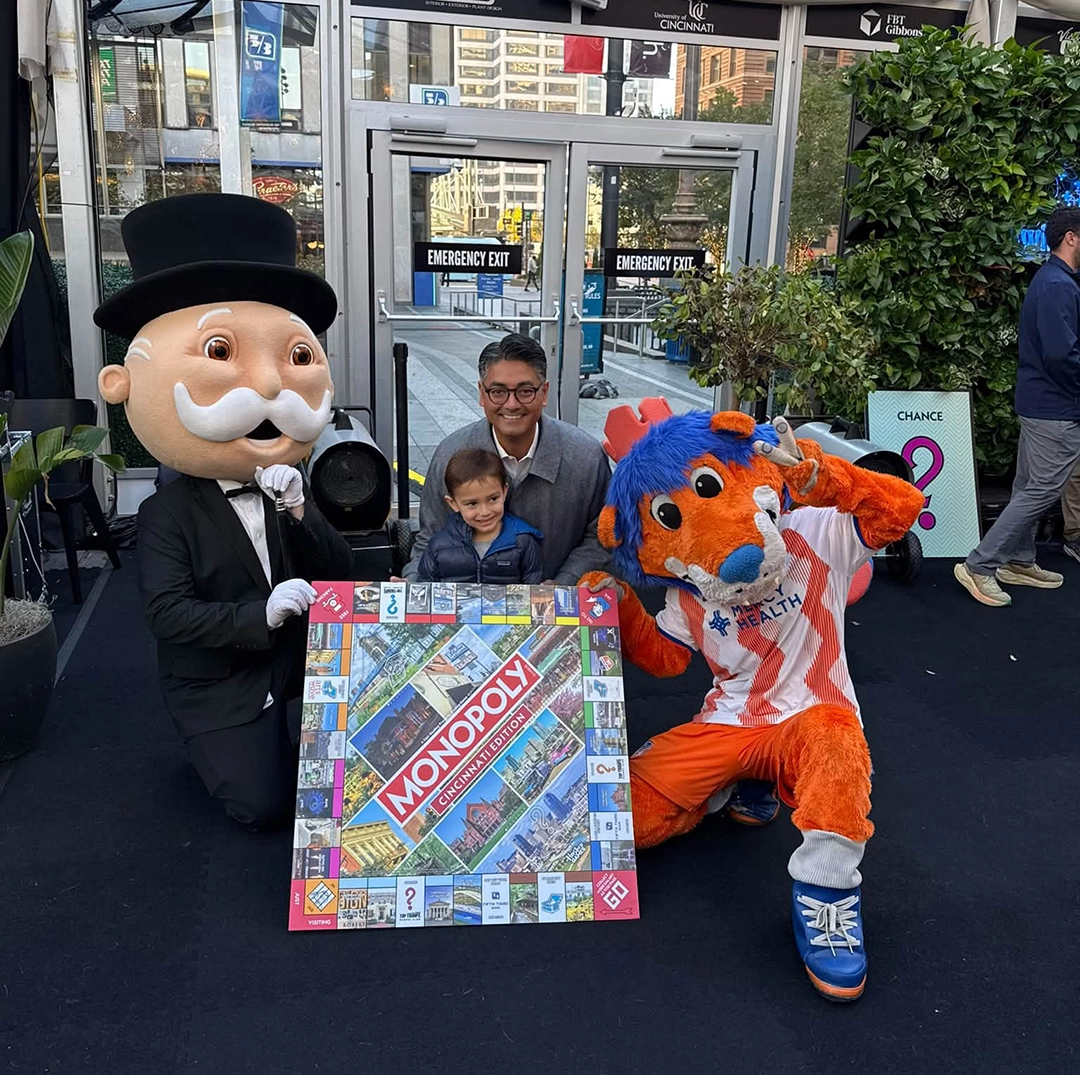
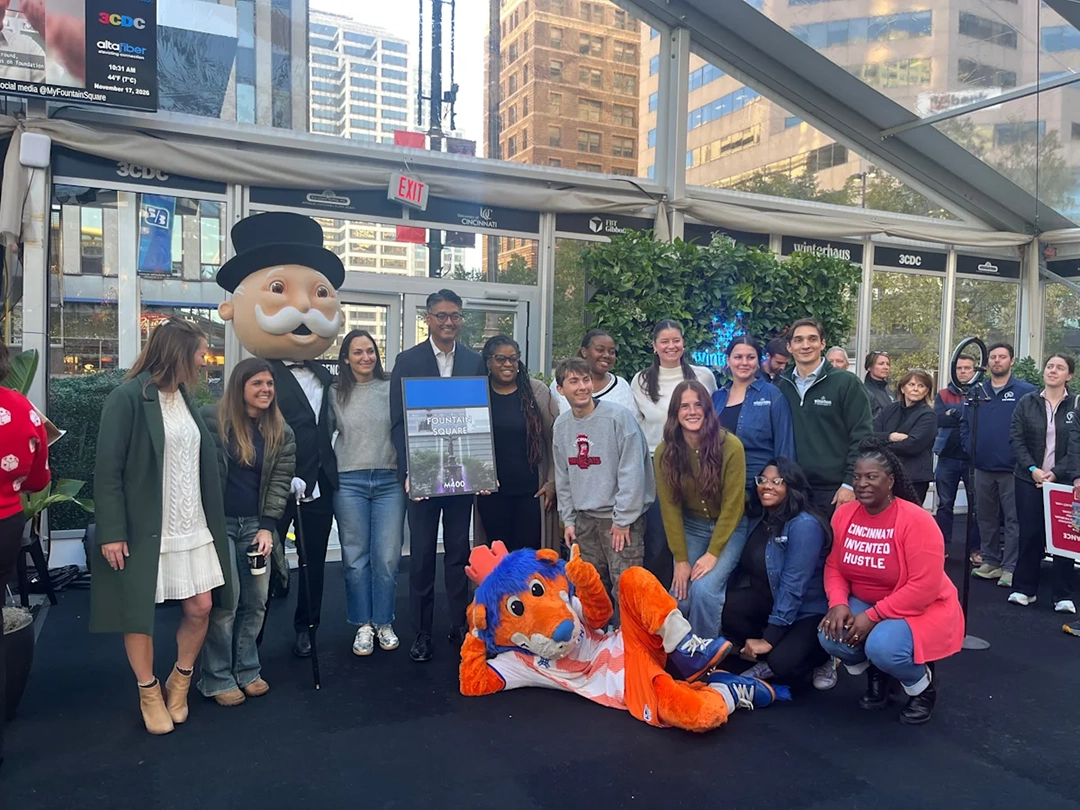
Cincinnati Mayor Aftab Pureval at the unveiling of the new Cincinnati-themed Monopoly board at Fountain Square in Downtown Cincinnati Tuesday. By Cincinnati Enquirer | Yahoo Life
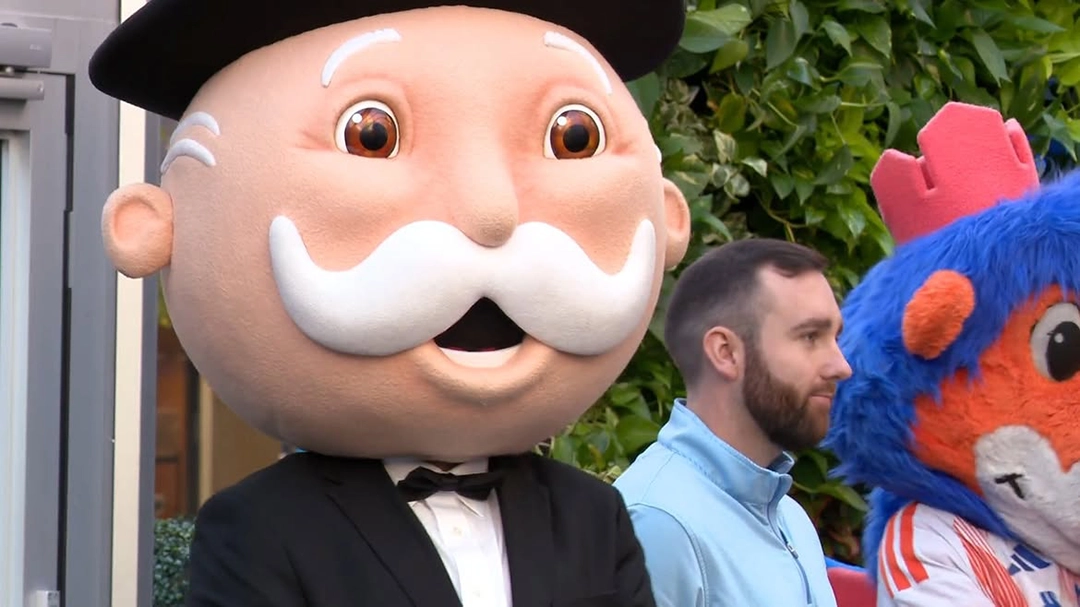
Several photographs reached me showing Mayor Aftab Pureval posing in Fountain Square beside a gentleman dressed as Mr. Monopoly, complete with handlebar mustache and top hat, standing behind a forty-dollar board.
The traditional Monopoly board reproduces the streets and properties of Atlantic City, New Jersey. Its squares have different values, identified by groups of colors. The most expensive are Park Place and Boardwalk, at the very top of the game's real-estate hierarchy. Over time, however, Monopoly has become a thematic platform, with editions devoted to cities, institutions, sports teams, and fictional universes. The brand belongs to Hasbro, but many American geographic editions are developed by licensees, such as Top Trumps USA, to name one.
When Lizzie Magie, of Brentwood, Maryland, patented the game on January 5, 1904, she did so with a purpose diametrically opposed to the one we now take for granted, where the winner takes everything and drives everyone else into ruin. And of course we find it amusing and instructive. It feels good to bankrupt the next fellow. Lizzie conceived the game precisely to expose that viciousness. To prevent everything from ending up in the hands of a single person, even in a game. Her board therefore came with two sets of rules, one for monopolists and another—the one she advocated—in which everyone benefited whenever someone created wealth. Parker Brothers bought her patent in 1935 for five hundred dollars, with no royalties, and relaunched the game with a single set of rules. The altruistic half fell by the wayside—some of my fellow Floridians would have considered it communist and unpatriotic. I cannot help imagining that poor seventy-year-old woman watching her righteous premonition become the favorite pastime of the very people she had sought to expose.
And so Monopoly, as we know it today, seems to be a game in which almost everyone loses. Perhaps a city can always come out ahead.
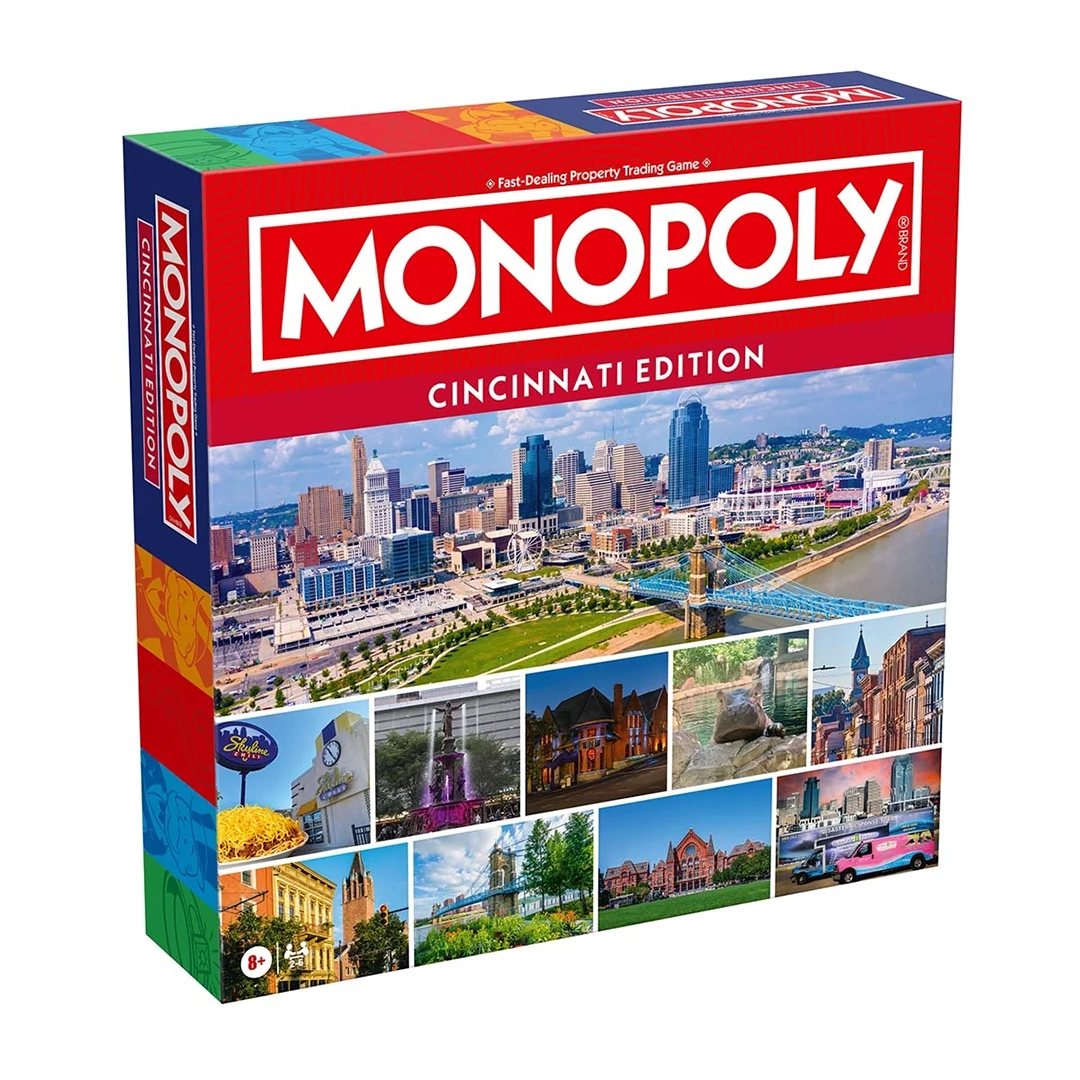
Courtesy of Top Trumps USA
Cincinnati, OH Monopoly Board Game
Availability: In Stock | $39.99 | Free Shipping
https://us.toptrumps.com/products/cincinnati-oh-monopoly-board-game
The official Cincinnati edition—licensed by Hasbro and produced by Top Trumps USA—has thirty-one squares and brings together a selection of the city's iconic places. For the mayor and many others, it is a source of pride. The first reactions, however, revealed a rather interesting controversy. Was the city really represented through what its inhabitants consider emblematic, or was the selection subordinated to the commercial interests of those involved in the project?
On the fourth day of a cold February in 2026, at the Cincinnati Museum Center, Sarah Bowman of Top Trumps USA invited Cincinnati residents to nominate places, restaurants, sports teams, schools, businesses, and even local jokes for inclusion on the board and its cards. The marketing departments of many local companies hurried out of there to submit their candidacies as quickly as possible.
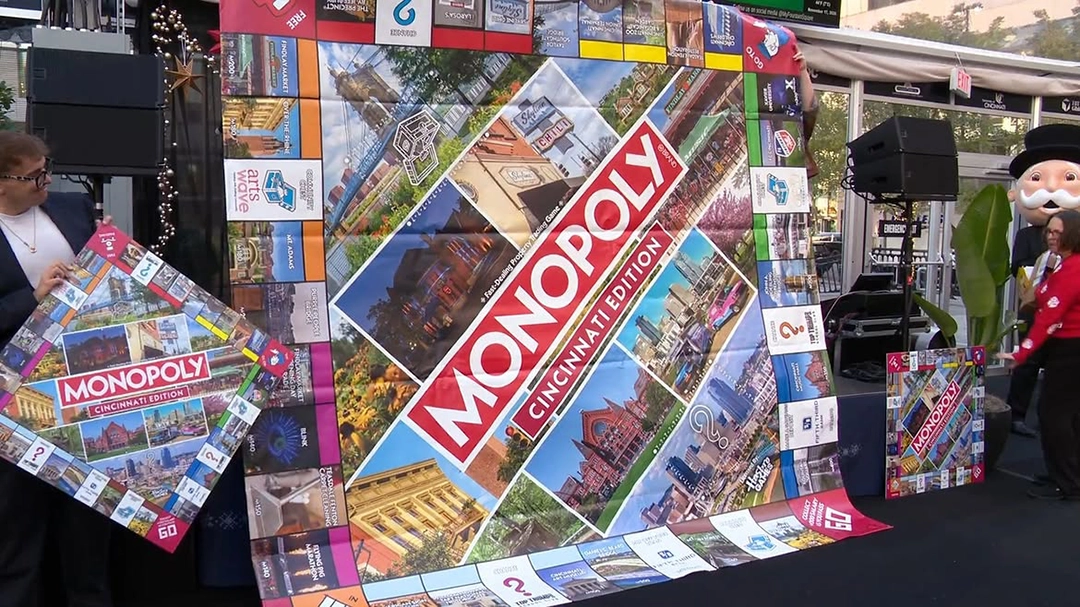
Your next family game night can be played Cincinnati style. The Queen City now has its own Monopoly board.
Local 12 WKRC-TV
Cincinnati's CBS affiliated news showcasing community, Local 12 personalities and great photographers from the Tri-State.
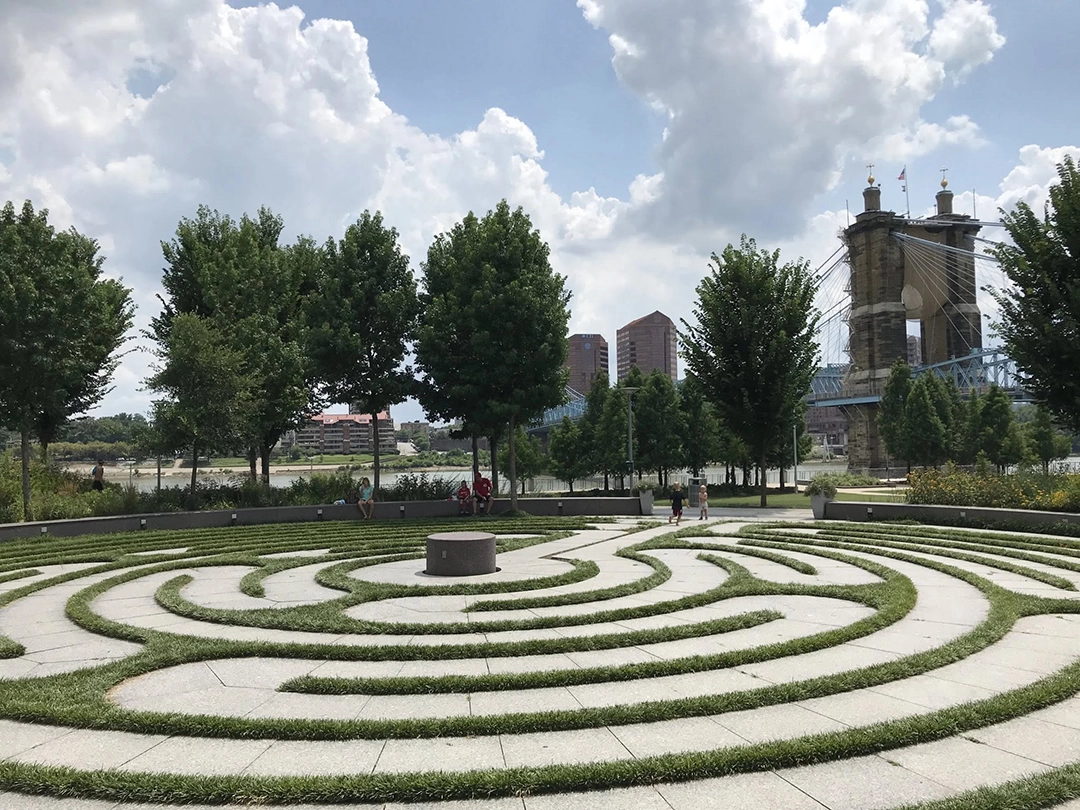
Metro, the streetcar, the Northern Kentucky transit authority, and the Butler County transit authority asked for votes to occupy the four railroad squares, in an email whose subject line probably read "Monopoly Railroad Vote." The four agencies made their case for the importance of public transportation. "Public transportation connects thousands of people to jobs, schools, healthcare, and community life every day." Truth be told, the appeal had something of a letter to Santa Claus about it. As it turns out, the final board doesn't feature a single bus. Where the railroads used to be, there are now four bridges—the Roebling, the Purple People, the Taylor-Southgate, and the Daniel C. Beard. Apparently, the city preferred the age-old adventure of crossing the river to going round and round inside its own limits. I understand. It's nothing against the streetcar. It's simply easier to get a good photograph of a bridge than of a bus that makes an appearance every now and then.
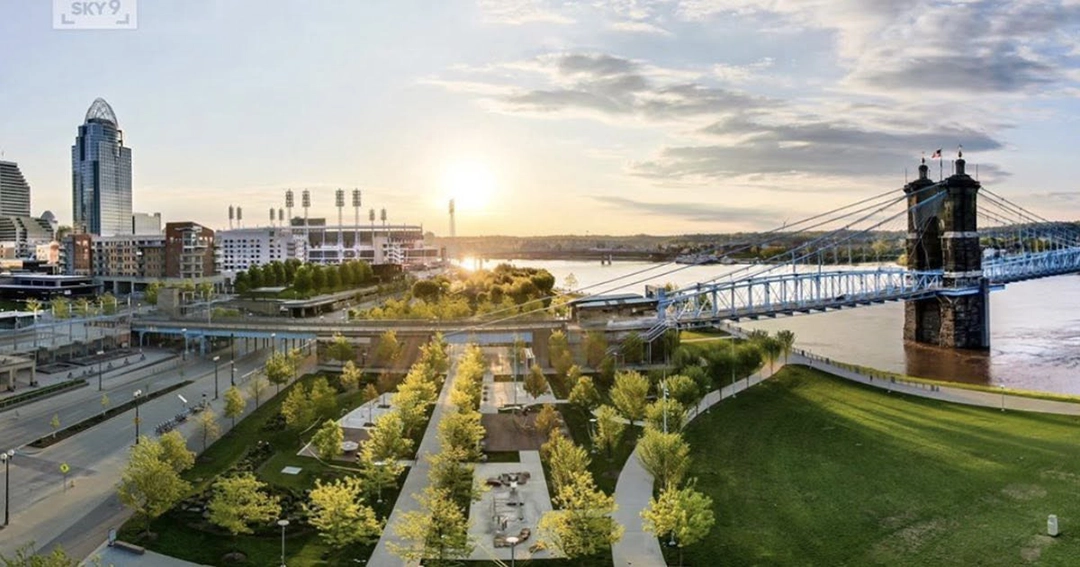
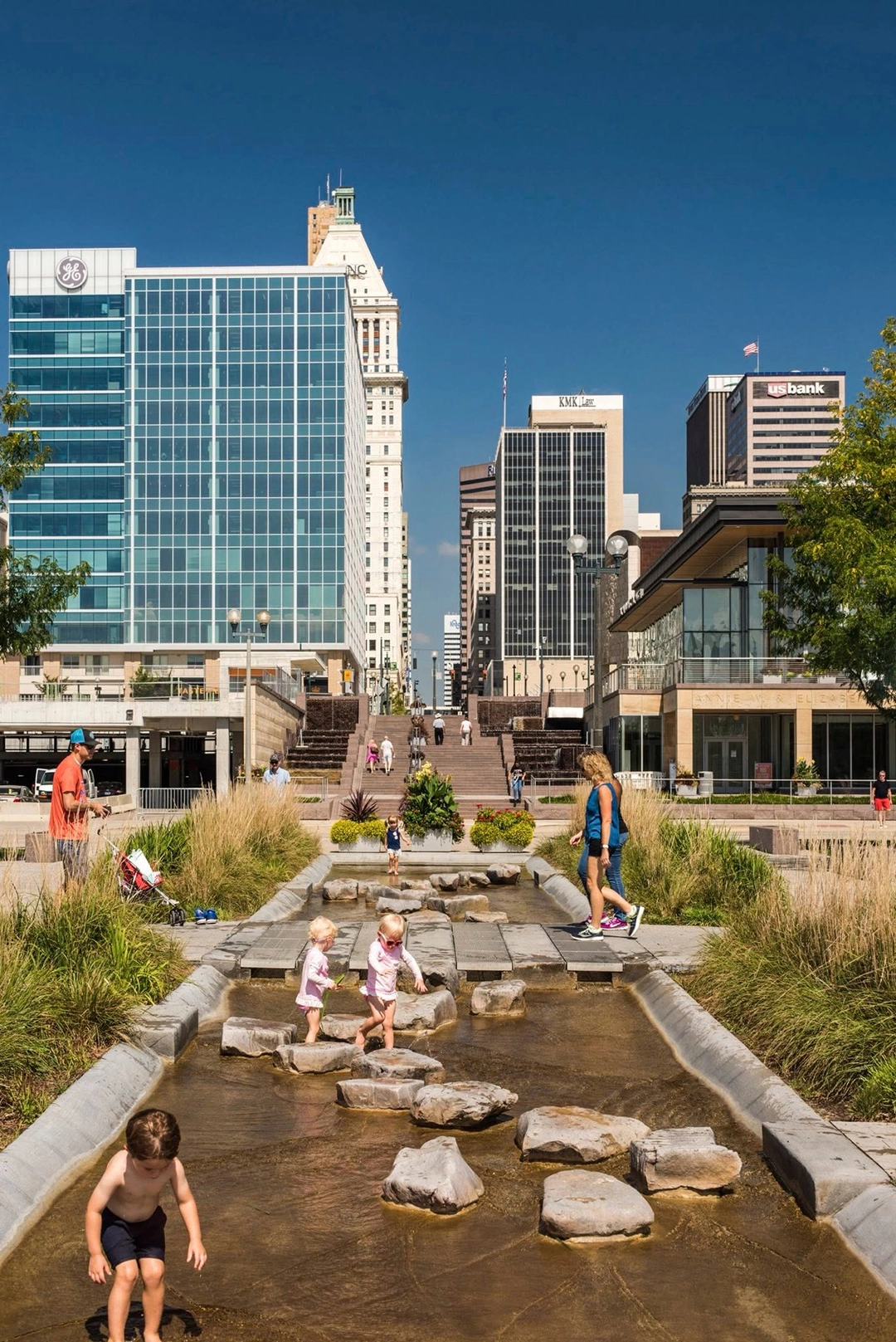
Smale Riverfront Park in Cincinnati
USA Today readers vote Smale Park second best riverwalk
https://www.wcpo.com/news/local-news/usa-today-readers-vote-smale-park-second-best-riverwalk
Reading the board raises a few questions for me. Who decides that a forest is worth less than a fountain? How much does a square cost? Who voted for the real-estate company? The answers lie in the price hierarchy.
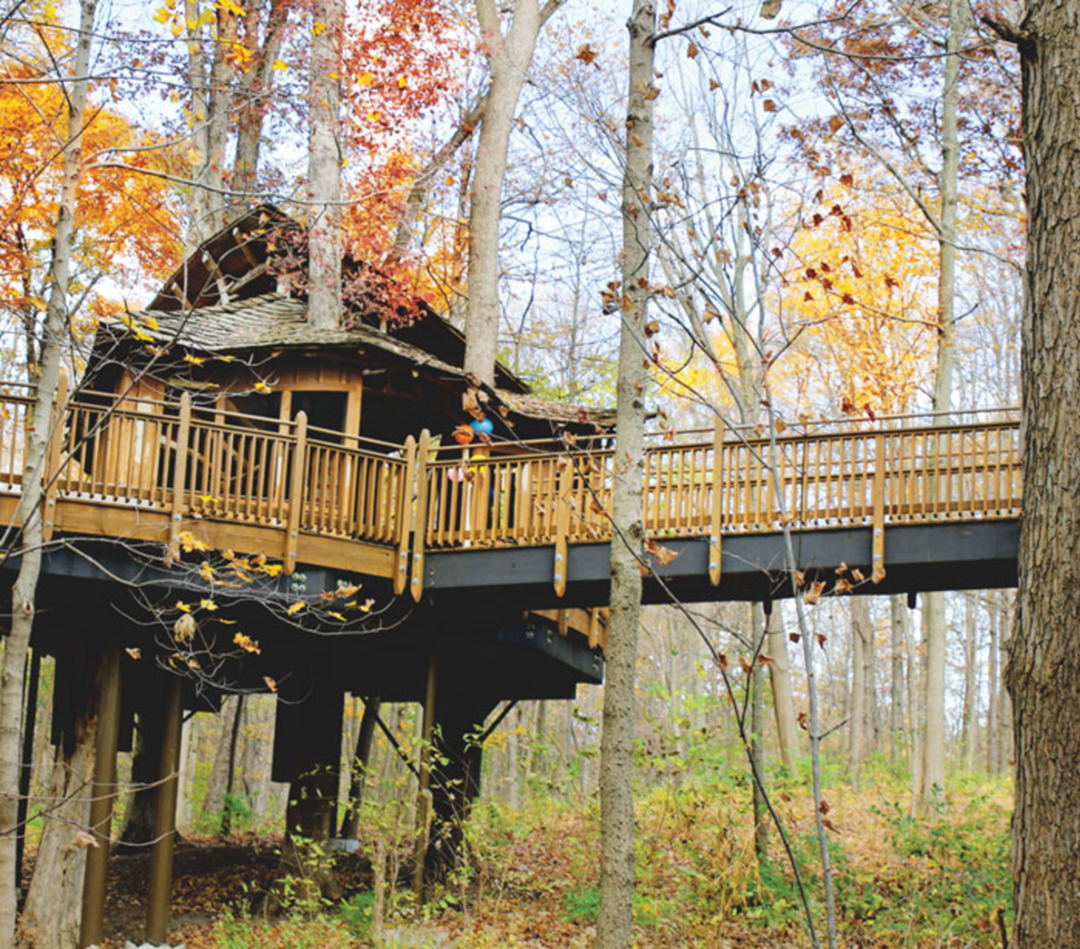
The two cheapest squares, the brown ones, are a park and a forest. Smale Riverfront Park bears the name of a former Procter & Gamble chief executive. In the spring of 2011, he donated twenty million dollars toward the construction of the park in memory of his wife, Phyllis, but died that same autumn, before the park opened. His name had to be added as well. Mt. Airy Forest was the Park Board's first purchase in 1911, 168 acres of exhausted farmland, and within ten years it had grown to more than a thousand. Men long forgotten planted a million trees there. Inside the forest stands an elevated house, built around twelve trees, with six ramps, paid for through donations. It is the only one in Ohio accessible by wheelchair. Opened in 2006, Everybody's Treehouse closed in January 2024 for repairs and reopened on September 25, 2026, less than two months before the Monopoly launch. Curiously, what belongs to everyone, the common good, is the cheapest thing on the board. Funny, isn't it.
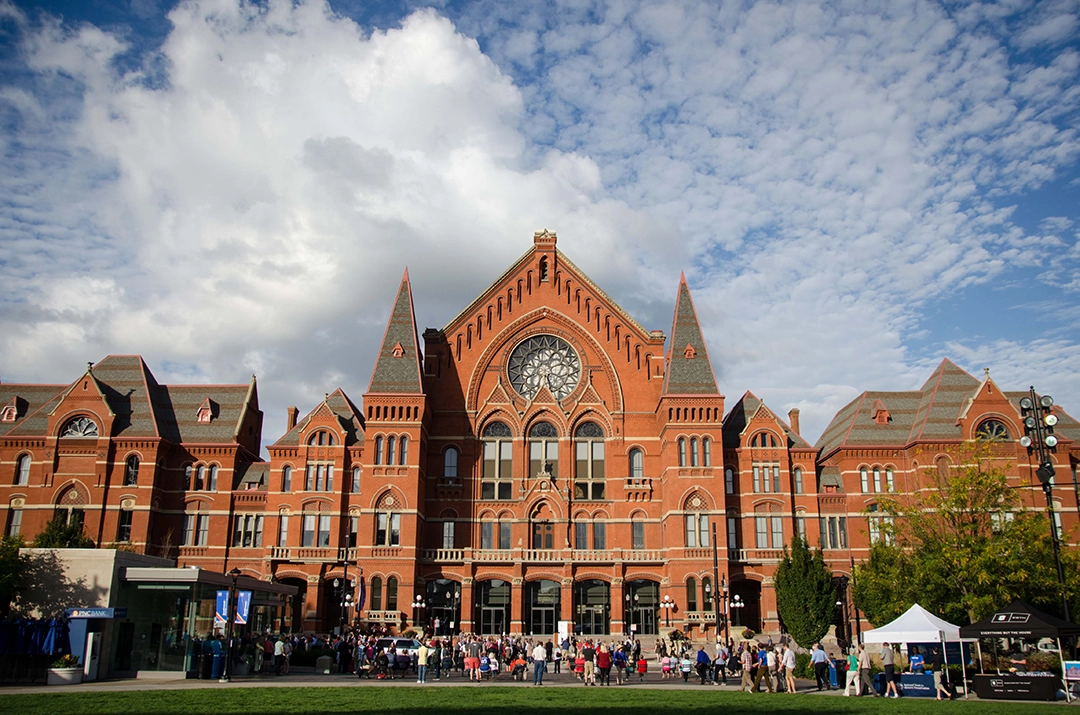
Cincinnati Music Hall
https://en.wikipedia.org/wiki/Cincinnati_Music_Hall
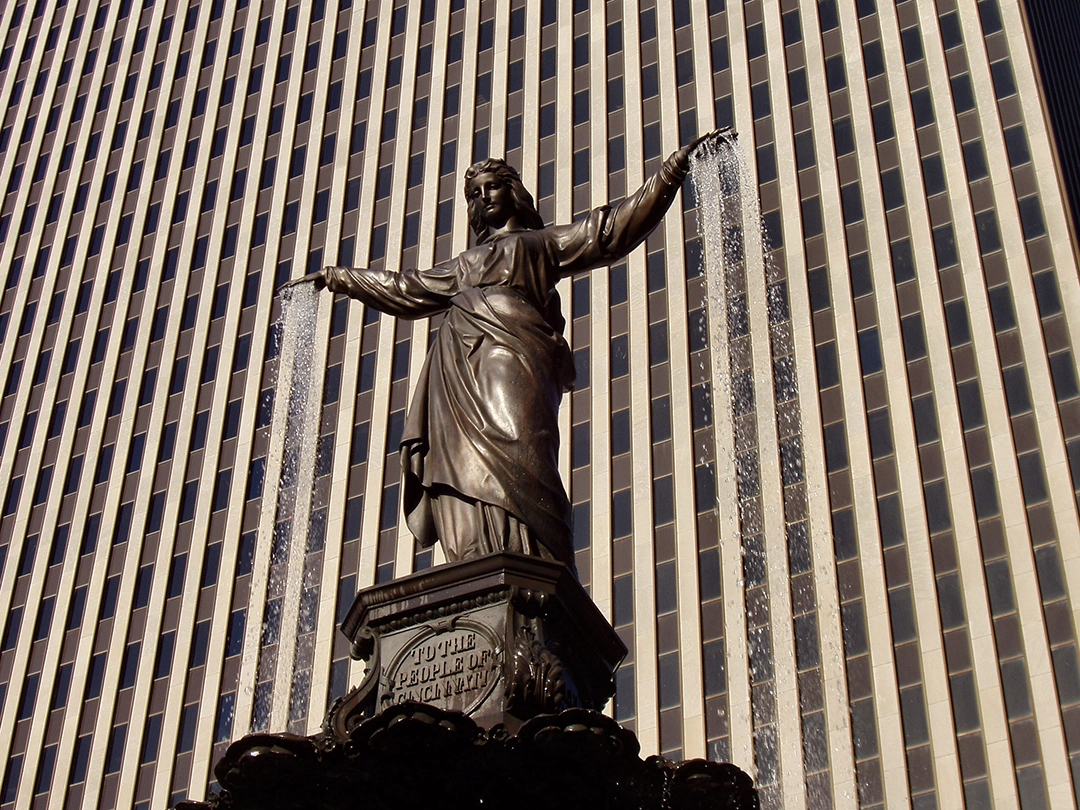
The two most expensive squares, the blue ones, have death buried in their foundations. Fountain Square exists because Henry Probasco lost his brother-in-law and business partner, Tyler Davidson, and went to Munich in 1865 to buy him a monument. There, at Ferdinand von Miller's foundry, he came across the drawing of a fountain that had been waiting twenty-five years for funding, and brought it home. It was unveiled on October 6, 1871, with a single inscription in bronze, "To the People of Cincinnati." Music Hall, built in 1878, rose over a paupers' cemetery where, between 1818 and 1837, criminals, the destitute, nameless immigrants, and suicides had been buried. A newspaper reported that in 1875, while digging the shaft for an elevator, workers came upon a heap of skulls. They didn't know what to do with them, so they put them back beneath the floor. They are still finding them today. The last time, beneath the orchestra pit. Those are the squares everyone fights over.
But the most revealing presences in this Monopoly are its sponsors. Sibcy Cline, a real-estate company. Teasdale Fenton, a company that cleans carpets after floods. A bank, Fifth Third, which sponsors the tax squares and renamed them "Make a Savings Deposit" and "Pay off Your Loan." Tim Barney, of Top Trumps, explained to the Inquirer just this week—in connection with the Philadelphia edition—that companies pay to appear on the board, that each contract is negotiated separately and includes a confidentiality clause, but that "Money is not the determining factor. They first have to be authentic." I only half believe that last part. "Authenticity" is a category that commands a price in this business. In Palm Springs, a few years ago, a square cost twenty-one thousand dollars, and the package including a Community Chest card, sixty thousand. What cannot be bought are the corners. Hasbro insists that Go, Jail, and Free Parking remain exactly where they have always been. Top Trumps has some sense of limits.
Incredibly, the Reds are missing, and the Enquirer notes their absence with a certain sadness. So is Kroger, headquartered just a few blocks away, the one local company that plays Monopoly for real. Nor is Procter & Gamble there, although its former president helped finance the park occupying the cheapest square. The University of Cincinnati, one of Ohio's major public research institutions, is absent, while Xavier, the private Jesuit university, is included. Graeter's is missing too, the ice-cream company founded in Cincinnati in 1870, whose black raspberry chocolate chip ice cream is practically a local institution.
All of them were invisible until Late for the Sky, a company on Robertson Avenue, began producing an unlicensed Cincinnati-opoly in 1984, which is still sold for twenty-five dollars. For forty years, Cincinnati was the city of counterfeit Monopolies. Now that it has an authentic one, we'll have to see whether they keep making the fakes.
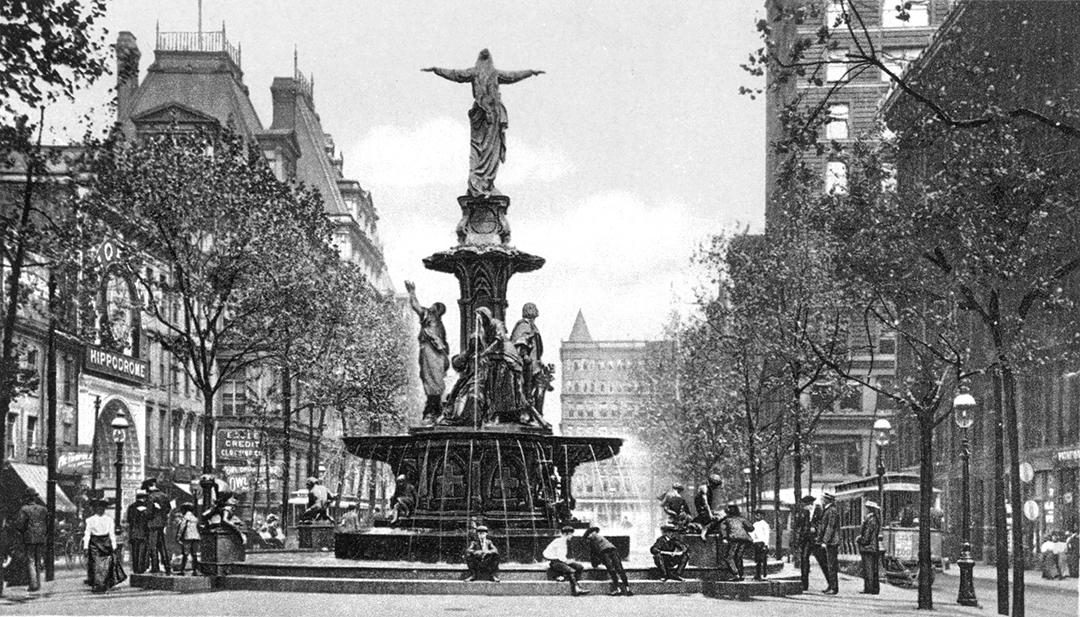
Fountain Square and Tyler Davidson Fountain, Cincinnati, Ohio in 1906. This view is looking east on 5th Street a little ways west of Walnut Street. The area has since been rebuilt, and the plaza and fountain now occupy a larger area on the north side of 5th Street, instead of in the center of 5th.
https://commons.wikimedia.org/wiki/File:Tyler-davis-fountain-1906.jpg
Sarah Bowman said at Fountain Square that the game's main purpose was to get people sitting around a table again, away from their phones. "Even though someone's going to cheat," she added. Because someone always cheats, someone always bends the rules to suit themselves. Fortunately, beyond the board there are still things nobody needs to buy. Going up into a treehouse in a wheelchair, for instance. Crossing the Roebling without paying, sitting beside a fountain that someone had commissioned—rather an odd thing, come to think of it—in memory of his brother-in-law.
P.S.
The following institutions appear on the board.
Smale Riverfront Park | Mt. Airy Forest | Daniel C. Beard Bridge | Cincinnati Art Museum | William Howard Taft National Historic Site | American Sign Museum | Flying Pig Marathon | BLINK Cincinnati | Findlay Market | Opening Day Parade | Purple People Bridge | Mt. Adams | ArtsWave | Over-the-Rhine—my neighborhood— | The Precinct by Jeff Ruby | LaRosa's | Skyline Chili | Taylor-Southgate Bridge | Cincinnati Union Terminal | Cincinnati Zoo & Botanical Garden | Teasdale Fenton Restoration | Cincinnati Children's | Xavier University | FC Cincinnati | Jeff Ruby Foundation | Paycor Stadium | John A. Roebling Suspension Bridge | Cincinnati Music Hall | Fifth Third Bank | Fountain Square | Sibcy Cline Realtors.
Incredibly enough—and possibly for reasons of space—the following were left out.
University of Cincinnati (UC): One of Ohio's leading public universities, founded in 1819.
Cincinnati Reds: One of the city's historic sporting institutions, associated with the first professional baseball team in 1869. The Opening Day Parade is represented, however.
Great American Ball Park: Home of the Reds, one of Cincinnati's most recognizable sporting venues.
Cincinnati Bengals: The professional football team is absent by name, although its home, Paycor Stadium, appears on the board.
Graeter's Ice Cream: Historic ice-cream company founded in 1870, closely associated with the city's culinary traditions.
Procter & Gamble (P&G): Multinational corporation founded in Cincinnati in 1837, fundamental to the city's industrial and economic history.
Kroger: Supermarket chain founded in Cincinnati in 1883, one of the city's major homegrown corporations.
Cincinnati Symphony Orchestra: Historic musical institution founded in 1895. Music Hall, its home, is represented.
Cincinnati Ballet: Major dance institution founded in 1963.
Cincinnati Opera: Founded in 1920, one of the oldest opera companies in the United States.
Taft Museum of Art: An important historic and art museum housed in an early nineteenth-century residence.
Contemporary Arts Center (CAC): Contemporary art institution whose history dates to 1939, housed in a building designed by Zaha Hadid.
National Underground Railroad Freedom Center: Museum dedicated to the history of slavery, abolitionism, and freedom, particularly significant given Cincinnati's position across the river from Kentucky.
Eden Park: One of Cincinnati's great historic parks, with panoramic views of the Ohio River.
Krohn Conservatory: Historic conservatory dating from 1933, known for its botanical collections and floral exhibitions.
Kings Island: One of the region's best-known amusement parks. Located in Mason, outside Cincinnati, although the board takes a regional approach that includes places and connections in Kentucky.
Jungle Jim's International Market: An international supermarket that has become a tourist attraction through its sheer scale, extravagant decoration, and enormous variety of products. Another missing regional landmark.
Carew Tower: One of the defining buildings of Cincinnati's skyline, completed in 1931 and renowned for its Art Deco architecture.
King Records: Historic record label founded in 1943, pivotal to American music and associated with artists such as James Brown. Its former studio is recognized by the city as a historic site.
Metro, Cincinnati Connector, TANK, and BCRTA: Public transportation operators excluded despite their February campaign to secure the four railroad squares.
These absences refer to the board itself and do not necessarily extend to every text or image on the Chance and Community Chest cards.