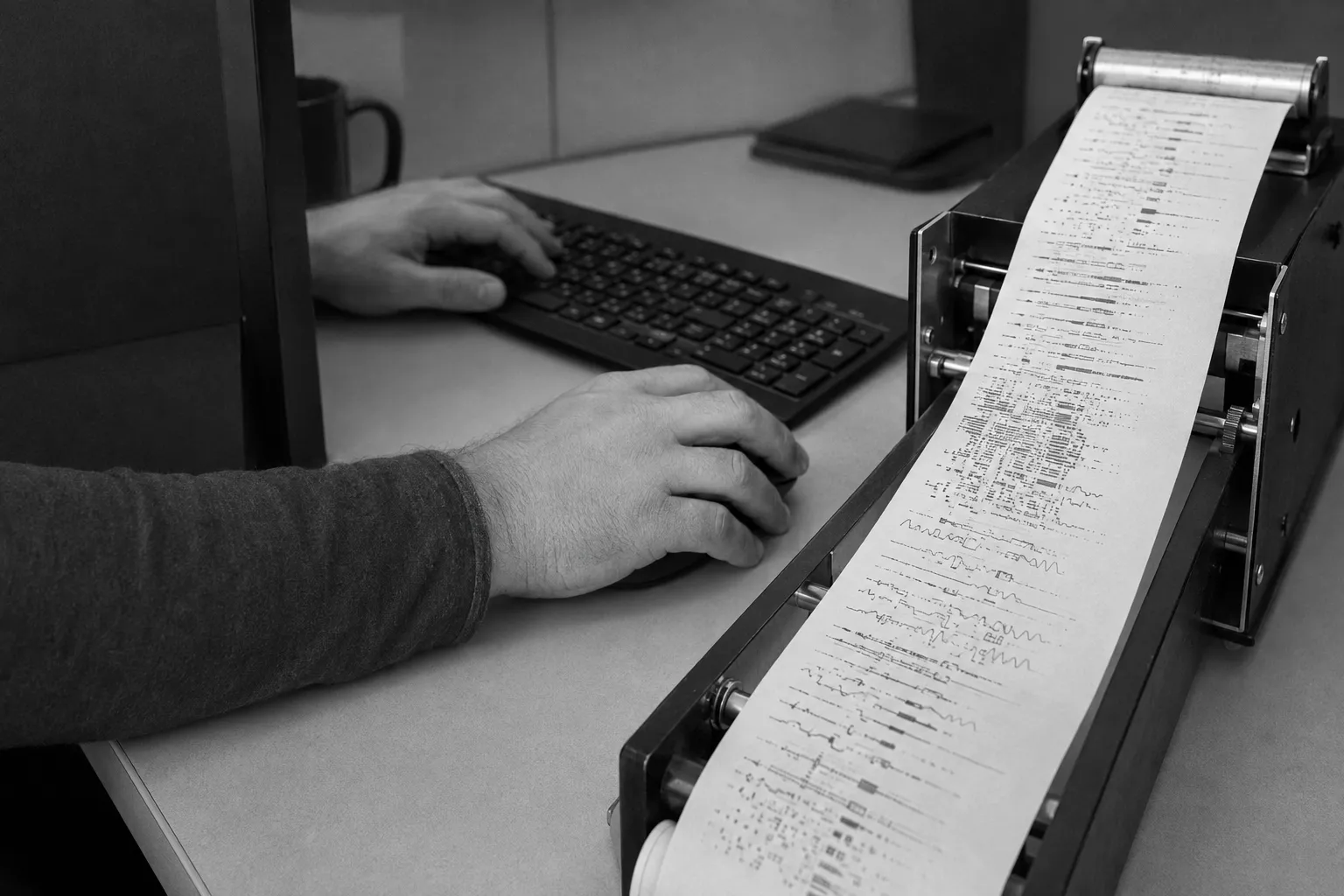
Meta plans to capture some employees' mouse movements, keystrokes, button clicks, and dropdown navigation as training data for computer-using agents. The company told TechCrunch that an internal tool will record these inputs on certain applications because agents need examples of how people use computers in everyday tasks. Meta said safeguards will protect sensitive content and that the material will serve no other purpose. The plan follows reports that defunct startups' Slack archives and Jira tickets are also being repurposed as model-training material, extending the industry's search for data into records produced during ordinary work. The source is labor performed inside Meta itself.
The employee's gesture now has a second corporate life. A click made to finish an assignment can become an example from which software is taught to perform similar labor. This arrangement concentrates interpretive power with the employer, which chooses the applications, defines sensitive content, and decides which traces become useful. Even careful redaction leaves a political question inside the tool. Paid activity generates a reusable asset whose future value may exceed the immediate task, while the worker sees neither the resulting dataset nor the agent shaped by it. The office interface thus doubles as a collection instrument, and routine competence is extracted at the keyboard, one recorded action at a time.

Deezer says fully AI-generated tracks now account for 44 percent of the music uploaded to its service each day, nearly 75,000 tracks daily and over two million each month. Listening remains between 1 and 3 percent of total streams, and the company detects 85 percent of those streams as fraudulent and demonetizes them. Daily AI uploads had risen from 10,000 in January 2025 to 60,000 in January 2026. Deezer labels detected AI music, excludes it from algorithmic recommendations and editorial playlists, and says it will cease storing high-resolution versions. During 2025, the platform tagged over 13.4 million AI tracks.
The figures separate the size of a catalog from the presence of an audience. Generative systems can supply files at industrial speed, while fraudulent streaming can manufacture a residue of apparent demand around them. This volume burdens detection, storage, royalty allocation, and the ordinary act of finding a song. Deezer's response creates a divided shelf inside the same service. One class of track receives a label, loses recommendation and playlist access, and now loses high-resolution storage. Human-made recordings continue through the usual channels. That arrangement gives the platform's detector substantial cultural and financial authority because classification affects visibility and payment. Each day, almost 75,000 new files enter that sorting process, while genuine listening reaches only a small fraction of their streams.

Investor Elad Gil argues that most companies pass through a roughly 12-month period of peak value before declining, and that founders often miss it by expecting stronger terms later. Speaking on the No Priors podcast, he cited Lotus, AOL, and Broadcast.com as companies sold at or near their high points. His practical recommendation is to schedule a board meeting once or twice each year specifically to discuss exits, making the decision a recurring governance question. Gil applied the warning to AI startups whose products occupy categories that foundation-model companies have yet to enter. A change in differentiation or defensibility, he said, should prompt founders to ask whether the next six months represent their most valuable period.
This advice compresses the corporate future into a sale calendar. For an AI startup, technical achievement may produce a temporary bargaining position because a larger model provider can add a similar function, bundle it with an existing service, or alter the terms on which the smaller company operates. Investors then read independence through timing. Employees may hear a mission, customers may buy a durable service, and the board may privately measure the remaining months before an acquisition looks preferable to competition. Gil's scheduled meeting makes that divergence procedural. Once or twice a year, directors would place the company's product, payroll, contracts, and prospective buyers beside a question already waiting on the agenda.
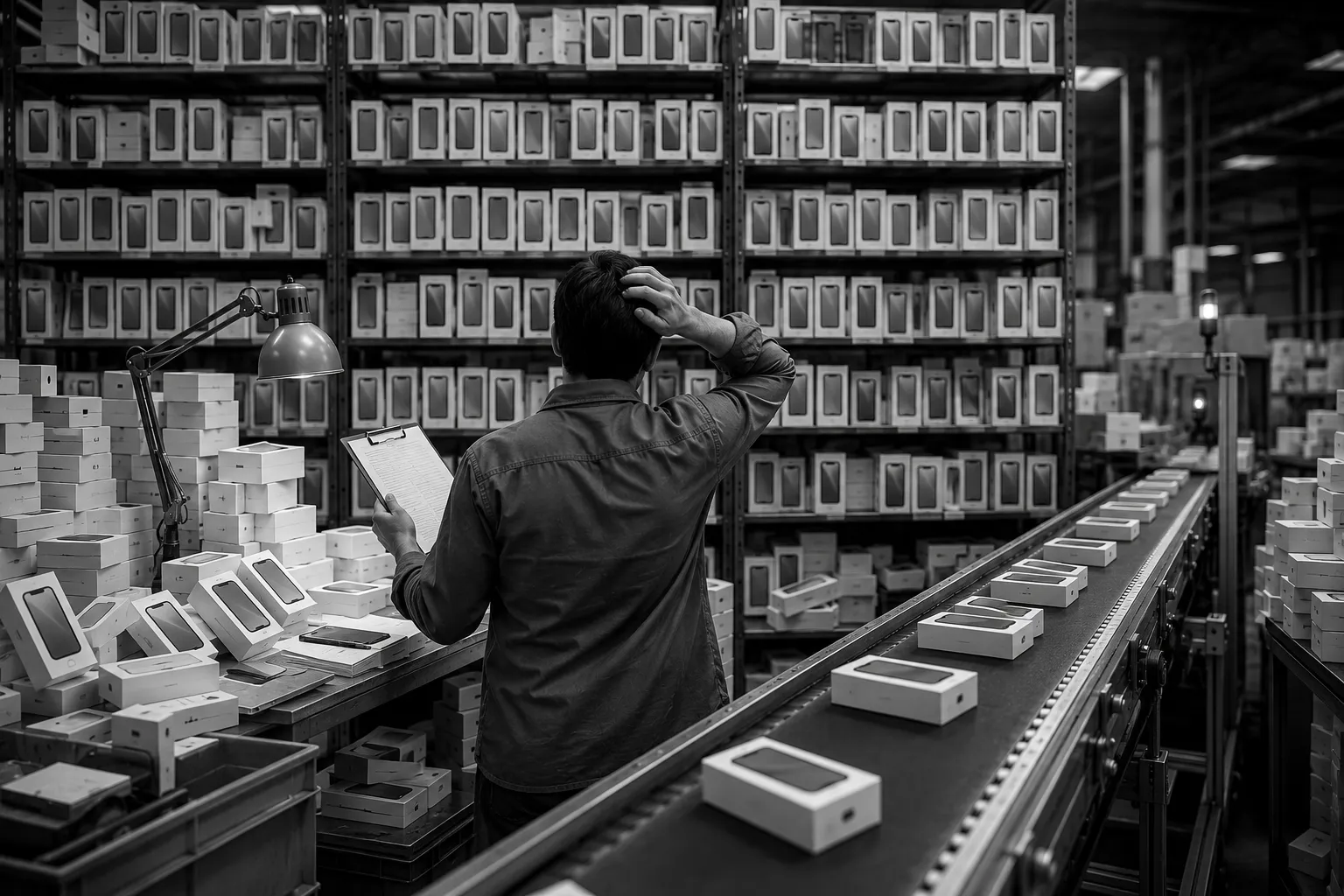
Worldwide app releases rose 60 percent year over year in the first quarter of 2026 across Apple's App Store and Google Play, according to Appfigures. Releases on iOS alone increased 80 percent. For April through the date of the analysis, launches were up 104 percent across both stores and 89 percent on iOS compared with the same period in 2025. Appfigures and TechCrunch present AI coding tools such as Claude Code and Replit as a possible cause, since they can help people build software with fewer technical skills, though the data cannot establish causation. Games still led new releases, while utilities ranked second and lifestyle third.
Lowering the cost of making an app transfers scarcity from production to judgment. A person with an idea can reach a store faster, while reviewers and customers face a denser shelf of utilities, imitations, experiments, and fraud. Recent failures give that pressure a price. Apple removed Freecash for rule violations after it had spent months near the top of its charts, and a counterfeit Ledger Live app drained $9.5 million in cryptocurrency from victims. Apple reported rejecting over 320,000 submissions for spam, copying, or misleading conduct in 2024. If AI-assisted coding contributes to the current volume, wider creative access arrives alongside a larger inspection bill, paid in review labor and in the accounts of customers who install the wrong icon.

World, the verification project backed by Sam Altman and developed by Tools for Humanity, announced integrations spanning Tinder, ticketing, Zoom, Docusign, email, and business services. Its strongest credential comes from the Orb, a spherical device that scans an iris and converts it into a unique cryptographic identifier called a verified World ID. After a pilot in Japan, World announced that Tinder would place a World ID emblem on verified profiles in global markets including the United States. World also introduced lower tiers based on an NFC scan of government identification or a selfie. Developers can choose a tier according to their security needs, while the company acknowledges that selfie checks have limits.
A dating profile once asked viewers to judge a face, a biography, and a handful of photographs. The verification emblem adds an institution to that encounter, certifying that a living person completed one of World's procedures. Trust then acquires a technical ladder. An iris scan carries higher standing than a selfie, and access to the strongest badge requires submitting a distinctive feature of the body to a privately designed identity system. The same credential can enter concert queues, signatures, meetings, and delegated software agents, giving one provider influence over many ordinary proofs of presence. On Tinder, the immediate consequence is plain. Two people approaching a date may begin by comparing badges issued through an Orb, an ID chip, or a phone camera.

Google has added Nano Banana image generation to Gemini's Personal Intelligence, allowing the service to draw on connected Google account data when making a picture. A user can ask Gemini to "Design my dream home" while the system derives relevant interests from Gmail and Google Photos, with those details absent from the request. Photo labels can also supply names or group descriptions such as "Family." Google says a Sources button will indicate where the context came from, and users can correct mistaken inferences or add reference photos. The feature was announced for Plus, Pro, and Ultra subscribers in the United States, with rollout expected within days and expansion to Chrome desktop and other users planned later.
The written prompt now occupies only the visible edge of the instruction. Years of messages, photographs, labels, and account connections can shape an image before the user names a preference. Personalization therefore changes creative authorship at the level of selection. The system chooses which traces of a life count as relevant, then turns those traces into furniture, hobbies, faces, or scenery. A dream house generated this way may express yesterday's inbox and Google's classification of the family album as much as today's desire. The Sources button offers a partial audit trail, yet the burden remains with the subscriber to inspect the derivation, notice a false association, and correct it after the picture appears.

Objection launched with seed funding from Peter Thiel, Balaji Srinivasan and two venture firms, offering a paid system for challenging factual claims in published work. A user pays $2,000 per objection. Freelance investigators collect material, and large language models from OpenAI, Anthropic, xAI, Mistral and Google assess the evidence claim by claim. The company says its Honor Index scores a reporter's integrity, accuracy and record. Official documents and emails receive high weight, while claims from anonymous whistleblowers rank near the bottom. Founder Aron D'Souza says protected source information can be submitted through a cryptographic hash. Media lawyers interviewed by TechCrunch warned that the system could discourage sources and pressure reporters.
The fee determines who can readily summon this private tribunal. A corporation or wealthy subject can turn displeasure with an article into an investigation, a score and an online label, while the reporter must choose whether to participate. Objection's Fire Blanket feature can flag a disputed claim on X while review is underway. That sequence gives accusation an immediate public interface before the company reaches a result. Confidential reporting also creates a structural difficulty for the scoring method. Evidence may be credible precisely because a newsroom has verified it while protecting the person who supplied it from dismissal or retaliation. A model jury receives only the material submitted to the platform, so absence can lower a score or yield an indeterminate finding. The journalist then confronts a $2,000 objection with a source's identity still sealed in a newsroom file.

Tesla is adding a redesigned self-driving app that lets eligible owners subscribe to Full Self-Driving in one tap and review how often they use it. The display includes a usage bar chart and streaks counting consecutive days with FSD engaged. Access requires Tesla's A14 chip, also called FSD Hardware 4.0, which began shipping in January 2023. The supervised system can steer, change lanes and park, yet drivers must remain attentive because the vehicles are not autonomous. A subscription costs $99 a month. Tesla also has a corporate incentive to expand adoption. Reaching 10 million active FSD subscriptions by 2035 is one product target tied to Elon Musk's compensation package.
A streak converts supervised driving into a habit that can be won, maintained and broken. Consumer apps use such counters to pull a person back toward language lessons, exercise or shopping. Inside a car, the same device meets an activity where divided attention carries physical consequences. The interface rewards activation frequency while the product instructions assign continuing responsibility to the driver. That pairing produces an awkward behavioral contract. Tesla benefits when owners subscribe and engage the software repeatedly. Each owner must still watch the road and intervene. Statistics can also change the meaning of a trip. A commute becomes evidence of loyalty to a feature, and an unused day becomes a gap in a sequence. The concrete reward is a longer number on the dashboard, earned while the driver keeps both hands ready for the wheel.
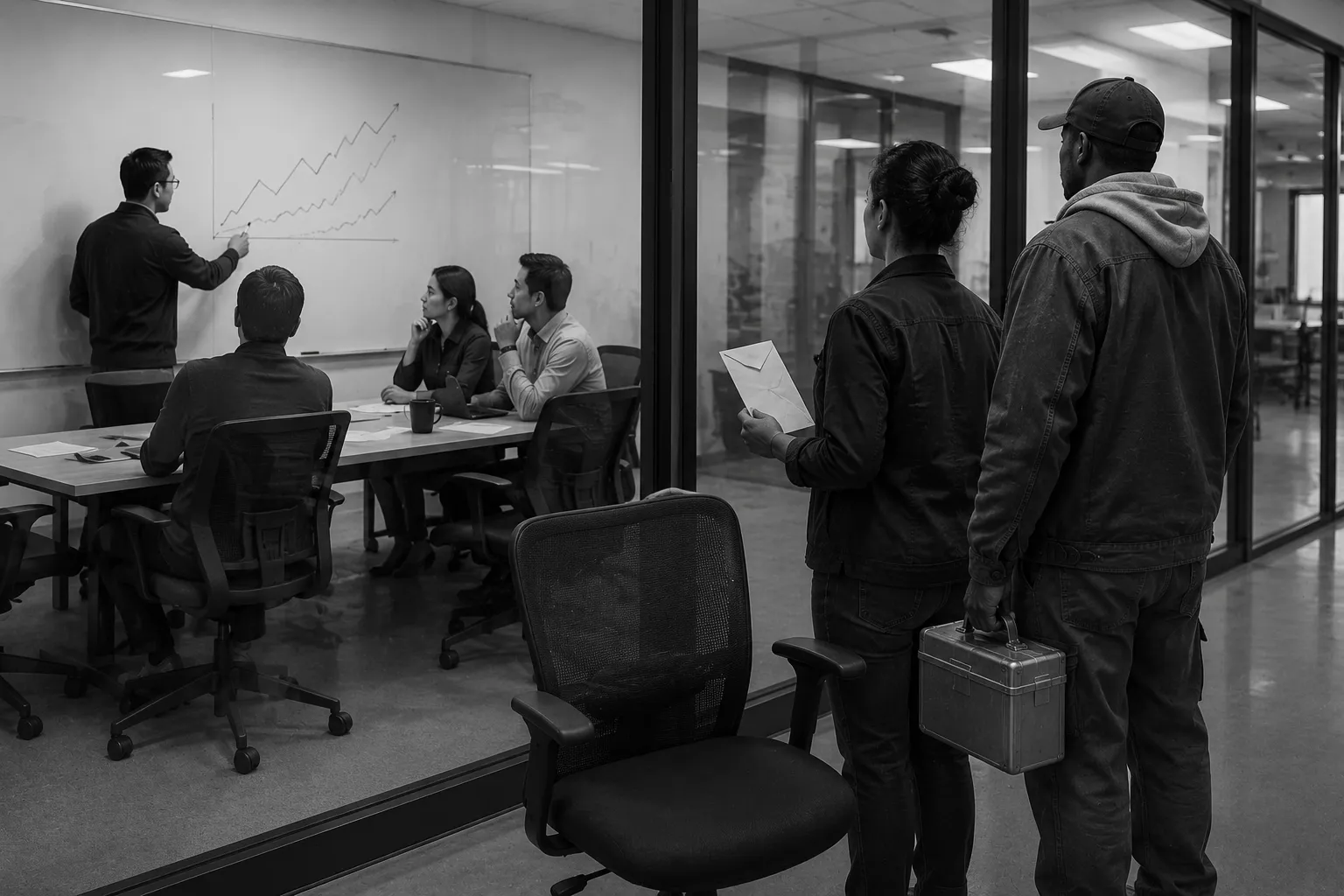
Stanford's 2026 AI Index assembled surveys showing a wide gap between AI experts and the American public. Pew data cited in the report found that 56 percent of experts expected AI to have a positive effect on the United States over twenty years. Eighty-four percent foresaw a largely positive effect on medical care, compared with 44 percent of the public. For work, the split was 73 percent against 23 percent. For the economy, 69 percent of experts were positive while 21 percent of the public agreed. Nearly two-thirds of Americans expected fewer jobs, and only 31 percent trusted the US government to regulate AI responsibly.
These figures describe people answering from different positions in the same economy. Researchers and industry specialists encounter models through laboratories, products and investment plans. Households encounter them through hiring decisions, medical institutions, electricity bills and public agencies. Expertise can estimate technical capability while leaving the distribution of costs outside its frame. Public anxiety becomes rational when promised gains arrive as forecasts and immediate exposure arrives through a workplace or monthly bill. The 50-point gap over jobs also creates a democratic problem for policy. A government that commands little trust cannot settle the dispute by repeating expert confidence. It has to specify who receives protection, who pays for infrastructure and how workers contest an automated decision. Until then, optimism will remain a professional survey response beside a household calculating its next utility payment.
