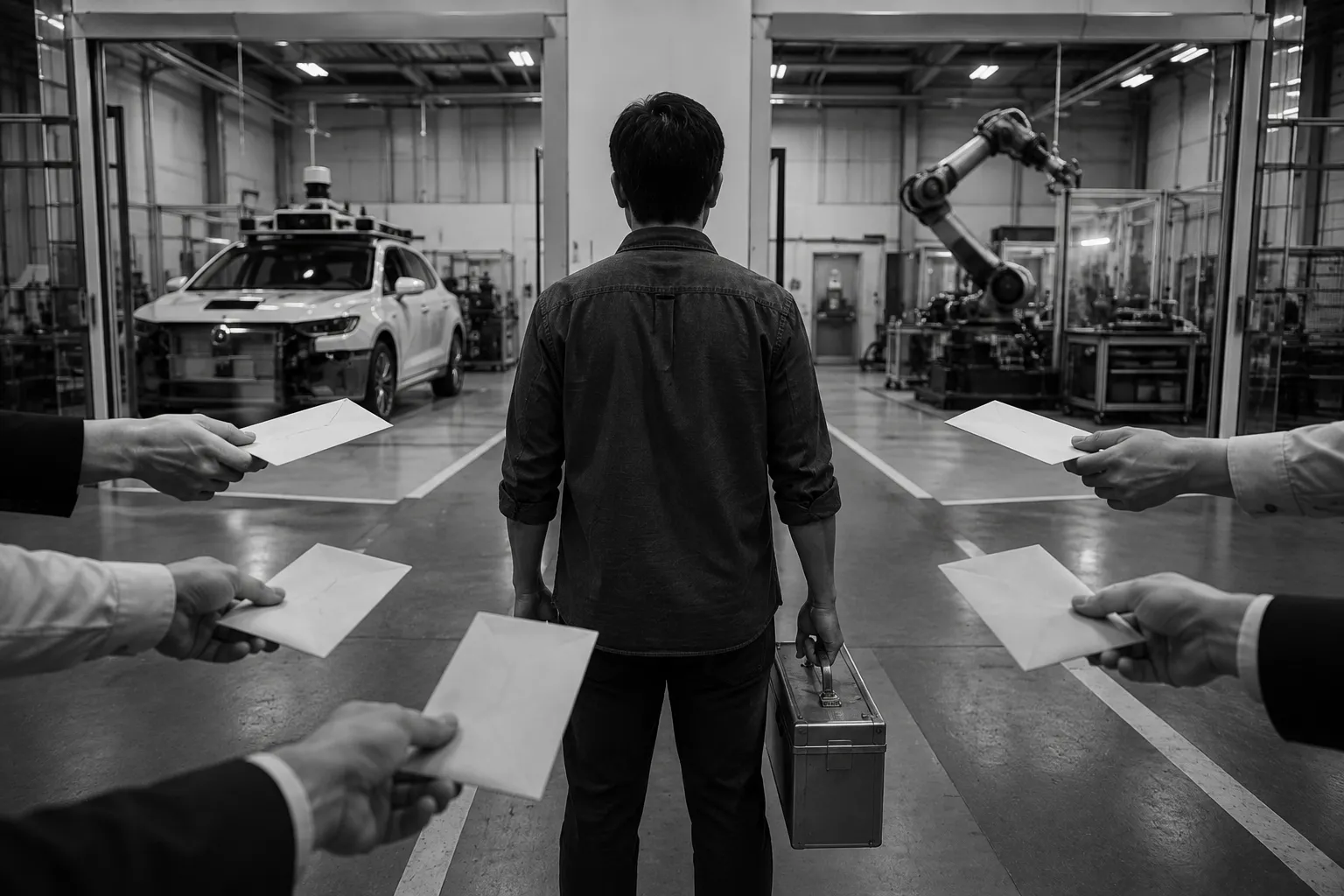
Robotics and defense companies are recruiting engineers from self-driving truck and robotaxi teams, according to industry sources who spoke with TechCrunch. Those sources put base salaries for some sought-after roles between $300,000 and $500,000, before equity and benefits. The desired workers combine classical robotics with AI and know how to integrate software into physical equipment. Their experience can transfer from autonomous vehicles to humanoid and industrial robots, forklifts, construction machinery, mining systems and agricultural equipment. Founders told the publication that defense technology startups are offering especially generous compensation, while automotive companies and smaller autonomous-vehicle firms face pressure to raise pay or lose staff.
The bidding war gives a price to knowledge acquired through years of making machines perceive streets, predict movement and act through hardware. That price also directs technical labor toward the institutions with the deepest budgets. Defense employers can turn public procurement into salaries that many transport startups cannot match, while automakers risk losing people after investing heavily in automated driving. The migration carries a political choice inside an employment offer. Skills developed around civilian mobility can be reassigned to industrial systems or defense projects without changing the engineer's core craft. A larger base salary for one worker can leave a startup with a longer hiring cycle and a thinner runway. The next autonomous-vehicle budget may therefore contain fewer test miles and a much larger line for retaining one engineer.
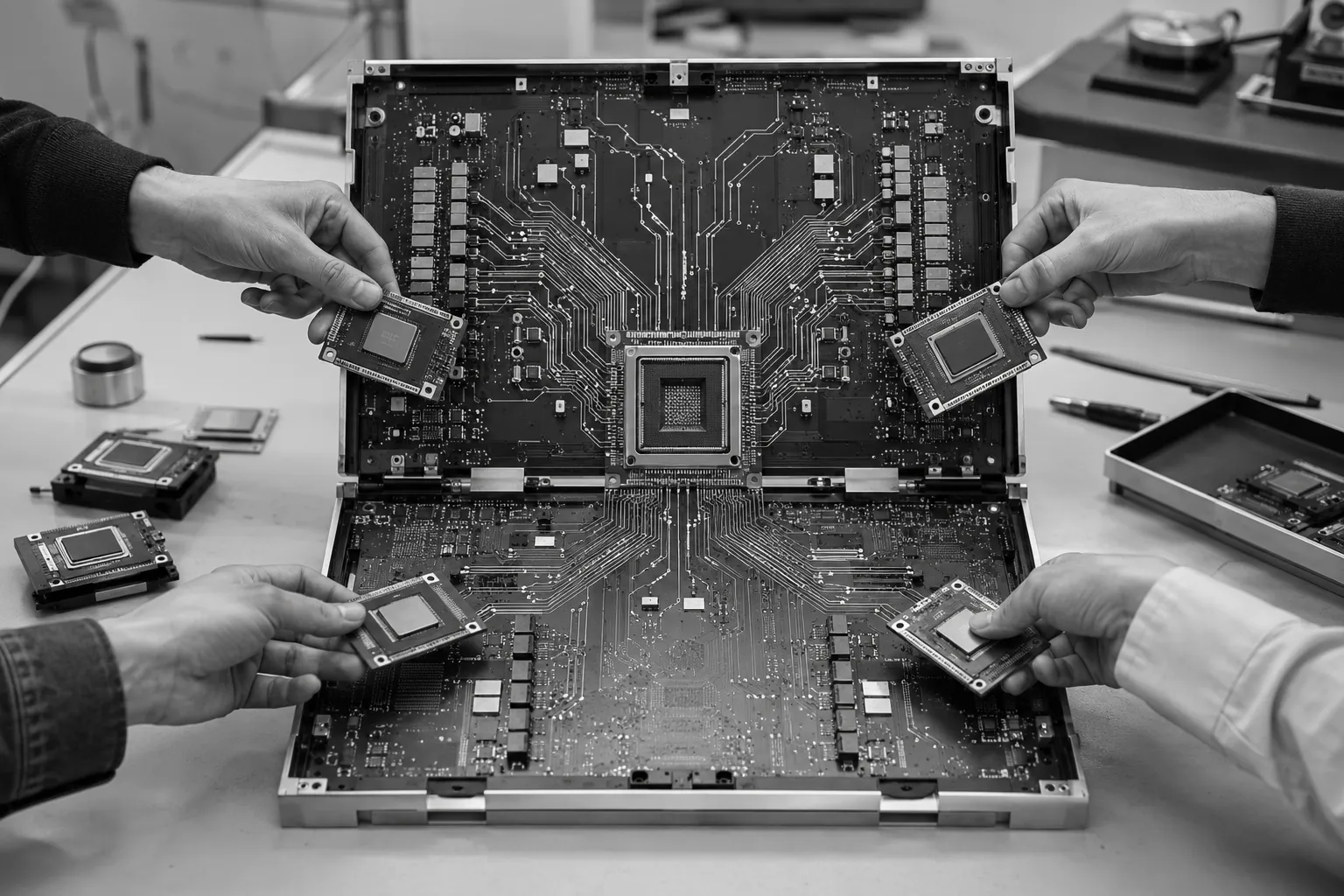
SiFive raised $400 million in an oversubscribed round that valued the chip-design company at $3.65 billion. Nvidia joined a group of investors led by Atreides Management. Founded in 2015 by UC Berkeley engineers who created RISC-V, SiFive licenses processor designs that customers can adapt and sells no finished chips. Its architecture offers an alternative to the x86 and Arm CPUs commonly paired with Nvidia GPUs. SiFive is now moving further into AI data centers, and its designs are set to work with Nvidia CUDA software and NVLink Fusion, a rack system designed to connect different CPUs to Nvidia infrastructure.
An open instruction set gains political force only when factories, software and customers can use it. Nvidia's investment places RISC-V inside an arrangement still organized around CUDA and Nvidia's rack technology. That combination gives hardware makers another CPU design while preserving the gravitational pull of the dominant GPU supplier. Openness here works as a negotiated layer of industrial power, available for modification yet entering data centers through interfaces controlled by a much larger company. The deal also exposes how standards travel. An architecture associated with embedded devices can reach expensive AI servers once capital and compatibility arrive together. Engineers may alter SiFive's licensed designs for particular workloads, but those processors will meet Nvidia's software and interconnect at the rack.

Instagram can notify friends when someone joins the Meta AI app, turning an experiment with a chatbot into an announcement across linked accounts. TechCrunch reported that these alerts continued nearly a year after the writer installed the app for work. Interest has risen since Meta released Muse Spark, moving Meta AI from number 57 to number 5 in the U.S. App Store. Access requires a Meta account connected to services such as Instagram and Facebook.
The notification treats private curiosity as material for social distribution. Someone may open a chatbot to test a feature, ask an awkward question, or discuss a concern they would avoid posting publicly. Meta can convert the act of joining into a prompt for friends to download the product, without asking for a separate decision at the moment of disclosure. The company also uses activity across its services, including Meta AI interactions, to target advertising. Earlier design failures made the risk plainer when users accidentally published intimate chat logs to a Discover feed that Meta later removed. The current alert exposes less information, but it preserves the same assumption that movement between Meta products is available for circulation. A person logs into one app with an old account and discovers the audience only when a friend sends a screenshot of Instagram’s announcement.

OpenAI introduced a $100 monthly ChatGPT Pro plan aimed at developers who use Codex every day. It provides five times the coding capacity of the $20 Plus tier, while a continuing $200 plan provides twenty times the Plus limits. None is unlimited. OpenAI says over 3 million people use Codex each week and reported monthly usage growth above 70 percent. Customers trying the new tier receive temporarily elevated limits through May 31, after which rate warnings may arrive sooner.
The price ladder turns coding assistance into a rationed workplace utility. Developers buy access to the same core features, then pay according to how long and intensely they can work before the interface interrupts them. Capacity becomes part of professional status, like faster hardware or a larger cloud budget, except the constraint can appear in the middle of a debugging session and is set remotely by the vendor. The temporary promotional allowance further obscures what the $100 plan will feel like during ordinary use. OpenAI explicitly compares its offer with Claude Code, making rate limits a competitive claim rather than a minor condition. A freelancer and a funded team can ask similar questions while receiving different amounts of productive time. The subscription page therefore prices a new unit of labor, measured in how much machine-assisted coding a worker can complete before the account asks for a higher tier.

Tubi became the first major streaming service to place a native app inside ChatGPT. Users install it from the chatbot’s app store, address requests to Tubi in natural language, and receive recommendations linked to a catalog of over 300,000 films and television episodes. The Fox-owned service brings over 100 million monthly users to the arrangement, while ChatGPT reported 900 million weekly users in February. Tubi had discontinued an earlier in-app recommendation experiment called Rabbit AI.
The integration moves the entrance to the cinema outside the streamer’s own walls. A viewer can describe a mood or social occasion before seeing Tubi’s shelves, and ChatGPT converts that request into a short route through the catalog. Discovery has always been a struggle over placement, thumbnails, genres, and home-page rows. Here the decisive layer is conversational language controlled by another company. Tubi gains access to an immense audience and avoids maintaining its own assistant. OpenAI gains another reason for people to begin entertainment inside its interface. The film still plays on Tubi, but the first act of selection belongs to the chatbot that interprets the request and determines which titles deserve mention. For viewers, a catalog of 300,000 works can arrive as a handful of links chosen before they open the streaming service.

Google Maps now lets Gemini write captions for photographs and videos contributed by users. After a person selects an image, the model analyzes it and proposes language that can be edited or deleted. The feature launched in English on iOS in the United States, with wider geographic and Android availability planned. Google is also surfacing recent media in the Contribute tab and displaying points, badges, and Local Guide levels for a community the company says exceeds 500 million contributors.
A caption seems like a small convenience, yet it determines what strangers are told to notice in a place. The photograph comes from a visit, while the first description can now come from a model trained to produce fluent, recognizable summaries. A peculiar cafe, damaged sidewalk, crowded room, or quiet park may acquire language that smooths the detail into familiar categories. The contributor retains an edit button, though convenience works by reducing the likelihood of revision. Google gains fresh local material with less effort from the person supplying it, and the public record begins to combine human evidence with generated phrasing whose origin may be easy to overlook. Points and badges further reward the completed upload. The result will appear beside directions and reviews, shaping where people go through a caption that began as a suggestion beneath someone else’s photograph.
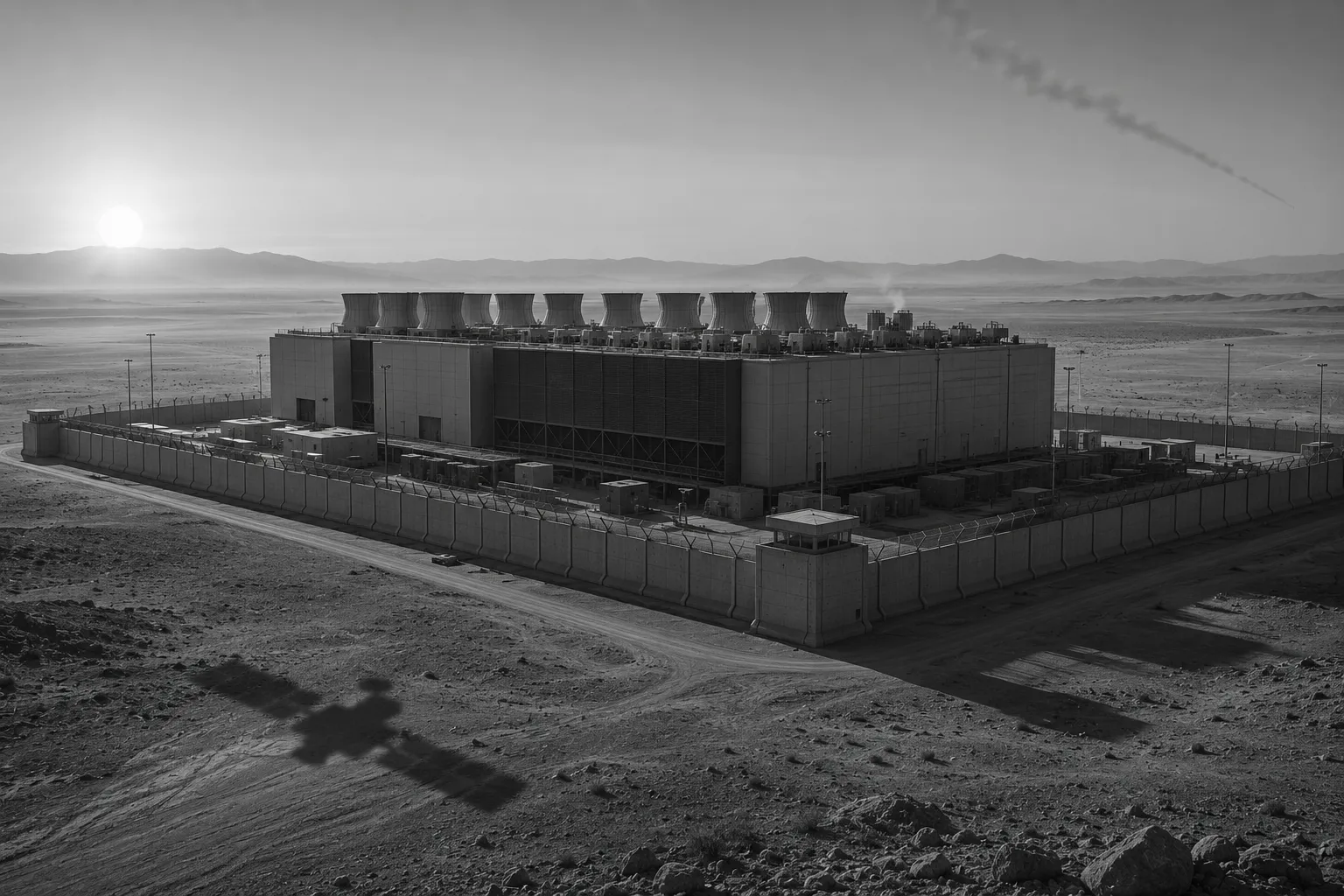
Iran threatened U.S.-linked data centers across the Middle East as the war with the United States escalated. Military spokesperson Ebrahim Zolfaghari warned that strikes on Iranian civilian infrastructure would bring retaliation against American energy and technology facilities. A video singled out the Stargate site in the United Arab Emirates, part of the $500 billion venture announced by OpenAI, SoftBank, and Oracle. Missiles had already hit AWS facilities in Bahrain and an Oracle data center in Dubai.
The threat gives physical coordinates to computing sold through the language of remote access. Stargate depends on buildings, power systems, cooling machinery, cables, workers, and host governments. Each site concentrates enormous investment in a structure visible to satellites and vulnerable to the politics of its location. The cloud metaphor encouraged customers to imagine processing without territory, yet military planners encounter a fixed facility that supports commercial services and national ambitions. AI capacity now enters calculations once reserved for ports, refineries, and power plants. This changes the price of expansion in regions chosen for capital, energy, or political alliances. Redundancy can move workloads when a building fails, but it cannot erase damaged equipment or danger to staff and nearby residents. Every new campus requires security plans that account for the state relationships surrounding its walls, along with the missiles capable of reaching them.

Microsoft has marketed Copilot as a workplace assistant while its consumer terms described the product as being for entertainment purposes and warned against relying on it for important advice. The language, last updated in October 2025, circulated widely as the company pursued corporate subscriptions. Microsoft called it a legacy clause that no longer reflected current use and promised to revise it. OpenAI and xAI carry similar warnings against treating model output as factual truth.
The clause exposes the distance between the demonstration and the contract. Advertising invites workers to draft, analyze, search, and make decisions with Copilot. Legal language imagines a user amusing themselves with an unreliable system at their own risk. Both texts belong to the same product, but liability settles on the person who acts on an answer. Calling the disclaimer outdated does little for anyone who used the tool under those terms, and replacing the sentence cannot remove model errors from office work. The comic label is useful precisely where the stakes are serious. It allows a company to sell competence in the foreground and reserve uncertainty in a document few customers read. Employers who install Copilot across a business still need rules for checking its work, identifying accountable staff, and handling damage when an entertaining suggestion enters a spreadsheet, a client message, or a consequential decision.

Anthropic stopped letting Claude subscribers use their included limits through OpenClaw and began charging separately for that traffic at noon on April 4. The company said the pay-as-you-go rule would soon extend to other third-party harnesses. Claude Code chief Boris Cherny argued that subscriptions were designed for different usage patterns and that the change would make growth sustainable. OpenClaw creator Peter Steinberger, who recently joined OpenAI, accused Anthropic of restricting open source after copying popular features. Anthropic offered full refunds.
The separate bill redraws a boundary that users discovered only after building workflows across it. A subscription appeared to buy access to Claude’s capacity, while Anthropic now distinguishes between requests sent through its own interface and requests sent through outside software. The same model and customer acquire a different price when an open-source tool controls the route. Engineering constraints may be real because persistent agents can consume capacity at an unusual rate. Yet metering also gives the model provider leverage over the independent applications growing around it, especially when those applications compete with the provider’s own harness. OpenClaw remains open source, but its usefulness depends on paid access to systems owned elsewhere. Developers can accept the new meter, change providers, or dismantle routines that had treated a subscription as portable. The refund covers the plan, while the work of rebuilding stays with the subscriber.
