
Wall Street banks are giving digital assistants the shape of office workers. Reuters reported on July 13th that Morgan Stanley plans to test client-facing assistants with human oversight, while BNY has assigned some digital employees login IDs, nicknames, daily tasks, and human managers responsible for training and review. UBS says its agents send thousands of alerts to financial advisors and can gather information from meetings, accounts, and email communications before a human approves a transaction. A June KPMG survey found that 51% of banks were piloting AI agents.
The strange detail is the personnel file. Once an agent receives a login, a nickname, a manager, and a performance review, automation stops looking like a tool and starts occupying a place in the hierarchy. Banks are not simply buying software for analysts to use; they are inventing a supervised class of nonhuman colleagues with access to internal systems and a duty to produce measurable returns. The office absorbs the machine by giving it bureaucracy. That gesture makes the risk easier to manage and harder to see. A client may still hear from a human advisor, but the reminder, the portfolio suggestion, the compliance trail, and the transfer may already have passed through a worker who exists as an account, a policy, and a daily task list.
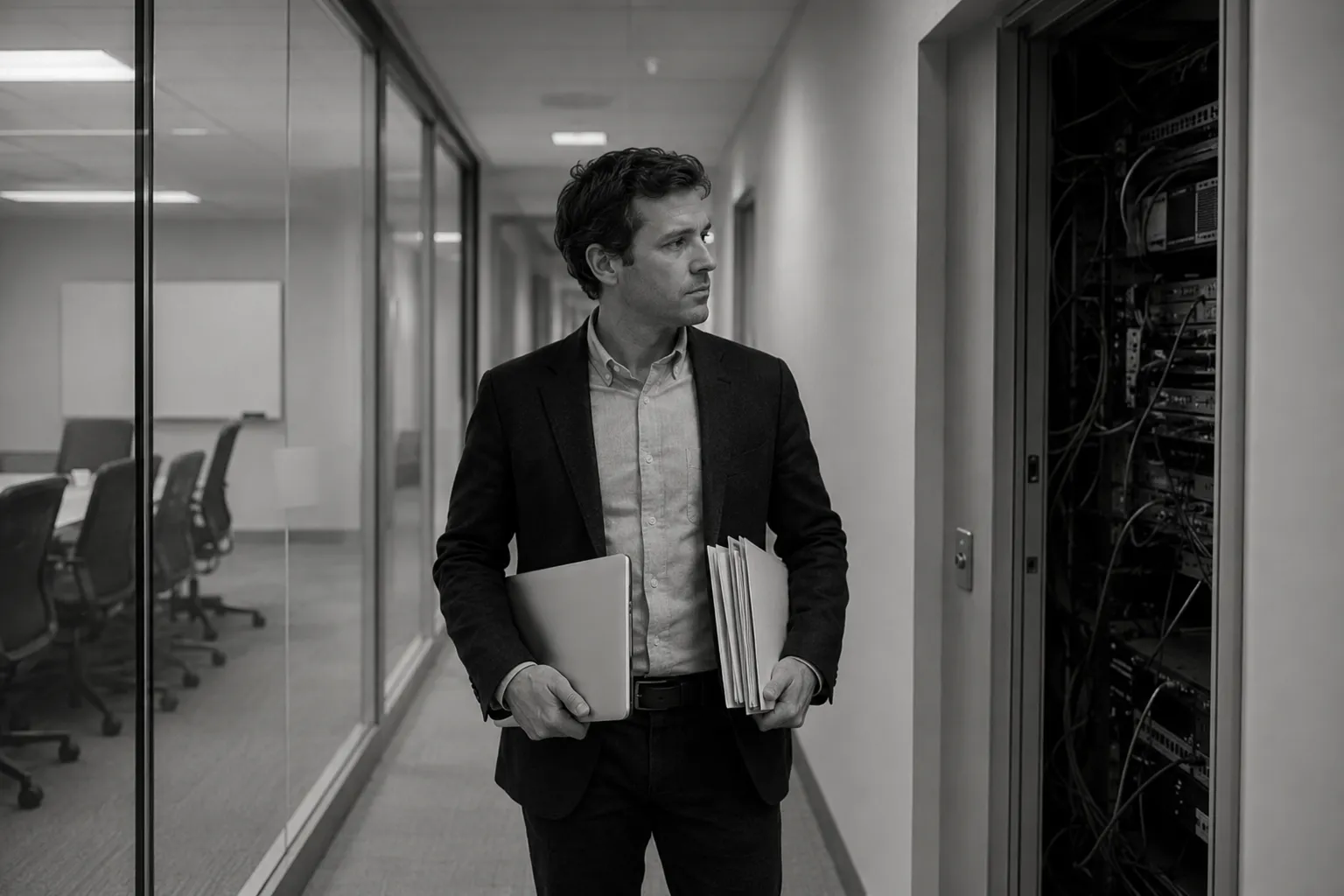
Tata Consultancy Services is building a team of up to 8,900 forward-deployed engineers to help clients put AI systems into use, Reuters reported on July 12th. The Indian software services company is also looking at acquisitions in AI, data security, and cybersecurity. The move comes as investors worry that AI will reduce the need for large outsourcing teams, shorten projects, and push clients to demand lower prices. TCS argues that companies still need people who know customer environments deeply enough to connect models with existing systems, data flows, and business routines.
The deployed worker is the less glamorous figure inside the AI boom. Models arrive with public demonstrations, benchmark scores, and executive promises, but the workday is full of old databases, permission rules, compliance meetings, broken integrations, and departments that use the same word for different things. Someone has to carry the model through those rooms. The forward-deployed engineer becomes translator, installer, negotiator, and witness to corporate friction. That role complicates the fantasy of instant automation. AI may compress some work, but it also produces another labor market around adaptation. The machine does not simply enter the company. It is escorted in by workers who know which server still matters, which spreadsheet cannot disappear, and which manager owns the bottleneck.

OpenAI is hiring a product manager to build ChatGPT experiences for families, caregivers, and older adults, TechCrunch reported on July 11th. The job posting asks for experience with parents, family products, and trust-sensitive consumer services. Sensor Tower estimates cited by TechCrunch show ChatGPT's audience aging upward, with users 35 and older rising globally and nearly one in four U.S. smartphone users who are parents using the app during the quarter. OpenAI has also added parental controls, safety routing for sensitive conversations, and a trusted contact feature that can alert a family member or caregiver in cases of possible self-harm.
The family account changes the social shape of the chatbot. A tool first sold as personal assistance starts to sit among homework, elder care, household planning, crisis warnings, and the small negotiations parents make with screens. Once a product is built for families, design choices become domestic rules. Who can ask what, what is remembered, what a parent can see, when a child is treated differently, and when a caregiver is notified all become product questions. The household is a difficult market because trust there is practical, repetitive, and exposed to harm. ChatGPT is moving from the individual prompt toward the kitchen table, where software has to share space with childhood, age, fatigue, and parental doubt.
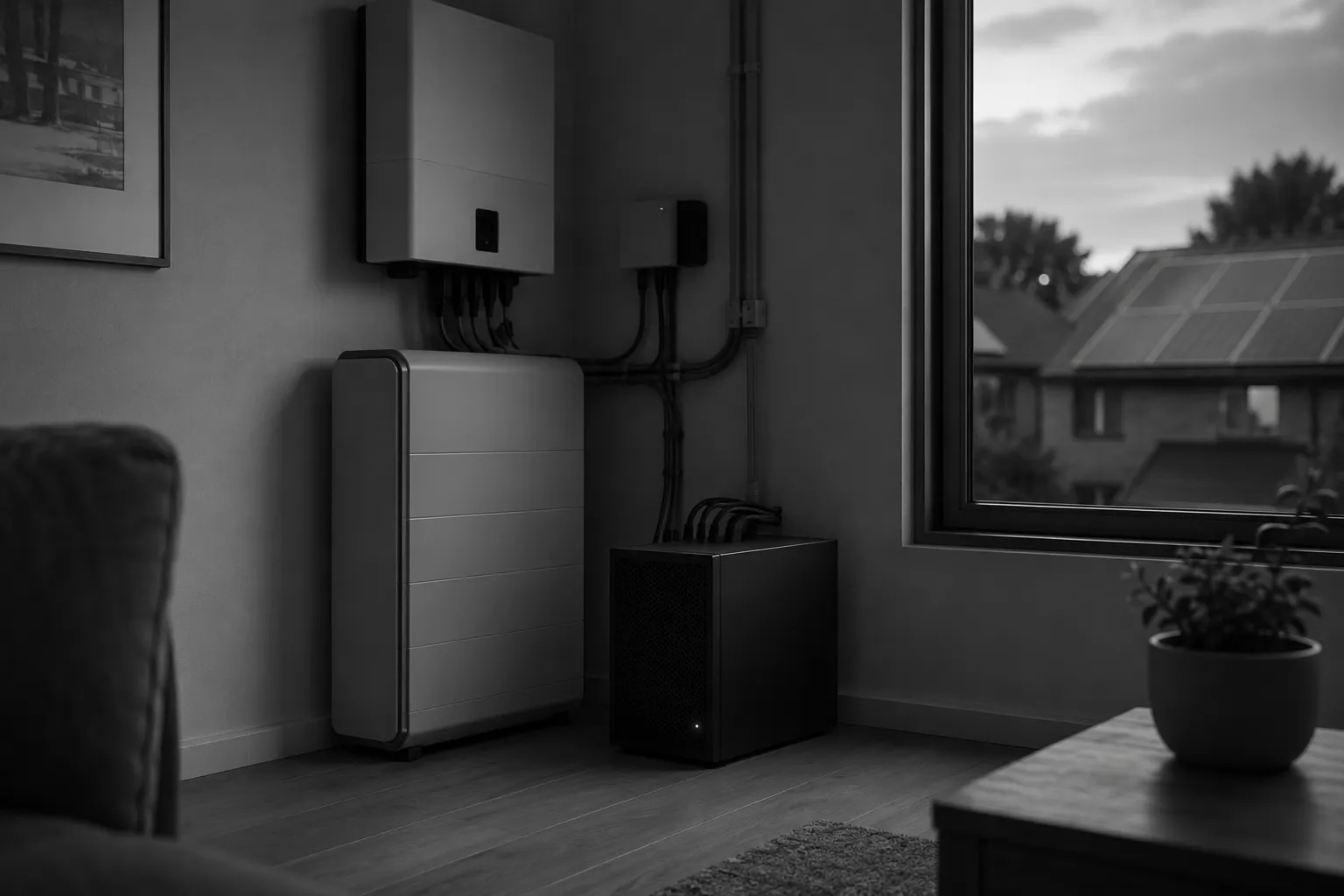
Sunrun is testing a distributed AI compute program that would place small compute nodes inside homes equipped with its solar panels and battery storage, The Verge reported on July 10th. The company says participating customers will be compensated, while Sunrun sells the combined compute power to enterprise buyers such as AI companies. The proposal arrives as large data centers face public resistance over electricity use, water demand, noise, pollution, and the pressure they place on local grids. Instead of concentrating machines in one visible facility, Sunrun wants to scatter them through houses already connected to its energy systems.
The server house changes the address of artificial intelligence. The data center no longer has to appear as a fenced industrial box at the edge of town. It can enter through the garage, the utility room, the wall beside the battery, and the monthly payment promised to the owner. Domestic infrastructure becomes leasable computation. A home that once fed solar power back to the grid can also feed model work into an invisible market of enterprise demand. The bargain may look clean because the box is small and the customer is paid. The real shift is spatial. AI's appetite for power and hardware moves closer to the living room, where infrastructure can pass as an appliance.
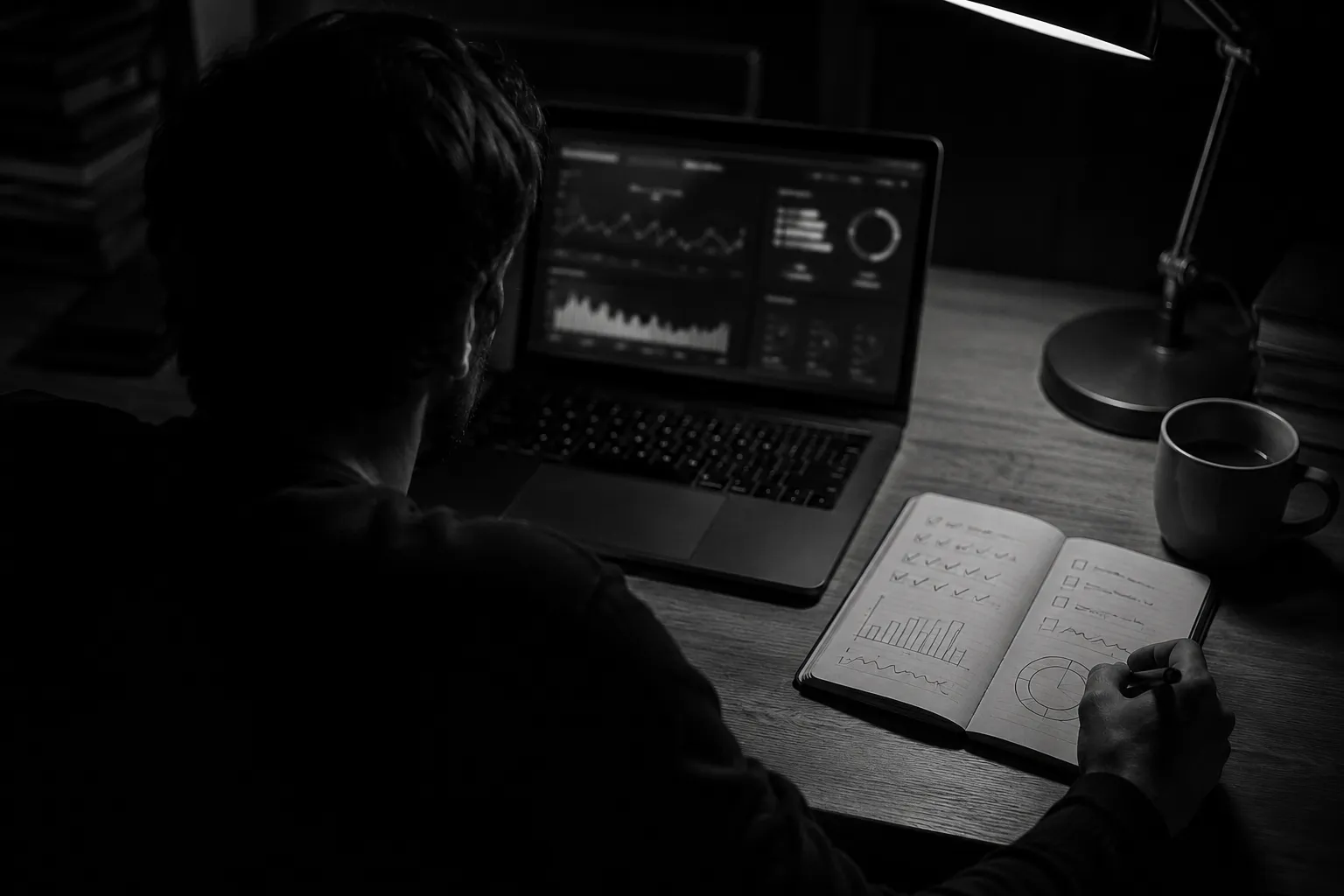
Anthropic introduced Reflect, a dashboard inside Claude that lets users inspect their own AI habits, TechCrunch reported on July 9th. The feature shows topics, patterns, task categories, and broader usage behavior for people with memory turned on. It can also ask reflective questions, suggest quiet hours, and nudge users to take breaks from the chatbot. Anthropic says sensitive conversations appear only at a high level, health integrations are excluded, and the insight data is not used for other purposes. Later, Reflect is expected to show how much time a person has spent using Claude.
The dashboard turns a private exchange into a measured routine. A user who once treated chat as a blank box now receives a portrait made from prompts, requests, categories, and recurring needs. That portrait can feel helpful, even hygienic, because it asks what should remain human and when the user should pause. It also gives Claude a new way to make itself visible inside the workday. The assistant becomes an archive of dependence, then offers advice on managing that dependence from within the same product. The habit is no longer hidden in browser history or monthly billing. It returns as a chart, a prompt, a reminder, and a suggestion to use Claude better next time.

Meta launched Muse Image, a new AI image generator from Meta Superintelligence Labs, TechCrunch reported on July 7th. The tool is available through the Meta AI app, Instagram Stories, and WhatsApp. It can generate images from prompts, provide preset ideas, edit pictures, create ads, imagine furniture in a room, and power new effects for Stories. The feature drawing the sharpest reaction lets a user tag a public Instagram profile and use that person's images to create new AI pictures. Meta says users can disable this use in settings, but its policy also says people may create content with Instagram material through AI features and that the person whose content is used may receive no notification.
The tagged face changes the meaning of a public profile. A photograph posted for friends, fans, customers, or casual display becomes available as material for another person's scene. The old social network copied attention. This one can copy presence. A face can leave its original caption, place, lighting, and intention, then return inside a generated picture the subject never asked to enter. Opt-out controls move the burden onto the photographed person after the system has already defined public visibility as permission enough to begin. The platform calls it creation. The user sees a familiar face becoming an ingredient.

Discord acknowledged that a bug in its AI moderation system wrongly banned more than 8,000 users over two months, TechCrunch reported on July 7th. Harmless images were flagged as dangerous material, including spreadsheets, chessboards, game textures, and plain white or gray transparent backgrounds. The company said the system matches uploads against databases of known harmful content, with human review meant to stand between a flag and a punishment. A bug removed that interval. Another 200 users were banned over the weekend before Discord identified and fixed the problem, and affected accounts are being restored.
The false ban gives automated safety its most ordinary injury, the locked account. A grid pattern on a chessboard or a game texture becomes close enough to suspicion for the system to treat a user as guilty before a person looks. The punishment then reaches beyond one upload. Discord accounts hold work channels, gaming communities, friendships, servers, archives, and the small social infrastructure people build without naming it that way. Appeals arrive after the account is gone, after contacts vanish, after the user has to explain that a square was only a square. Moderation at scale asks machines to notice danger quickly. The user learns that speed first as removal.

Utah has allowed residents to renew prescriptions through an AI chatbot called Doctronic, the Associated Press reported on July 6th. The program launched under a state regulatory sandbox, which can waive rules for promising AI companies. Users confirm their identity, answer questions about prescriptions and medical history, and the system checks a pharmacy database before sending eligible refills to a local pharmacy. Human doctors review orders during the initial phase, but the company expects to move toward fully automated refills. Utah's medical licensing board learned of the program after its January launch and later asked the state to halt it.
The refill sounds routine until the old meaning of a prescription is inspected. A renewal is a small medical judgment disguised as repetition. The dose may be familiar, but the body may have changed, another drug may have entered the cabinet, bleeding risk may have appeared, or a symptom may have become relevant only because a physician noticed it in conversation. Doctronic's defenders see a path through overloaded care. Critics see a license being simulated before the standards have been built. The argument will not stay in Utah. Texas, Wyoming, Iowa, and Idaho are already testing or debating similar openings. The first prescription written by software may arrive as convenience, then ask medicine to explain why a doctor had to be there.

Amazon will close Mechanical Turk to new customers on July 30th, TechCrunch reported, leaving existing users inside a service that AWS says will receive security and availability work but no new features. The crowdsourcing marketplace opened in 2005 as a place where people performed small tasks that software could not yet handle, including labeling images, reading sentiment, passing CAPTCHA challenges, and checking scraps of data for a few cents at a time. Later it was folded into the training economy as a source of annotation for neural networks. Its name was already a confession. The eighteenth-century Mechanical Turk pretended to be a chess-playing machine while a human being hid inside the cabinet.
The closure has the shape of a quiet labor obituary. For years, the platform helped companies sell automation while paying dispersed workers to supply the missing perception, judgment, and patience. Then the loop bent back on itself. Studies found that some workers used large language models to complete tasks meant to produce human-labeled data, turning the crowd into another surface for machine output. The old bargain became harder to defend. If the human is paid too little to be trusted, and the model is used to imitate the human, the dataset loses its last modest claim to being grounded in labor. Amazon is keeping the lights on for current customers. The cabinet door is closing for everyone else.
