Cursor introduced Composer 2 as “frontier-level coding intelligence” without initially saying that the model began with Kimi K2.5, an open-source system from China’s Moonshot AI. A user found traces of Kimi in the code, and Cursor later acknowledged the base. The company said only about a quarter of the compute behind the final model came from that foundation, with the rest devoted to continued training and reinforcement learning. It also said the commercial use was authorized through Fireworks AI.
The omission mattered because model releases are staged as declarations of independent invention. A new name, benchmark chart, and product launch can make a layered technical artifact look like a singular achievement. Open-source development works differently: capability travels, is modified, and returns under another brand. Cursor’s mistake was therefore less about borrowing than about hiding the genealogy until outsiders reconstructed it. The episode also disturbed the familiar story of an AI race divided neatly between the United States and China. The supposed rivals already inhabit one another’s products. Composer 2 is not simply American or Chinese, original or copied. It is a commercial model assembled from shared research, private compute, licensing agreements, and a disclosure that arrived only after the borrowed foundation spoke through the code.

Hachette Book Group withdrew the horror novel “Shy Girl” before its planned U.S. release and discontinued the edition already available in Britain after concerns that artificial intelligence had generated its prose. Readers and reviewers had noticed patterns they associated with machine writing. The author, Mia Ballard, denied using AI herself and said an acquaintance hired to edit an earlier self-published version was responsible. A novel moved from manuscript to product, then became evidence in a dispute about who had actually written it.
The withdrawal gives publishers a new role that extends beyond judging quality or checking plagiarism. They must now establish a chain of authorship for language that can look fluent while hiding its production history. Yet the case also exposes how uncertain that judgment remains. Suspicion can begin with repetitive phrasing, an improbable image, or simply the atmosphere around a book, then spread faster than any forensic proof. The machine does not need to be listed as an author to reshape the fate of the human name on the cover. In this new editorial economy, provenance becomes part of the work itself, and a writer may be asked to prove that a book is theirs and that every stage of its transformation remained human.

Microsoft says it will reduce Copilot entry points in Photos, Widgets, Notepad, and Snipping Tool as part of a broader effort to improve Windows quality. The retreat follows years of adding AI buttons and features across the operating system, including the delayed Recall function that raised persistent privacy concerns. The company now describes restraint as a better way to integrate assistance.
A removed button is a small admission that software can become hostile through excess. Each shortcut promised help, but each also changed the shape of a familiar tool and asked users to understand a new layer of behavior. Copilot entered applications that had once performed narrow tasks without requiring a conversation with a model. Its withdrawal gives users back some negative space, the unoccupied area where a tool can remain predictable. Microsoft is responding to feedback, yet the reversal also reveals how product strategy was set. AI was first treated as a presence that every surface needed; now quality requires deciding where it should stay out. The operating system improves when the assistant stops interrupting the work it was supposed to support.
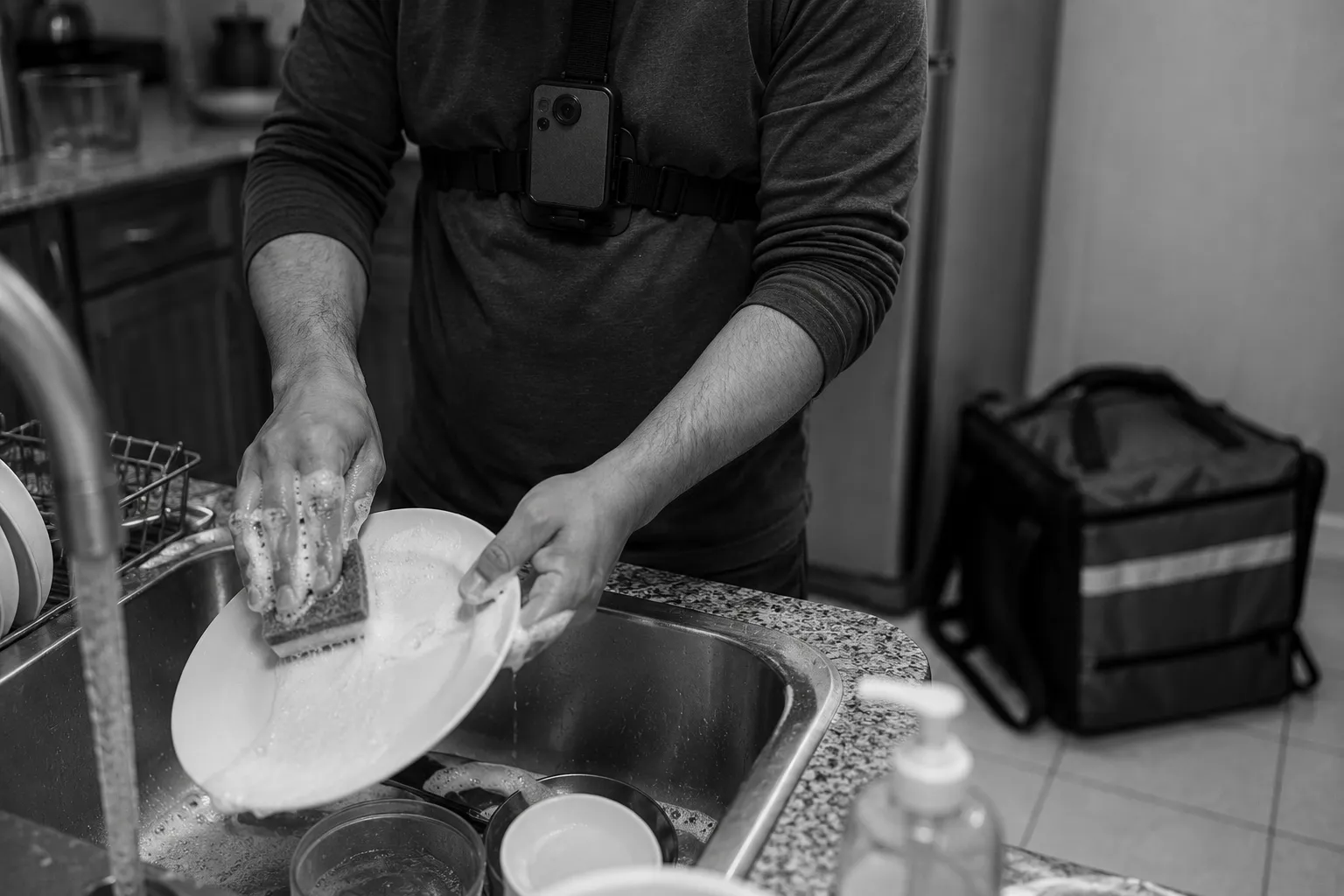
DoorDash is launching Tasks, an app that pays delivery couriers to film ordinary activities and record speech for AI and robotics training. One assignment asks a worker wearing a body camera to film washing dishes, holding each clean plate in view. The courier’s route through the city becomes a route through the physical world, collecting gestures that models cannot learn from polished demonstrations alone.
The arrangement extends platform labor into data production. A worker who already supplies location, timing, and delivery evidence can now sell images of hands, kitchens, entrances, and accents. DoorDash calls this flexible income, and the payment is shown before the assignment begins. The language of choice is real, but the bargaining position remains shaped by a platform that decides which tasks exist and what they are worth. Ordinary labor becomes training material through a short contract and a phone camera. The future robot may learn to wash a plate from footage made by someone paid to deliver food, while the worker’s own body remains outside the story of the machine being taught.
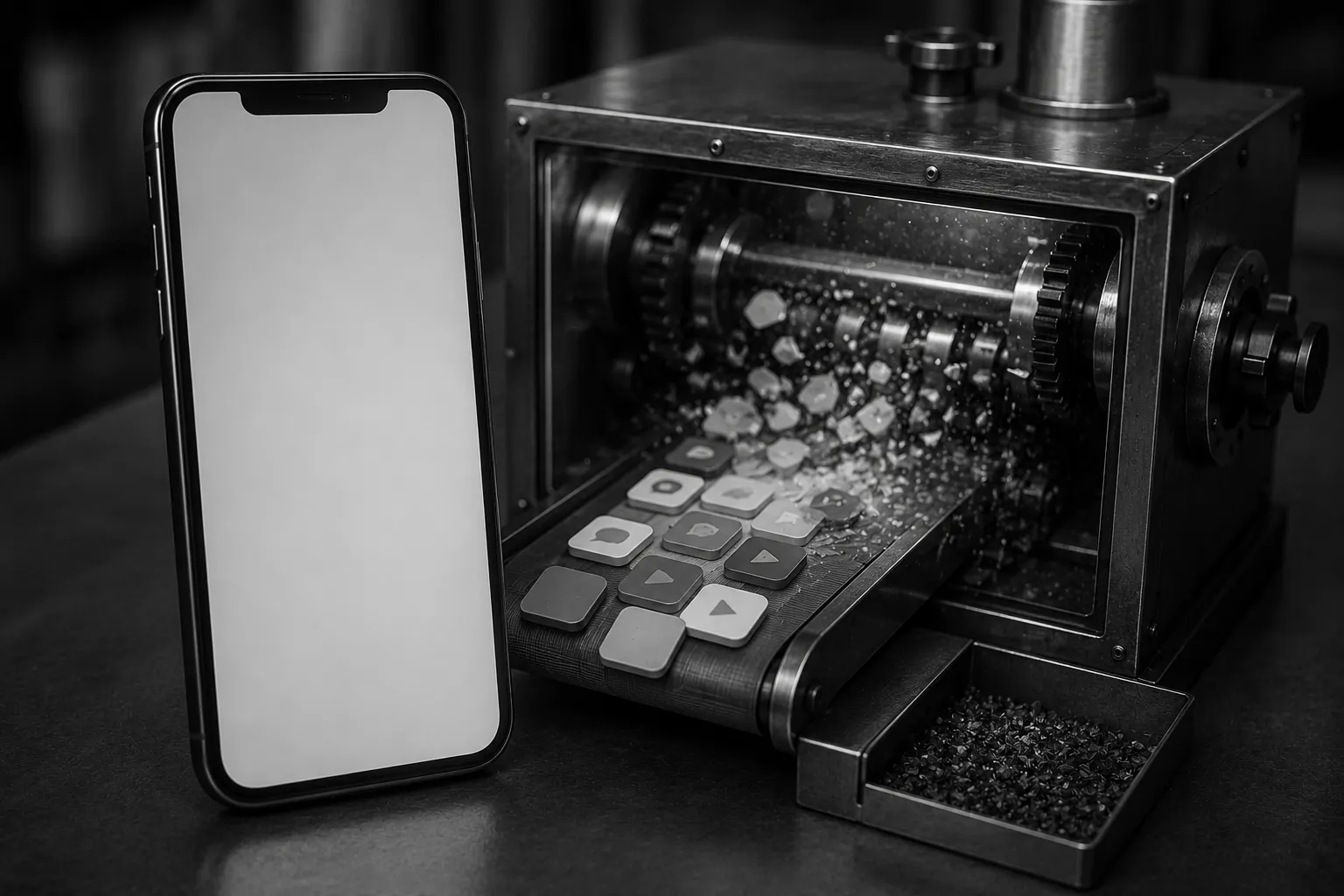
Nothing CEO Carl Pei says smartphone apps will eventually disappear as AI agents learn a user’s intentions and carry out tasks across services. Instead of opening messages, maps, ride-hailing, and calendars to arrange coffee, the user would state an intention and let the device coordinate the steps. The proposal sounds convenient because it removes the visible sequence that currently makes a phone legible.
That sequence also provides a record of agency. An app shows which company received a request, which price was offered, and which permission was used. An agent that moves through private interfaces on a user’s behalf compresses those decisions into an answer that may look effortless. The phone becomes less like a collection of rooms and more like a concierge with access to every door. For the system to act without mimicking human taps, companies will need interfaces designed for agents, along with rules for identity, consent, and liability. The app may disappear from view while its contracts remain active underneath. Convenience will be measured in fewer screens, but responsibility will have to travel through the hidden steps.

Kagi is bringing its Small Web collection to mobile devices, offering access to more than 30,000 personal blogs, webcomics, independent videos, and other non-commercial sites it describes as human-authored. The project responds to a web where search results increasingly mix personal writing with material produced or polished by machines. Discovery becomes an act of choosing which kind of voice deserves to appear.
The gesture is attractive because it reverses the usual logic of scale. Instead of asking an index to contain everything, Kagi curates a smaller field and sends the user from one site to another, recalling StumbleUpon and the informal pleasures of the early web. Curation also creates a new authority. Someone must decide whether a site is independent, recent, and human enough to enter the collection. RSS requirements already exclude pages that do not publish regularly, and users have found entries that sound suspiciously synthetic. The human web therefore needs procedures for recognizing humans, a paradox that turns authorship into a property administered by an index. The personal page survives, but first it must pass through a directory.

Encyclopedia Britannica and Merriam-Webster are suing OpenAI over nearly 100,000 online articles they say were scraped for training. The complaint also points to verbatim reproductions, retrieval systems that substitute for publisher pages, and fabricated answers attributed to the institutions. A dictionary and an encyclopedia are defending their names at the moment when language software uses names as shortcuts for authority.
The dispute places a strange object in court: knowledge that has been copied, compressed, and returned without its original address. Britannica’s articles were written to answer questions under editorial responsibility. ChatGPT can deliver a fluent answer while depriving the page of the visit that supports its staff, archives, and future revisions. When the answer is wrong, the institution may still be blamed because its name has been attached to the invention. The lawsuit asks who owns the words, but it also asks who remains visible when a machine has learned to sound informed. A definition can be reproduced in a second. The institution that maintains it takes years to build, and the browser window may never show where the sentence began.
Google and Accel reviewed more than 4,000 applications for an India-focused AI accelerator and said roughly 70 percent of rejected ideas were “wrappers,” products that placed a chatbot on existing software without redesigning the workflow. The word has become an investor’s shortcut for a company thought to be too dependent on the model underneath it.
A wrapper is also a judgment about originality. It treats the interface as suspect when the infrastructure belongs to someone else, even though every technology business depends on layers built elsewhere. The selected companies work in science, ERP systems, call centers, entertainment, and industrial automation, areas where the model is tied to a specific institution or task. Their distinction lies in the work around the model, not in claiming ownership of intelligence itself. The accelerator turns that distinction into a gate. Founders must prove that they have changed a procedure, gathered a hard-to-replace dataset, or entered a physical industry before capital considers the product durable. A thin layer can still be useful, but it will have to survive the next feature released by the model maker.
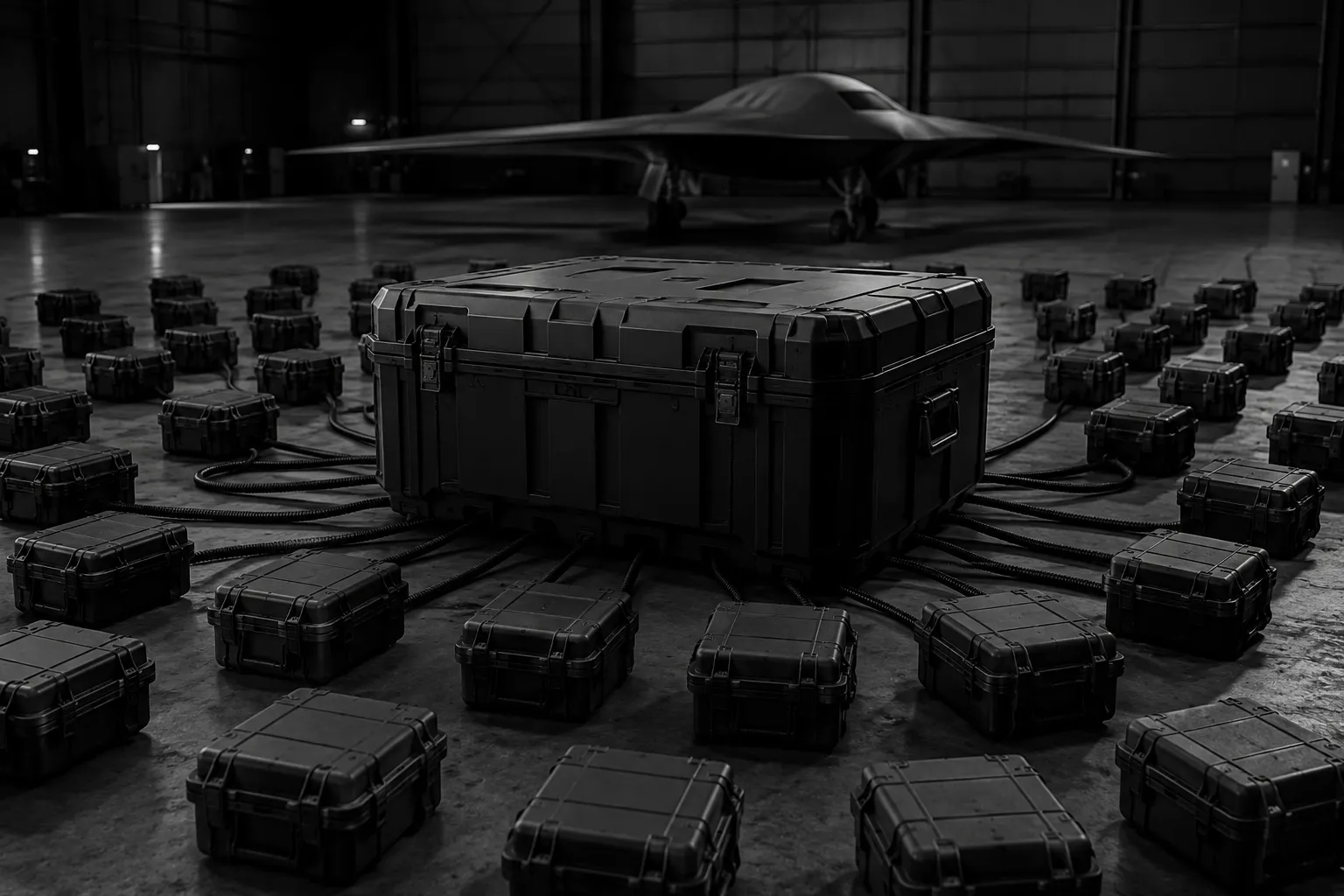
The U.S. Army signed a ten-year contract with Anduril worth up to $20 billion, consolidating more than 120 procurement actions into one enterprise agreement. The package includes hardware, software, infrastructure, and services. The language of the deal is administrative, but its object is a military whose battlefield is increasingly organized through commercial code and autonomous machines.
Consolidation changes the political shape of technological power. A company that once sold a few systems now receives a broad channel into the institution that defines security priorities, while the state gains speed by reducing the number of separate purchases it must manage. The contract joins the culture of venture-backed disruption to the older rituals of defense procurement. Palmer Luckey’s consumer-electronics past, Anduril’s theatrical brand, and the Army’s need for deployable software meet inside one long commitment. A future fighter, drone, or surveillance tool may arrive as a product update rather than a public decision. The contract does not merely buy equipment. It gives one company room to define what military readiness looks like in code.
